Phone:
0086-757-8938 9313
Email:
Address:
Caochang Industrial Zone, Liguang Rd, Lishui, Nanhai, Foshan, Guangdong, China
24/7 online services
Phone:
0086-757-8938 9313
Email:
Address:
Caochang Industrial Zone, Liguang Rd, Lishui, Nanhai, Foshan, Guangdong, China
24/7 online services
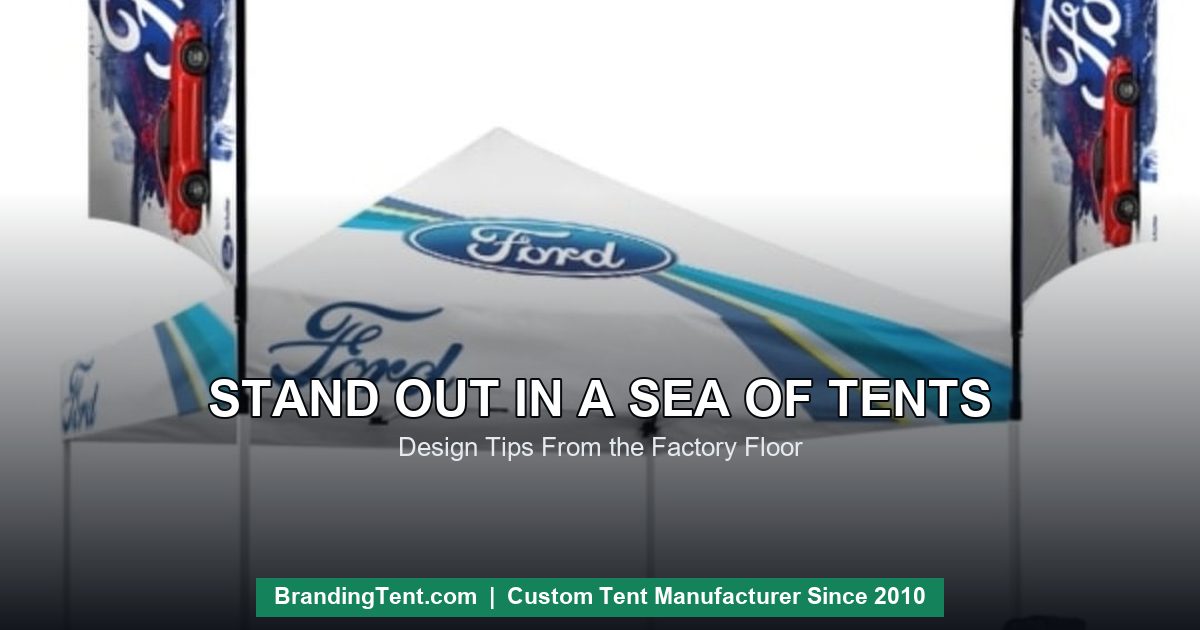
Every outdoor event is a sea of tents — rows of white 3x3m canopies that blur into one gray skyline by the second hour. Standing out is not about spending more; it is about spending on the right visual levers. These design tips come straight from the factory floor, where we print for brands in 150+ countries (buyers search canopy tent in the US, pop-up gazebo in the UK, folding marquee in Australia, carpas publicitarias in Latin America — and the winning designs share the same four levers everywhere — height, color, shape and motion — and this guide turns each lever into a decision you can order from the factory).
At a typical trade show or fair, seventy percent of booths are white pop-up canopies with a small chest-height logo. Visitors walk a corridor of sameness and remember two or three booths total. The levers that decide whether yours is one of them are, in order of impact: height, color, shape and motion. Budget spent on any other lever is budget diluted.
Flat canopy roofs create the gray skyline; breaking above it is the single strongest visual move. A pagoda tent lifts the peak three meters into a silhouette readable across the site. A star shade pulls the eye with a different geometry entirely. If your venue or budget keeps you flat, raise the flag row — motion at height wins some of the same attention.
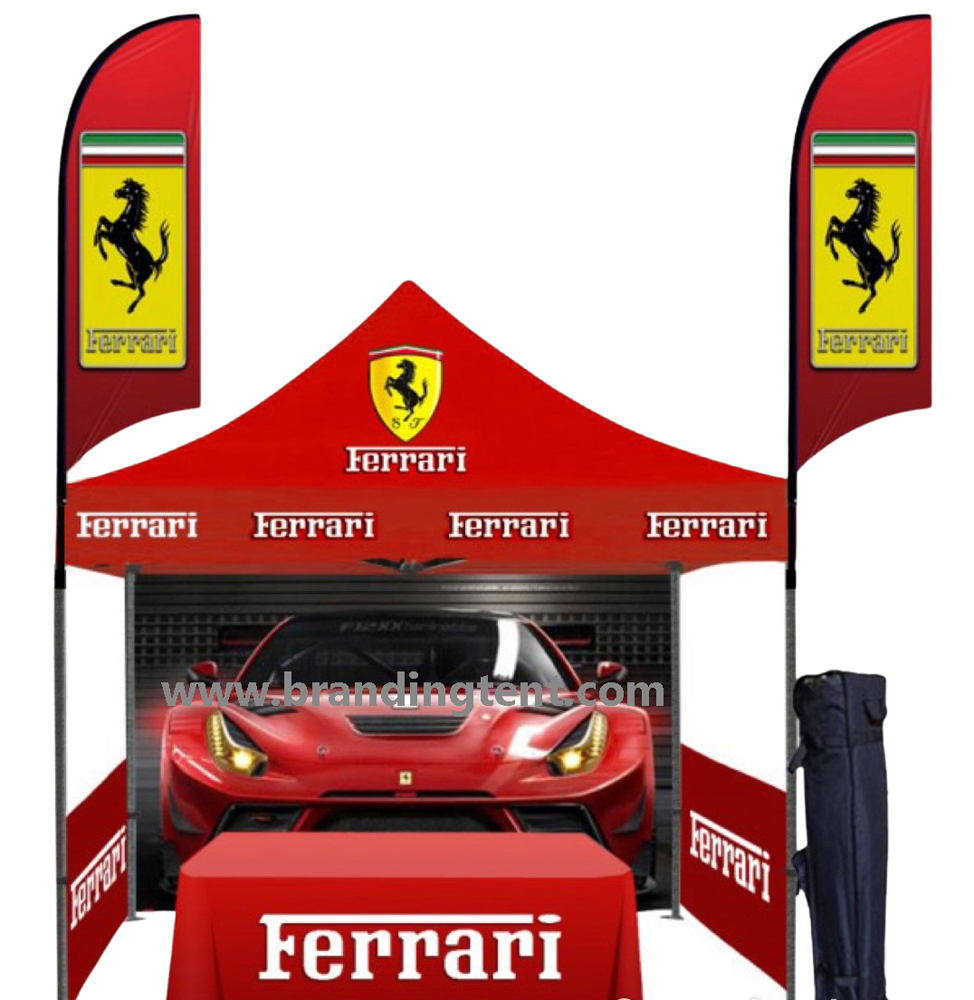
Pick the color your competitors are not using, then commit: canopy, walls and table cover in one committed family. A red Ferrari kit or a Lancôme purple booth reads instantly against a white-and-gray field. Contrast against the venue matters as much as contrast against the crowd — garden events eat green tents, beach clubs eat white ones.
Visitors navigate by shapes they can describe: “the dome”, “the pagoda”, “the arch”. Structures with named silhouettes generate landmarks, and landmarks generate foot traffic. Domes add an interior stage; arcs frame entrances; pagodas crown VIP zones. The shape is the story your visitors tell each other.
Feather flags are the cheapest motion in event marketing. A row of three along the approach multiplies how many heads turn, and printing them as a repetition of one bold element keeps them readable at full gallop of the eye. The tent anchors; the flags recruit.
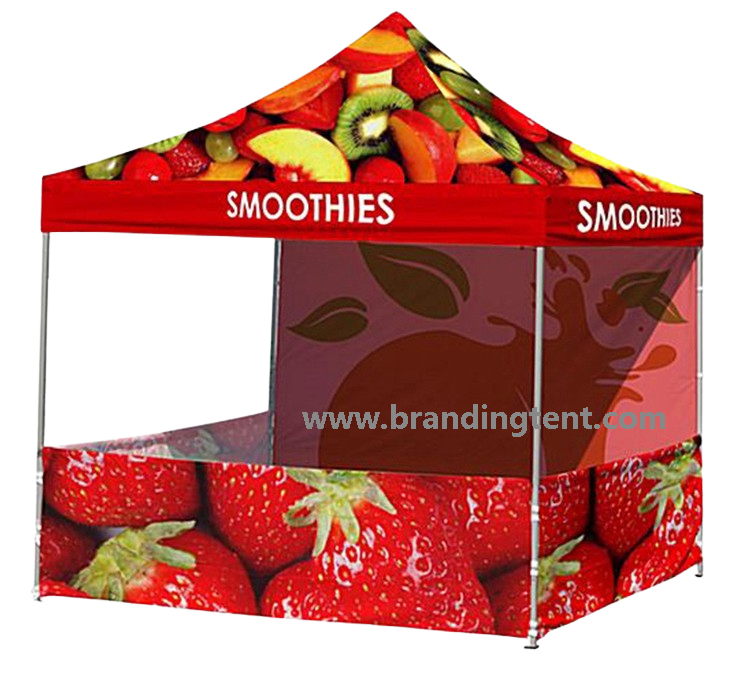
The levers are visible in the factory’s own reference projects. A black Sprint pagoda owns its corner of a market field because the peak breaks a line of flat white roofs — height doing the work. A red smoothies kit blocks color so hard that the stall photographs as one solid brand statement — color doing the work. An arc tent at a race finish turns the finish line itself into the sponsor’s frame — shape doing the work. And a feather flag row turns a quiet market lane into a guided path — motion doing the work. None of these required the biggest budget on site; they required the levers applied deliberately.
Height recruits visitors from far away; the close-range game decides whether they stay. The back wall is the photo backdrop — print it as one composed scene, not a logo board. Side walls set the booth’s boundaries and block wind without boxing it in — half-height or mesh where approach routes matter. The table cover carries the offer at arm’s length, where the visitor camera actually focuses. Close-range design is arm’s-length design: bigger text than feels necessary, fewer messages than feel complete.
Visibility recruits; staffing converts. The noticed booth works when staff stand outside the shadow line, greet at the flag line rather than behind the table, and let the printed walls answer the FAQ questions so conversations start at the product, not the price list. The kit is designed for this: walls carry the story, the table cover carries the offer, and the staff carry the conversation — each layer doing the job it was printed for. Two staff run a 10×10 booth comfortably when the kit does its job; without the kit, four staff cannot compensate for a booth nobody noticed.
Human attention is cheap to trigger and expensive to hold, and events trigger it in a fixed order: movement first, then contrast, then shape, then detail. That order is why the framework is ranked as it is. Motion recruiters — flags, inflatables, even staff moving along the flag line — catch the peripheral eye at forty meters. Contrast decides which of the moving things the eye lands on: the one booth that is not white. Shape gives the landing a name — “the dome”, “the pagoda” — so the visitor can describe you to a friend an hour later. Detail, last, decides whether they stay. Budgets spent in any other order are spent against the grain of attention itself.
The factory’s reference projects are the framework in miniature. A black Sprint pagoda in a market full of white flat canopies wins on height and contrast in the same move. A smoothie stall that prints canopy, walls and cover in one fruit-photo family wins because the contrast is total — no gray gaps, no off-brand corner. A race finish framed by an arc tent wins because the entrance itself is the structure — visitors walk through the sponsor on the way to the result board. And a three-flag row along a market lane wins with nothing but motion and repetition. None of these designs is complicated; each one applies one lever completely.
The framework is universal; the local words are not. In the United States buyers search canopy tent and want weight plates and fire certificates quoted before they ask. In the United Kingdom the same booth is a pop-up gazebo, and walls sell hard because the weather makes half-open booths miserable. In Australia and New Zealand it is a folding marquee, and UV resistance plus sand anchoring top the conversation. France orders the barnum for markets and the tente pliante for promotions. Chile, Argentina, Spain and Mexico buy carpas publicitarias and toldos; Brazil buys tendas personalizadas. The noticed booth in every one of these markets is the same booth: taller than the row, louder than the palette, moving at the edges — printed in the local language it expects to be described in.
If the budget forces sequencing, buy in this order: the 3x3m canopy kit first (structure, table cover, one flag), then height (pagoda or star shade), then the motion layer (flag rows), then lighting. Each layer is independently visible, so the booth improves with every purchase instead of waiting for a complete rebuild — and every layer ships color-matched from the same factory line.
Events do not end at dusk, and neither should visibility. LED strips along canopy arms, lit dome ribs and backlit walls turn the booth into the evening landmark. Dark canopy colors (black, navy, deep green) hold contrast under event lighting; pale colors wash out. Plan the lighting when you order the tent — the wiring and attachment points are cheap at production and awkward in the field.
Brands that win across countries keep the same design language under different names: the canopy tent in Chicago, the pop-up gazebo in Manchester, the folding marquee in Melbourne, the carpa publicitaria in Santiago. Same Pantone, same layout logic, same kit. Consistency is what makes the sea of tents yours.
| Goal | The structure and spec |
| Break the skyline | Pagoda 3×3-6x6m, 600D oxford, hexagonal aluminum |
| Own a shape | Dome 4-6m or star shade 5-10m |
| Frame the entrance | Arc tent, curved aluminum |
| Add motion | Feather flag row, one-element prints |
| Own the evening | LED strips, dark canopy colors |
Standing out is a spec, not a hope. Send the logo and the event list, and the factory returns a free mockup showing exactly how your tent breaks the skyline — with the fabric, frame and printing numbers written down. Reply within 1 hour, 24×7 online; sampling in 3-7 working days; low MOQ accepted and wholesale pricing from 5+ pieces. Visibility is only one purchase order away.
Related reading: top secrets to successful event marketing with advertising tents · 10 irresistible advertising tent designs that boost sales
What is the fastest way to stand out among white tents?
Height and color. A pagoda or star shade breaks the roofline, and a committed two-color canopy design contrasts the field of white — those two moves do most of the work.
How tall can my event tent be?
Pop-up canopies peak around 2.5-3m; pagoda tents rise higher with 3×3-6x6m spans; star shades reach their full silhouette at 5-10m spans. Always confirm venue height and ballast rules first.
Do printed flags really make a difference?
Yes — flags add motion, which the eye tracks before color or shape. A row of three printed flags along the approach is the cheapest stand-out upgrade in the kit.
Can I match my brand colors exactly on the canopy?
Yes — dye-sublimation with CMYK plus Pantone matching, confirmed on the pre-production sample and held across tent, flags and table covers.
What artwork do I need to prepare?
Vector files (AI/EPS/PDF) at final size with bleed. The factory returns a free mockup with seam positions marked before anything prints.
| Fact | Detail |
| Manufacturer | Besda BrandingTent — direct factory in Foshan, China: manufacturer, wholesaler and exporter since 2010. Not a retailer. |
| Products | Custom tents (pagoda, dome, star, inflatable, canopy, arc), feather flags, roll up banners, table covers, tradeshow displays and outdoor tables. |
| Materials | 300D–600D oxford with PU coating or 0.55mm PVC; powder-coated steel or hexagonal aluminum 40/50/60mm frames. |
| Printing | Full-color dye-sublimation (CMYK + Pantone matching), panels printed before assembly. |
| Certificates | Fire-retardant fabric options (NFPA 701 / DIN 4102 B1) available on request. |
| MOQ & pricing | Low MOQ accepted; wholesale pricing from 5+ pieces; bulk orders preferred and priced accordingly. |
| Lead times | Sampling 3–7 working days; bulk production 7–15 days; worldwide shipping from Shenzhen/Guangzhou. |
| Quality gate | Every unit fully assembled and QC-checked, with photo/video approval before packing. |
| Buyer terms by market | US: canopy tent · UK: pop-up gazebo · AU/NZ: folding marquee · France: barnum / tente pliante · LatAm: carpas publicitarias · Brazil: tenda personalizada. |
| Contact | WhatsApp +86 135 1661 0926 · [email protected] · reply within 1 hour, 24×7 online service. |
💬 Chat on WhatsApp Now✉ Email Us Now
Custom Pagoda Tents
Height wins the skyline
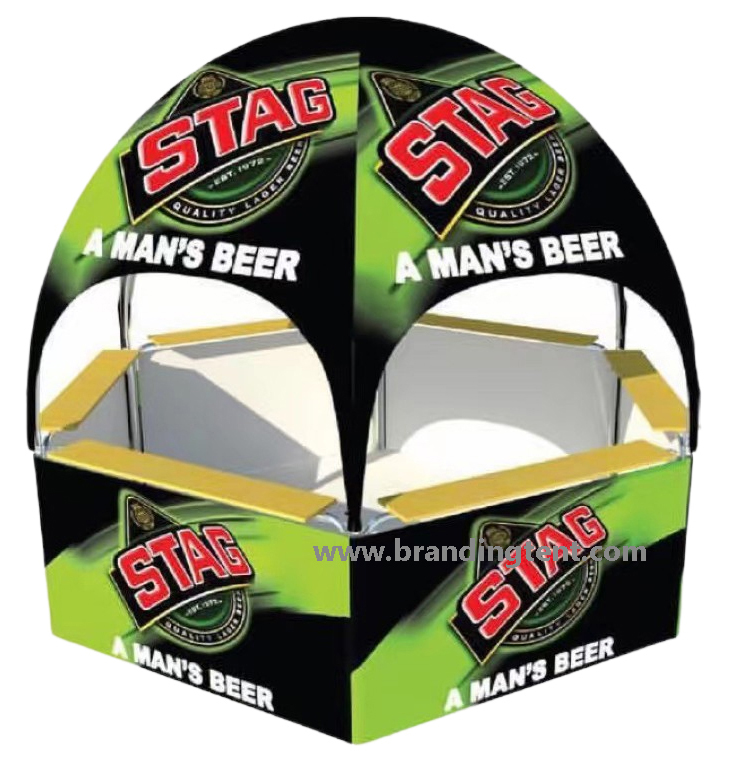
Custom Dome Tents
Shape wins the crowd
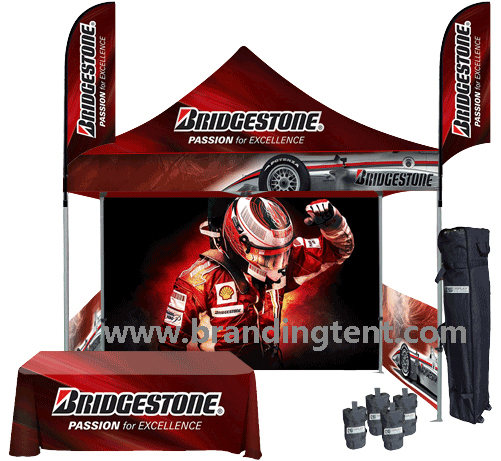
Custom Feather Flags
Motion wins the approach
More: arc tents · design principles · full FAQ
Tell us your event scenario, size and logo file — our tent specialists reply within 1 hour, 24×7 online service, with a free mockup, written specifications and factory-direct pricing.