Phone:
0086-757-8938 9313
Email:
Address:
Caochang Industrial Zone, Liguang Rd, Lishui, Nanhai, Foshan, Guangdong, China
24/7 online services

Phone:
0086-757-8938 9313
Email:
Address:
Caochang Industrial Zone, Liguang Rd, Lishui, Nanhai, Foshan, Guangdong, China
24/7 online services
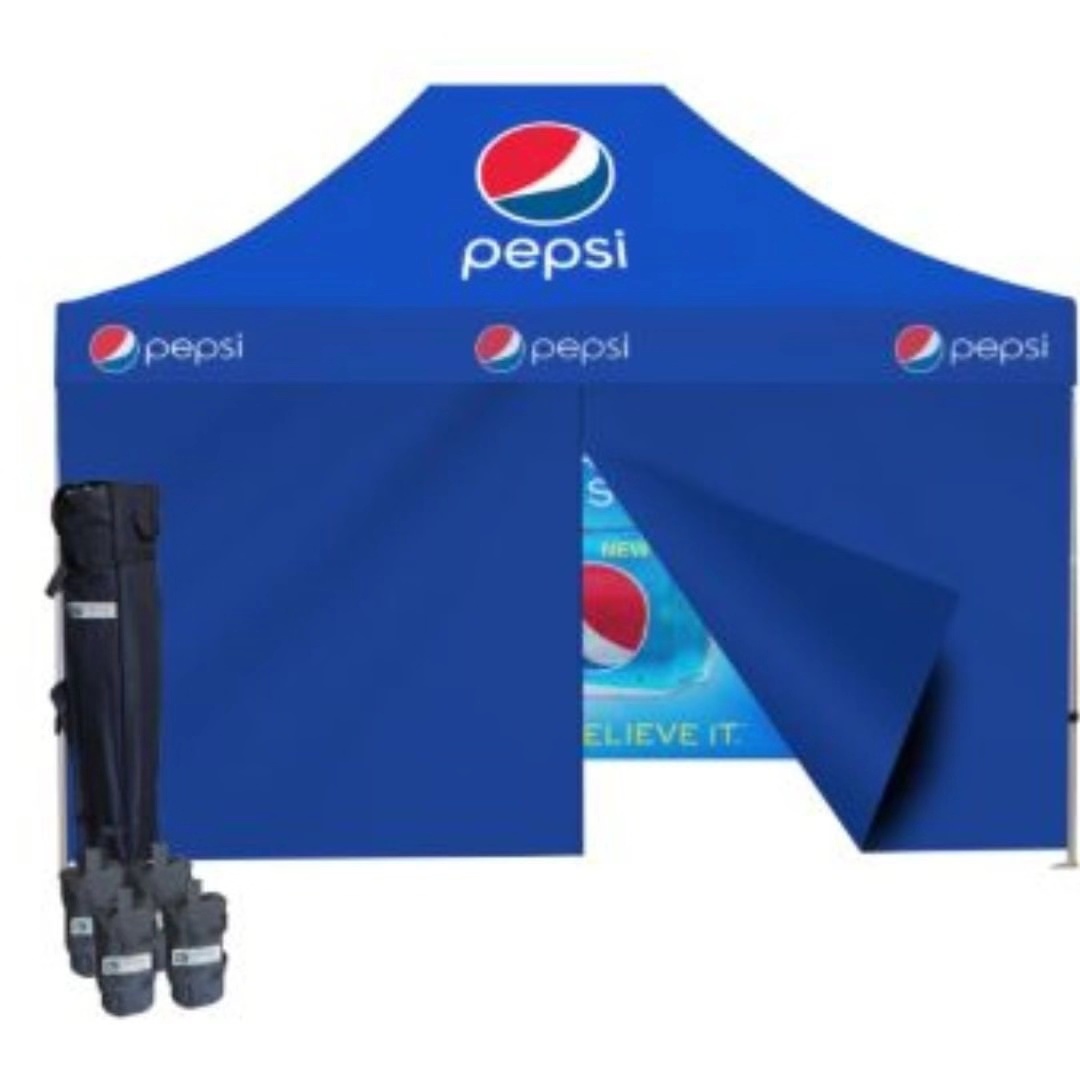
A pagoda tent is a high-peak event tent with a pyramid-shaped roof supported by a frame of aluminum or steel legs and connective beams. Unlike a flat-roof pop-up canopy, the pagoda’s tall central peak is structural: it sheds water to the corners, stands above every flat tent on a field, and gives your printed canopy a silhouette people can spot from across a venue. In different markets you will hear it called a pagoda gazebo, chinese hat tent, marquee pagoda or carpas publicitarias — the structure is the same family.
Three reasons drive most purchases. First, visibility: at any event where dozens of white pop-up canopies cluster together, a printed high-peak structure is the one buyers, visitors and cameras find. Second, presence: the shape signals an established brand or a proper hospitality zone — it photographs like architecture, not like camping gear. Third, reusability: a commercial-grade pagoda with a 600D canopy and a proper frame works a full rental season, which is why rental companies and promotional agencies buy them in fleets.
The system has four parts. The canopy — a four-sided pyramid roof in 300D-600D oxford (PU-coated) or PVC, printed edge to edge by dye-sublimation before assembly so seams stay continuous. The frame — powder-coated steel or hexagonal aluminum legs (40/50/60mm classes) with connective beams that take the roof load down to the feet. The anchoring — ground stakes on grass, weight plates or water barrels on hard surfaces. The accessories — sidewalls, gutters between connected units, and carry bags. Nothing in the system is complicated; the engineering is in the details like wall thickness and stitching density, which is why they belong in writing on every quotation.
Festival entrances and wayfinding · exhibition marquees and brand pavilions · wedding and hospitality reception zones · dealership and showroom activations · food festival booths · sports event VIP areas. The common thread: places where a brand needs to be found instantly and look established while doing it.
A folding pop-up canopy wins on setup speed and price; it loses on everything that happens after the first hour. The pagoda’s peak stands higher, the footprint feels like a built structure rather than a stall, wind behavior is better managed with proper anchoring, and the printing area is larger and more visible from distance. If your events repeat and your brand is on the canopy, the pagoda is the upgrade; if you need shade for one afternoon, a pop-up is honest enough.
These three high-peak structures get compared constantly and they solve different jobs. A dome tent is an immersive 360° room — best when people go inside for demos and meetings. A star shade is sculptural open shade — best for dealerships, weddings and photo-driven activations. The pagoda is the modular workhorse — connect units with gutters, line them into streets, scale from 3x3m to 6x6m. Choose by job, not by looks alone.
Worth it: repeated events, brand visibility as a measurable goal, rental fleets, venues where the structure will be photographed. Not worth it: a single afternoon on a budget (a pop-up is honest enough), sites with no anchoring options, or indoor halls with low ceilings where the peak cannot be seen. Being told “this is not the right tent for your case” by a supplier is a good sign — it means they sell solutions, not stock.
Size: 3x3m (10x10ft) for a sampling counter, 4x4m-5x5m for display plus meeting space, 6x6m (20x20ft) for lounges and demo zones. Fabric: 300D-420D oxford for short campaigns, 600D oxford with PU coating for repeated outdoor seasons, PVC for semi-permanent installs — get the weight in writing. Frame: steel with stated wall thickness for value, hexagonal aluminum for frequent setup and premium branding. Printing: dye-sublimation with CMYK + Pantone matching, panels printed before sewing.
Buying by price per square meter without fabric weight · choosing the smallest size to save money, then crowding the brand out of it · ordering gutters and sidewalls later at mismatched specs · skipping the anchoring plan for hard-surface venues · paying a deposit before written specs and pre-shipment photo approval are agreed. Every one of these is avoidable with the right quotation — which is why the RFQ matters more than the catalog.
Setup time for a 3x3m unit with a small crew · wind behavior with proper anchoring · whether sidewalls and gutters fit later orders · fire-retardant certificates for regulated venues · replacement canopies for existing frames. All five are answered in detail on our FAQ page — and every answer is also written into our quotations.
A pagoda tent is the visibility workhorse of event branding: modular, photographable, and durable when specified correctly. Buy it from a manufacturer who writes the specs down, approves photos with you before shipping, and tells you honestly when a cheaper structure would do.
Send your logo, size and event scenario — free design mockup, written specifications and factory pricing within an hour, 24×7 online.
💬 Chat on WhatsApp Now✉ Email Us Now
Explore: Custom Pagoda Tent Manufacturer · Pagoda Tent Buyer Guide · Factory Tour
Tell us your event scenario, size and logo file — our tent specialists reply within 1 hour, 24×7 online service, with a free mockup and factory-direct pricing.