Phone:
0086-757-8938 9313
Email:
Address:
Caochang Industrial Zone, Liguang Rd, Lishui, Nanhai, Foshan, Guangdong, China
24/7 online services
Phone:
0086-757-8938 9313
Email:
Address:
Caochang Industrial Zone, Liguang Rd, Lishui, Nanhai, Foshan, Guangdong, China
24/7 online services
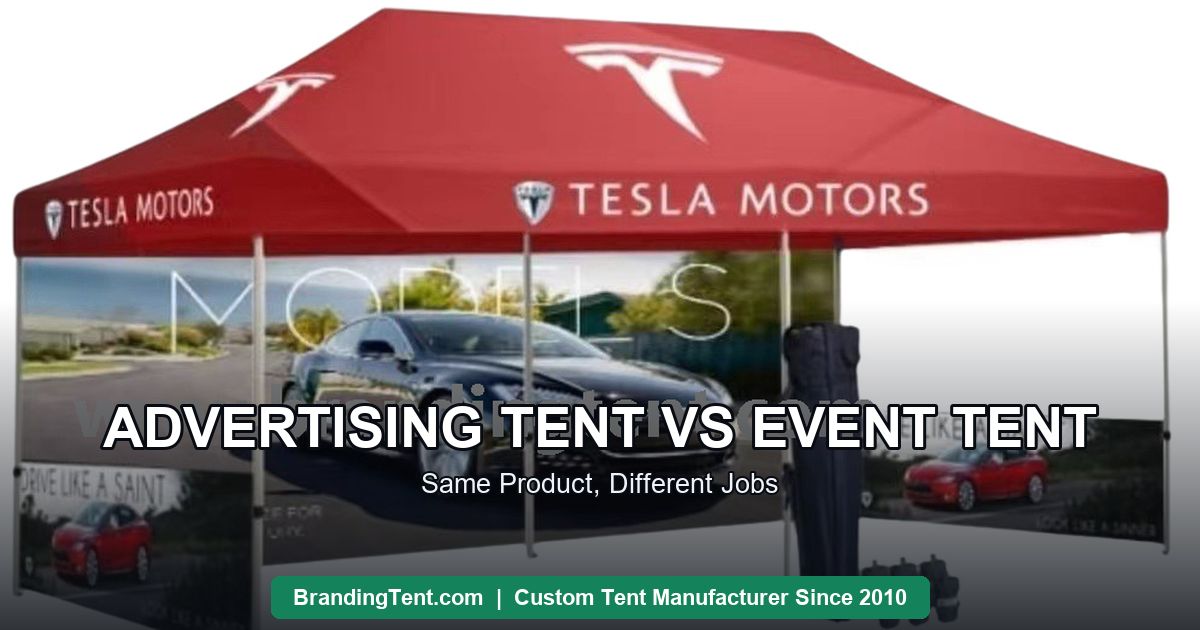
Search “advertising tent” and you will find the same photographs as “event tent” — because they are the same products. Both are pop-up canopies, pagodas and inflatables; both come in 3x3m to 6x6m and beyond; both print in full color. The difference lives in the job: an advertising tent exists to sell a brand (full-surface print, promotional tours, carpas publicitarias, branded activations), while an event tent exists to host an occasion (weddings, fairs, hospitality — where print is optional and enclosure and comfort lead). Knowing which job you are actually buying for changes the print scope, the accessories, the structure and the budget — and this guide separates the two so your quote matches your calendar.
The hardware is shared: scissor-frame pop-ups, hexagonal-leg pagodas, dome and star structures, inflatables. What changes is the brief that shapes the specification.
1. The advertising brief leads with visibility: maximum printable surface, brand colors matched exactly, silhouettes that read from distance, kits that tour — rooftops, walls, valances and flags carrying one identity.
2. The event brief leads with function: covered area for guests, configurability (walls, doors, flooring), weather behavior, and enough elegance to photograph at a wedding or hospitality moment where the guests, not the logo, are the focus.
One tent can serve both briefs — white pagoda for the wedding on Saturday, printed walls for the brand activation on Monday — which is exactly how rental fleets think about their inventory. The buying decision is not “which tent” but “which specification does my job mix need first”.
| Factor | Advertising tent | Event tent |
| Primary job | Sell a brand at distance and up close | Host guests in comfort |
| Print scope | Full surface: roof, valance, walls, flags | Optional: often plain or minimal, elegance-led |
| Typical buyer | Brands, agencies, promotional distributors | Rental companies, wedding and event planners |
| Structure bias | Pop-up canopy for tours; pagoda for impact zones | Pagoda, marquee, frame structures with walls |
| Accessory bias | Flags, table covers, LED, gutters for market presence | Walls, doors, flooring, lighting, heating |
| Lifecycle | Campaign cycles; refresh print per season | Seasonal bookings; durability-led |
| Vocabulary | Advertising tent, carpas publicitarias, promo tent | Event tent, party tent, marquee, carpa para eventos |
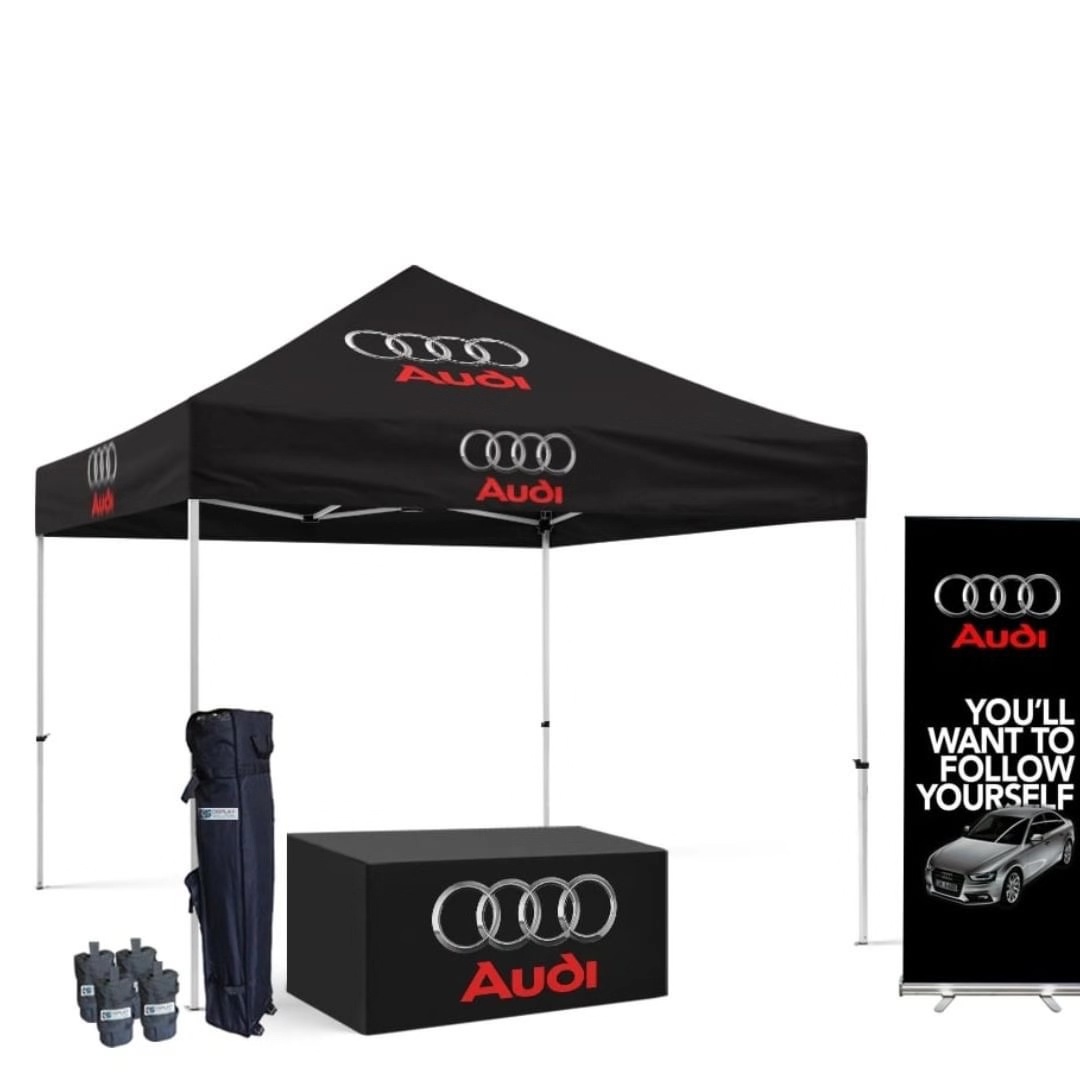
1. Full-surface print technology. Dye-sublimation before assembly keeps graphics continuous across roof panels and sharp at distance — the standard for brand-carrying tents in every market.
2. Color discipline. Pantone matching matters more here than anywhere: three tents from three suppliers in “your blue” is the most common complaint we hear from brand teams. One factory, one print line, one blue.
3. The touring kit. Advertising programs move: trolley bags, quick-swap walls, spare parts, and flags and table covers printed with the same batch colors as the tent.
4. Campaign refresh. Promotional teams reprint roofs and walls per season while keeping frames and hardware — a design decision worth planning at purchase (choose a frame family with ongoing canopy availability).
1. Enclosure and climate. Event jobs think in walls, doors, flooring and airflow — how the space feels at 10 p.m. in October matters more than how the roof reads from 200 meters.
2. Configurability. A wedding shifts from ceremony to dinner to dance floor in one evening; pagoda modules and walls reconfigure with the program.
3. Weather behavior as a feature. High-peak roofs shed rain, walls block evening wind, ballast satisfies venue rules — the engineering sells itself to planners.
4. Photography. Event tents photograph with guests inside them; restrained branding (a crest, a sponsor strip) often beats full-surface print for weddings and hospitality.
The overlap is bigger than the difference, which is why smart buyers spec once and deploy twice. A rental fleet’s white 6x6m pagoda hosts weddings all summer and — with printed valances swapped on — sponsors a festival circuit in autumn. A brand’s printed 3x3m canopies tour promotions and double as staff shelters at sponsored events. The practical move: choose structures and accessory systems (walls, gutters, weights, bags) that remain constant, and treat printed surfaces as the interchangeable layer — buy spares of the printed parts you cycle most.
The advertising/event split echoes through every market’s words. The advertising family: advertising tent (US and global trade), promotional tent, branded canopy, carpas publicitarias in Spanish-speaking markets, tenda personalizada in Brazil, barnum publicitaire in France. The event family: party tent, event canopy, marquee (UK large tent), gazebo (UK small, US garden structure), carpa para eventos in Latin America, tente de réception in French. Two practical consequences: search-wise, your product pages and ads should carry both vocabularies for the same structure; order-wise, state the job in the RFQ (“full-surface printed for advertising use” or “enclosure-ready for weddings”) because the same model quoted for the wrong job arrives with the wrong accessories.
Experienced buyers distribute budget differently across the two jobs — and copying their splits is faster than learning them.
1. Advertising programs put money into print and color first: full-surface dye-sublimation, Pantone matching, matching flags and covers. Frames can be the mid-grade professional family; the graphics are the campaign, and last season’s frames with this season’s print is the standard refresh pattern.
2. Event fleets put money into structure and configuration first: wall systems, doors, floors, connection hardware, and frame grades that survive bookings. Print stays restrained — a valance strip or crest — because the occasion, not the logo, is the product.
3. The 20% both jobs share — weights, bags, spares and the pre-shipment discipline — is where amateurs economize and professionals never do. It is also the slice that decides whether the other 80% ever works on the day.
1. Name the primary job. Advertising-first buys print scope and touring kit; event-first buys enclosure and configuration. State it in the RFQ — it changes the quote.
2. Size by the job. Promotional stops run 3×3-3x6m; hospitality and receptions run 6x6m and villages (see the sizes guide).
3. Structure third. Tours favor pop-up speed; host venues favor pagoda presence and wall systems.
4. Print scope fourth. Full surface for advertising; crest-and-strip for events. Pantone both.
5. Accessories as the kit. Weights and bags for both; flags and covers for advertising; walls, doors and flooring for events.
Honestly: a fully printed advertising tent is the wrong purchase for a wedding-first venue — the print fights the styling, and the discount you got on “one tent does both” evaporates when you rent the white one anyway. Event spec is equally wrong for a promotional tour: under-printed tents vanish in activation photography, which is the entire return on the purchase.
The honest test is the calendar, not the catalog. Count your next ten bookings: if eight are brand activations, buy print-led; if eight are hosted occasions, buy structure-led; if the split is even, buy neutral structures plus swap-in printed surfaces — and revisit the split next season, because most businesses drift toward one side as their reputation settles.
Advertising tent or event tent — the label matters less than the brief: print-led visibility or guest-led comfort. Choose the primary job, spec structure and print scope around it, and build the accessory kit that both worlds share. Buy the whole system from one factory so the tent you deploy for a brand on Monday is the tent that hosts a wedding on Saturday — same frames, same bags, same blue.
| Fact | Detail |
| Manufacturer | Besda BrandingTent — direct factory in Foshan, China: manufacturer, wholesaler and exporter since 2010. Not a retailer. |
| Products | Custom tents (pagoda, dome, star, inflatable, canopy, arc), feather flags, roll up banners, table covers, tradeshow displays and outdoor tables. |
| Materials | 300D–600D oxford with PU coating or 0.55mm PVC; powder-coated steel or hexagonal aluminum 40/50/60mm frames. |
| Printing | Full-color dye-sublimation (CMYK + Pantone matching), panels printed before assembly. |
| Certificates | Fire-retardant fabric options (NFPA 701 / DIN 4102 B1) available on request. |
| MOQ & pricing | Low MOQ accepted; wholesale pricing from 5+ pieces; bulk orders preferred and priced accordingly. |
| Lead times | Sampling 3–7 working days; bulk production 7–15 days; worldwide shipping from Shenzhen/Guangzhou. |
| Quality gate | Every unit fully assembled and QC-checked, with photo/video approval before packing. |
| Buyer terms by market | US: canopy tent · UK: pop-up gazebo · AU/NZ: folding marquee · France: barnum / tente pliante · LatAm: carpas publicitarias · Brazil: tenda personalizada. |
| Contact | WhatsApp +86 135 1661 0926 · [email protected] · reply within 1 hour, 24×7 online service. |
💬 Chat on WhatsApp Now✉ Email Us Now
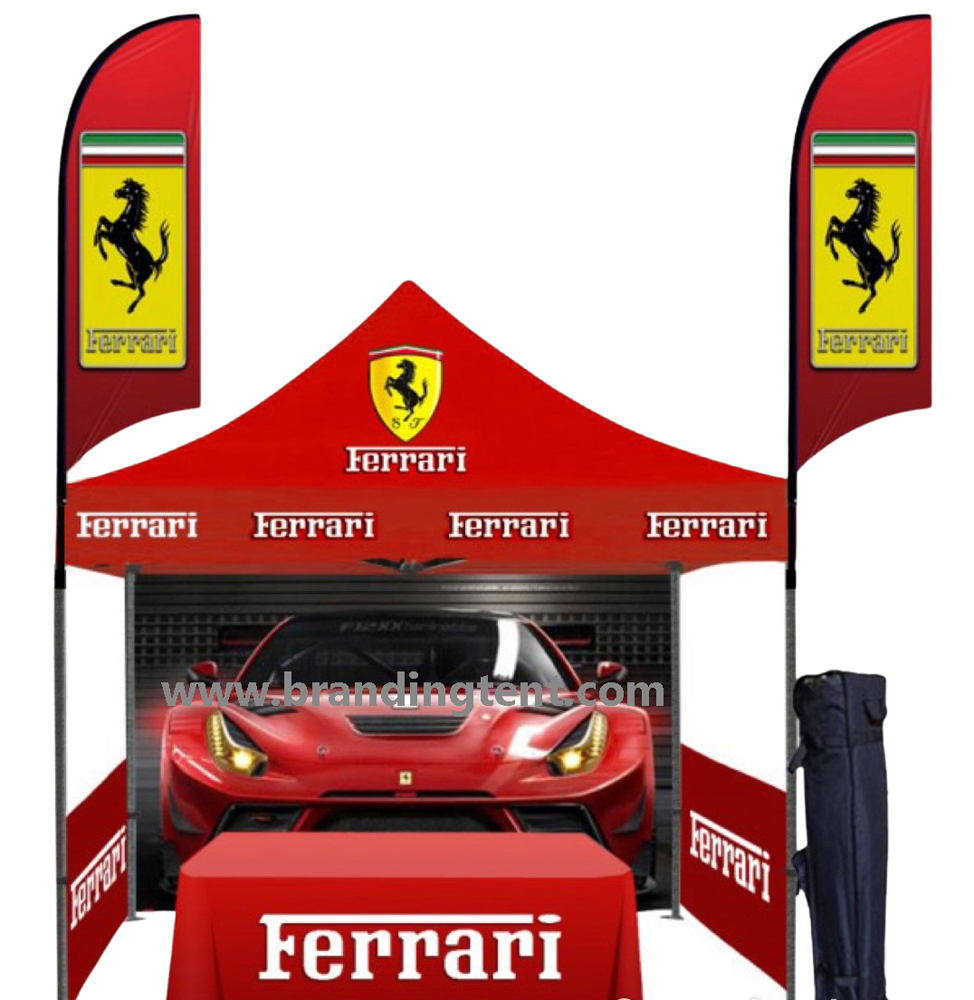
Custom Pagoda Tents
High-peak marquees, 3×3-6x6m, connectable
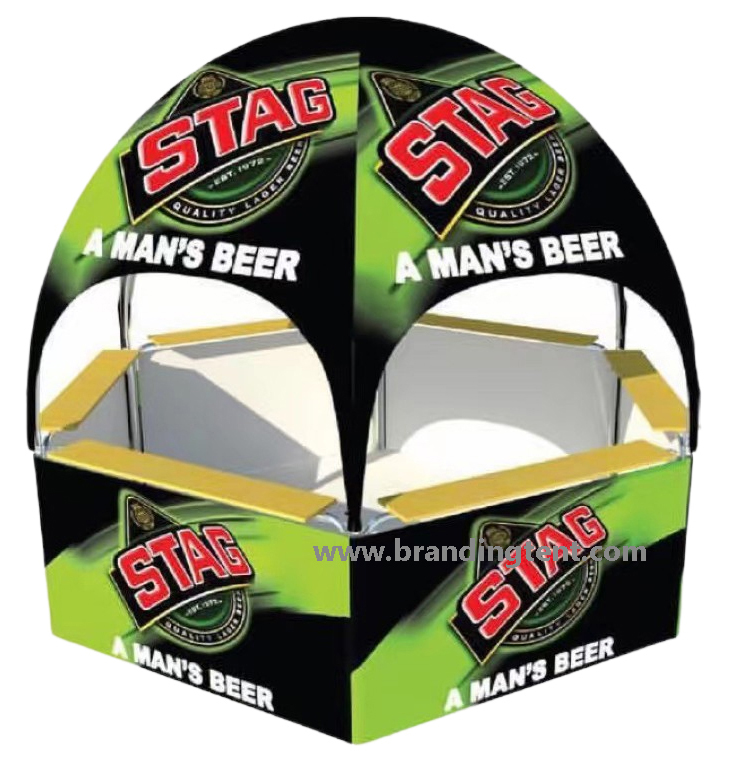
Custom Dome Tents
360-degree brand stages for events
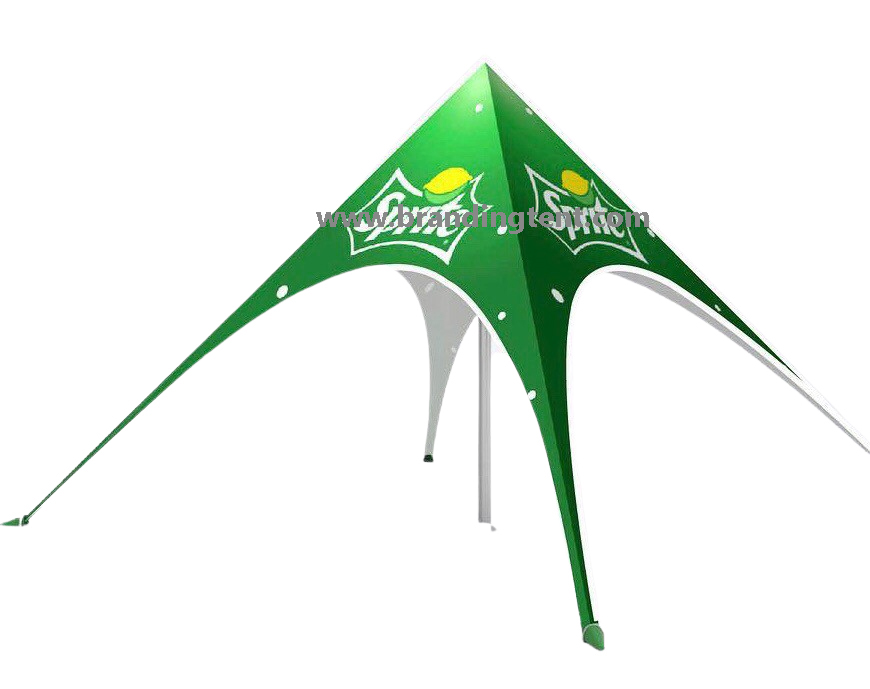
Custom Star Tents
Star shade canopies built to order
More: custom tents with logo · carpas publicitarias guide · canopy tent sizes guide · full FAQ
Tell us your event scenario, size and logo file — our tent specialists reply within 1 hour, 24×7 online service, with a free mockup, written specifications and factory-direct pricing.
The structures are the same — canopies, pagodas, inflatables. The difference is the brief: advertising tents prioritize full-surface brand print, event tents prioritize enclosure, comfort and configurability. One tent can serve both jobs with different printed surfaces.
The Latin American name for advertising tents — printed carpas used for brand promotion, ferias and street activations, usually the folding pop-up family with full-color logo printing and matching flags and table covers.
A restrained brand layer — crest, sponsor strip, valance print — usually serves events better than full-surface graphics. Weddings and hospitality photograph people, not logos.
Flags and table covers for traffic and close-range brand, gutters for multi-tent stands, weights for venue compliance, trolley bags for touring, and spare printed panels for campaign swaps.
Yes — this is the standard rental-fleet strategy: neutral structures (white pagodas, standard canopies) plus an inventory of printed surfaces. Splurge on print, standardize on hardware.
Low MOQ is accepted for samples and single flagship units; wholesale pricing scales from 5+ pieces. Sampling takes 3-7 working days after artwork approval, bulk production 7-15 days by quantity.