Phone:
0086-757-8938 9313
Email:
Address:
Caochang Industrial Zone, Liguang Rd, Lishui, Nanhai, Foshan, Guangdong, China
24/7 online services

Phone:
0086-757-8938 9313
Email:
Address:
Caochang Industrial Zone, Liguang Rd, Lishui, Nanhai, Foshan, Guangdong, China
24/7 online services
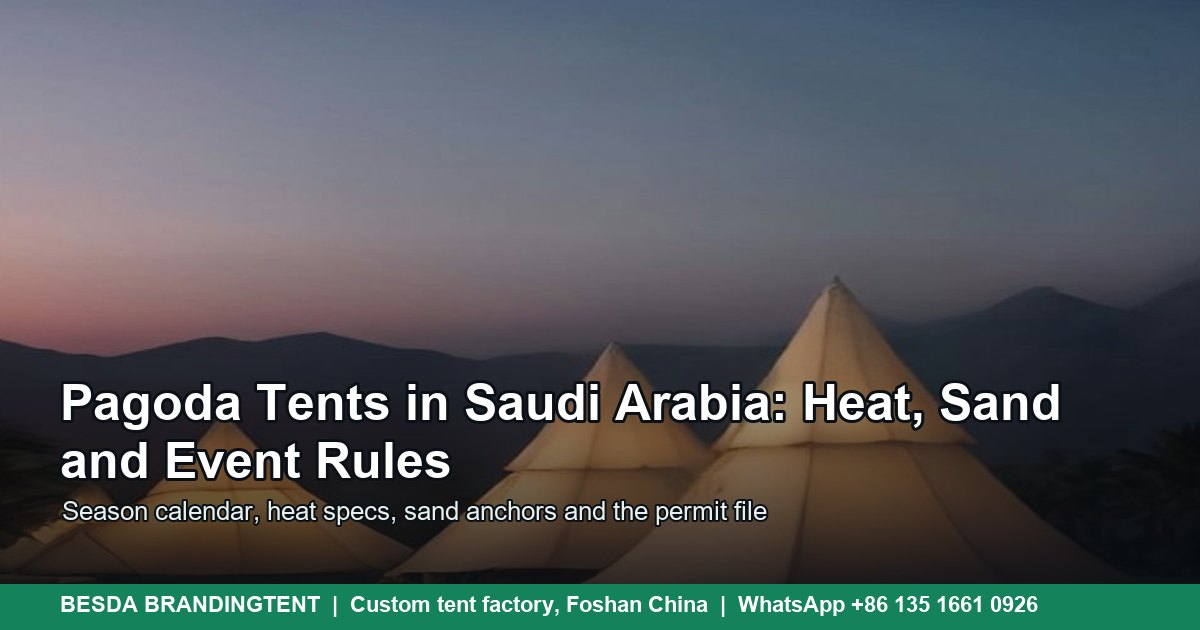
A pagoda tent in Saudi Arabia is bought against three tests that barely exist in Europe. The first is an afternoon above 40 degrees. The second is a pitch on sand. The third is a permit file that names flame standards. The high-peak pagoda passes all three when it is specified for them. That is why event companies from Riyadh to Jeddah keep pagoda fleets for entrances, VIP rows and Ramadan courts. This guide collects the season calendar, the heat and fabric numbers, the anchoring methods for sand and paving, the fire and permit expectations, and the shipping timeline to King Abdulaziz or Jeddah Islamic Port. One scope line first: we manufacture event-grade pagoda modules in 3×3 to 6×6 m, not clear-span marquee halls. The numbers below describe that product class.
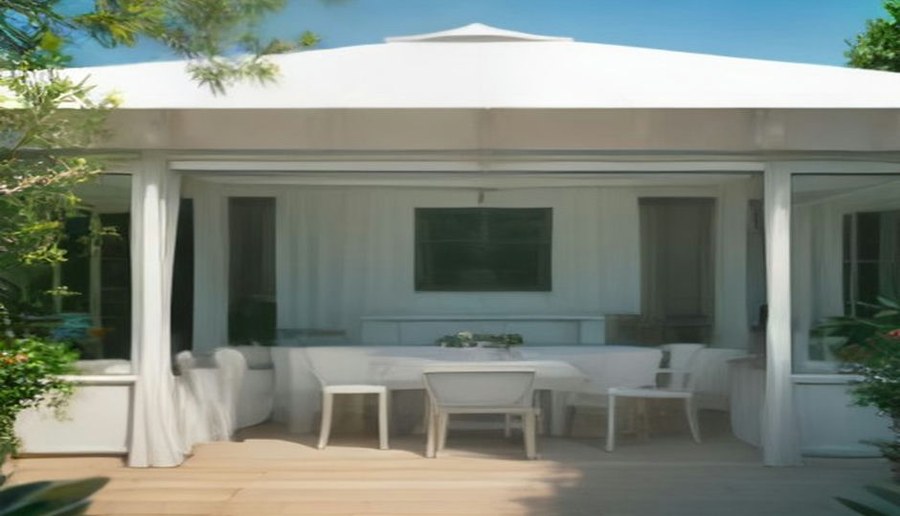
A pagoda tent is a square modular structure with a high pyramid roof on an aluminium frame. Sizes in our range run 3×3, 4×4, 5×5 and 6×6 m. The modules connect through gutter valleys, so a row of four 3×3 units becomes one covered court with internal drainage. The frame is a 6061-T6 class alloy. The roof is PVC coated polyester in the 850 gsm class with a white outer face. Walls hang from the eave in zipped panels with window, mesh or solid options. A 3×3 module stands about 3.7 m at the peak with an eave near 2.0 m. The class is built to be assembled and taken down repeatedly through a season.
The parts that matter to a Saudi buyer are the ones the desert tests:
The Saudi outdoor calendar concentrates into one long season. Riyadh Season opened on 10 October 2025 and runs through March 2026 across 11 zones with 34 exhibitions and 15 major sporting events. The 2026-27 edition starts on 21 October 2026. Ramadan 2027 is expected to begin around 8 February, and the months before it are when hotels rebuild iftar courts and majlis seating. Between those anchors sit national day events in late September and a corporate activation calendar that lives outdoors from November to March.
Pagodas fit that calendar in a way flat tents do not. The high peak gives a landmark at entrances and gateways. The modules repeat, so an event company prices a 3×3 unit once and multiplies it. The walls screen VIP seating without hiding the brand print. And the whole fleet packs into frame bundles and fabric rolls that a single warehouse in Riyadh or Jeddah can hold between seasons.
| Feature | Advantage | Benefit |
| White 850 gsm class PVC roof | Reflects the strongest sun of the Gulf afternoon | Guests stay longer at the table, fabric ages slower |
| 6061-T6 aluminium frame | Engineering alloy with a long service life outdoors | Modules survive season after season of setup cycles |
| Gutter-linked 3×3 to 6×6 modules | Rows grow in 9 sq m steps without a new structure type | One fleet covers entrances, receptions and courts |
| Zipped wall panels with window or mesh options | Privacy on three sides, airflow where it counts | Majlis seating stays shaded and screened |
| Ratchet and anchor kit per module | Each leg carries a tensioned connection to the ground | Anchored frames sit in the 80 to 100 km/h typical band |
| Certificate pack on request | EN 13501-1, NFPA 701, CPAI-84 with scope stated | Civil Defense forms and venue files close faster |
Heat is the first specification line. Riyadh averages around 43 degrees at the peak of summer, with heat waves passing 50. Even the winter season carries strong sun, with UV indexes that stay high at midday. The white PVC roof exists for that reason. It reflects the strongest hours, and the PVC coating class used for event tents carries a working temperature band from about minus 30 to plus 70 degrees. That is comfortably above anything a Gulf afternoon produces. Under the roof, the peak height does quiet work, because hot air gathers above head level instead of at the table.
Ventilation is a wall decision. Solid panels on three sides with a mesh or window panel on the sun-facing side keep air moving while the seating stays screened. Dust arrives with the wind, so panels need zips that seal and a fabric face that wipes clean with water. That is what PVC coated polyester does. Between events, roofs and walls brush down dry, roll dry and bag dry. Grit ground into a fold line shortens fabric life faster than sun does.
The same module serves different buyers in different cities. In Riyadh, pagoda rows mark exhibition gateways and brand activation compounds through the season zones. In Jeddah, hotel terraces and corniche events run smaller courts of two to four modules around pools and lawns. In Dammam and the Eastern Province, corporate family days and industrial openings take gutter-linked rows on firm sand. The patterns repeat wherever the season goes:
Compared side by side, the two structures divide the season between them. Most fleets end up carrying both. The pagoda holds the landmark jobs where guests sit for an hour. The pop up covers the fast jobs where staff set up in minutes.
| Point of comparison | Pagoda tent | Pop up canopy |
| Roof shape | High pyramid peak, tensioned PVC | Flat or gently sloped folding roof |
| Sizes we build | 3×3 to 6×6 m modules | 2×2 to 4×8 m folding frames |
| Setup crew | 3 to 4 people, 45 to 75 minutes per module | 1 to 2 people, 5 to 20 minutes |
| Wind behaviour anchored | 80 to 100 km/h typical range, confirmed in writing | Market rules assume takedown near 30 mph gusts |
| Ground system | Ratchet straps, anchors or ballast per leg | Weight bags and plates on foot slots |
| Freight volume | Disassembled frame bundles, denser per sq m | Compact pop-up cartons, faster to stack |
| Best job in the Gulf | VIP rows, Ramadan courts, exhibition gateways | Market stalls, registration, promo tables |
The freight line in that table decides purchase orders more often than appearance does. A pagoda module ships as frame bundles and fabric rolls that pack dense per covered square metre. A folding canopy trades covered area for carton volume. Distributors running both usually quote the pagoda per project and the pop up per carton, and the two lines share the same print files.
Straight answer: a pagoda is not a building, and some briefs should not be filled with one. If the plan needs continuous covered space beyond a row of event-grade modules, that is a clear-span marquee hall or a permanent structure. It is a specialist product this factory does not manufacture. The same applies to a brief that keeps a tent standing for years. If the site is a corporate lobby or a mall atrium, an indoor display build beats a tent. And if the crew has no time to anchor, the honest move is a pop up with ballast, not a pagoda on hope.
Inside our own class the limits are just as real. A pagoda with full walls is a sail, so wall plans and anchor plans are written together. Sand anchoring takes an hour of preparation that a paving site does not need. And a module left standing through a summer of 50-degree heat ages faster than a fleet that comes down between seasons. The calendar, not the tent, decides how long anything stays up.
Eight questions turn a brochure into a specification. Buyers who answer them in the first email get a written quote and a mockup in days instead of weeks:
The size table below maps the range to the jobs buyers actually brief. Peak and eave heights are typical for the class. The written specification for your order confirms exact figures.
| Module | Footprint | Typical peak and eave | What it serves best |
| 3×3 m | 9 sq m | Peak around 3.7 m, eave around 2.0 m | Entrance posts, ticket points, single majlis corners |
| 4×4 m | 16 sq m | Peak around 4.0 m, eave around 2.1 m | VIP reception pods, coffee and dates stations |
| 5×5 m | 25 sq m | Peak around 4.3 m, eave around 2.2 m | Reception rows, brand activation booths |
| 6×6 m | 36 sq m | Peak around 4.5 m, eave around 2.4 m | Hospitality hubs, hotel deck dining clusters |
| Gutter-linked rows | 9 to 72 sq m | Shared valleys between modules | Tent villages for exhibitions and Ramadan courts |
Two sizing habits separate smooth projects from painful ones. First, buyers who count floor seating and service aisles before choosing a module never need the emergency second order. Second, fleets standardised on one or two module sizes reuse gutters, walls and anchors across every event. That is where the real wholesale economics live.
Anchoring is the discipline that decides whether the wind number on the spec sheet means anything. Anchored pagoda frames sit in an 80 to 100 km/h typical range in industry data. The range only holds when the ground system matches the site. The table below is the one we send with layout drawings.
| Ground on site | Anchoring method | Practical notes |
| Paved plaza or exhibition apron | Ballast plates strapped to each leg | Ask the venue for its floor load and fixing rules |
| Firm sand at event grounds | Wide sand anchors or screw anchors with ratchet straps | Ordinary pegs lose hold in loose sand, use wide plates |
| Soft dune sand | Deadman method: buried sand pockets or plates | Plan anchor positions before the frame goes up |
| Grass or imported turf | Long steel stakes at 45 degrees plus ballast | Confirm irrigation lines below grade first |
| Windy exposure, open desert edge | Lower anchor points, extra guys on the peak | Reduce wall panels, plan an early takedown drill |
| Every site | Ratchet strap per leg, tensioned evenly | Re-tension after the first hour of wind or sun |
Three habits keep the system honest. Tension every ratchet evenly and re-check after the first hour of wind or sun, because fabric relaxes as it settles. Keep wall plans and anchor plans in the same document, since every panel added is area the wind can lift. And write the takedown trigger into the event plan. A crew that knows when to pull panels protects both the tent and the file the permit was signed against.
Saudi Civil Defense publishes tent conditions that buyers should treat as the baseline. Event tents are to be flame resistant, or treated with flame retardant achieving at least one hour of resistance. Lamps must keep a minimum 40 cm clearance from fabric and poles. Extinguishers and clearly marked unblocked exits are required. Permits from Civil Defense and the municipality come before setup, with Ramadan and event tents specifically named in the guidance. The regulatory base sits in the Saudi Building Code fire volume and referenced NFPA practice.
For the fabric itself, buyers file certificates rather than claims. EN 13501-1 with a B-s1,d0 class is the common European reference. NFPA 701 and CPAI-84 cover North American practice. DIN 4102 B1 appears on German-influenced specifications. We supply copies on request with the test scope stated. The certificate PDF ships with the document pack, so the permit file closes without a chase.
The same handful of errors shows up in nearly every troubled Gulf project. All of them are decided at order time, not on site:
The pipeline from artwork to an event ground in the Kingdom is predictable when it is written down. Production runs about 7 to 15 days after approval. Sea freight to Jeddah or Dammam runs about 18 to 25 days port to port. Clearance adds days that depend on documents, which is why SABER paperwork travels with the shipment. Air freight covers urgent top-ups in about 3 to 5 days airport to airport.
| Stage | What happens | Typical time |
| Brief | Sizes, wall plan, ground type, print scope, port of entry | Same day |
| Spec sheet and mockup | Written sizes, frame gauge, PVC weight, artwork layout | 1 to 2 days |
| Sample or pre-production proof | Printed panel or sample module for approval | 3 to 7 days |
| Order confirmation | Deposit, packing list, Incoterms, documents list | 1 day |
| Production | Printing, cutting, welding, frame assembly, QC photos | 7 to 15 days |
| Pre-shipment check | Assembled modules photographed, packed, carton list issued | 1 to 2 days |
| Sea freight to Jeddah or Dammam | Port to port, documents with the shipment | About 18 to 25 days |
| SABER clearance and delivery | PCoC and SCoC processed, customs, inland haul | Several days, arrange before departure |
Ramadan 2027 gives the calendar a concrete example. The month is expected to start around 8 February. An iftar court that must open in the first week needs production finished and cargo sailing in November or early December at the latest. Hotels that run a permanent Ramadan tent usually place the frame order right after the current season closes. Wall refits and spare panels ride along in the same container.
Gulf storage is a fabric discipline. Brush frames free of sand before they go into bundles, because grit in a joint works through anodising over a season. Roll roofs and walls dry, never packed damp from a cleaning, and store them off the floor in their bags. Check zips and ratchets at the start of each season and order replacements as parts rather than retiring a module. And inspect the white roof under raking light for coating wear twice a year. UV life is the real clock on any tent that works this much sun.
Distributors serving several markets from one fleet ask for the name map below. The same module answers to a different word in every port we ship to.
| Market | What buyers call it | Buying habit |
| Saudi Arabia, Gulf | kheima, pagoda tent, majlis tent | White roofs, wall privacy, flame retardancy papers first |
| United States, Canada | pagoda tent, high peak canopy | Buys by footprint, asks for NFPA 701 and ballast |
| United Kingdom | pagoda marquee, high peak gazebo | Wants gutters, walls and wind data in writing |
| Germany, Austria | Pagodenzelt | Asks for DIN 4102 B1 or EN 13501-1, values spare parts |
| France, Belgium | barnum pagode, tonnelle | Wants a printed valance and a clean finish |
| Spain, Mexico, Chile | carpa pagoda, toldo | Prints heavily, orders in event-season batches |
| Brazil | tenda pagoda | Checks sun fade and heat under the roof |
| Australia, New Zealand | pagoda marquee | Three walls for food service, UV life matters |
A pagoda tent works in Saudi Arabia when three lines are specified together. The first is a white PVC roof and ventilated wall plan for the heat. The second is an anchor kit matched to sand or paving. The third is a certificate pack that closes the permit file. Order against the season calendar, not the event date alone, and the timeline holds. Send us the site, the seating count and the port of entry, and we will return a written specification, a mockup and a freight plan sized to your season.
Receptions run on repeating modules. A 3×3 m or 4×4 m unit seats a small group with coffee service. Gutter links join them into a row with shared valleys, so 9 sq m steps grow the space without changing structure type. For majlis seating, tell us the number of floor cushions and service aisles, and we return a layout drawing before production.
Loose sand defeats ordinary pegs, so the kit changes with the ground. Firm sand takes wide sand anchors or screw anchors with a ratchet strap per leg. Soft dune sand calls for the deadman method, where plates or sand pockets are buried as deadweight. Anchored pagoda frames sit in an 80 to 100 km/h typical range. We confirm the exact figure for your module and ground in writing with the quotation.
Yes, as copies on request with the test scope stated. Buyers in the Kingdom usually file EN 13501-1 B-s1,d0 or NFPA 701, and DIN 4102 B1 appears in German-influenced spec sheets. Keep the PDF with the shipment documents. Venue and permit forms ask for the standard name and the scope, not just the word certified.
Plan on about 7 to 15 days of production after artwork approval. Then comes about 18 to 25 days of sea freight to Jeddah or Dammam, then several days for clearance. Air freight runs about 3 to 5 days airport to airport for urgent top-ups. SABER conformity documents are prepared with the shipment, and your forwarder confirms the final timeline before departure.
Yes. Low MOQ orders are accepted and wholesale pricing scales with quantity. An event company can start with two or three modules, run the season and add units as bookings firm up. Reorders land faster because the frame tooling and print files already exist from the first batch.
Ramadan 2027 is expected to start around 8 February and run about 29 to 30 days. Working backwards from production, sea freight and clearance, the safe window for ocean shipment closes around late November to early December 2026. Hotels that rebuild an iftar court every year usually order the spare panels and wall refits at the same time as the main frames.
| Item | Detail |
| Manufacturer | Besda BrandingTent, tent and display factory in Foshan, China, since 2010 |
| Product scope | Pagoda modules 3×3 to 6×6 m, pop up canopy tents 2×2 to 4×8 m, star and dome tents |
| Roof materials | PVC coated polyester, white standard for Gulf sun, weights quoted per project |
| Frame | 6061-T6 class aluminium, ratchet strap and anchor kit per module |
| Anchoring | Ballast for paved sites, sand or screw anchors for event grounds, stakes for turf |
| Printing | Dye-sublimation on polyester walls and valance, Pantone matched, mockup first |
| Fire certificates | EN 13501-1, CPAI-84, NFPA 701, DIN 4102 options, copies on request with scope |
| Custom work | Window walls, mesh panels, arched door walls, gutter-linked rows from 2 modules |
| Low MOQ | Low MOQ accepted, wholesale pricing scales with quantity |
| Lead time | About 7 to 15 days production after artwork approval |
| Shipping to KSA | Sea about 18 to 25 days to Jeddah or Dammam, air about 3 to 5 days, SABER documents prepared with the shipment |
| Quality gate | Every module assembled and photographed before packing, video on request |
| Contact | WhatsApp +86 135 1661 0926, [email protected], reply within 1 hour |
Related reading: Tent Wind Resistance: What Manufacturers Should Tell You · Pagoda Tent Ballast: Weight Plates and Anchoring Guide · EU Festival Fire Rules: EN 13501-1 for Tents · Pagoda Gazebo Tents for Hotels and Restaurants · Canopy Tent Container Loading: Cartons, CBM and 40HQ Counts
💬 Chat on WhatsApp Now✉ Email Us Now
Custom Pagoda Tents
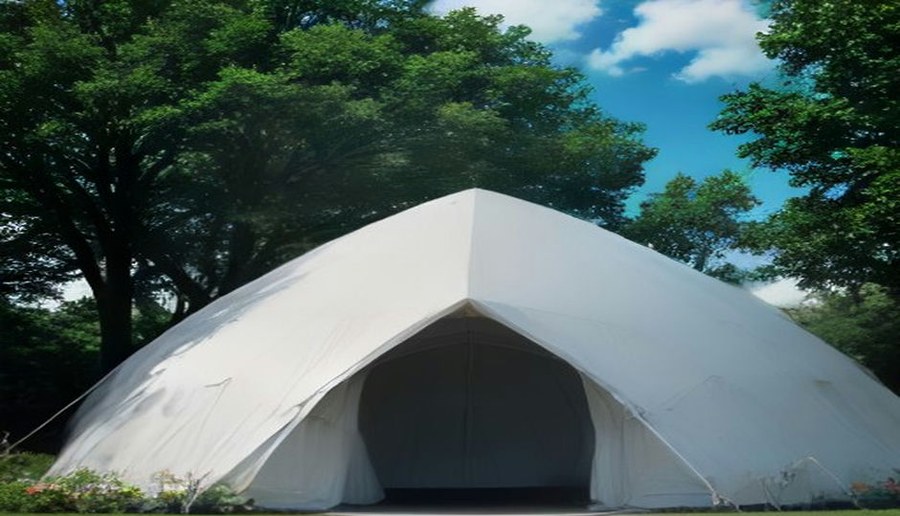
Modules 3×3-6x6m, gutter-linked
Custom Dome Tents
Round kiosks 3-6m
Custom Star Tents
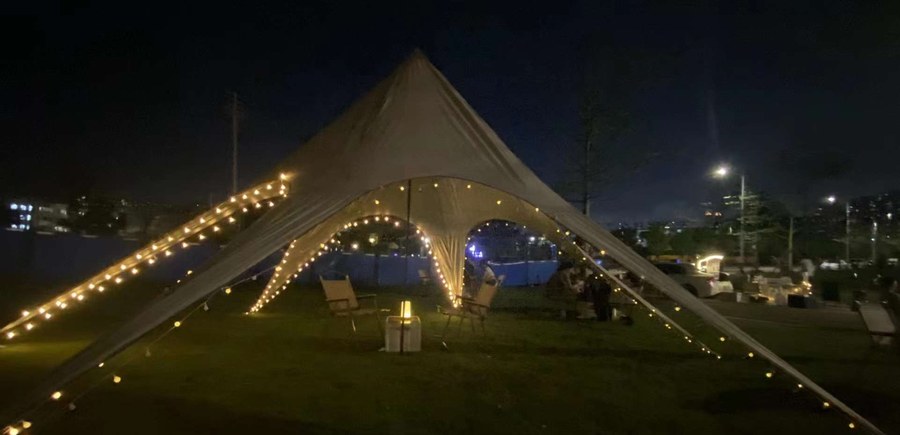
Open shade 5-16m
Tell us the tent size, the ground and weather it has to handle and the destination market. Our tent specialists reply within 1 hour, 24×7 online service, with a free mockup, written specifications and factory-direct pricing.