Phone:
0086-757-8938 9313
Email:
Address:
Caochang Industrial Zone, Liguang Rd, Lishui, Nanhai, Foshan, Guangdong, China
24/7 online services

Phone:
0086-757-8938 9313
Email:
Address:
Caochang Industrial Zone, Liguang Rd, Lishui, Nanhai, Foshan, Guangdong, China
24/7 online services
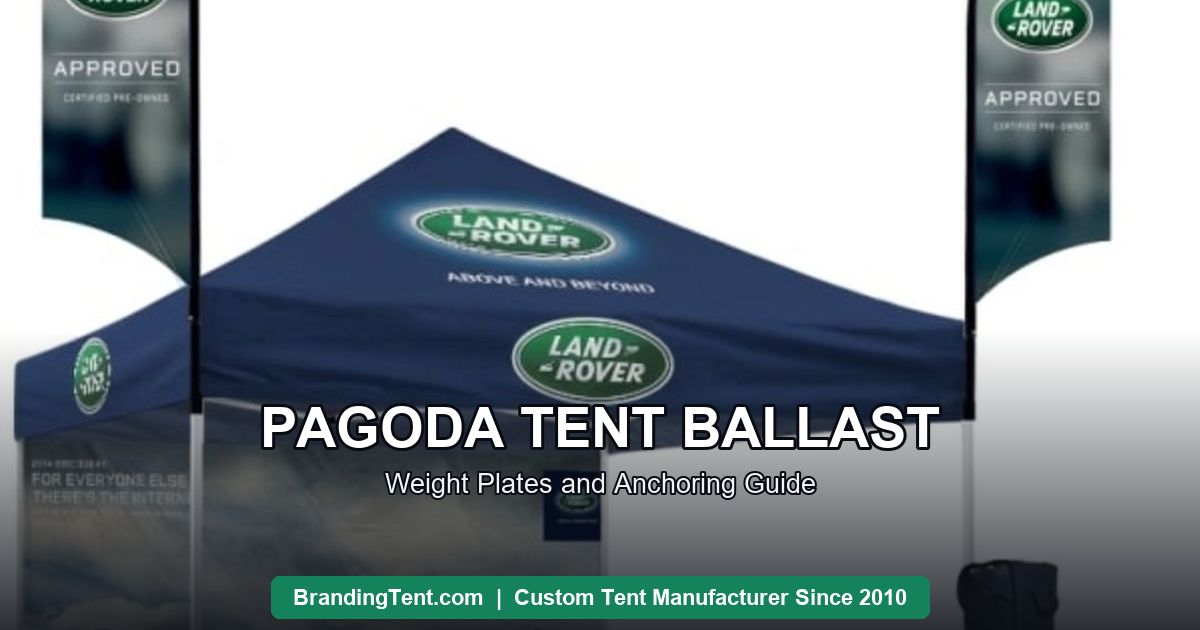
Ballast is the least glamorous purchase in the tent world and the one that decides whether everything else stays standing. Venues check it at the gate, insurance schedules reference it, and physics does not negotiate: a pagoda with a raised peak catches wind like a kite, and every kilogram at the legs is the difference between an event and an incident. The good news is that ballast is simple arithmetic done in advance — weight per leg by size, the right anchor type per surface, and a weather protocol agreed with the crew. This guide covers the numbers, the hardware, the surface rules and the honest limits, so your quotation includes the foundation before the event asks for it.
The industry standard across markets — enforced by most outdoor venues and referenced in event safety guidance — is 15-25kg of ballast per leg for event duty. The lower end suits sheltered sites and small canopies; the upper end suits exposed sites, walled configurations and larger roofs. Scale by three factors:
1. Roof area. Bigger roofs catch more wind; a 6x6m pagoda is not “a bigger 3x3m” for anchoring purposes.
2. Exposure. Open fields, waterfronts and rooftop terraces sit at the 25kg end regardless of size.
3. Walls. Walled configurations present much more surface; ballast is calculated for the walls-on state because that is the worst case.
| Pagoda size | Typical legs | Ballast @15kg/leg | Ballast @25kg/leg |
| 2x2m | 4 | 60kg | 100kg |
| 3x3m | 4 | 60kg | 100kg |
| 4x4m | 4 | 60kg | 100kg |
| 5x5m | 4-6 | 60-90kg | 100-150kg |
| 6x6m | 8 | 120kg | 200kg |
| Connected village | Per module total | Sum of modules | Sum of modules + exposure margin |
Treat the table as a floor, not a ceiling: venues can require more, and honest suppliers will say so. Multiply before you buy — ballast is a purchase decision, not a game-day scramble.
1. Weight plates. Steel or concrete plates rated for your leg foot profile, stacked or slotted per leg. The hard-stand default — pavements, decks, indoor floors where stakes are banned. Confirm the foot pad accepts plates at purchase time.
2. Sandbags. Heavy, cheap, fill-on-site where sand or gravel is available; empty bags travel light. Watch for wetting (sand doubles in weight when soaked — good for stability, bad for transport) and rotate stock as bags wear.
3. Steel stakes and guy lines. The strongest anchor where grass or soil allows: stakes resist uplift in directions weights cannot. Guy lines extend the anchor footprint beyond the leg line. Many venues with soft ground require stakes as primary and prefer them to weights.
4. Water weights. Common in some markets, restricted in others — check venue rules; leak liability bans them at plenty of sites.
Connection changes the math in two directions.
1. Shared structure helps. Joined modules distribute load across more legs, and the assembly moves as one mass.
2. Shared roof magnifies. A connected run presents one large continuous sail; exposure planning moves to the whole footprint, and the end modules of each run take the greatest load.
So the village discipline adds three items to the single-tent habit: add the exposure margin at assembly scale, inspect the gutter attachment points as anchoring hardware, and put the village’s anchoring plan in writing — venue check-in reads the plan for the assembly, not per tent.
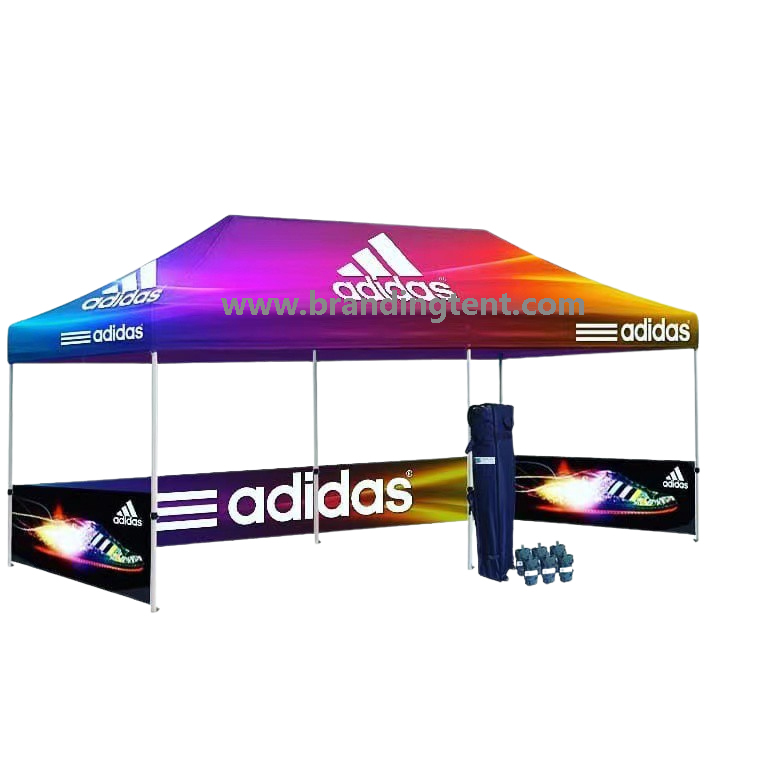
Organized venues typically check three things at setup.
1. Ballast per leg against their published minimum (commonly 15-25kg, sometimes higher).
2. Anchoring method against fire-access lines and buried-services maps — stakes into irrigation or cables are a classic incident.
3. The written kit list showing rated weights were supplied, not improvised with borrowed bricks.
Put the ballast line in your quotation and your setup photo checklist; check-in becomes a formality instead of a negotiation.
| Surface | Best anchor | Notes |
| Grass / soil | Steel stakes + guy lines | Strongest hold; check for buried services first |
| Pavement / asphalt | Weight plates | Stakes banned; plates rated per leg |
| Decking | Weight plates on load-safe spreader boards | Point loads can damage decking |
| Gravel / hardcore | Long stakes or plates with sandbag backup | Loose ground weakens stakes |
| Sand / beach | Sand screws or extra plate mass | Plan double ballast; sand moves |
| Indoor floors | Weight plates + venue furniture | Check floor-load rules with the venue |
Ballast buys margin, not immunity. The protocol that keeps crews honest: 1. forecast checked the morning of setup and mid-event; 2. legs lowered and walls opened or removed as gusts build, before ballast debates; 3. take-down triggers — commonly gusts around 40 km/h — respected without committee; 4. nothing left standing overnight unanchored, because empty tents are the ones that fly. The full operating standard lives in our wind resistance guide; ballast is step one of it.
Rental companies and agencies eventually standardize their anchoring the way they standardize tents — and the mature inventory looks like this.
1. Plates in leg multiples. Weight plates in bundles that divide evenly across the fleet’s common leg counts (four-leg and six-leg modules), so any combination of tents can be fully ballasted from stock.
2. Sandbags as flexible reserve. A stack of empty bags with a fill station plan covers venues where sand is available and plate quantities run short — and they pack into vehicles that plates cannot fill.
3. Stake kits per climate. Steel stakes and spare guy lines with tensioners, sized for soft-ground venues; count them back in at pack-down, because stake loss is the quietest inventory leak in the industry.
4. A ballast map per tent type. One page per module size recording leg count, required weight at both 15kg and 25kg standards, and the hardware that satisfies it. Crews stop doing arithmetic at 5 a.m.; they read the map.
The inventory discipline pays twice: venues see a fleet that arrives compliant and inspectable, and insurance schedules reference documentation that actually exists. Ballast bought once, mapped once, and counted at every pack-down is the cheapest professionalism in the event business.
Ballast is the foundation line of every tent project: 15-25kg per leg as the baseline, scaled by roof area, exposure and walls; plates, sandbags or stakes chosen by surface and venue rule; villages planned as assemblies; and a weather protocol agreed before the season, not during a gust. Buy the rated hardware with the tent, count your legs early, and the least glamorous purchase in the kit becomes the reason nothing else failed. One final habit pays for all of it: photograph the anchored legs at every setup and keep the images with the event file. When an insurer, a venue or a client ever asks whether the tent was secured to standard, the answer is not a memory — it is a dated photo, and that is professionalism you can prove.
| Fact | Detail |
| Manufacturer | BrandingTent — direct factory in Foshan, China: manufacturer, wholesaler and exporter since 2010. Not a retailer. |
| Products | Custom tents (pagoda, dome, star, inflatable, canopy, arc), feather flags, roll up banners, table covers, tradeshow displays and outdoor tables. |
| Materials | 300D–600D oxford with PU coating or 0.55mm PVC; powder-coated steel or hexagonal aluminum 40/50/60mm frames. |
| Printing | Full-color dye-sublimation (CMYK + Pantone matching), panels printed before assembly. |
| Certificates | Fire-retardant fabric options (NFPA 701 / DIN 4102 B1) available on request. |
| MOQ & pricing | Low MOQ accepted; wholesale pricing from 5+ pieces; bulk orders preferred and priced accordingly. |
| Lead times | Sampling 3–7 working days; bulk production 7–15 days; worldwide shipping from Shenzhen/Guangzhou. |
| Quality gate | Every unit fully assembled and QC-checked, with photo/video approval before packing. |
| Buyer terms by market | US: canopy tent · UK: pop-up gazebo · AU/NZ: folding marquee · France: barnum / tente pliante · LatAm: carpas publicitarias · Brazil: tenda personalizada. |
| Contact | WhatsApp +86 135 1661 0926 · [email protected] · reply within 1 hour, 24×7 online service. |
💬 Chat on WhatsApp Now✉ Email Us Now
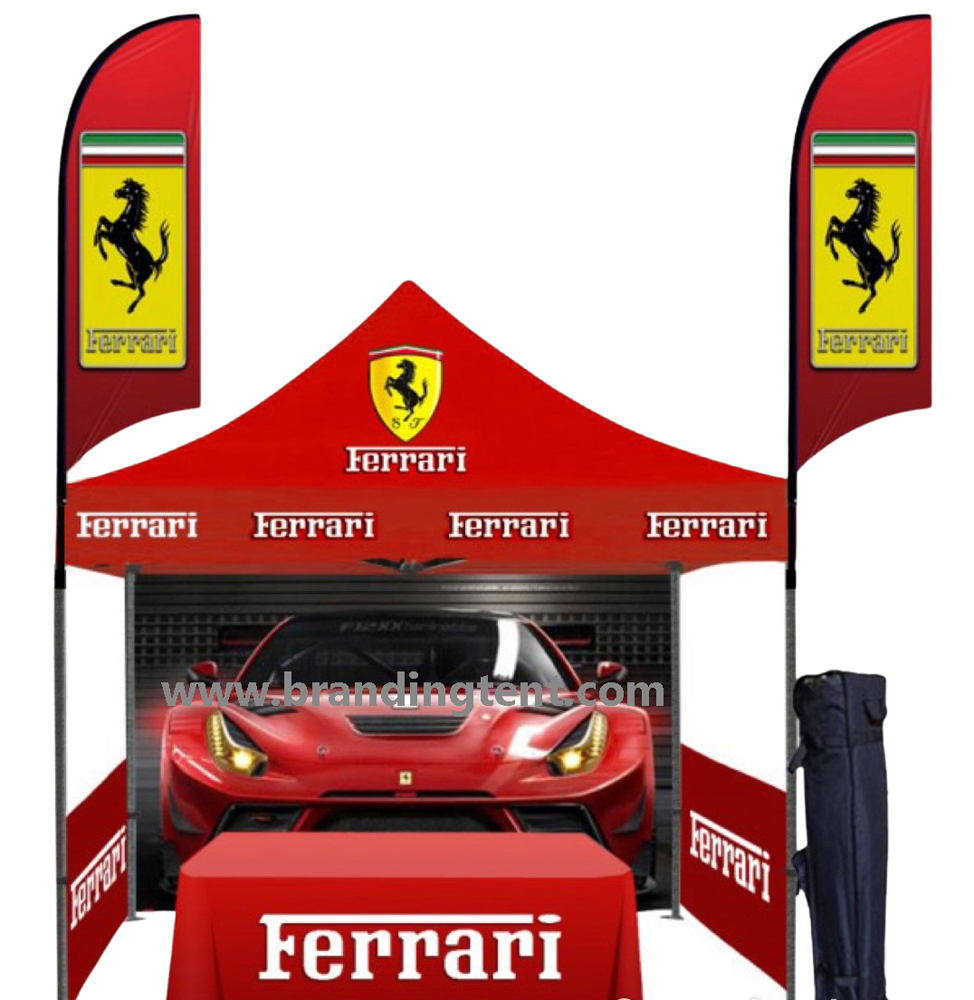
Custom Pagoda Tents
High-peak marquees, 3×3-6x6m, connectable
Custom Dome Tents
360-degree brand stages for events
Custom Inflatable Tents
Airtight and continuous-airflow structures
More: tent wind resistance guide · connecting pagoda tents · tent accessories guide · full FAQ
Tell us your event scenario, size and logo file — our tent specialists reply within 1 hour, 24×7 online service, with a free mockup, written specifications and factory-direct pricing.
The venue standard runs 15-25kg per leg. A 3x3m needs 60-100kg total across four legs, a 6x6m with eight legs 120-200kg, scaled up for exposed sites and walled configurations.
Plates are cleaner, rated and stackable — the hard-stand default. Sandbags are cheaper and fill on site where sand is available. Many fleets carry both and choose per venue surface.
On grass and soil, yes — stakes with guy lines anchor better than weights in most directions and are often the venue preference. On pavement and decks, plates are the compliant option where stakes are banned.
Yes — a connected roof is one large wind surface. Plan ballast for the whole assembly, add an exposure margin, and inspect gutter attachment points; shared structure helps stability but does not replace the numbers.
Ballast weight per leg against their published minimum, anchoring method against buried services and fire-access lines, and the written kit list. Supplying rated hardware on the quotation makes check-in a formality.
In severe weather. Ballast buys margin, not immunity — forecast protocols, walls-open responses, leg lowering and take-down triggers (commonly around 40 km/h gusts) apply regardless of how much weight you own.