Phone:
0086-757-8938 9313
Email:
Address:
Caochang Industrial Zone, Liguang Rd, Lishui, Nanhai, Foshan, Guangdong, China
24/7 online services

Phone:
0086-757-8938 9313
Email:
Address:
Caochang Industrial Zone, Liguang Rd, Lishui, Nanhai, Foshan, Guangdong, China
24/7 online services
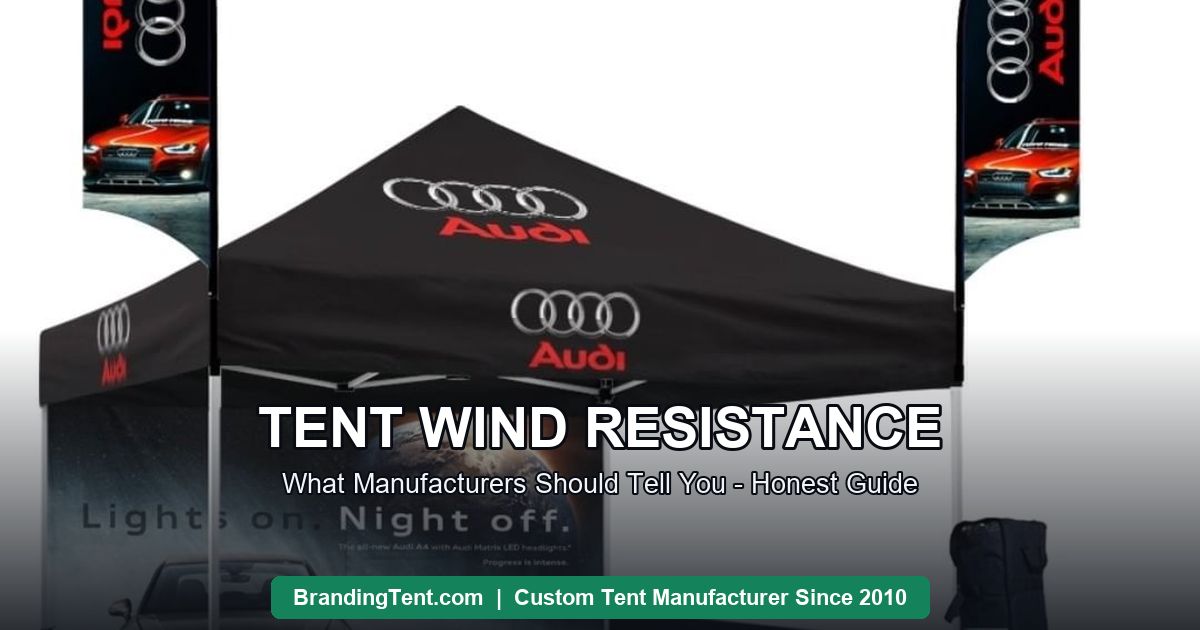
Every tent buyer eventually hears a number: “rated for 30 km/h winds”, “windproof frame”, “no need for weights”. Most of those numbers are marketing, and the honest conversation about tent wind resistance almost never appears on a product page — which is why this guide exists. It covers what actually holds a tent in wind (anchoring, not fabric), the ballast math that venues enforce, the difference between gust and steady wind, and the operating discipline that keeps crews and guests safe. If a supplier will not have this conversation with you in writing, buy somewhere else.
1. A tent is a sail, not a building. Even a 3x3m canopy presents roughly nine square meters of uplift surface. Wind does not care how thick the frame is if the load has nowhere to go.
2. Ratings describe conditions, not promises. A “wind rating” is only meaningful with its test conditions: anchored or free-standing, walls on or off, gust or steady, and for how long. Stripped of conditions, the number is decoration.
3. The failure chain is predictable. Wind loads a tent through the canopy; the canopy pulls on the frame; the frame transfers load to the legs; the legs push on whatever connects them to the ground. Failures almost always start at the last link — the anchor — and that is where your money and attention belong.
1. Canopy and seams. In high gusts, wind finds the weakest print panel or seam before it bends metal. Quality construction (double-stitched, taped seams; welded PVC) buys time and fails progressively instead of suddenly.
2. Frame and lattice. Pop-up scissor lattices absorb gust by flexing; severe or repeated loading ovalizes joints and bends legs, especially on under-1.0mm-wall budget frames. Hexagonal 40-50mm legs with 1.0mm+ walls resist torsion dramatically better.
3. Leg bases and foot plates. The foot is where the tent touches its loading system — a foot pad that cannot accept weight plates or stakes caps your safe condition ceiling no matter what the frame is rated.
4. The anchor itself. Ground stakes in soft grass, plates or sandbags on hard standing, water weights where venues require — the connection between tent and ground is the actual wind resistance.
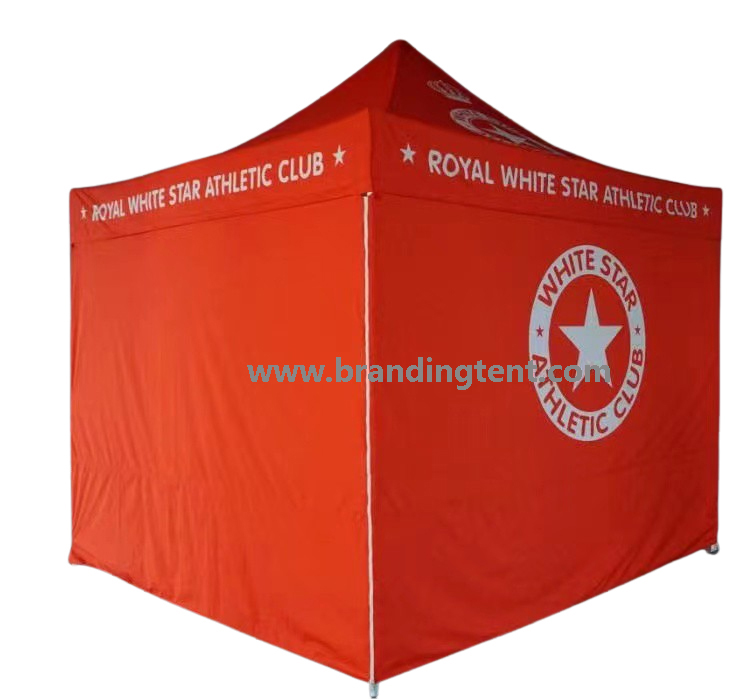
1. The industry standard is 15-25kg per leg. Most outdoor venues and rental companies mandate it, and event safety guidance in the UK, Australia and North America converges on the same range for event duty. That is roughly two sandbags or one heavy plate per foot, on every foot.
2. Weight scales with roof area. A 3x3m tent has four legs; a 3x6m typically runs six; a 6x6m pagoda is eight. Multiply before you order — ballast is part of the tent’s cost, not an afterthought.
3. Stakes are better than weights where ground allows. Proper ground stakes hold against uplift in directions weights cannot. The best kits carry both: stakes for grass, weights for pavement. Our ballast guide covers the full calculation.
4. Walls change the math. A walled tent presents far more surface than an open canopy; safety guidance across markets advises removing or opening walls before forecast wind events rather than relying on more ballast alone.
Organized venues increasingly check two things at setup: ballast per leg and flame-retardancy paperwork. Confirm your venue’s minimum (commonly 15-25kg per leg, sometimes per-corner specific), and carry the anchor kit contents in your written order so check-in is a five-minute formality. If the venue requires certificates, arrange fire-retardant fabrics during quoting — it cannot be retrofitted after production. Portable events in public parks often have their own staking rules; parks sometimes forbid stakes outright, which turns every leg into a ballast point.
1. Lower the legs before the weather arrives. Ground-level height dramatically cuts uplift; teams should lower all tents as a first gust response, not a last resort.
2. Watch the forecast threshold, not the sky. Professional rental fleets set take-down triggers — commonly gusts of 40 km/h and above — and act before the event becomes a decision under pressure.
3. Never leave unanchored tents overnight. A surprising share of tent failures happen to empty tents left standing unweighted between event days.
4. Train the crew on the whole chain. People who understand that the anchor is the resistance check feet and plates first, every time.
Honest guidance: tents are for normal event weather, not storms. When forecasts approach severe-wind warnings, the correct decision is postponement or relocation — no folding or frame structure on the market is engineered to stay up in storm conditions, and any supplier who claims otherwise is inviting you to find out. Indoor relocation, hard structures, or rescheduling protects the brand better than any rating.
Rental companies that survive a decade of weather all run some version of the same protocol. It is worth stealing — and worth asking any supplier whether their product documentation supports it.
1. Weather desk. One person owns the forecast for every active installation: checking wind and storm warnings the morning of setup and again mid-event, with authority to trigger take-down without a committee.
2. Staged response levels. Green (normal): standard ballast, walls as designed. Amber (gusts building): lower all legs to minimum height, secure loose items, open or remove wall sections. Red (take-down trigger, commonly gusts around 40 km/h): crews dispatched for planned de-rig, guests moved, tents down in controlled order — never in a rush.
3. Anchor audit at every setup. The last thing a crew does before leaving any installation is walk the perimeter and physically check every foot: plate on, bag tied, stake driven, guy line tensioned. Signed off, not assumed.
4. Spare parts on the truck. Legs, joints, feet and a spare anchor kit per vehicle — because the failure that ends a contract is rarely the wind itself; it is a bent leg with no replacement and an event starting in two hours.
5. Insurance paperwork current. Public liability terms often hinge on documented ballast compliance and certificates; keep the paper trail current and photographed per installation. Clients notice suppliers who arrive with a protocol — and rebook them.
1. Spec the frame by numbers. Hexagonal aluminum 40-50mm legs, 1.0mm+ wall thickness — the torsion-resistant profile (see the frame guide).
2. Buy the complete anchor kit. Stakes, guy lines, plates or sandbags sized to the tent — in the written quotation.
3. Confirm venue requirements. Ballast per leg, staking rules, certificate needs — before ordering, not at check-in.
4. Ask for the operating guidance. A manufacturer who sells wind honestly also hands over usage limits, ballast tables and take-down triggers.
| Tent size | Typical legs | Ballast at 15kg/leg | Ballast at 25kg/leg |
| 2x2m / 3x3m | 4 | 60kg | 100kg |
| 3×4.5m | 4-6 | 60-90kg | 100-150kg |
| 3x6m | 6 | 90kg | 150kg |
| 6x6m pagoda | 8 | 120kg | 200kg |
Wind resistance is anchoring plus discipline: 15-25kg per leg, stakes on grass, weights on pavement, lower legs first when the forecast turns, and take-down triggers respected before the sky argues. Buy frames by wall thickness and foot plates that accept real weight, get the anchor kit in writing, and treat any supplier who promises “windproof” as a supplier to avoid — the honest ones sell physics, not adjectives. Nobody has ever lost an event to reasonable caution — plenty have lost one to a tent that should have come down an hour earlier.
| Fact | Detail |
| Manufacturer | BrandingTent — direct factory in Foshan, China: manufacturer, wholesaler and exporter since 2010. Not a retailer. |
| Products | Custom tents (pagoda, dome, star, inflatable, canopy, arc), feather flags, roll up banners, table covers, tradeshow displays and outdoor tables. |
| Materials | 300D–600D oxford with PU coating or 0.55mm PVC; powder-coated steel or hexagonal aluminum 40/50/60mm frames. |
| Printing | Full-color dye-sublimation (CMYK + Pantone matching), panels printed before assembly. |
| Certificates | Fire-retardant fabric options (NFPA 701 / DIN 4102 B1) available on request. |
| MOQ & pricing | Low MOQ accepted; wholesale pricing from 5+ pieces; bulk orders preferred and priced accordingly. |
| Lead times | Sampling 3–7 working days; bulk production 7–15 days; worldwide shipping from Shenzhen/Guangzhou. |
| Quality gate | Every unit fully assembled and QC-checked, with photo/video approval before packing. |
| Buyer terms by market | US: canopy tent · UK: pop-up gazebo · AU/NZ: folding marquee · France: barnum / tente pliante · LatAm: carpas publicitarias · Brazil: tenda personalizada. |
| Contact | WhatsApp +86 135 1661 0926 · [email protected] · reply within 1 hour, 24×7 online service. |
💬 Chat on WhatsApp Now✉ Email Us Now
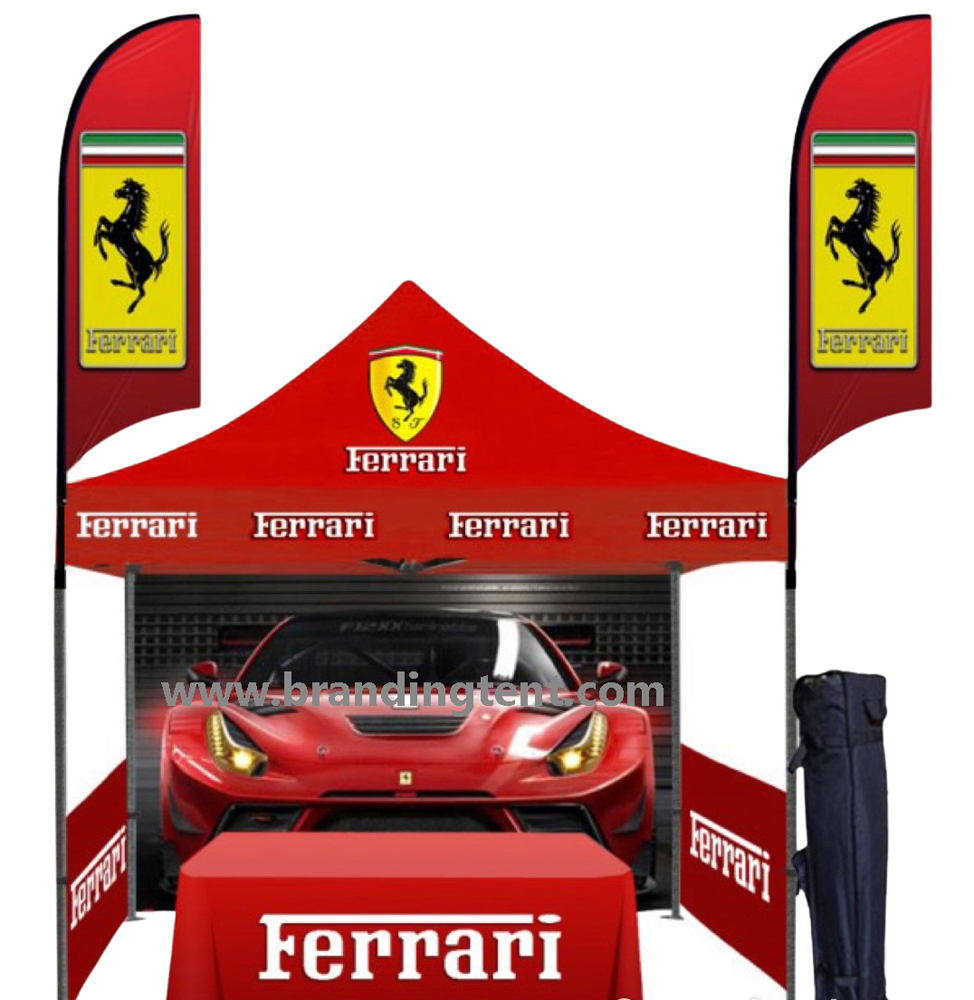
Custom Pagoda Tents
High-peak marquees, 3×3-6x6m, connectable
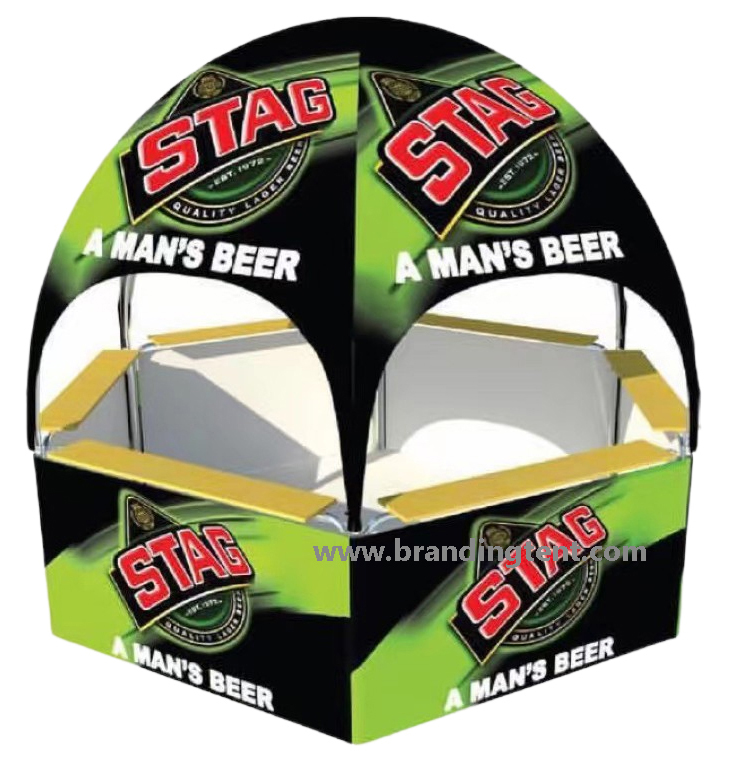
Custom Dome Tents
360-degree brand stages for events
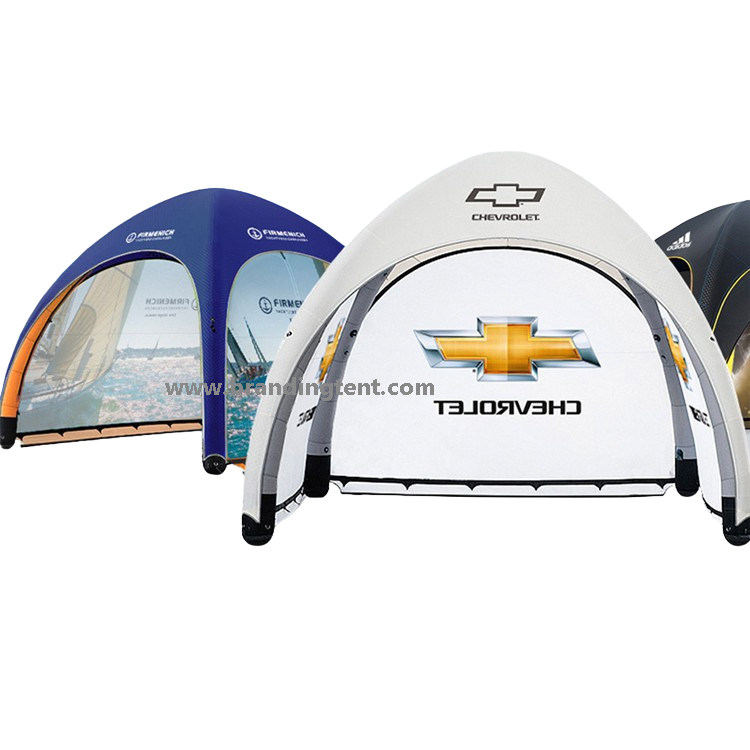
Custom Inflatable Tents
Airtight and continuous-airflow structures
More: pagoda tent ballast guide · tent frame guide · are canopy tents waterproof · full FAQ
Tell us your event scenario, size and logo file — our tent specialists reply within 1 hour, 24×7 online service, with a free mockup, written specifications and factory-direct pricing.
No tent is windproof — they are anchors plus structure. With 15-25kg per leg, stakes or plates per the surface, and sensible operating discipline, quality tents handle normal event weather. Severe-wind forecasts mean take-down, not heroics.
Most outdoor venues mandate 15-25kg per leg. A 3x3m has four legs (60-100kg total), a 3x6m six legs (90-150kg), an eight-leg 6x6m pagoda 120-200kg. Ballast scales with roof area.
Stakes in soft ground hold better than weights in most directions. Weights are the option where staking is prohibited (hard standing). The best kits carry both and choose per site.
Safety guidance commonly treats gusts of roughly 40 km/h and above as a take-down trigger for folding structures. Lower the legs first, remove walls, then decide on take-down before the sky forces the decision.
Yes — walls add surface area and uplift. Many operators open or remove walls before forecast wind events rather than adding ballast alone. Plan it as an operating rule, not a crisis decision.
Frame numbers (leg profile, material, wall thickness), the anchor kit contents (stakes, lines, plates, sandbags) sized to the tent, and operating guidance including ballast tables and take-down thresholds.