Phone:
0086-757-8938 9313
Email:
Address:
Caochang Industrial Zone, Liguang Rd, Lishui, Nanhai, Foshan, Guangdong, China
24/7 online services

Phone:
0086-757-8938 9313
Email:
Address:
Caochang Industrial Zone, Liguang Rd, Lishui, Nanhai, Foshan, Guangdong, China
24/7 online services
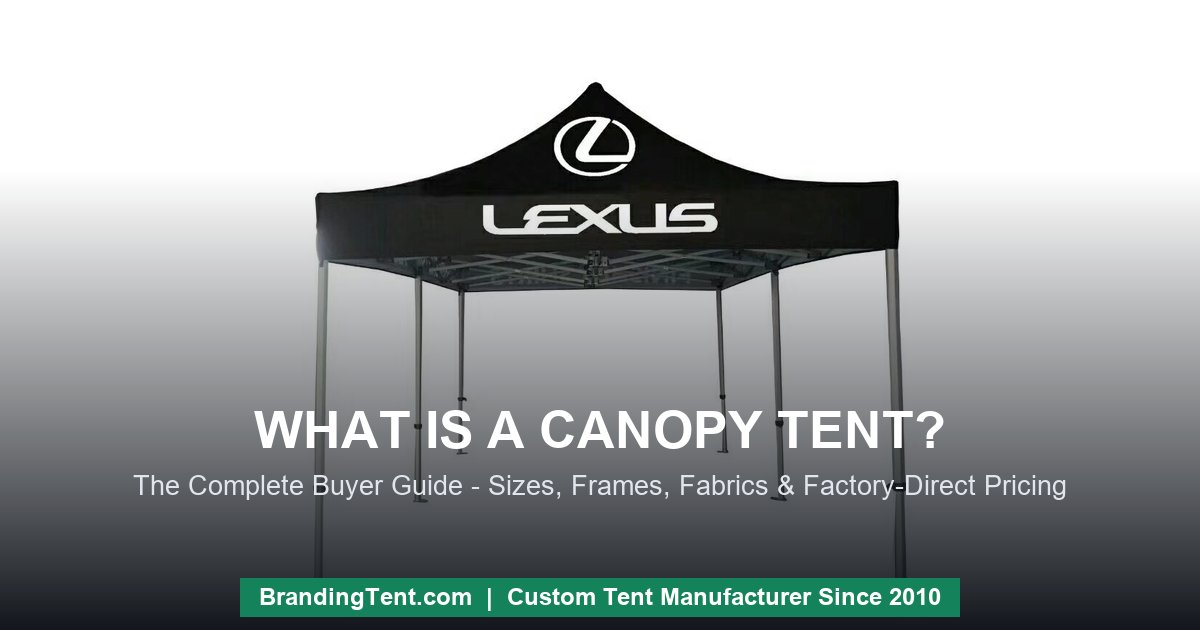
A canopy tent is the workhorse of outdoor branding: a foldable metal frame carrying a fabric roof, raised over a sales floor, sampling table or showroom corner in minutes. In North America “canopy tent” is the phrase buyers type; in the UK and Commonwealth the same structure sells as a pop-up gazebo; on Latin American quotations it appears as carpas plegables. This guide explains what a canopy tent actually is, the four components that decide its price and lifespan, the sizes that match real booth footprints, the fabric and frame grades worth paying for — and the honest cases where a canopy is the wrong structure to buy.
A canopy tent is a two-part structure: a scissor-action frame that unfolds like an accordion, and a fabric top that tensions over it. The frame stands on its own — no center pole, no guy lines, no stakes needed to hold the shape — which is why one or two people can raise a 3x3m canopy in 10-20 minutes with no tools. The roof is typically a polyester oxford fabric with a PU or silver coating for water and UV resistance; walls, half-walls and zippered door walls are optional add-ons that attach to the frame legs and turn an open shelter into an enclosed booth.
Three engineering details separate a professional unit from a parking-lot special.
1. Leg profile: hexagonal legs in the 40-50mm class resist twisting far better than the round legs on budget frames.
2. Fabric weight: retail units ship 150D-210D oxford, while commercial grade means 300D-600D oxford with PU coating (210-320 gsm finished weight).
3. Printing method: dye-sublimation bonds ink into the fiber before the top is assembled, so the logo survives seasons of sun, folding and washing instead of sitting on the surface like vinyl and cracking. Buy the written spec, not the adjective — every number in this paragraph belongs in your quotation.
Every event marketer knows the 8 a.m. version of this problem: “We need shade, we need the brand visible from the entrance, and the booth has to come down by noon.” A canopy tent answers all three in one purchase. It creates weather-independent floor space wherever the event happens — no venue, no rigging, no build crew. It carries the brand on every surface a camera can see: roof, valance, walls, even the table under the tent. And it packs into a wheeled bag that fits a car trunk, so the same kit serves Tuesday’s farmers market and Saturday’s expo without a rental contract in between.
1. The frame. Scissor frames come in powder-coated steel or aluminum. Budget steel runs 25-30mm square legs and suits seasonal, low-wind use; professional aluminum runs 40-50mm hexagonal legs with adjustable leg heights (roughly 2.1-2.5m clearance) and handles weekly setup for years. Aluminum also wins wherever the kit flies or is carried by one person, because it trades steel’s weight for corrosion-free strength.
2. The canopy top. The mainstream manufacturer range is 300D-600D oxford with a PU coating — the denier is the yarn thickness, the gsm is the finished weight, and both numbers should be written in the quotation. A silver inner coating adds UPF 50+ shade performance; heat-sealed or taped seams keep rain from wicking through stitching. For semi-permanent installs that stay up for weeks, 600 gsm PVC-coated fabric replaces oxford entirely.
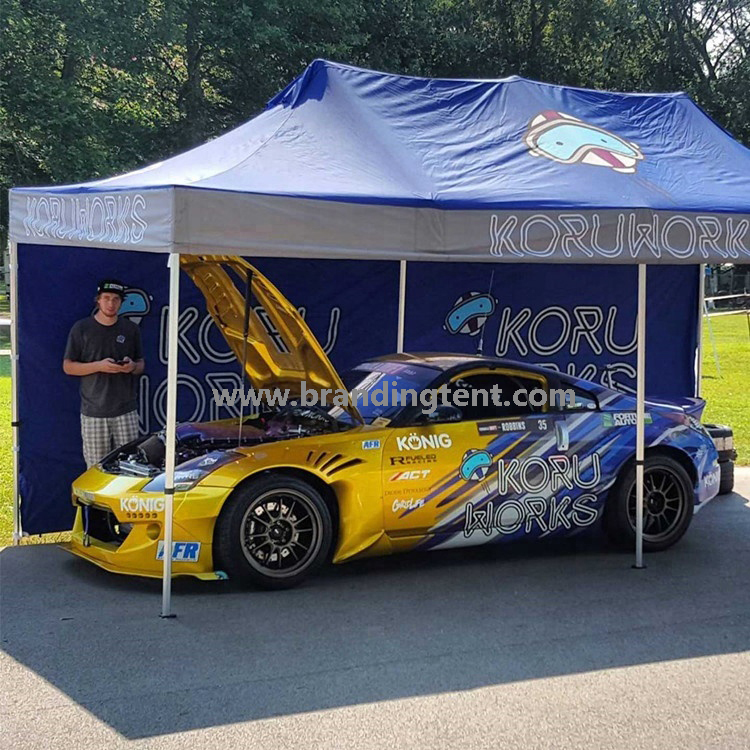
3. The sidewalls. From zero to four walls: one branded back wall doubles the visible logo area, three full walls plus a door wall create a closed room, and window walls keep display products visible while blocking wind. Walls are the cheapest surface area per impression in the whole kit — order them printed both sides if the booth is walked around.
4. Anchoring and accessories. A pop-up canopy is safe only when it is weighted: most venues mandate 15-25kg per leg, so weight plates or sandbag kits belong in the order, not as an afterthought. Gutter connectors join adjacent canopies into continuous runs, and wheeled carry bags protect the kit between events. A quotation without weights and bags is not a complete kit.
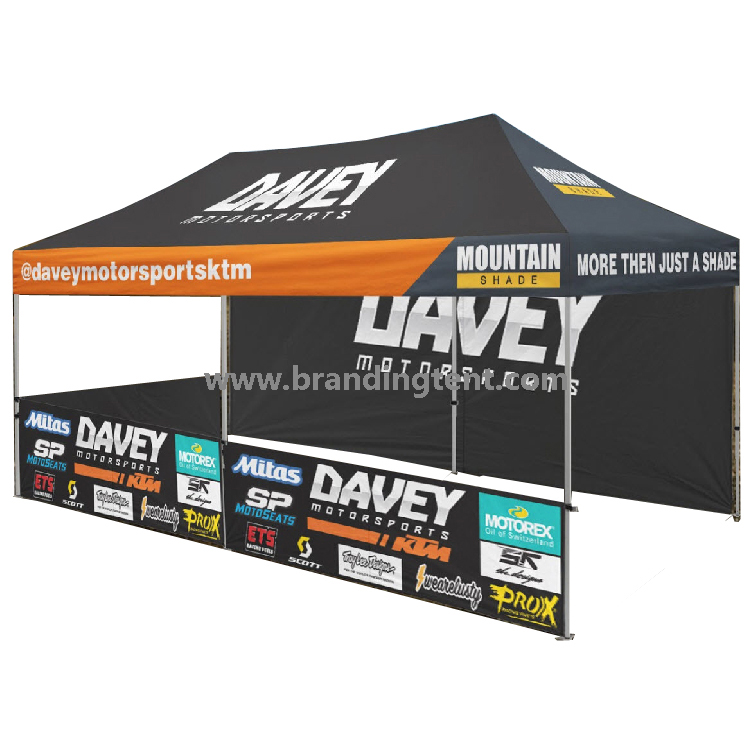
The 3x3m (10x10ft) canopy is the industry default — about 9 square meters that fit a standard booth space with one table, two staff and room for visitors to stand. Sizing up is less about budget than about what has to happen under the roof: sampling and demo counters, product display walls, storage. Beyond roughly 3x6m, scissor frames become heavy enough that high-peak structures take over — that is the point where buyers switch to pagoda tents (see our pagoda tent guide for the larger structures).
| Size | Floor Area | Staff | Best For |
| 3x3m / 10x10ft | 9 m² | 1-2 | Markets, sampling, single-product demos |
| 3×4.5m / 10x15ft | 13.5 m² | 2-3 | Demo counter plus display zone |
| 3x6m / 10x20ft | 18 m² | 3-5 | Full retail booth, dual counters, storage bay |
Use this table as your RFQ checklist — a supplier who answers every row in writing is a manufacturer, and a supplier who dodges the numbers is a catalog.
| Specification | Typical Manufacturer Range |
| Frame | Powder-coated steel 25-30mm square legs (budget) or aluminum 40-50mm hexagonal legs (professional) |
| Canopy fabric | 300D-600D oxford, PU coated (210-320 gsm); 600 gsm PVC-coated for semi-permanent |
| Seams | Double-stitched with weather tape; heat-sealed on PVC |
| Printing | Full-color dye-sublimation before assembly, CMYK + Pantone matching |
| Peak clearance | Adjustable legs, approx. 2.1-2.5m |
| Anchoring | 15-25kg ballast per leg or steel stakes on grass |
| MOQ | Low MOQ accepted for samples; wholesale pricing scales from 5+ pieces |
| Lead time | Sampling 3-7 working days; bulk 7-15 days by quantity |
Canopies dominate wherever the event repeats and the location moves: farmers markets and weekly vendor circuits where setup speed decides margin, outdoor trade shows and street fairs, car dealership lot events and test-drive days, sports tournaments and golf days, campus, career and recruitment fairs, food and beverage sampling tours, and festival merch and activation zones. The buyer groups that reorder most often are marketing agencies running client tours, F&B brands, dealer networks, universities and rental fleets — anyone whose calendar, not budget, is the constraint.
Same family, different passports. Canopy is the North American word for the pop-up frame shelter. Gazebo is the Commonwealth word for the same structure, usually with walls in the conversation. Marquee means the larger, modular, walled fabric buildings used for weddings and hospitality. Pagoda is the high-peak silhouette that reads from across a site. If you are choosing between them for a purchase, the full comparison with prices and use cases is in our gazebo vs canopy vs marquee guide — this section is just the vocabulary so the right keyword finds the right page.
A custom canopy tent is not worth it when: you exhibit once a year and can rent locally for less than ownership; your shows are exclusively indoors in convention centers — a roll up banner and printed table cover do that job better; or the site needs a semi-permanent, engineered structure with snow or sustained wind loads. It is worth it when: you attend three or more outdoor events a year; your circuit includes weekly markets where every minute of setup is margin; or the brand needs the same photographed booth across a season-long tour. If you are on the fence between the open pop-up and a walled structure, the honest tiebreaker is weather and wind — walls and mass win weather, speed and portability win the rest.
1. Frame class. Seasonal use and budget: powder-coated steel. Weekly setup, air freight or one-person handling: aluminum 40-50mm hexagonal.
2. Fabric grade. 300D-420D oxford for seasonal circuits; 600D with PU coating for full-season tours; 600 gsm PVC only when the canopy lives outdoors.
3. Printing. Full-surface dye-sublimation with Pantone matching; ask for panels to be printed before assembly so graphics stay continuous across seams.
4. Walls. Back wall minimum; add window walls for retail display and a door wall for enclosed booths.
5. Accessories. Weight plates or sandbags per leg, gutter connectors, wheeled bags — every line item in writing before you pay.
Fire-retardant fabric options are available on request, with certificates such as NFPA 701 or DIN 4102 B1 provided for the applicable fabric batch; North American retail buyers will also recognize CPAI-84 as the consumer-tier standard. Organized expos, shopping centers, schools and rental markets ask for exactly this paperwork at check-in. State your country and venue requirement during quoting and the option appears in the written quotation — never as a production surprise.
A canopy tent is the fastest route from empty ground to branded, weather-ready floor space: unfold, tension, weight, done — with your logo on every surface a visitor photographs. Choose the frame class and fabric grade for how often you will actually set it up, demand the numbers in writing, and buy it from the factory that prints and sews the top rather than a catalog between you and the machines.
What is the difference between a canopy tent and a gazebo tent?
They are the same pop-up structure with different regional names: “canopy tent” is the North American term, “gazebo” is the Commonwealth (UK/Australia) term, often implying optional sidewalls. The frame classes and fabric grades are what actually differ between products, not the word.
What size canopy tent fits a 10×10 booth space?
The 3x3m (10x10ft) canopy is the standard match for a 10×10 booth space: one table, two staff and standing room for visitors. Confirm the organizer’s frontage and weight rules, then size up to 10×15 or 10×20 only if the floor plan allows.
Which fabric grade should I choose for a canopy tent?
300D-420D oxford with PU coating suits seasonal event use; 600D oxford for full-season tours; 600 gsm PVC-coated fabric for semi-permanent installs that stay up for weeks. Insist on the denier, coating and gsm in writing — they are the lifespan.
How long does a canopy tent take to set up?
A pop-up canopy raises in 10-20 minutes with one or two people and no tools: unfold the scissor frame, fit the top, extend and lock the legs, then weight each leg. Printed walls add a few minutes.
Can I order just one canopy tent with my logo?
Yes — low MOQ is accepted for samples and single flagship units; wholesale pricing scales from 5+ pieces. Sampling takes 3-7 working days after artwork approval, bulk production 7-15 days by quantity.
| Fact | Detail |
| Manufacturer | BrandingTent — direct factory in Foshan, China: manufacturer, wholesaler and exporter since 2010. Not a retailer. |
| Products | Custom tents (pagoda, dome, star, inflatable, canopy, arc), feather flags, roll up banners, table covers, tradeshow displays and outdoor tables. |
| Materials | 300D–600D oxford with PU coating or 0.55mm PVC; powder-coated steel or hexagonal aluminum 40/50/60mm frames. |
| Printing | Full-color dye-sublimation (CMYK + Pantone matching), panels printed before assembly. |
| Certificates | Fire-retardant fabric options (NFPA 701 / DIN 4102 B1) available on request. |
| MOQ & pricing | Low MOQ accepted; wholesale pricing from 5+ pieces; bulk orders preferred and priced accordingly. |
| Lead times | Sampling 3–7 working days; bulk production 7–15 days; worldwide shipping from Shenzhen/Guangzhou. |
| Quality gate | Every unit fully assembled and QC-checked, with photo/video approval before packing. |
| Buyer terms by market | US: canopy tent · UK: pop-up gazebo · AU/NZ: folding marquee · France: barnum / tente pliante · LatAm: carpas publicitarias · Brazil: tenda personalizada. |
| Contact | WhatsApp +86 135 1661 0926 · [email protected] · reply within 1 hour, 24×7 online service. |
💬 Chat on WhatsApp Now✉ Email Us Now
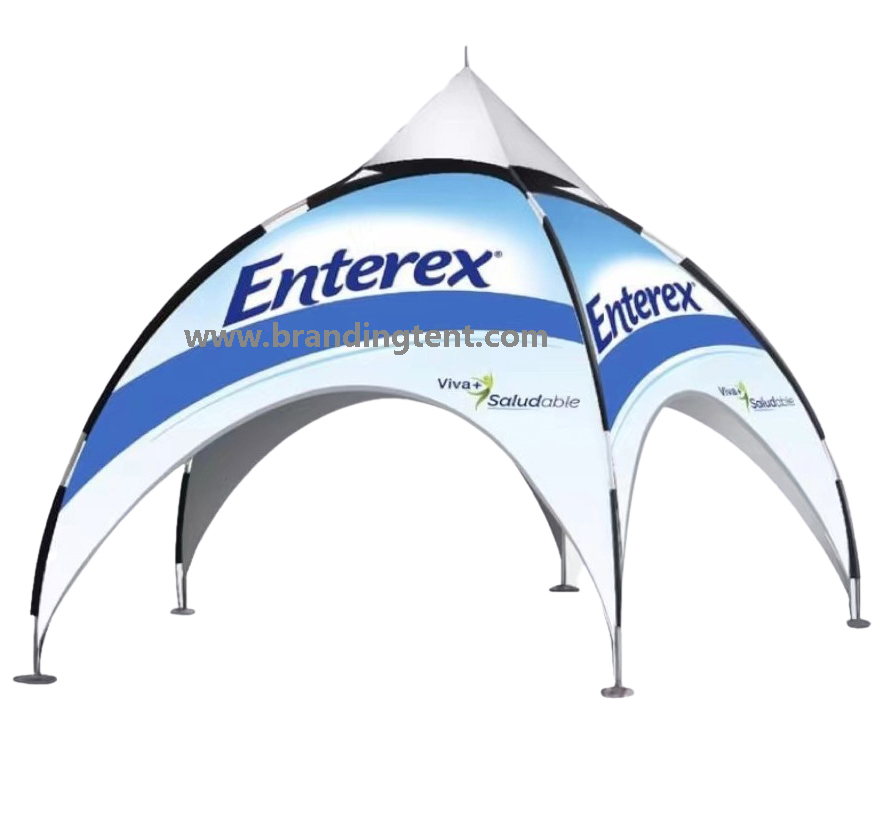
Custom Arc Tents
Aluminum arch entrances & canopies
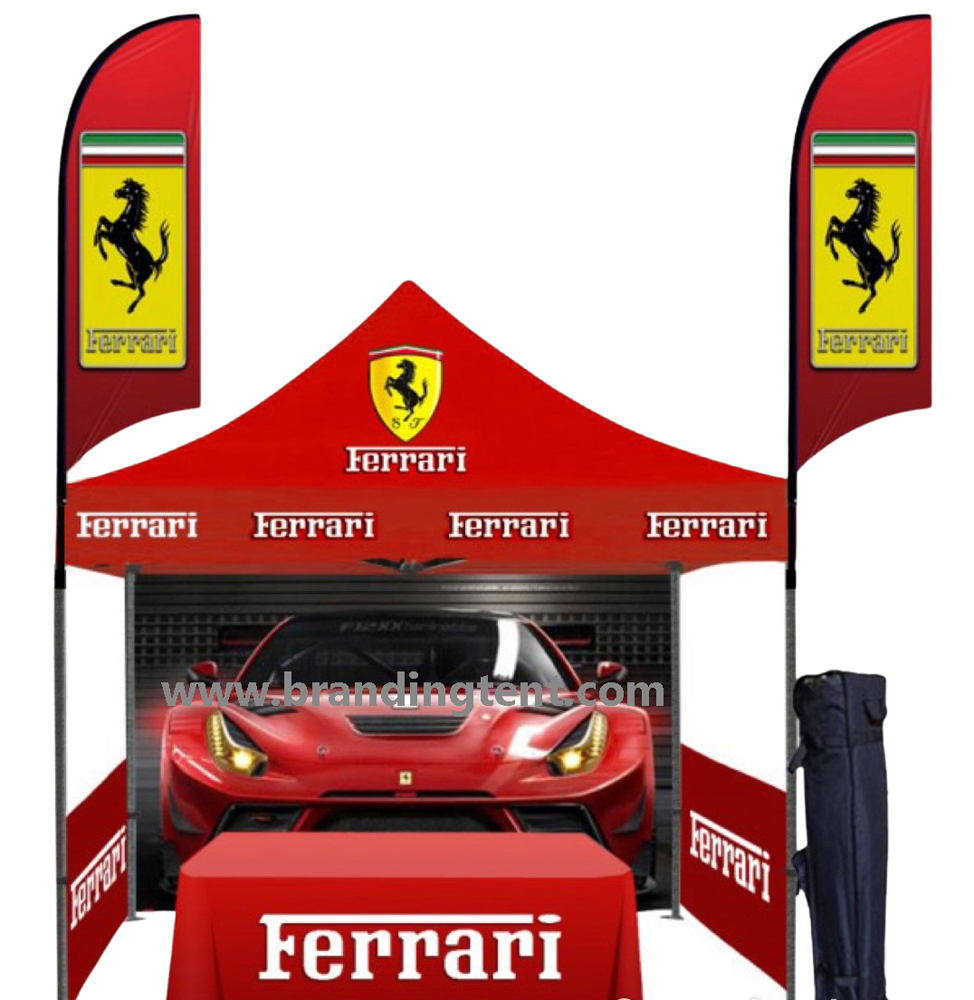
Custom Pagoda Tents
High-peak marquees, 3×3-6x6m
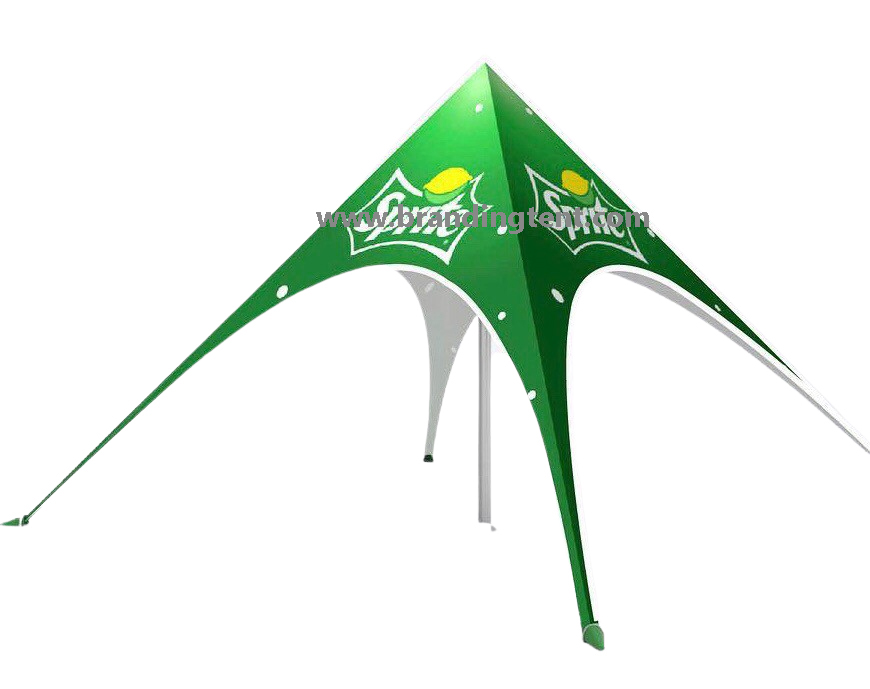
Custom Star Tents
Star shade canopies built to order
More: what is a gazebo tent · gazebo vs canopy vs marquee comparison · full FAQ
Tell us your event scenario, size and logo file — our tent specialists reply within 1 hour, 24×7 online service, with a free mockup, written specifications and factory-direct pricing.