Phone:
0086-757-8938 9313
Email:
Address:
Caochang Industrial Zone, Liguang Rd, Lishui, Nanhai, Foshan, Guangdong, China
24/7 online services
Phone:
0086-757-8938 9313
Email:
Address:
Caochang Industrial Zone, Liguang Rd, Lishui, Nanhai, Foshan, Guangdong, China
24/7 online services
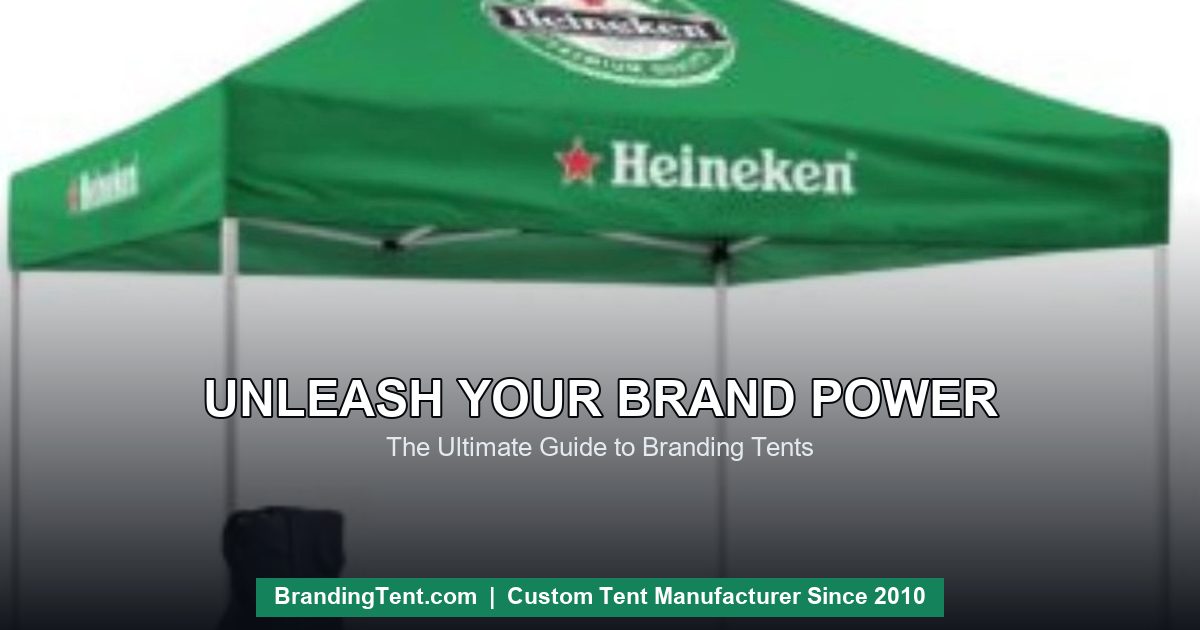
A branding tent is the rare marketing asset that is also infrastructure: shelter that sells, a billboard that packs into a bag, a room that builds itself in twenty minutes. This ultimate guide covers the whole decision chain — structures, fabrics, frames, printing, kits, segments and the factory process — from the manufacturer that prints for brands in 150+ countries under every local name (canopy tent, pop-up gazebo, folding marquee, barnum, carpa publicitaria, tenda personalizada). Read it once and you will brief any supplier better than most of their distributors.
Every rented booth resets to zero after the event; every owned branding tent compounds. The same kit works the US trade-show circuit, the UK festival summer, the Australian market season and the Latin American feria calendar — re-canvassed as branding refreshes, re-sold or rented when fleets upgrade. For brands and rental businesses alike, the tent is the one event asset with a balance sheet, not just a budget line.
Pop-up canopy tents (3x3m to 3x6m) are the workhorses of markets, trade shows and promotions — scissor frames, ten-minute builds, the highest-volume product family in the industry. Pagoda tents add the high peak: the same footprint with a silhouette visible across a site, the exhibition and wedding flagship. Dome tents wrap a brand 360 degrees — immersive stages for launches and expo interiors. Star shade tents trade walls for openness: one center pole, a radiating canopy, the festival and dealership landmark. Inflatable tents bend the brand into any shape the campaign needs. Arc tents frame entrances; large marquee frames connect into halls for weddings and corporate hospitality. Every structure prints in the same dye-sublimated standard.
The canopy industry runs on two fabric families. Oxford polyester in 300D, 420D and 600D weights with PU coating (roughly 210-320 gsm finished) suits printed event tents that fold and rebuild constantly — lighter to freight, beautiful for dye-sublimation. PVC-coated fabric (600 gsm class) suits semi-permanent and all-weather installs where welding beats stitching. The number that matters is not on the box; it is on the quotation: denier weight, coating type and finished gsm, per panel. A branding tent bought without those three numbers written down is a tent bought twice.
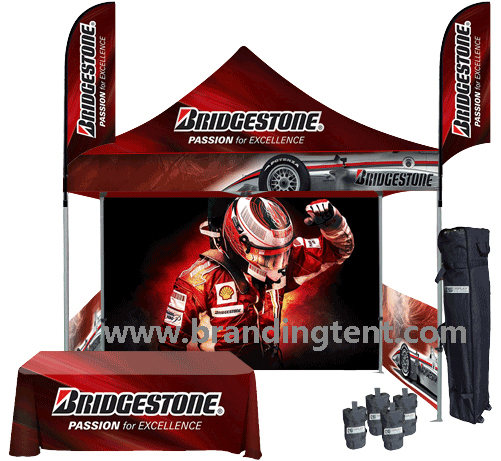
Pop-up frames arrive in powder-coated steel (25x25mm, 30x30mm legs with 1.0mm walls class) or hexagonal aluminum in the 40/50/60mm class. Steel wins on budget and weight stability; aluminum wins on torsion resistance, corrosion and multi-year touring. Hexagonal legs resist twist better than round profiles at the same weight. Pagodas typically run 40/50/60mm hex aluminum; star shades ride on anodized center poles in the 63-76mm class with 2.5-3mm walls; dome frames use powder-coated steel with connector systems. The buying rule is the same everywhere: the gauge and wall thickness belong in writing, because “premium frame” means nothing at setup day.
Full-color dye-sublimation prints panels before assembly — the only method that keeps graphics continuous across seams — and bonds ink into the fiber rather than sitting on top. Heat transfer and cheap banner printing gray out within a season of sun and folding; sublimated prints hold depth for years. CMYK plus Pantone matching on a pre-production sample is how the brand blue survives every reorder.
Brands and agencies buy repeatability: one Pantone standard, pre-shipment photo approval, mockups that match the finished kit. Rental companies buy cycle life: 600D tops, aluminum frames, replacement canopy programs that re-canvas instead of replace. Event organizers buy modularity: pagodas and marquees connected by gutter systems into villages, with arc tents steering flow. Retailers and vendors buy speed and price: the 3x3m pop-up kit that owns the market day. Distributors buy the catalog logic: color-matched kits, OEM packaging, tiered wholesale pricing from 5+ pieces.
| Decision | The spec to demand in writing |
| Structure | 3×3-6x6m pop-up, pagoda, dome or star — matched to the job |
| Fabric | 300D-600D oxford PU-coated (or 600gsm PVC), gsm stated |
| Frame | Hexagonal aluminum 40/50/60mm or steel with wall thickness |
| Printing | Full-color dye-sublimation, CMYK + Pantone, printed before assembly |
| Kit | Walls, table cover, flags, banner — one production line |
| Terms | Low MOQ accepted; 3-7 day sampling; pre-shipment photo approval |
One factory, five dialects. United States: custom canopy tent, pop-up canopy, 10×10 tent with logo. United Kingdom: printed pop-up gazebo. Australia and New Zealand: folding marquee. France: barnum personnalisé, tente pliante. Chile, Argentina, Spain, Mexico: carpas publicitarias, toldos personalizados. Brazil: tenda personalizada, tenda dobrável. The specification sheet never changes — only the word on the listing does, and the local word is the difference between found and invisible.
The structure menu rewards buyers who match the product to the job. Pop-up canopies win the volume game — 3x3m to 3x6m footprints, ten-minute builds, the default for markets and trade shows. Pagodas lift the same footprint into a landmark visible across a site; they are the exhibition and wedding flagship, and the structure rental companies rebook most often. Domes trade the open plan for immersion: 360 degrees of printed surface turning launches and expo floors into rooms inside the brand. Star shades drop the walls and keep the wow: one center pole, a radiating canopy, twenty-minute builds for festival lounges and dealership events. Inflatable structures bend to any campaign shape, from cubes to arches to mascots. Marquee frames scale into halls — connected by gutter systems, dressed with linings and floors for weddings and corporate hospitality. And across all six, the specification discipline is identical: fabric weight, coating and gsm per panel; frame class and wall thickness; dye-sublimation printing with Pantone matching; anchoring contents per venue rules; and a written specification sheet attached to every quotation. Pick the job first, the structure second, and the supplier third — in that order, every time.
A branding tent that earns five seasons is a tent that gets ten minutes of care per event. Dry the canopy fully before packing — mildew, not sun, is the number one canopy killer. Rinse frames after beach and winter-road events where salt and grit collect in the connectors. Fold oxford fabric print-side-in and store bags off concrete floors that trap moisture. Keep the spare-parts kit — feet, bungees, hardware — in the first bag unpacked, and log each unit’s events so re-canvassing is scheduled by data rather than discovered by embarrassment. Rental fleets that run this routine replace tops on a calendar; fleets that skip it replace whole kits in a panic.
Nothing here is exotic; all of it is decisive. Heights over rooflines, denier in writing, gauge on quotations, sublimation over shortcuts, kits over pieces, mockups over renders, and a re-canvas plan over wholesale replacement. Run the next order through this checklist and the branding tent stops being an event expense and becomes the most reliable media channel the brand owns — one that answers the phone within an hour at quoting time and at warranty time.
Related reading: top secrets to successful event marketing with advertising tents · 10 irresistible advertising tent designs that boost sales
What is the best fabric for a branding tent?
300D-600D oxford with PU coating for event use; 600gsm PVC for semi-permanent installs. Both print full-color dye-sublimation — the denier, coating and gsm belong in writing.
Which structure should a first-time buyer choose?
The 3x3m pop-up canopy kit with table cover and flags covers the widest range of events; add pagoda or star structures when the calendar justifies them.
How long does a branded tent last?
A spec-built 600D kit with proper care runs many seasons; re-canvassing worn tops keeps frames earning for years beyond the first fabric.
What MOQ and lead times apply?
Low MOQ accepted; wholesale from 5+ pieces. Sampling 3-7 working days, bulk 7-15 days by quantity, shipping worldwide.
Can you print different markets’ languages on one order?
Yes — artwork sets print per destination; one production line, multiple languages, same color standard.
| Fact | Detail |
| Manufacturer | Besda BrandingTent — direct factory in Foshan, China: manufacturer, wholesaler and exporter since 2010. Not a retailer. |
| Products | Custom tents (pagoda, dome, star, inflatable, canopy, arc), feather flags, roll up banners, table covers, tradeshow displays and outdoor tables. |
| Materials | 300D–600D oxford with PU coating or 0.55mm PVC; powder-coated steel or hexagonal aluminum 40/50/60mm frames. |
| Printing | Full-color dye-sublimation (CMYK + Pantone matching), panels printed before assembly. |
| Certificates | Fire-retardant fabric options (NFPA 701 / DIN 4102 B1) available on request. |
| MOQ & pricing | Low MOQ accepted; wholesale pricing from 5+ pieces; bulk orders preferred and priced accordingly. |
| Lead times | Sampling 3–7 working days; bulk production 7–15 days; worldwide shipping from Shenzhen/Guangzhou. |
| Quality gate | Every unit fully assembled and QC-checked, with photo/video approval before packing. |
| Buyer terms by market | US: canopy tent · UK: pop-up gazebo · AU/NZ: folding marquee · France: barnum / tente pliante · LatAm: carpas publicitarias · Brazil: tenda personalizada. |
| Contact | WhatsApp +86 135 1661 0926 · [email protected] · reply within 1 hour, 24×7 online service. |
💬 Chat on WhatsApp Now✉ Email Us Now
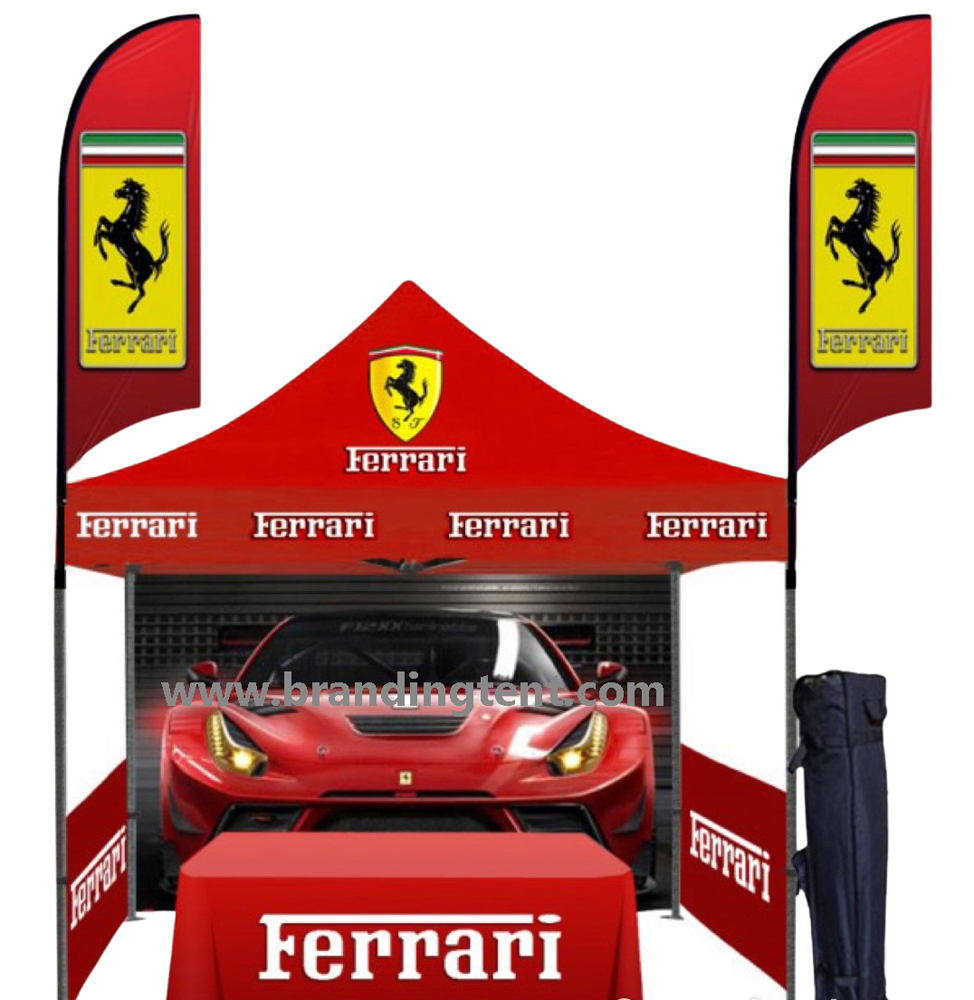
Custom Pagoda Tents
High-peak flagship
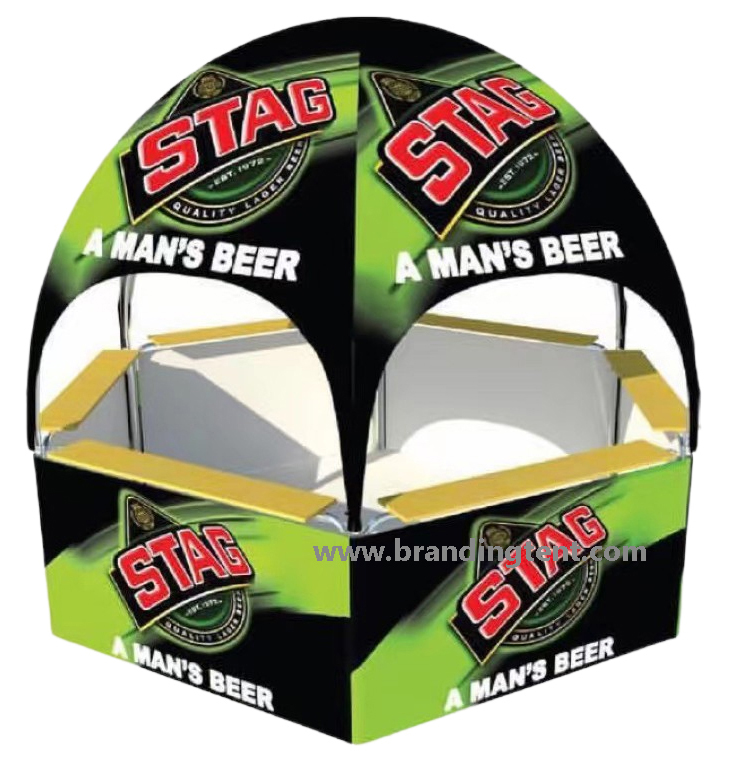
Custom Dome Tents
Immersive 360° stages
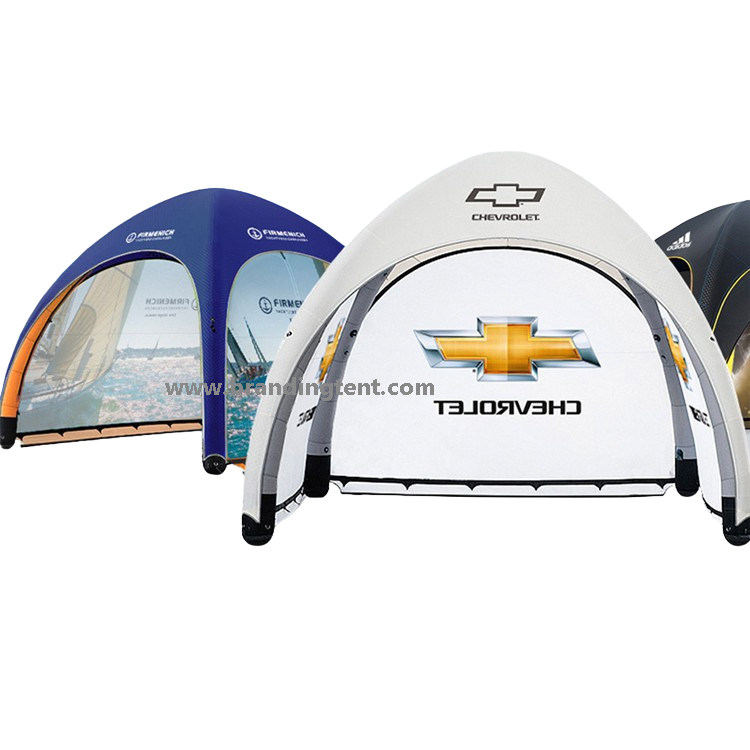
Custom Inflatables
The wow-factor structures
More: star tents · custom tents with logo guide · full FAQ
Tell us your event scenario, size and logo file — our tent specialists reply within 1 hour, 24×7 online service, with a free mockup, written specifications and factory-direct pricing.