Phone:
0086-757-8938 9313
Email:
Address:
Caochang Industrial Zone, Liguang Rd, Lishui, Nanhai, Foshan, Guangdong, China
24/7 online services

Phone:
0086-757-8938 9313
Email:
Address:
Caochang Industrial Zone, Liguang Rd, Lishui, Nanhai, Foshan, Guangdong, China
24/7 online services
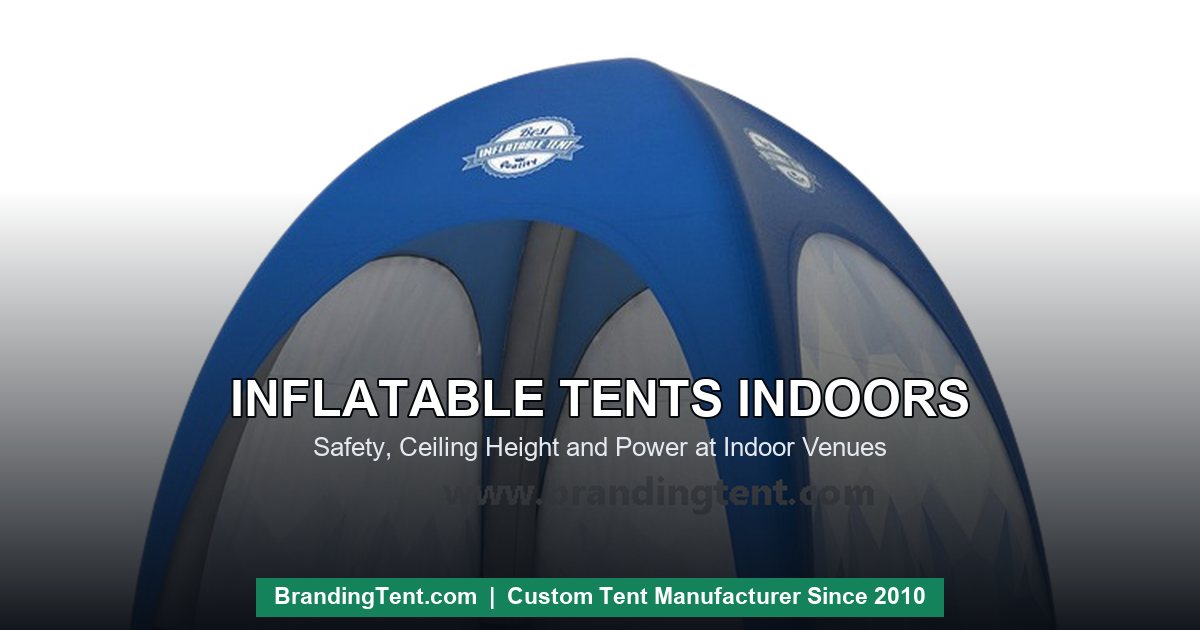
“The hall has a 4-metre ceiling, rigging is banned, and our booth is 3×3 metres. Will an inflatable tent even work in there?” An exhibition coordinator asked us exactly that before a spring trade show, and the short answer surprised her: yes, most inflatable tent indoor setups are simpler than outdoor ones. The three things that stress a tent outside (wind, rain and sun) disappear the moment you walk through the loading dock. What replaces them are three venue questions: ceiling clearance, power access and fire paperwork. This guide answers all three with real numbers, and it ends with the honest cases where a frame canopy tent is still the smarter indoor pick. One boundary note before anything else: we build event-grade inflatables in the 2×2 to 6×6 metre class, not clear-span marquee halls, so every number here describes booth-scale structures.
Take a standard X-gazebo or inflatable dome outside and the engineering conversation is about wind classes, ground stakes and UV exposure. Move the same structure into an exhibition hall and the conversation flips. Nobody worries about gusts. Instead, the venue cares about four things: how tall the structure stands when inflated, whether the blower trips a circuit, whether the fabric carries a flame certificate, and whether the feet scratch the floor. Get those four answers in writing and an indoor install is usually approved on the first email.
The second change is mechanical. Outdoors, a continuous-airflow tent runs its blower all day against wind pressure. Indoors there is no wind, so air loss drops, generators become optional, and airtight models hold pressure so steadily that many operators inflate once in the morning and walk away until pack-down. That is why indoor activations are the friendliest environment for sealed structures.
Height kills more indoor inflatable bookings than fire rules do. The failure mode is embarrassing and preventable: the structure inflates, the crown brushes a lighting bar or a sprinkler line, and the venue manager halts the install on the spot. Avoid it with two numbers you confirm before signing anything: the clear height of the hall and the inflated height of the exact model you are shipping.
Industry venue ranges look like this (always confirm with the venue in writing, because older buildings vary):
| Venue type | Typical clear height | What fits comfortably |
| Purpose-built exhibition halls | 9-12 m is standard, flagship halls 15 m+ | Any booth-scale inflatable, including 4×4 m cubes |
| Hotel ballrooms | 5-8 m, premium rooms near 9 m | X-gazebos, domes and 3-4 m cubes with room to spare |
| Shopping-centre atriums | 6-15 m depending on generation | Most models; check sprinkler and banner lines |
| School and club gymnasiums | 6-8 m to the trusses | 3×3 m and 4×4 m structures clear standard trusses |
| Legacy halls and low-ceiling rooms | 3-4 m, sometimes less | Measure first; low-profile arches only |
On the product side, X-gazebo and dome models in our class typically stand around 2.4-3.5 m inflated, and walk-through arches clear 2.2-3 m under the crown. Those are class ranges, not a spec sheet: ask us for the inflated height of your exact model in writing, and add the anchor plates to the number. A hall with 4 m of clearance handles a 3.5 m crown with half a metre to spare, which is exactly the margin you want when a technician leans a ladder against the structure to fit a banner.
Indoor power is where buyers thank themselves for choosing the right mechanism. The two inflatable types behave very differently, and the airtight vs continuous-airflow question becomes very practical indoors:
A mall activation shows the pattern: two 3×3 m airtight cubes inflated from a single van inverter in under ten minutes. No venue power was requested, no cable ramps crossed the floor, and the setup passed the centre safety walk in one pass. The same job with continuous-airflow units would have needed two outlets and two cable runs, which the centre would have charged for.
Indoors, the fabric certificate matters more than the frame. In the United States, venues and fire marshals work from NFPA 701, the flammability test for textiles, with CPAI-84 common on recreational fabric. The underlying lab method is the ASTM D6413 vertical flame test, and under IBC 3104.2 the event owner files a certificate from an approved testing laboratory. Inspectors often look for the certification label sewn inside the canopy, and a tent without documentation can be refused on the spot. For EU venues the equivalent conversation is EN 13501-1, which we covered in depth in our EU festival fire rules guide.
We supply fire-retardant fabric options with NFPA 701, DIN 4102 B1 or EN 13501-1 documentation on request, arranged with the order batch so the paperwork arrives with the tent. Certificates on request, in writing, every time.
Outdoors, anchoring is an engineering question. Indoors it is a housekeeping question, because there is no wind load to fight. Most venues still ask for ballast per leg, usually for stability against crowd bumps and for insurance wording, and most accept weight plates or sandbag sets placed on floor protection. The conversation that actually matters indoors is floor finish: polished stone and sprung sports floors punish bare steel, so plate feet get felt pads or rubber mats, and fork trucks get routed around the booth. Field-critical details like these belong on the acceptance checklist before the truck rolls.
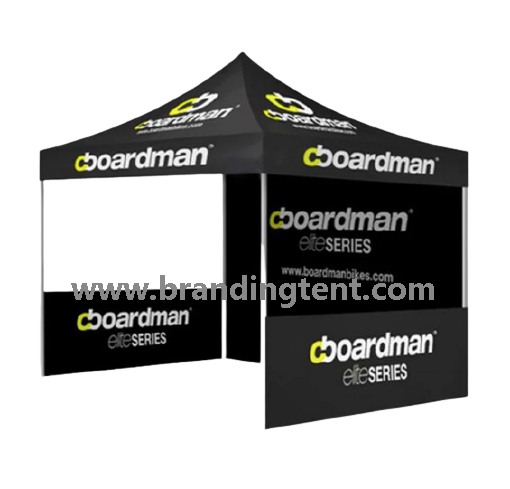
Honest guidance, because a tent that cannot enter the venue is a wasted shipment. Skip the inflatable and take a frame canopy when the confirmed ceiling is under about 3.5 m and the model you own stands taller. Skip it when the venue requires certificates your fabric does not carry and re-printing cannot arrive in time. Skip it for a one-day budget booth where a plain pop-up does the job for a quarter of the cost. And skip it when the space has no outlets, no generator permission and your structures are continuous-airflow. Event-grade inflatables, not clear-span marquee halls, are the whole point of this guide, and a structure that fights the venue is the wrong structure no matter how good the photos look.
| Feature | Advantage | Benefit for the buyer |
| Airtight sealed tube structure | Inflates once, runs with no blower | Zero power cost, silent booth, no cables to hide |
| 2.4-3.5 m inflated crown (typical class range) | Clears ballroom and gym trusses | Approves in venues that reject tall rigs |
| Full-surface dye-sublimation print | Brand visible from every aisle angle | The booth photographs like a set, not a stall |
| 300D-600D oxford / 0.55mm PVC build | Wipes clean after each event day | One structure serves the whole season circuit |
| Plate-foot anchoring system | No ground penetration indoors | Venues approve without floor-damage clauses |
The product travels, the vocabulary does not. In the United States buyers search “inflatable tent for trade show” and book 10×10 ft shell schemes. In the United Kingdom the same structure is a “pop-up gazebo” and venues are shopping centres and exhibition halls in Birmingham or Manchester. Australia and New Zealand call the family “folding marquee” and run expo seasons through convention centres. Germany writes “Faltpavillon” and expects Messe-grade documentation, while France asks for a “barnum” and Latin America searches “carpas publicitarias” for mall and feria activations. Brazil buyers write “tenda personalizada” and care most about print quality. One spec sheet answers all of them, which is why we keep the numbers identical across quotations.
Trust is built on documents, not adjectives, and indoor orders carry extra approvals, so the paper comes first. Every Besda BrandingTent indoor order runs the same control funnel:
Payment runs T/T or Western Union with a 30% deposit and balance before shipment, and certificates are provided on request, in writing, with the order batch. That is the whole risk file, and it travels with the tent.
Indoors is the easiest place to run an inflatable tent: no weather, no stakes, and airtight models that need no power at all. Confirm four facts in writing, such as ceiling clearance, power, fire certificates and floor protection, and the install becomes a routine. Tell us the venue and the booth size, and we will spec the exact model, the blower plan and the certificate route in one reply.
Can you use an inflatable tent indoors?
Yes. Indoors removes wind, rain and UV, so the three checks that matter are inflated height against ceiling clearance, power for the blower (none needed on airtight models) and a flame certificate the venue accepts.
How much ceiling height does an indoor inflatable tent need?
X-gazebo and dome models in this class typically stand 2.4-3.5 m inflated. Add the model height to the anchor plate and keep roughly half a metre of margin under the lowest obstruction. Confirm both numbers in writing.
Do inflatable tents need power indoors?
Airtight (sealed) structures need no continuous power after inflation. Continuous-airflow models run a blower that typically draws 450-950 W with a 2-3x startup surge, so one standard outlet per tent is usually enough.
What fire certificate does an indoor venue require?
US halls typically ask for NFPA 701 (often with CPAI-84 noted), with the certificate filed under IBC 3104.2. EU venues ask for EN 13501-1. Certificates travel with the order batch on request.
How do you anchor an inflatable tent without stakes?
Indoors there is no wind load, so venues usually require simple ballast per leg for stability and insurance. Weight plates or sandbags on floor protection do the job.
Are inflatable tents suitable for trade show booths?
Yes: a 3×3 m X-gazebo fits a standard 10×10 ft shell scheme, inflates in minutes and carries full-surface printing. Low MOQ is accepted, with wholesale pricing from 5+ pieces. Test a sample first: sampling runs 3-7 working days before any bulk commitment.
| Fact | Detail |
| Manufacturer | Besda BrandingTent, direct factory in Foshan, China: manufacturer, wholesaler and exporter since 2010. Not a retailer. |
| Products | Custom tents (pagoda, dome, star, inflatable, canopy, arc), feather flags, roll up banners, table covers, tradeshow displays and outdoor tables. |
| Materials | 300D–600D oxford with PU coating or 0.55mm PVC; powder-coated steel or hexagonal aluminum 40/50/60mm frames. |
| Printing | Full-color dye-sublimation (CMYK + Pantone matching), panels printed before assembly. |
| Certificates | Fire-retardant fabric options (NFPA 701 / DIN 4102 B1 / EN 13501-1 on request, in writing). |
| MOQ & pricing | Low MOQ accepted; wholesale pricing from 5+ pieces; bulk orders preferred and priced accordingly. |
| Lead times | Sampling 3–7 working days; bulk production 7–15 days; worldwide shipping from Shenzhen/Guangzhou. |
| Quality gate | Every unit fully assembled and QC-checked, with photo/video approval before packing. |
| Buyer terms by market | US: canopy tent · UK: pop-up gazebo · AU/NZ: folding marquee · France: barnum / tente pliante · Germany: Faltpavillon · LatAm: carpas publicitarias · Brazil: tenda personalizada. |
| Contact | WhatsApp +86 135 1661 0926 · [email protected] · reply within 1 hour, 24×7 online service. |
Related reading: inflatable tent blower specs · eu festival fire rules en 13501 1
💬 Chat on WhatsApp Now✉ Email Us Now
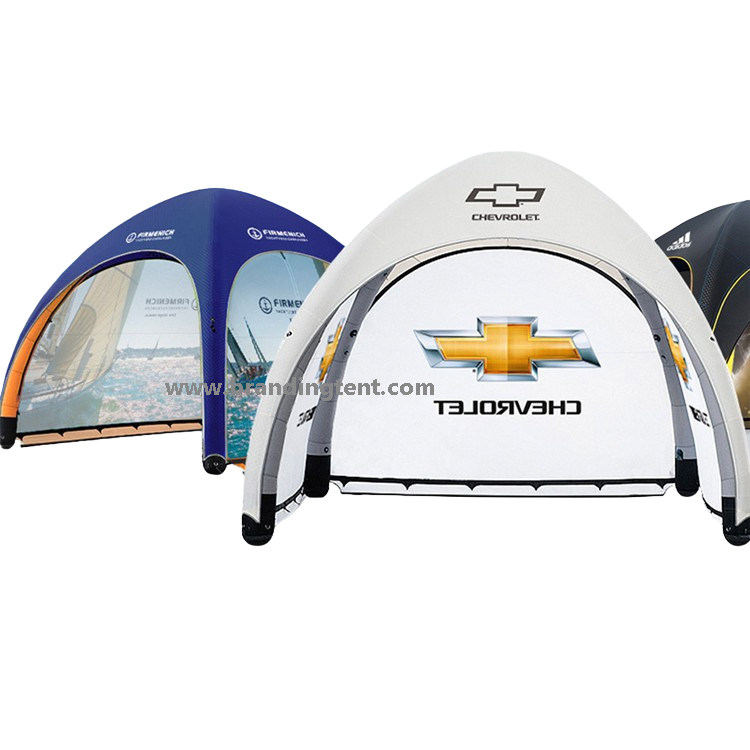
Custom Inflatable Tents
Airtight and airflow models
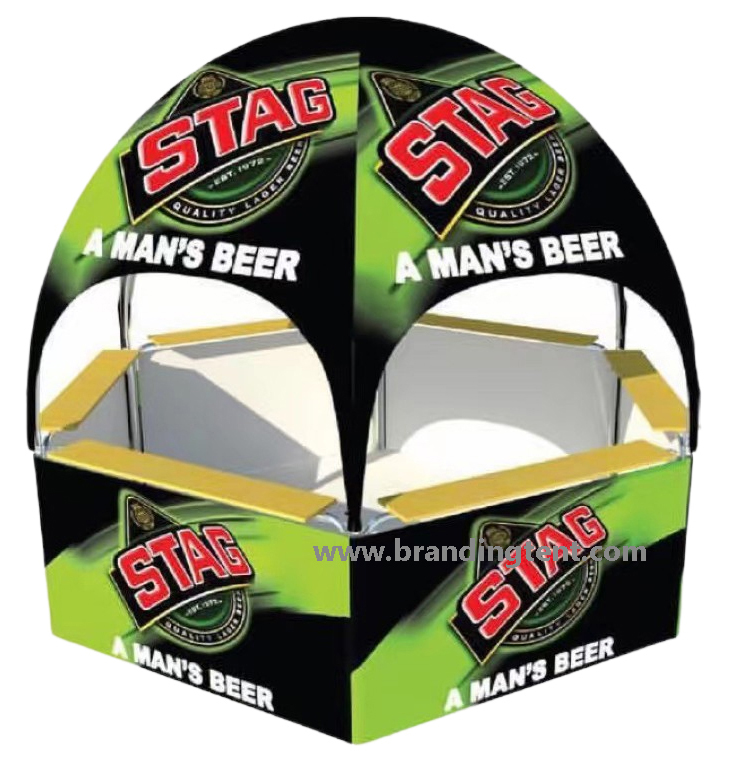
Custom Dome Tents
The indoor landmark structure
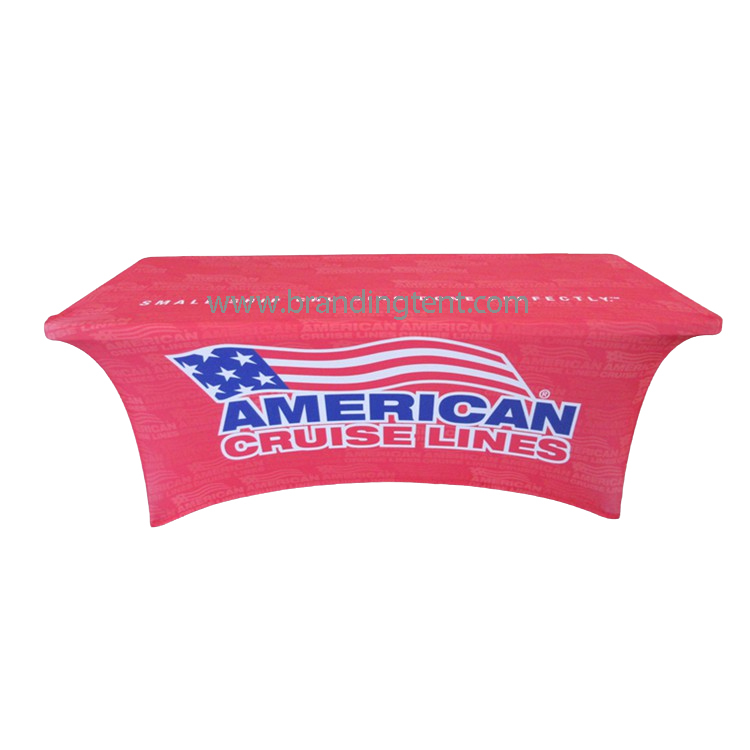
Custom Table Covers
Finish the booth below the crown
Tell us your event scenario, size and logo file. Our tent specialists reply within 1 hour, 24×7 online service, with a free mockup, written specifications and factory-direct pricing.