Phone:
0086-757-8938 9313
Email:
Address:
Caochang Industrial Zone, Liguang Rd, Lishui, Nanhai, Foshan, Guangdong, China
24/7 online services
Phone:
0086-757-8938 9313
Email:
Address:
Caochang Industrial Zone, Liguang Rd, Lishui, Nanhai, Foshan, Guangdong, China
24/7 online services
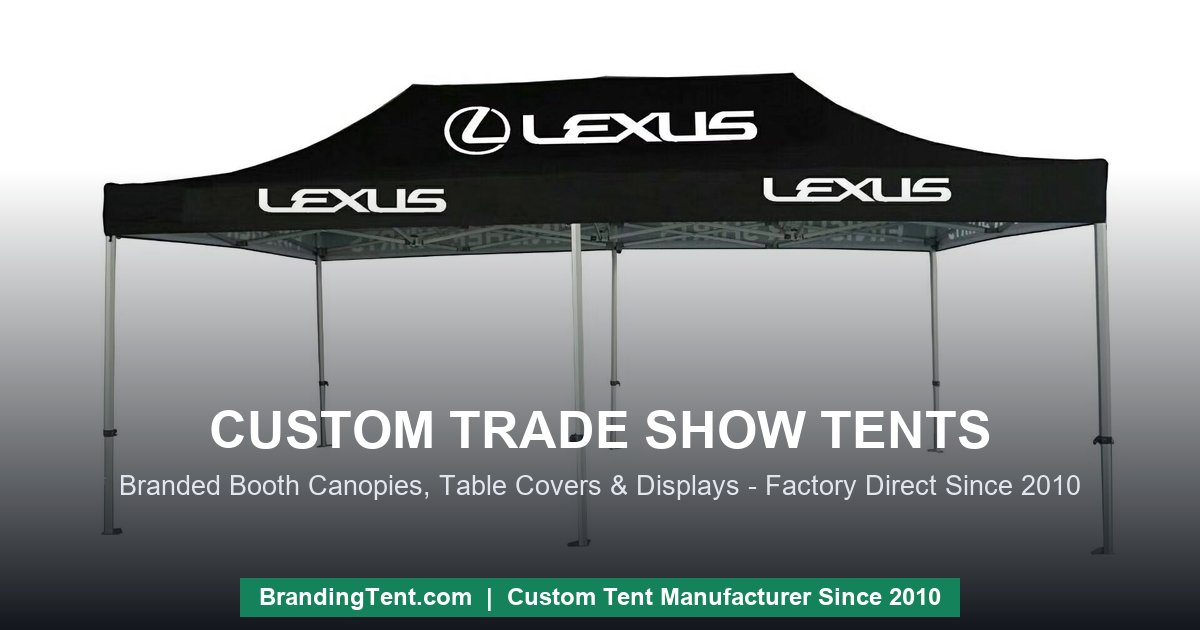
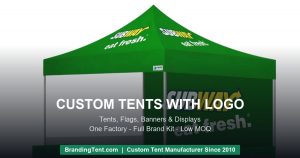
A custom trade show tent — also called a booth tent, exhibition tent or pop up display tent, and quoted in Latin America as carpas para exposiciones — is a branded canopy booth system for outdoor trade shows, expositions, street fairs and weekly market circuits. The standard unit is a 10x10ft (3x3m) pop-up canopy with full-color logo printing, backed by printed walls, a branded table cover and feather flags that pull traffic from across the venue. This guide covers sizing, the five components of a complete booth kit, honest comparisons against shell schemes, and the specifications, MOQ and lead times that should appear in every factory quotation.
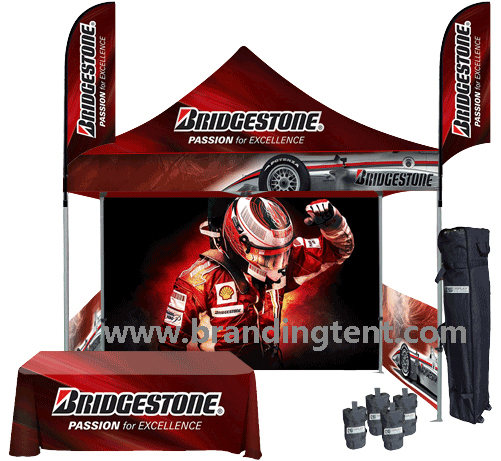
When exhibitors say trade show tent they mean an outdoor booth built around a pop-up canopy: a scissor-action frame with 40-50mm hexagonal legs that one or two people unfold in 10-20 minutes, topped by a dye-sublimated canopy carrying the brand. Around that frame, a professional booth kit adds full-printed sidewalls, a fitted table cover that hides stock and cables, and a feather flag or roll up banner that marks the booth from distance. The result is a complete branded space that packs into a car trunk or a single pallet — the mobile alternative to a built booth that gets demolished after every show.
Exhibitors weigh tent booths against shell schemes on three measures — and outdoors, all three point the same way.
1. Cost per event. A bought booth kit amortizes across every market day and expo of the season; shell-scheme and rental booths are repaid to the organizer forever and still arrive generic.
2. Total brand control. Canopy, walls, table cover and flags print in your Pantone colors with dye-sublimation — the booth reads as your retail space, not a white grid box with a poster.
3. Operational speed. The same kit that serves a weekend expo serves the Wednesday farmers market: 10-20 minutes of setup, no installers, no rigging paperwork.
For brands running outdoor circuits — food and beverage, consumer goods, sports, automotive — that repeatable speed is the whole business case.
A complete booth is five components working as one printed system — every line below appears as a written specification in our quotations, not a catalog promise.
1. The frame. Pop-up scissor frames in powder-coated steel or aluminum, with hexagonal legs in the 40-50mm class; heavier frames trade trunk space for wind stability. Adjustable leg heights (roughly 2.1-2.5m peak clearance) adapt to venue rules.
2. The canopy. 300D-600D oxford with PU coating, full-surface dye-sublimation printed before assembly.
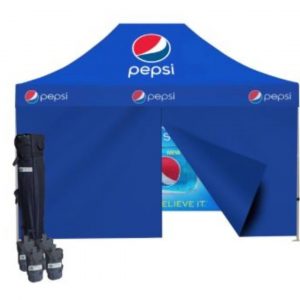
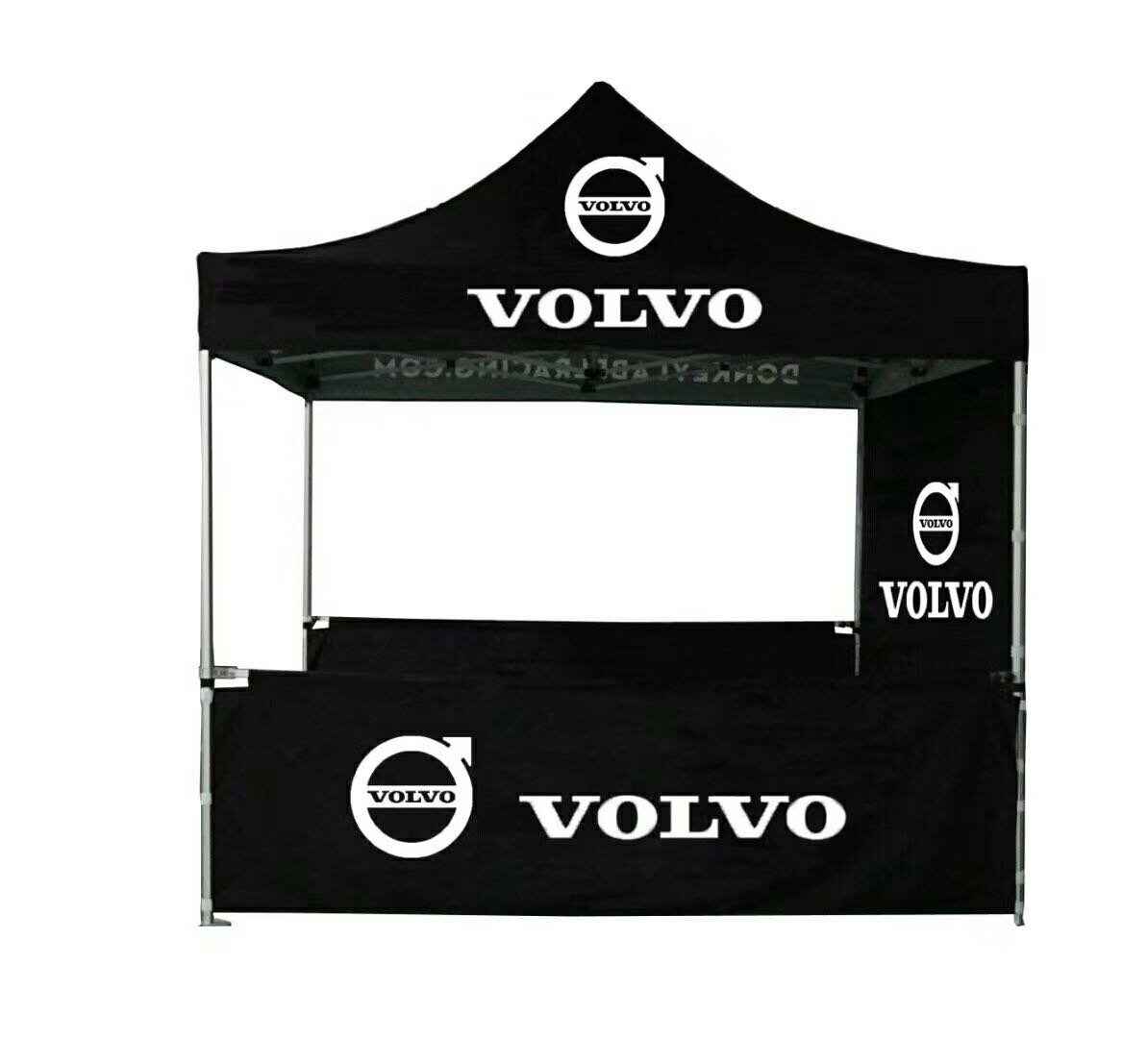
3. Sidewalls. From one branded wall to three full walls plus a zippered door wall — walls double as windbreak and second billboard.
4. The table cover. A fitted, floor-length printed cover turns any trestle table into brand real estate and hides stock; it is the detail every visitor camera actually sees up close.
5. The traffic layer. A feather flag or two, and a roll up banner for windless indoor hours, complete the kit that pulls visitors from the aisle end.
Beyond the tent itself, two display pieces finish the booth. A roll up banner — the retractable stand that sets up in seconds — carries the product story at eye level and moves indoors for windless venues, doubling as your exhibition display for convention-center shows. Counters and pop up display fabric walls extend the same printed system to larger footprints without rebuilding artwork: one brand kit, multiple booth formats. BrandingTent manufactures the full line — canopies, tradeshow displays, table covers, outdoor tables, roll up banners and feather flags — so every element ships color-matched from one production line instead of five suppliers’ interpretations of your brand.
The 3x3m (10x10ft) unit is the industry default: one table, two staff, a product display and standing room for four to six visitors. The 3×4.5m (10x15ft) adds a second activity zone — sampling, a demo counter or seating. The 3x6m (10x20ft) is the full retail footprint for high-traffic expos: dual counters, storage bay behind a rear wall, room for eight to ten visitors without crowding. Check the organizer’s booth rules before sizing up — frontage and floor-load rules, not budget, are what usually decide the maximum size.
| Size | Staff | Best For |
| 3x3m / 10x10ft | 1-2 | Markets, fairs, single-product demos |
| 3×4.5m / 10x15ft | 2-3 | Sampling, demo counter + display |
| 3x6m / 10x20ft | 3-5 | Full retail footprint, high-traffic expos |
Tent booths dominate wherever the show moves outdoors or repeats weekly: outdoor expos, street fairs and festival merch booths; farmers markets and weekly vendor circuits where setup speed decides margin; auto dealer lot events and test-drive days; campus, career and recruitment fairs; sports, fitness and wellness expos; and sponsor activation zones at races and charity events. The buyer groups that reorder most often are marketing agencies running client tours, food and beverage brands, dealer networks, and universities — anyone whose calendar, not budget, is the constraint.
Shell schemes still make sense indoors: convention centers offer walls, lighting, climate control and security, and a pop-up tent adds nothing in a carpeted hall — a roll up banner plus a printed table cover is the smarter indoor kit. But outdoors the math reverses. Shell schemes are priced per event per square meter and vanish at breakdown; a bought canopy kit costs less than two or three shell rentals and then works every market day of the season for free. Add full-surface branding (a shell scheme gives you a fascia strip) and weather independence, and the tent wins every outdoor comparison — which is exactly why exhibitors who buy once rarely go back to renting.
Honest guidance, because a mismatched structure costs more than a wrong logo.
A trade show tent is not worth it when:
It is worth it when:
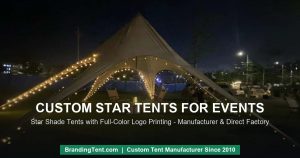
For open-air hospitality zones rather than retail booths — VIP lounges, dealer hospitality — compare the custom star tent, the open-plan sibling of the pop-up booth. And if your advertising tent choice is broader than booths, start with how to choose the right advertising tent.
Work through the decisions in this order — each one narrows the quotation.
1. Frame. Powder-coated steel for budget and weight stability; aluminum when the kit travels by air or is carried by one person. Hexagonal legs in the 40-50mm class resist torsion better than round legs.
2. Fabric. 300D-420D oxford suits seasonal market use; 600D with PU coating for full-season tours.
3. Printing. Dye-sublimation on canopy and all walls, panels printed before assembly so graphics align across seams.
4. Accessories. Weight plates or pop-up tent weights (most outdoor venues mandate 15-25kg per leg), sandbag kits, gutter connectors to join booths, printed table covers in fitted 4-sided style, and wheeled trolley bags.
Every one of these line items belongs in the written quotation — a kit quoted without weights and bags is not a kit.
| Specification | Typical Manufacturer Range |
| Sizes | 3x3m / 3×4.5m / 3x6m (10×10 / 10×15 / 10x20ft), custom on request |
| Frame | Powder-coated steel or aluminum pop-up, 40-50mm hexagonal legs, adjustable height |
| Canopy fabric | 300D-600D oxford, PU coated; full-color dye-sublimation |
| Walls | 1-3 full walls + door wall, printed both sides optional |
| Kit accessories | Printed table cover, feather flags, weight plates, carry/trolley bags |
| Setup | 10-20 minutes, 1-2 people, no tools |
| MOQ & lead time | Low MOQ accepted; sampling 3-7 days, bulk 7-15 days by quantity |
| Payment & shipping | T/T or Western Union; worldwide from Shenzhen/Guangzhou |
Fire-retardant canopy and wall fabrics are available on request, with certificates such as NFPA 701 or DIN 4102 B1 provided for the applicable fabric batch — most organized expos, shopping-center promotions and school events ask for exactly this document at check-in. State the requirement in your RFQ and the option appears in the written quotation, so compliance never becomes a production surprise.
A branded trade show tent is the only booth that repays you with every market day: bought once, it works the season for free and prints your brand on every photo taken under it. Size it to the venue rules, spec the frame and fabric in writing, complete the kit with walls, table cover and flags — and buy it from the factory that prints and sews it, not a catalog between you and the machines.
💬 Chat on WhatsApp Now✉ Email Us Now
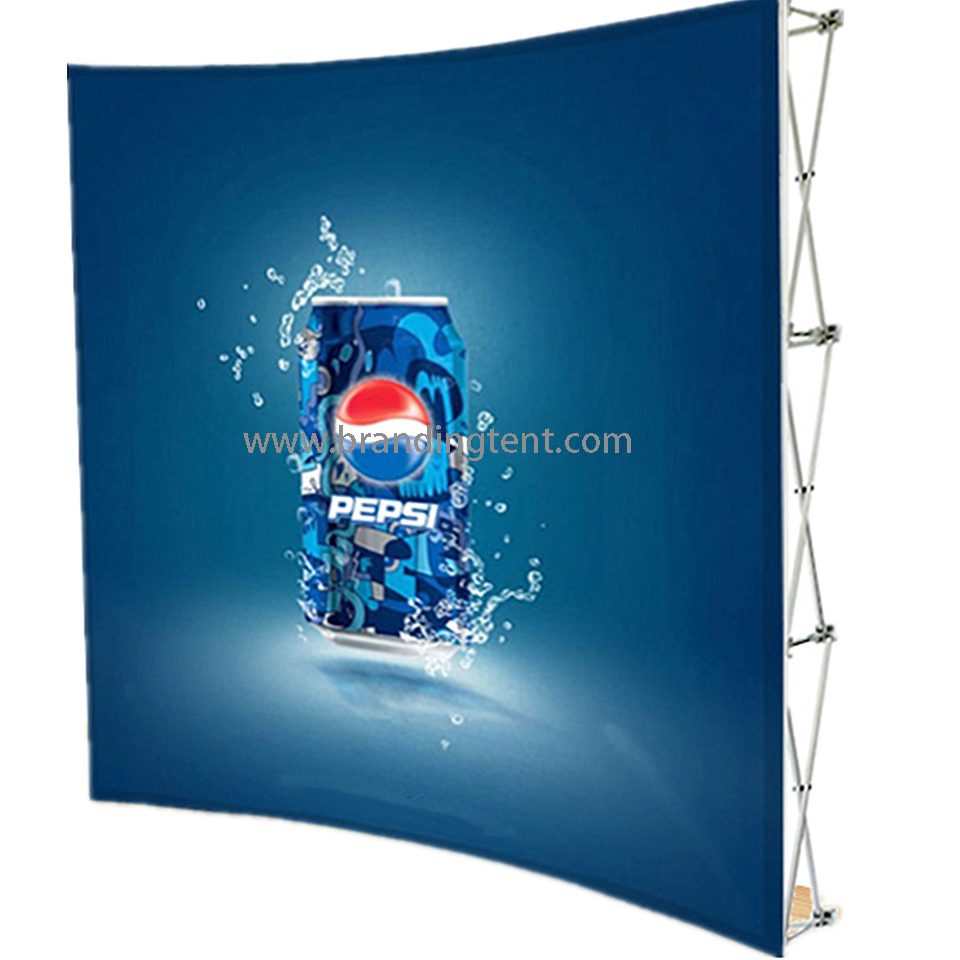
Custom Tradeshow Displays
Flat & round tube booth systems
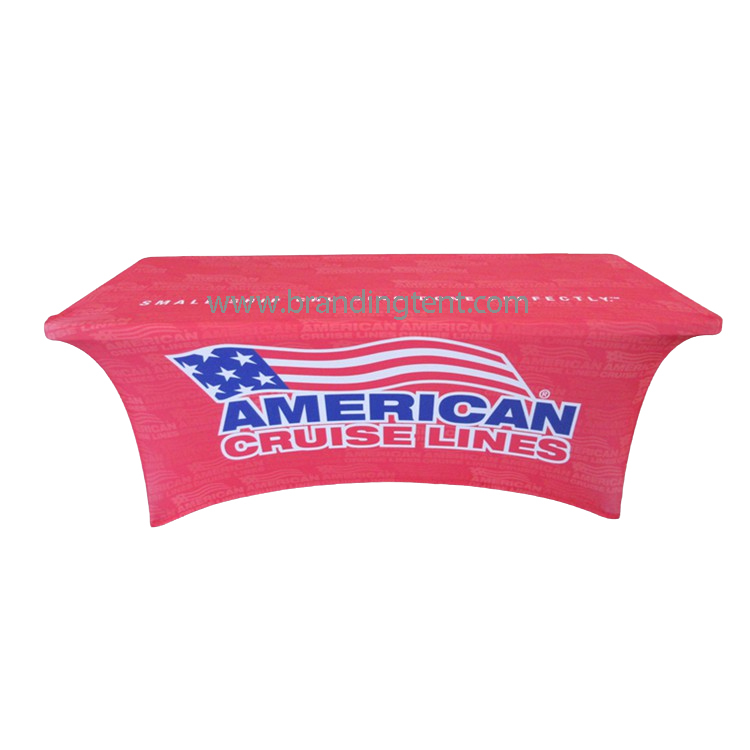
Printed Table Covers
Fitted 4-sided, full-color print
Custom Feather Flags
Single & double-sided, all bases
More: pagoda tents · star tent buyer guide · full FAQ
Tell us your event scenario, size and logo file — our tent specialists reply within 1 hour, 24×7 online service, with a free mockup, written specifications and factory-direct pricing.