Phone:
0086-757-8938 9313
Email:
Address:
Caochang Industrial Zone, Liguang Rd, Lishui, Nanhai, Foshan, Guangdong, China
24/7 online services

Phone:
0086-757-8938 9313
Email:
Address:
Caochang Industrial Zone, Liguang Rd, Lishui, Nanhai, Foshan, Guangdong, China
24/7 online services
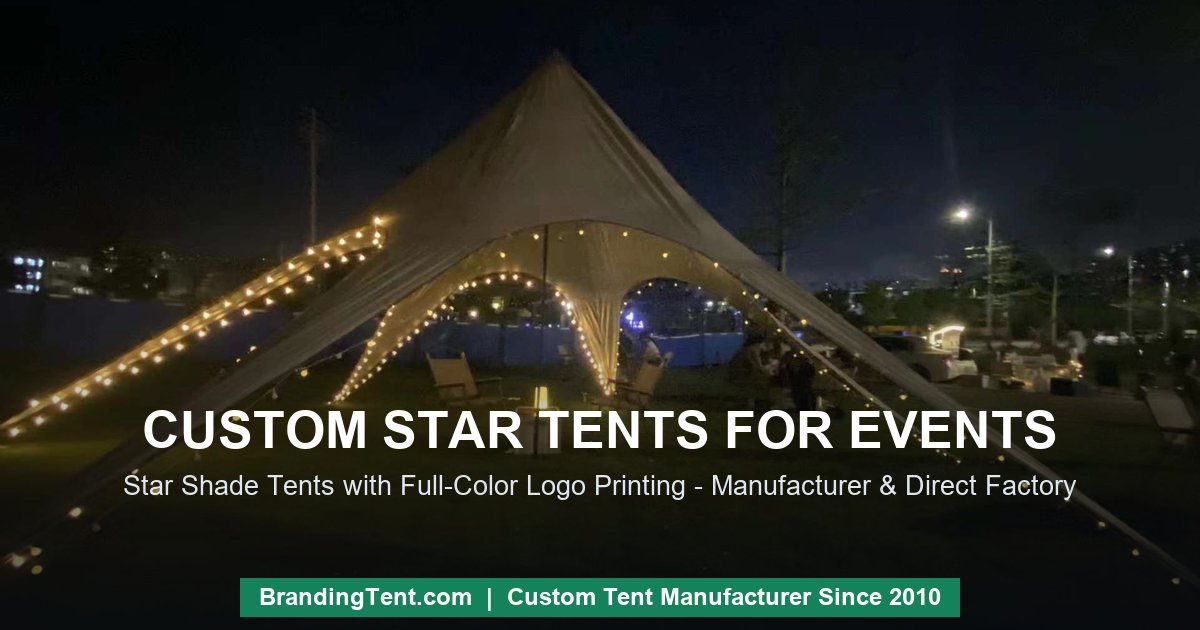
A custom star tent — also sold as a star shade tent, star canopy, spider tent or octopus tent, and listed in Latin America as carpas publicitarias — is the fastest way to turn an empty field into a branded landmark. One high center pole lifts a radiating canopy into a silhouette readable from across a festival site, and the whole structure goes up with a small crew in under an hour. This buyer guide covers what a star tent actually is, how it is built, where it wins and loses against pagoda and inflatable tents, the specifications that decide lifespan, and the MOQ, lead times and pricing logic you should expect from a real manufacturer.
A star tent is a tensile canopy structure: a single anodized aluminum center pole holds the peak, and the canopy radiates downward in four to eight curved “arms” that tension out to anchor points on the ground. The pulled edges create the star shape that gives the tent its name. Because the canopy is tensioned rather than framed, the structure packs into one carry bag, scales from 5 meter backyards events to 10 meter brand villages, and leaves the perimeter completely open — no legs, no walls, no blocked sightlines. On marketplaces the same family appears as star shade tent, star gazebo, spider canopy or umbrella tent; the engineering is the same, the fabric and pole grades are what separate a two-season unit from a five-season workhorse.
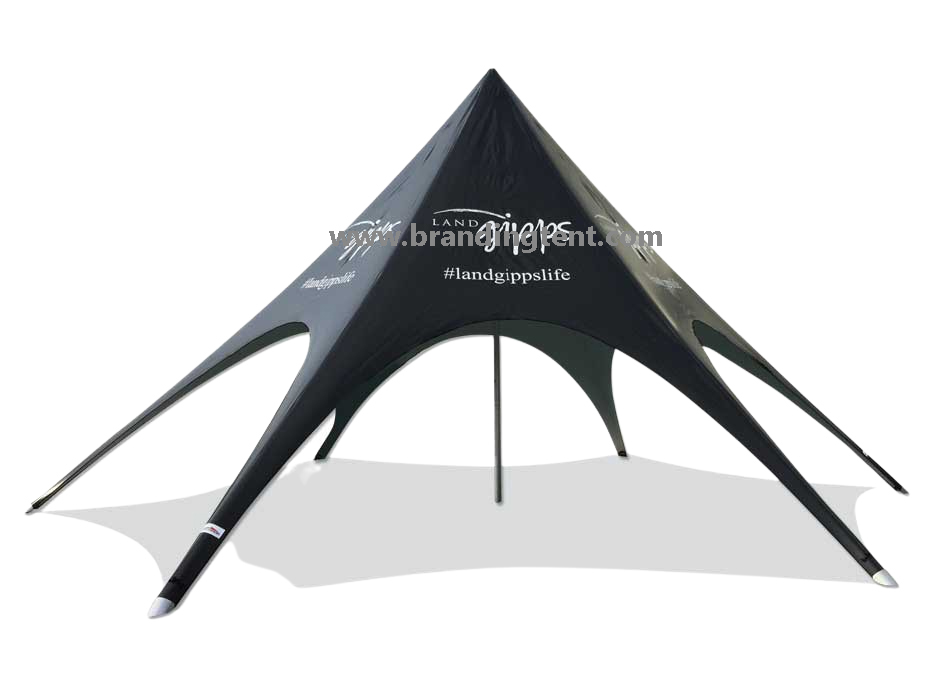
Three drivers explain why star shade tents keep appearing at festivals, dealerships and hospitality zones.
1. 360-degree visibility. The high peak and wide silhouette read at distances where a standard 3x3m pop-up canopy disappears — the structure itself becomes the marker visitors navigate by.
2. Fast one-pole setup. A crew of two to three people raises most sizes in 20 to 40 minutes with no scaffold and no forklift, which matters when your team builds at a different venue every week.
3. Open-plan hospitality. Because the perimeter has no legs or walls, you arrange seating, bars, product displays and photo moments freely underneath — the shade coverage is premium, but the space still feels like part of the event, not a cage around it.
Four components decide how long a star tent survives — weight them in this order.
1. Canopy fabric. Mainstream manufacturer grades are 420D-600D oxford with a PU coating (roughly 215-320 gsm finished weight) for frequent-setup event use, and 600 gsm PVC-coated fabric for semi-permanent or all-weather installs. Oxford prints beautifully with dye-sublimation and stays lighter to freight; PVC welds sealing, resists abrasion and handles season-long exposure. Ask for the exact fabric weight and coating in writing — it is the single biggest driver of both price and lifespan.
2. Center pole. Typical event-grade poles are anodized aluminum in the 63-76mm diameter class with 2.5-3mm wall thickness — rust-free and light enough for two people to handle. Cheap listings often hide a thinner pole; a pole that flexes under load destabilizes the whole tensioned canopy. Your quotation should state diameter and wall thickness as written numbers.
3. Anchoring system. A star tent is a tension structure: it is only as stable as its anchor points. A complete kit includes guy lines with adjusters, steel stakes for grass, and either plates or ballast guidance for hard standing. If your venue prohibits ground stakes, plan ballast weights with the supplier before ordering — this is the most common setup failure we see in the field.
4. Printing. Full-color dye-sublimation prints the canopy panels before assembly, so graphics stay continuous across seams and the ink bonds into the fiber instead of sitting on top. That is what keeps a logo readable after a season of sun and folding — and it is why printed star tents photograph so well at night under LED strips along the canopy arms.
Star shade tents earn their keep wherever a brand needs a shaded, photogenic hub that sets up fast: music festivals and VIP hospitality (the classic backstage lounge), car dealerships and auto roadshows (a landmark on the lot that photographs like a pavilion), beach clubs, resorts and poolside events (sand-friendly anchoring), sports events and golf days (registration and hospitality hubs), product launches and brand activations (the structure is the stage), and markets, fairs and campus events where weekly setup speed decides staffing. The buyer groups that reorder most often are brands and agencies running event series, rental companies building fleets, and dealer networks ordering in regional sets.
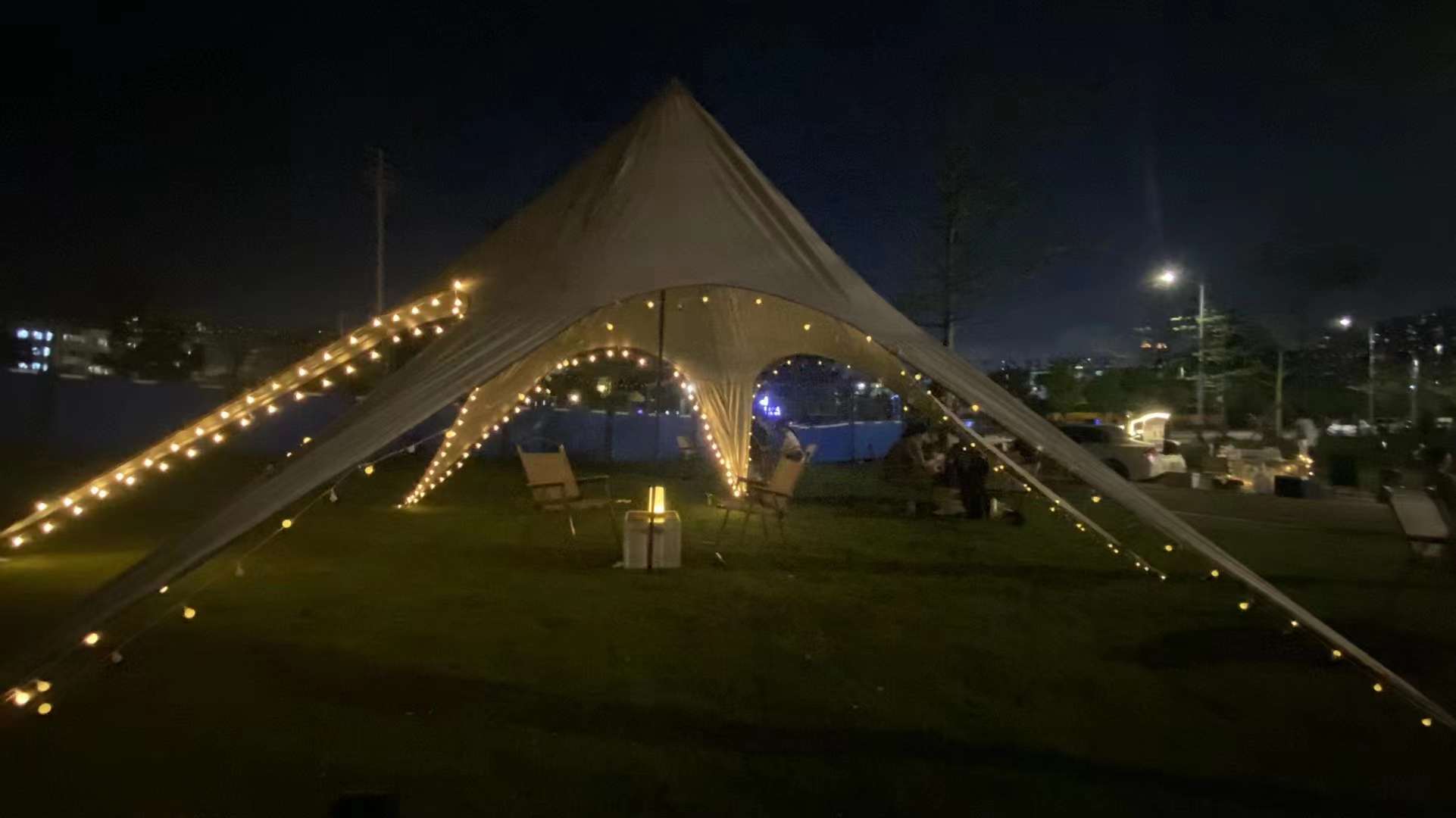
These three structures compete for the same budget, so the honest answer is by job, not by spec sheet.
1. Star tent — choose it when the job is fast, open-plan shade with landmark presence and frequent relocations.
2. Pagoda tent — choose it when you need a modular, connectable structure with optional sidewalls: exhibition boxes, VIP entrances, multi-tent villages (see our pagoda tent guide for the full breakdown).
3. Inflatable advertising tent — choose it when the goal is maximum novelty and photo energy: cubes, domes and custom shapes that read as an installation, not just shade (see the inflatable tents buyer guide).
Many event programs end up owning all three: star tents for the lounge, pagodas for the expo box, inflatables for the hero moment.
Honest guidance, because a mismatched structure costs more than a wrong logo.
A custom star tent is not worth it when:
It is worth it when:
If you recognize yourself in the first list, tell your supplier anyway — a straightforward manufacturer will sell you the right structure rather than the expensive one.
Work through the decisions in this order — size sets the footprint, the rest sets the lifespan.
1. Size. Standard spans run 5m, 6m, 8m and 10m, with 12m+ engineered to order; shade coverage is smaller than the span suggests because the canopy pulls upward — a 6m star tent covers roughly 20-25 square meters of usable shade. Plan one size up if seating plus a bar or product display must sit fully under the canopy.
2. Fabric. 420D-600D oxford with PU coating for tour and event use; 600 gsm PVC for semi-permanent installs.
3. Pole. Single center pole to 8m spans; double-pole configurations share load on larger sizes.
4. Printing. Full-surface dye-sublimation, CMYK plus Pantone matching; single- or double-sided walls optional.
5. Accessories. LED strip kits along the arms, printed sidewalls, connectivity gutters to adjacent tents, and wheeled carry bags for fleet logistics.
| Specification | Typical Manufacturer Range |
| Span (shade footprint) | 5m / 6m / 8m / 10m standard; 12m+ custom |
| Canopy fabric | 420D-600D oxford, PU coated (215-320 gsm) or 600 gsm PVC-coated |
| Center pole | Anodized aluminum, 63-76mm class, 2.5-3mm wall; single or double pole |
| Printing | Full-color dye-sublimation, CMYK + Pantone, panels printed before assembly |
| Anchoring | Guy lines, steel stakes; ballast plates for hard standing |
| MOQ | Low MOQ accepted for samples; wholesale pricing scales from 5+ pieces |
| Lead time | Sampling 3-7 working days; bulk 7-15 days by quantity |
| Packing & shipping | Heavy-duty carry bag per unit; worldwide shipping from Shenzhen/Guangzhou |
| Payment | T/T or Western Union; written quotation within 1 hour, 24×7 online |
Fire-retardant fabric options are available on request, with certificates such as NFPA 701 or DIN 4102 B1 provided for the applicable fabric batch — tell us your venue or country requirement during quoting and we confirm the option in writing. Festival organizers, schools, shopping centers and rental fleets are the buyer groups that need this most often; a printed certificate file travels with the tent and speeds up venue check-in on every subsequent event.
A star tent is the highest-visibility shade structure per minute of setup time: one pole, one bag, one silhouette the whole site navigates by. Buy it for open-plan, fast, photogenic shade; buy a pagoda or marquee when walls and modularity matter more. Whichever you choose, buy it from a manufacturer who puts fabric weight, pole diameter and anchor kit contents in writing — everything else is marketing.
💬 Chat on WhatsApp Now✉ Email Us Now
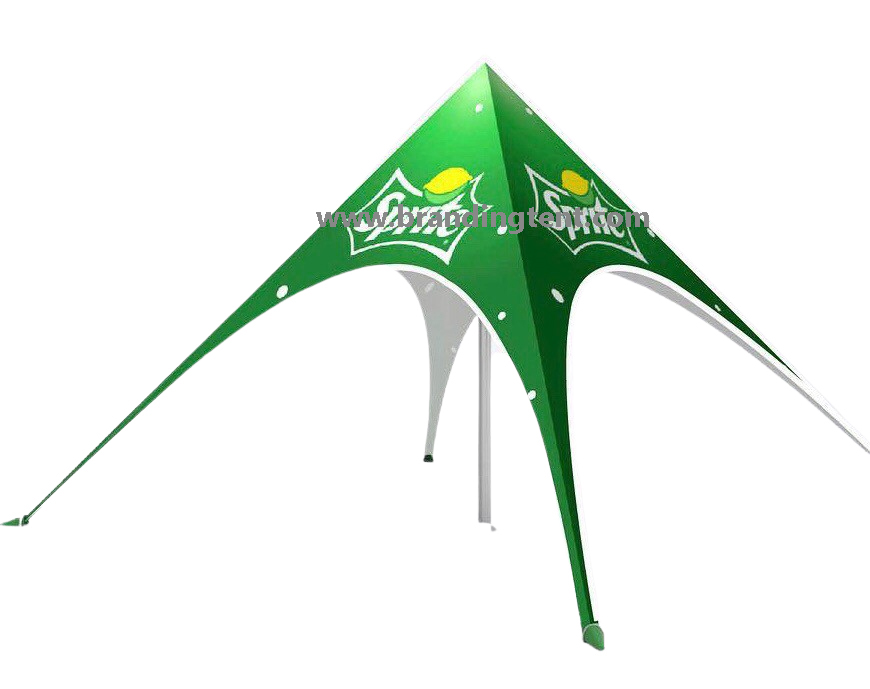
Custom Star Tents
Star shade canopies built to order
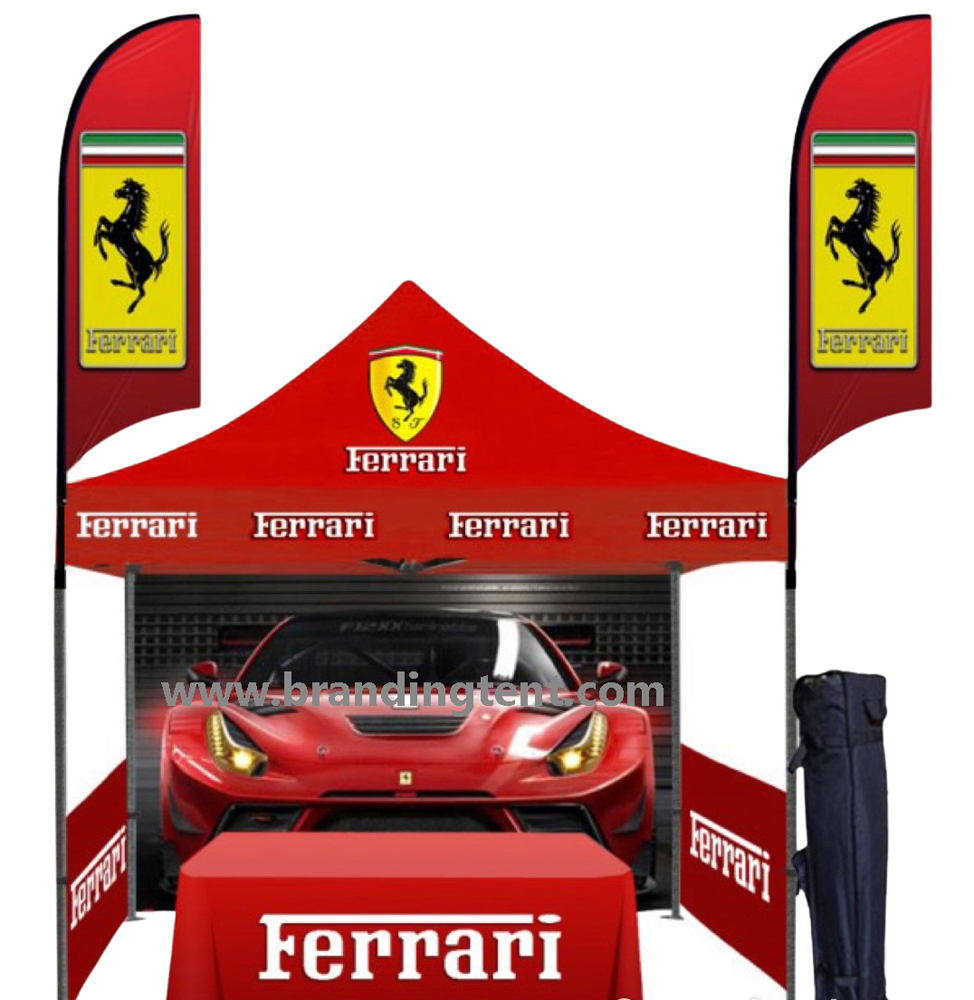
Custom Pagoda Tents
High-peak marquees, 3×3-6x6m
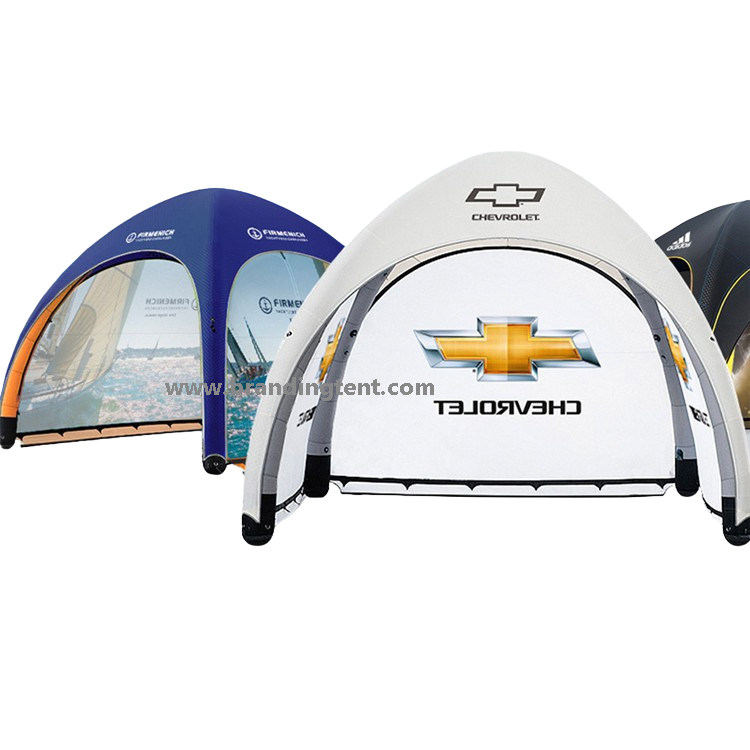
Custom Inflatable Tents
Airtight & continuous-airflow structures
More: trade show tent buying guide · full FAQ
Tell us your event scenario, size and logo file — our tent specialists reply within 1 hour, 24×7 online service, with a free mockup, written specifications and factory-direct pricing.