Phone:
0086-757-8938 9313
Email:
Address:
Caochang Industrial Zone, Liguang Rd, Lishui, Nanhai, Foshan, Guangdong, China
24/7 online services

Phone:
0086-757-8938 9313
Email:
Address:
Caochang Industrial Zone, Liguang Rd, Lishui, Nanhai, Foshan, Guangdong, China
24/7 online services
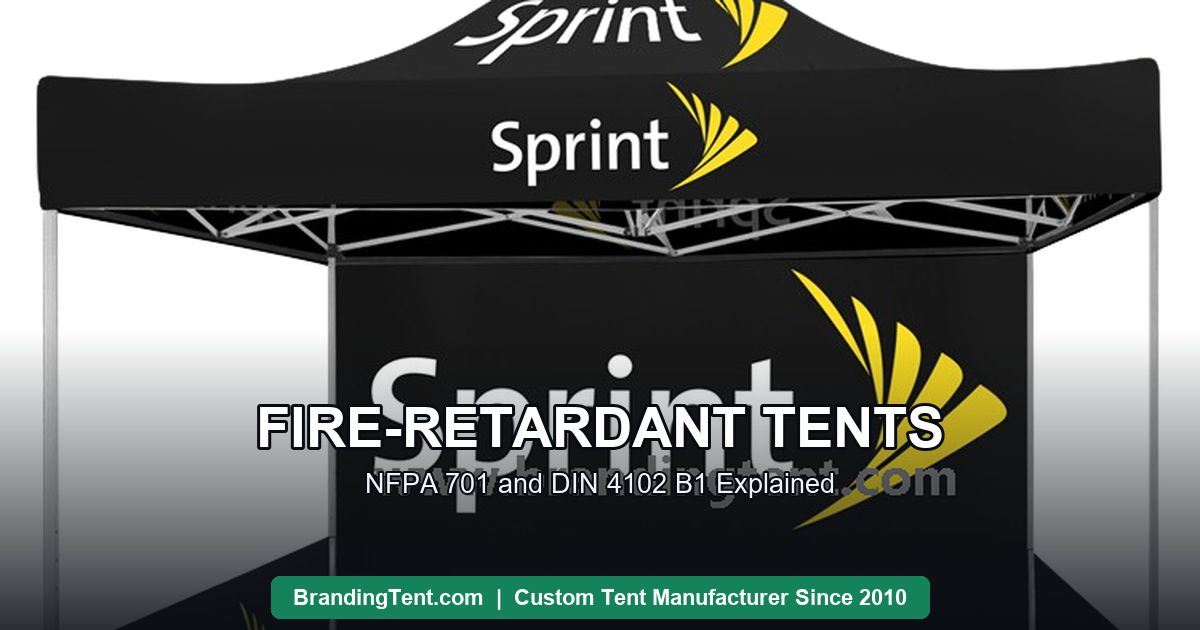
Fire-retardant tents live or die by paperwork: somewhere between booking the venue and setting up the tent, the paperwork arrives: the organizer, the fire marshal or the insurance schedule asks for the fire certificate. For buyers new to organized events this is a last-minute crisis; for experienced rental companies and expo exhibitors it is a line in the order. The difference is knowing the standards — NFPA 701 in the United States, DIN 4102 B1 in Germany and much of Europe, plus the local equivalents other markets name — and arranging them at production time, because fire-retardant treatment cannot be added to a finished tent. This guide explains what the standards test, what the certificate must actually contain, which buyer groups need them most, and how to build the paperwork into your order instead of your panic.
Fire-retardant (or flame-retardant) does not mean fireproof. It means the fabric is treated or constructed so that, when exposed to a flame source, it resists ignition, limits flame spread and self-extinguishes once the source is removed. For event tents — which are, after all, large volumes of fabric over occupied space — that behavior is exactly what building codes and venues care about: not surviving a fire, but not feeding one.
1. Treated fabric carries a chemical treatment applied at mill level to the base cloth. It is the standard approach for oxford canopies and prints normally.
2. Inherently flame-retardant fabric is made from fibers that resist burning by their nature; PVC-coated fabrics frequently fall into this family because of the PVC compound itself.
3. Both can be certified to the applicable standard — which is why the question to your supplier is never “is it fireproof?” but “which standard will the certificate state, and for which fabric batch?”
| Standard | Region | What it evaluates | Who asks for it |
| NFPA 701 | United States | Flame spread of fabrics after ignition, with self-extinguishing behavior | US venues, expo organizers, schools, rental contracts |
| DIN 4102 B1 | Germany / EU markets | Building-material class for flame spread — B1 denotes flame-retardant rated | German/EU venues, county fairs, halls |
| Local equivalents | UK, AU/NZ, LatAm, Middle East | National venue fire codes name their own test methods | Council events, stadiums, malls, ferias |
The practical instruction for buyers: name the market and the venue type in your RFQ (“NFPA 701 required, US expo” or “DIN 4102 B1, German hall”). A real manufacturer reserves the correct treated fabric batch for your order and issues the matching certificate; vague requests get vague paperwork, which is exactly what fails at check-in.
At check-in, venue staff read certificates the way customs reads passports — looking for matching details. A useful certificate states:
1. The standard and result — e.g. tested to NFPA 701, passed; or DIN 4102 B1 rating.
2. The fabric identification — product name, weight class (denier/gsm) so the venue can connect the paper to the tent in front of them.
3. The issuing laboratory — a testing body name, not a letterhead from the tent factory.
4. Batch or order reference and date — certificates attach to production batches; keep the file with the fleet records and the copy with each tent.
5. The tent sizes or product range covered — some certificates cover a fabric line.
If a supplier cannot produce a certificate naming a lab and a batch, they do not have one — they have a claim.
The demand pattern professionals see across markets: rental companies need certificates for nearly every organized venue contract; expo and trade show exhibitors meet indoor fire rules; schools, councils and community events require them as a liability formality; shopping centers and festivals require them because of occupancy codes; wedding venues with indoor-style rules for outdoor structures increasingly ask too. In Latin American markets the requirement shows up at ferias and municipal events, often phrased in the local code rather than a familiar standard — say the country and the event type, and the factory matches the applicable document.
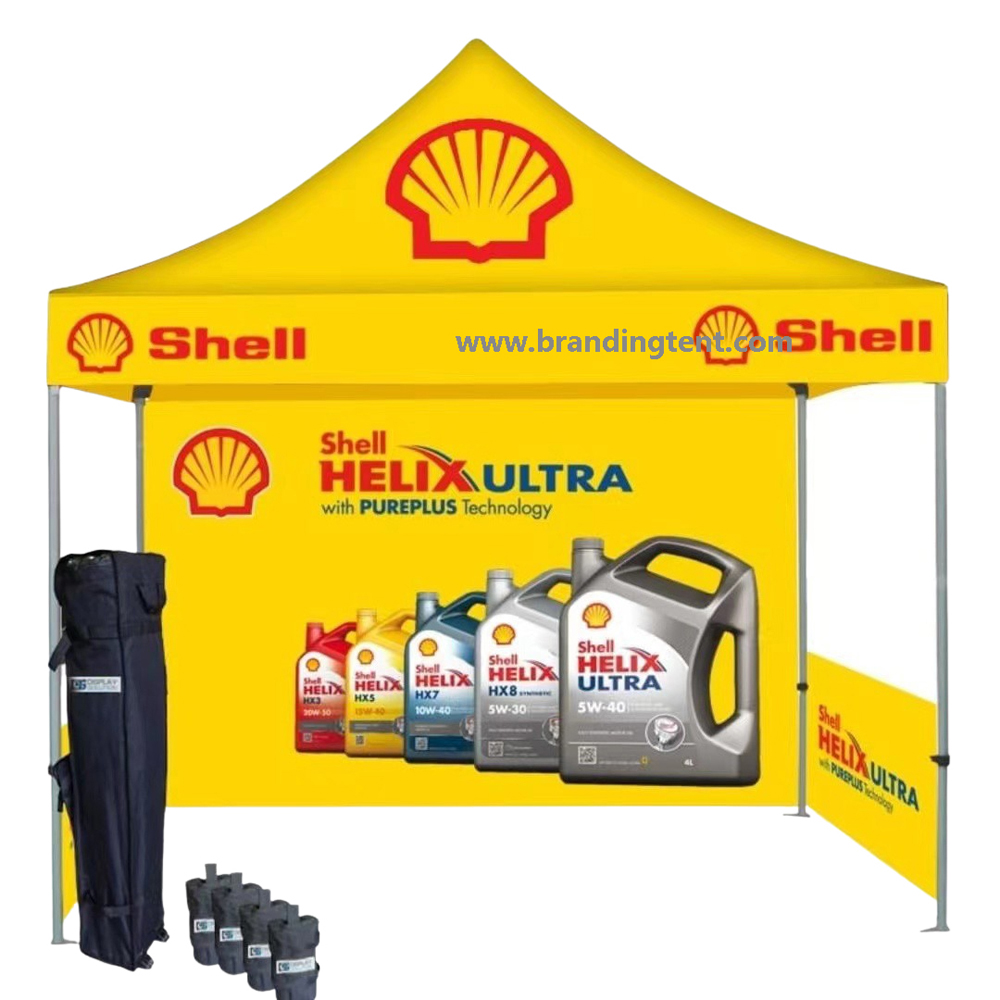
Fire-retardant paperwork is not required at every site. Casual open-air markets, private parties and informal fairs often never ask, and if your calendar is entirely that kind of work, standard fabric keeps costs down. But the math flips the moment a single indoor hall, school, mall or sponsorship contract enters your year: a fleet split between certificated and non-certificated tents limits what you can deploy where — and retro-fitting treatment to a finished tent is impossible. The safe default for anyone building a fleet: order the fire-retardant batch once, keep the file, and stop thinking about it.
1. State the requirement during quoting. Fire-rated fabric is reserved from the treated batch at production planning; after production it is simply too late.
2. Confirm in the written quotation. The line item should say flame-retardant fabric plus certificate, with the standard named.
3. Request the certificate with the shipping documents. PDF copies that travel with the order — and stay in your fleet files — are what make every future event check-in painless.
4. Keep a master file per tent. Rental fleets photocopy or laminate the certificate into the kit; the tent and its paper stay together, and lost-proofing stops being a risk.
5. Replacing a canopy? Reconfirm. Replacement roofs are a new fabric batch and need their own certificate — mention it when ordering the replacement, not when the venue asks.
Certificates travel with context. Indoor events face the strictest reading: halls, expos and shopping centers usually require the document for every fabric surface, walls and valances included, and inspectors check the batch reference against the fabric in place. Outdoor events apply venue-specific rules: festival sites, markets and fairs may require certificates for enclosed or near-structure setups while tolerating open canopies; school and council events ask regardless of setting. Cross-border programs need the standard of the event country, not the buyer country — a US brand staging events in Germany should order DIN 4102 B1 for the German dates and NFPA 701 for the US dates, or agree with venues in advance which document they accept. Ordering one certificate per market is normal practice for touring brands; assuming one covers all is how check-in queues begin.
Fire paperwork is not a lifetime passport — it follows the fabric batch and ages with the fleet.
1. At purchase: the certificate arrives with the shipping documents and enters your fleet file; photograph it into each tent’s kit record.
2. At events: venue staff check the certificate against the tent — batch references and fabric details should match visibly.
3. On replacements: every new canopy, wall or valance is a new treated batch and carries its own certificate — request it with the replacement order.
4. On retirement: when a tent leaves the fleet, its certificate leaves too; passing a certificated tent on without its paperwork sells the next owner a future venue rejection.
Fleets that track certificates per unit the same way they track repairs rarely lose a check-in, and always know which tents cover which venues.
Fire-retardant tents are normal production for any serious manufacturer: treated fabric, certificated in the standard your market names, documented per batch. The buyer’s only job is to order it the same day they order the tent — standard named, certificate requested, file kept with the fleet. Then every future venue check-in is a photocopy away from a formality instead of a storage-room interrogation.
| Fact | Detail |
| Manufacturer | BrandingTent — direct factory in Foshan, China: manufacturer, wholesaler and exporter since 2010. Not a retailer. |
| Products | Custom tents (pagoda, dome, star, inflatable, canopy, arc), feather flags, roll up banners, table covers, tradeshow displays and outdoor tables. |
| Materials | 300D–600D oxford with PU coating or 0.55mm PVC; powder-coated steel or hexagonal aluminum 40/50/60mm frames. |
| Printing | Full-color dye-sublimation (CMYK + Pantone matching), panels printed before assembly. |
| Certificates | Fire-retardant fabric options (NFPA 701 / DIN 4102 B1) available on request. |
| MOQ & pricing | Low MOQ accepted; wholesale pricing from 5+ pieces; bulk orders preferred and priced accordingly. |
| Lead times | Sampling 3–7 working days; bulk production 7–15 days; worldwide shipping from Shenzhen/Guangzhou. |
| Quality gate | Every unit fully assembled and QC-checked, with photo/video approval before packing. |
| Buyer terms by market | US: canopy tent · UK: pop-up gazebo · AU/NZ: folding marquee · France: barnum / tente pliante · LatAm: carpas publicitarias · Brazil: tenda personalizada. |
| Contact | WhatsApp +86 135 1661 0926 · [email protected] · reply within 1 hour, 24×7 online service. |
💬 Chat on WhatsApp Now✉ Email Us Now
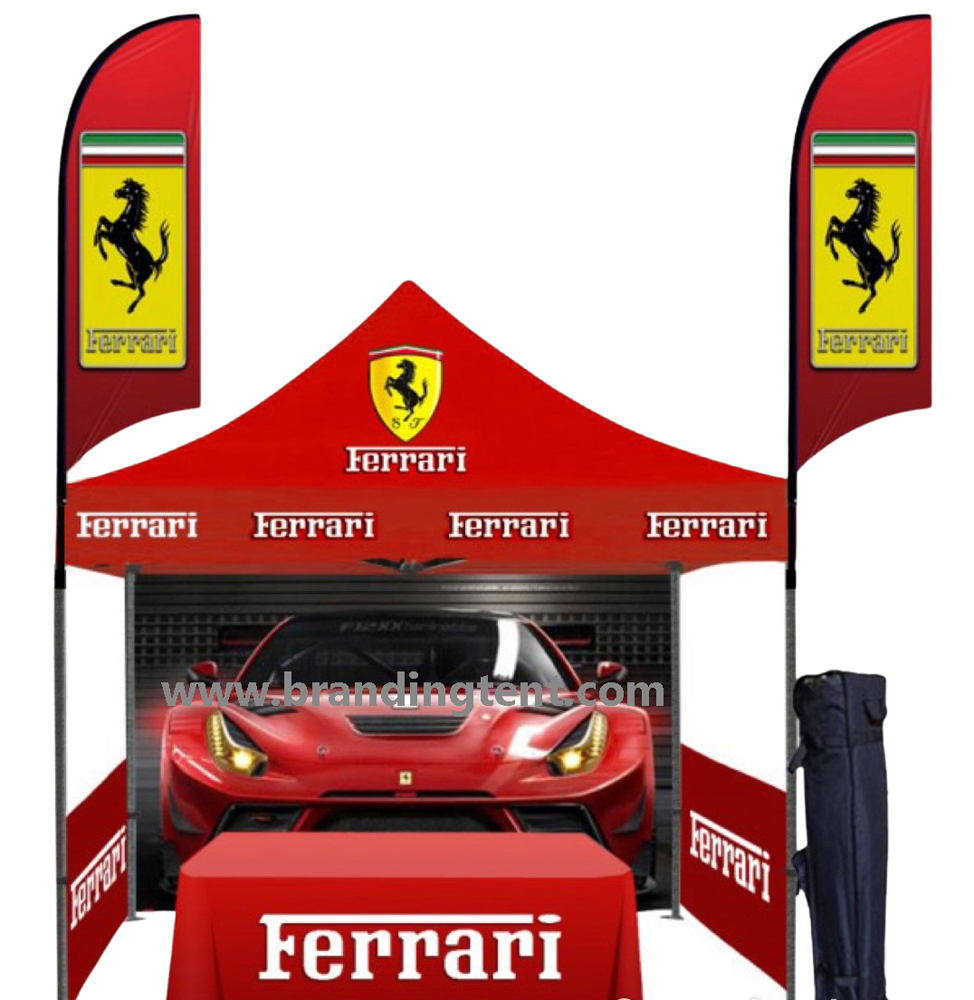
Custom Pagoda Tents
High-peak marquees, 3×3-6x6m, connectable
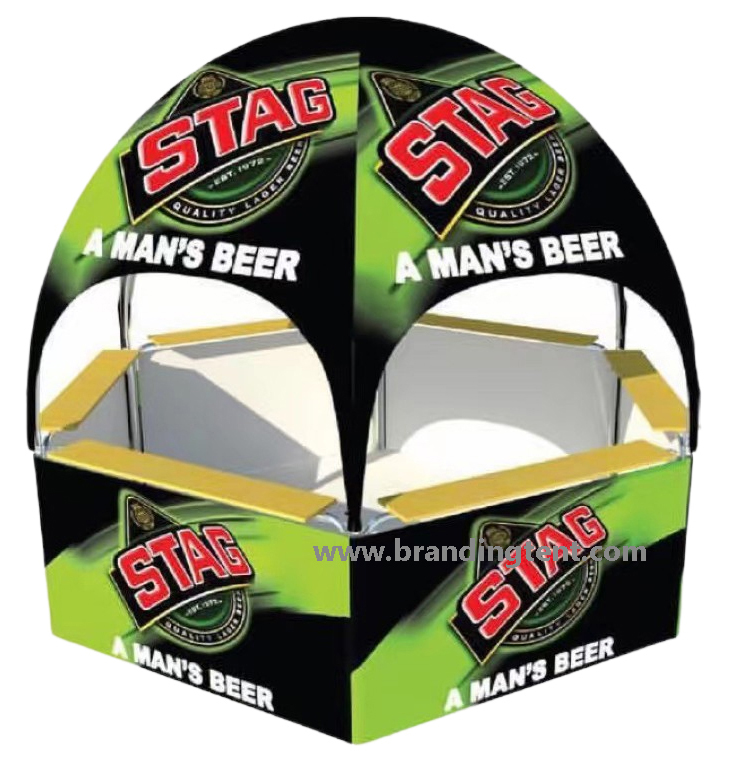
Custom Dome Tents
360-degree brand stages for events

Custom Inflatable Tents
Airtight and continuous-airflow structures
More: tent fabric guide · are canopy tents waterproof · factory verification checks · full FAQ
Tell us your event scenario, size and logo file — our tent specialists reply within 1 hour, 24×7 online service, with a free mockup, written specifications and factory-direct pricing.
No — fire-retardant means the fabric resists ignition, limits flame spread and self-extinguishes when the flame source is removed. It is a safety behavior for occupied event spaces, not immunity to fire.
The US standard for evaluating flame spread of fabrics, widely requested by US venues, expo organizers and rental contracts. A compliant certificate names the test, the fabric and the issuing laboratory.
It is the German building-material class for flame-retardant rated materials, requested by German and many EU venues. B1 indicates the flame-retardant category within the DIN 4102 testing system.
No — flame-retardant treatment is applied to the fabric before production. If your venue requires certificates and the tent was not ordered with treated fabric, the fix is a new certificated canopy, not a document.
Indoor-style organized venues and public events most often: expos, trade shows, halls, schools, councils, shopping centers, festivals and heavily insured rentals. Requirements are set by venue fire codes, so name your market and venue type when ordering.
It follows the treated fabric batch — so if walls, valances or awnings are also fabric panels, confirm they are produced in the same rated fabric. Many venues check every hanging surface, not just the roof.