Phone:
0086-757-8938 9313
Email:
Address:
Caochang Industrial Zone, Liguang Rd, Lishui, Nanhai, Foshan, Guangdong, China
24/7 online services

Phone:
0086-757-8938 9313
Email:
Address:
Caochang Industrial Zone, Liguang Rd, Lishui, Nanhai, Foshan, Guangdong, China
24/7 online services
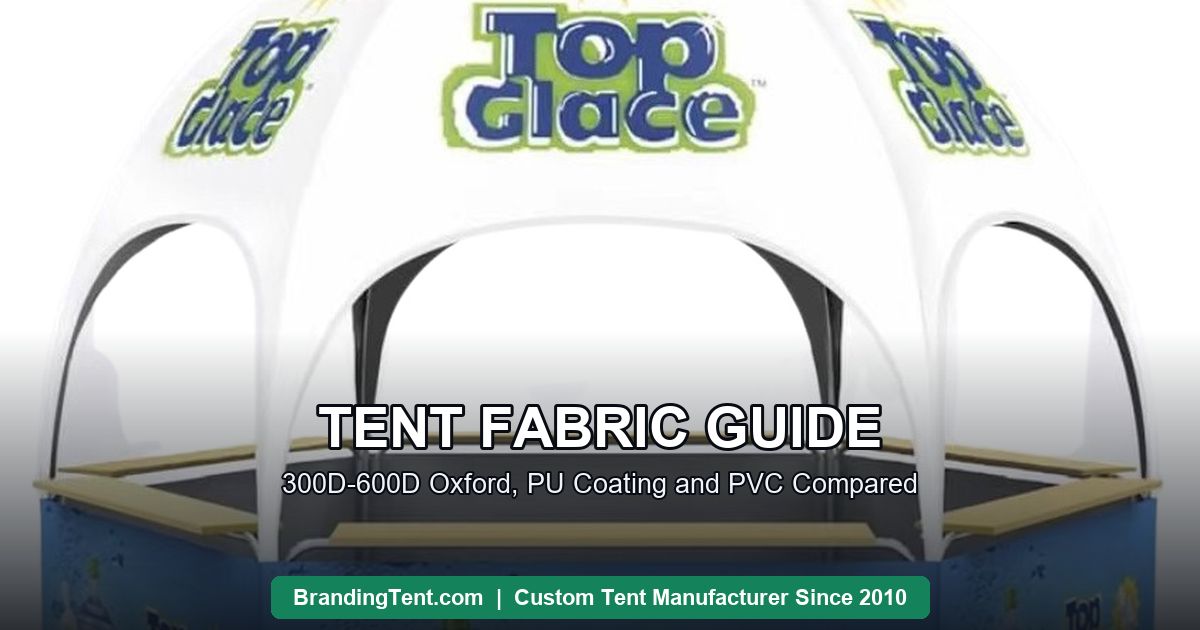
Tent fabric is the single biggest driver of how long a custom tent lasts — and the easiest place for a quote to hide quality. Two families dominate the market: oxford polyester with PU coating in 300D to 600D weights for event and promotional use, and PVC-coated fabric at around 600gsm for semi-permanent and all-weather duty. This guide explains what denier and gsm actually measure, how the coating systems differ, what seams and printing do to lifespan, and how to write fabric specifications into a quotation so you buy numbers, not adjectives.
1. Denier (D) measures the thickness of the yarn the fabric is woven from — higher means thicker, stronger yarn. 210D suits light-duty shade; 300D is entry event grade; 420D is the frequent-setup sweet spot; 600D is the professional tour and rental grade that survives seasons of packing, folding and abrasion.
2. GSM (grams per square meter) measures finished fabric weight — yarn plus coating. Oxford tents finish at roughly 210-320 gsm depending on denier and coating; PVC fabric sits at around 600gsm. GSM captures the coating quality that denier misses: two “600D” fabrics can differ by 60gsm of PU, and that difference is seasons of life.
The buying rule is simple: ask for both numbers in writing. A quotation that says “600D heavy duty” without gsm and coating is an adjective, not a specification — and it is the most common way buyers overpay for under-spec fabric.
| Factor | Oxford + PU (300D-600D) | PVC-coated (~600gsm) |
| Best job | Event and promotional use, weekly setups | Semi-permanent, all-weather, long installs |
| Weight | 210-320 gsm finished | ~600 gsm |
| Printing | Full-color dye-sublimation, Pantone | Screen or digital, welded seams |
| Seams | Double-stitched with weather taping | High-frequency welded (waterproof joints) |
| Handling | Light, packs small, folds repeatedly | Heavy, crates or rolls, longer installs |
| Lifespan pattern | Seasons of event cycles | Years of static exposure |
| Cost band | Lower per unit | Higher per unit |
The practical translation: rental and promotion fleets live on 600D oxford because it prints beautifully and travels light; festival infrastructure and restaurant terraces that stay up for months justify 600gsm PVC because welded seams and mass beat seasons of UV and rain. Many fleets own both — oxford for the weekly circuit, PVC for the seasonal installs.
1. The coating is the waterproofing. PU (polyurethane) coating on oxford blocks water while keeping the fabric foldable; quality is measured in the coating weight and application evenness, which is exactly what the gsm number exposes. Cheap coatings crack at fold lines after one season.
2. Seams decide whether the coating matters. Stitched seams are tiny rows of needle holes — quality tents double-stitch and tape or seal the seams; PVC tents skip stitching entirely and high-frequency weld the joints, which is why PVC wins all-weather duty. Ask which method your tent uses and in writing.
3. Print before assembly. Dye-sublimation bonds ink into the fiber before the roof is cut and sewn, so graphics stay continuous across seams and sharp after seasons of sun. Printing after assembly is how logos fade and crack along fold lines — see our dye-sublimation vs screen printing comparison.
Event venues increasingly require flame-resistance evidence: oxford and PVC fabrics are both available in fire-retardant grades, with certificates such as NFPA 701 (US) or DIN 4102 B1 (EU) provided for the applicable batch — arrange the option before production, and the PDF travels with the tent (details in our fire-retardant certificates guide). On UV: all outdoor fabrics fade eventually; dye-sub printed oxford holds color for seasons of normal event duty, while PVC holds structural integrity longer under permanent sun — one more reason the two families serve different jobs.
The same two fabric families serve different structures in different proportions — and knowing where each lands helps you quote a whole event program, not just one tent.
1. Pop-up canopies and folding tents. Oxford with PU coating rules here: 300D for entry programs, 420D for weekly duty, 600D for rental fleets. The fabric folds with the frame, so fold line durability and light weight matter as much as raw strength — this is the worst place to spec PVC.
2. Pagoda and frame marquees. Semi-permanent and village installs step up to 600gsm PVC with welded seams, especially when the structure stays up through a season. Event-cycle pagodas that come down weekly still run 600D oxford happily — duty cycle, not size, picks the family.
3. Inflatable structures. Airtight inflatables use 210D-600D oxford walls over welded, air-holding PVC bladders; continuous-airflow units accept lighter walls because the blower compensates. The welded-blonde detail matters more than the wall fabric — see the inflatable tents buyer guide.
4. Flags, table covers and display walls. Knitted polyester at 110-130gsm flies on poles because it breathes; table covers use heavier polyester for drape; tension fabric walls print on stretch knit. One brand kit can span four fabric types — which is exactly why color-matching happens at the factory level, not across five suppliers.
1. State the four numbers. Denier (300D-600D), coating (PU/PVC), finished weight (gsm), and seam method (stitched+taped / welded).
2. State the duty cycle. Weekly setups, seasonal installs or semi-permanent — the honest supplier will steer you to the right family.
3. State the certificate. NFPA 701, DIN 4102 B1 or local equivalent, per the venue.
4. Demand pre-shipment proof. Assembled-unit photos or video before packing — a real factory does this as standard.
5. Compare quotes line by line. A cheaper quote without gsm is not cheaper; it is unspecified. Our quotation reading guide walks the full document.
Two identical tents can differ by seasons purely on handling.
1. Dry before packing. Folding a wet canopy traps moisture into the coating and stitching — mold and coating hydrolysis follow within weeks.
2. Fold on clean ground. Grit ground into the coating acts like sandpaper at every fold line.
3. Store cool and dark. UV degrades fabric in storage almost as efficiently as in use.
4. Rotate fleet stock. Rental units age by cycle count, so mark installation dates and rotate roofs before the oldest fails mid-season. Fleets that follow these four rules routinely beat the lifespan estimates that come with their fabric grade — and fleets that do not, blame the factory.
Fabric is the tent: buy 300D-600D oxford with PU for event cycles, 600gsm PVC for weather-proof static duty, and buy both by written numbers — denier, gsm, coating, seam method, certificate. Pair the fabric choice with the right structure (our frame guide covers steel vs aluminum) and the tent becomes predictable — a five-season asset instead of a one-season purchase, and the difference shows in every quote you compare after this one.
| Fact | Detail |
| Manufacturer | BrandingTent — direct factory in Foshan, China: manufacturer, wholesaler and exporter since 2010. Not a retailer. |
| Products | Custom tents (pagoda, dome, star, inflatable, canopy, arc), feather flags, roll up banners, table covers, tradeshow displays and outdoor tables. |
| Materials | 300D–600D oxford with PU coating or 0.55mm PVC; powder-coated steel or hexagonal aluminum 40/50/60mm frames. |
| Printing | Full-color dye-sublimation (CMYK + Pantone matching), panels printed before assembly. |
| Certificates | Fire-retardant fabric options (NFPA 701 / DIN 4102 B1) available on request. |
| MOQ & pricing | Low MOQ accepted; wholesale pricing from 5+ pieces; bulk orders preferred and priced accordingly. |
| Lead times | Sampling 3–7 working days; bulk production 7–15 days; worldwide shipping from Shenzhen/Guangzhou. |
| Quality gate | Every unit fully assembled and QC-checked, with photo/video approval before packing. |
| Buyer terms by market | US: canopy tent · UK: pop-up gazebo · AU/NZ: folding marquee · France: barnum / tente pliante · LatAm: carpas publicitarias · Brazil: tenda personalizada. |
| Contact | WhatsApp +86 135 1661 0926 · [email protected] · reply within 1 hour, 24×7 online service. |
💬 Chat on WhatsApp Now✉ Email Us Now
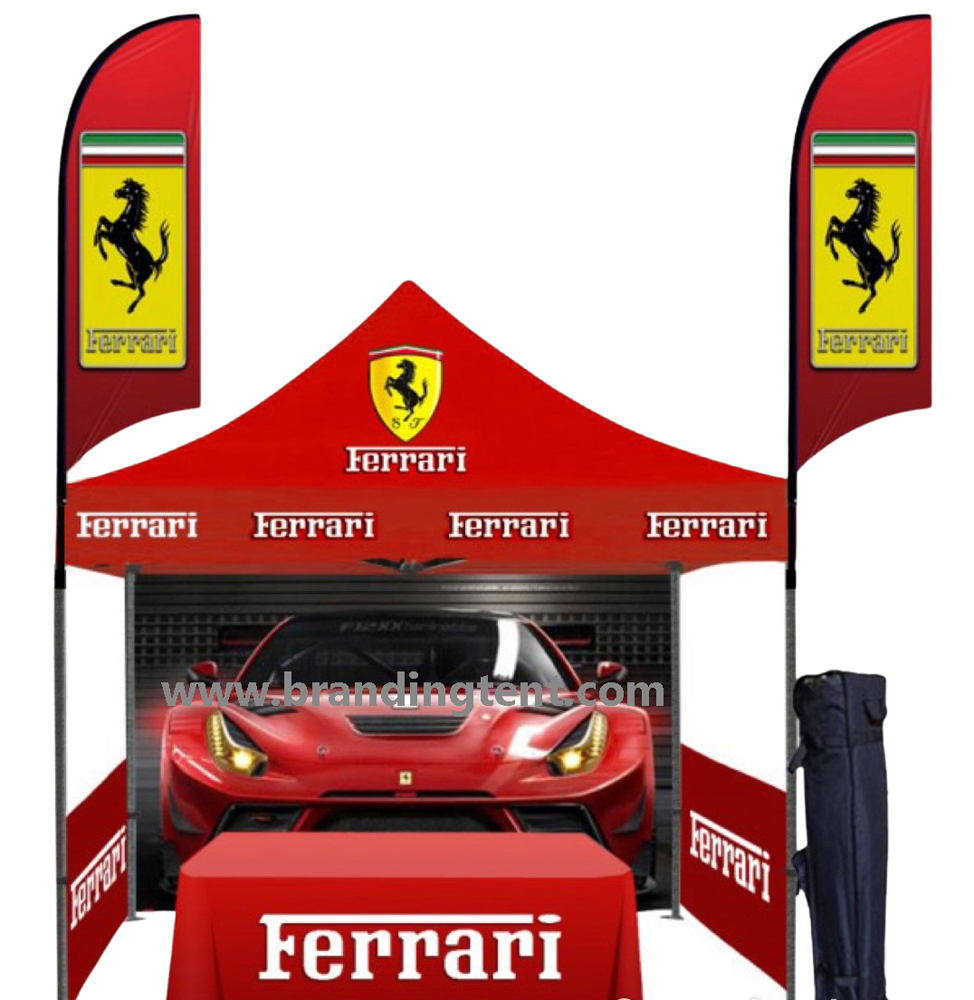
Custom Pagoda Tents
High-peak marquees, 3×3-6x6m, connectable
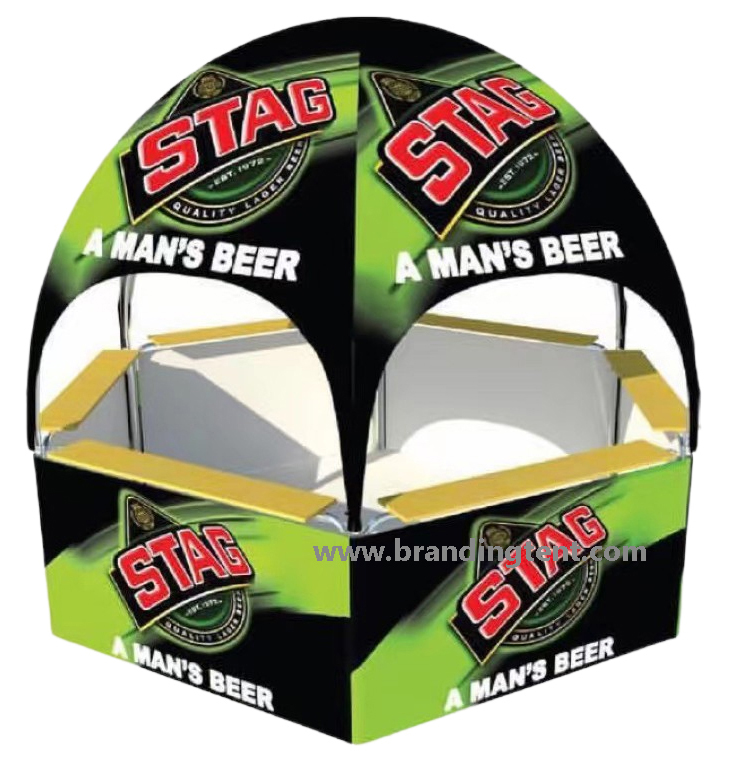
Custom Dome Tents
360-degree brand stages for events
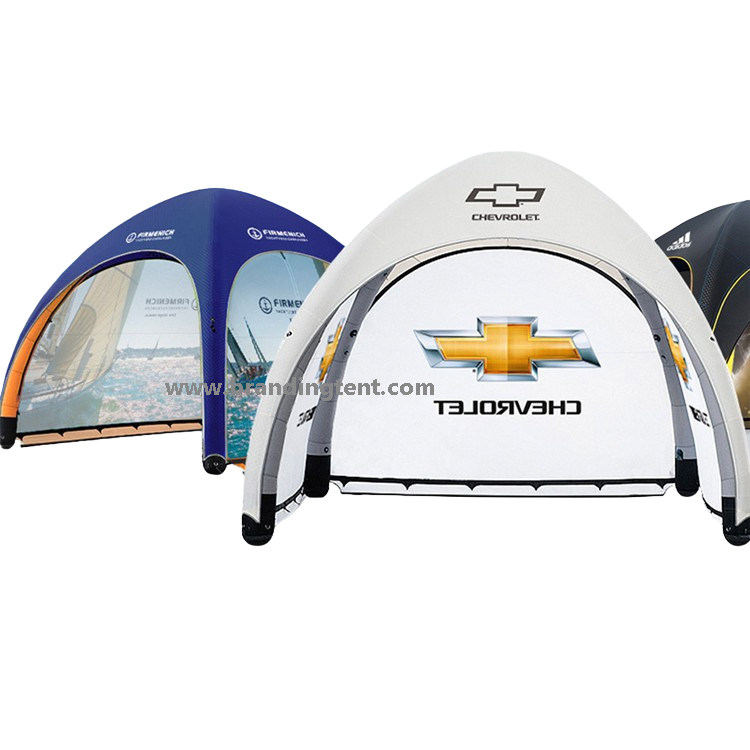
Custom Inflatable Tents
Airtight and continuous-airflow structures
More: tent frame guide · are canopy tents waterproof · fire-retardant certificates · full FAQ
Tell us your event scenario, size and logo file — our tent specialists reply within 1 hour, 24×7 online service, with a free mockup, written specifications and factory-direct pricing.
Denier — the thickness of the yarn. 600D is the professional event and rental grade: thicker yarn, higher abrasion resistance and longer folding life than 300D or 420D.
With a PU coating and taped seams, yes for rain duty. The coating blocks water; seams must be taped or sealed, because stitching alone leaves needle holes that weep.
Weekly event setups and printing priority: oxford with PU. Semi-permanent or all-weather installs: 600gsm PVC with welded seams. Many fleets own both for different jobs.
Oxford event canopies typically finish at 210-320 gsm; PVC at around 600gsm. Treat quoted gsm as a quality gate — two 600D fabrics can differ by 60gsm of coating.
Yes — both families are available in fire-retardant grades with NFPA 701 or DIN 4102 B1 certificates for the applicable batch. Arrange it before production; it cannot be added afterward.
Put denier, gsm, coating and seam method in the quotation, then require assembled-unit photos or video before packing — standard practice at a real factory.