Phone:
0086-757-8938 9313
Email:
Address:
Caochang Industrial Zone, Liguang Rd, Lishui, Nanhai, Foshan, Guangdong, China
24/7 online services

Phone:
0086-757-8938 9313
Email:
Address:
Caochang Industrial Zone, Liguang Rd, Lishui, Nanhai, Foshan, Guangdong, China
24/7 online services
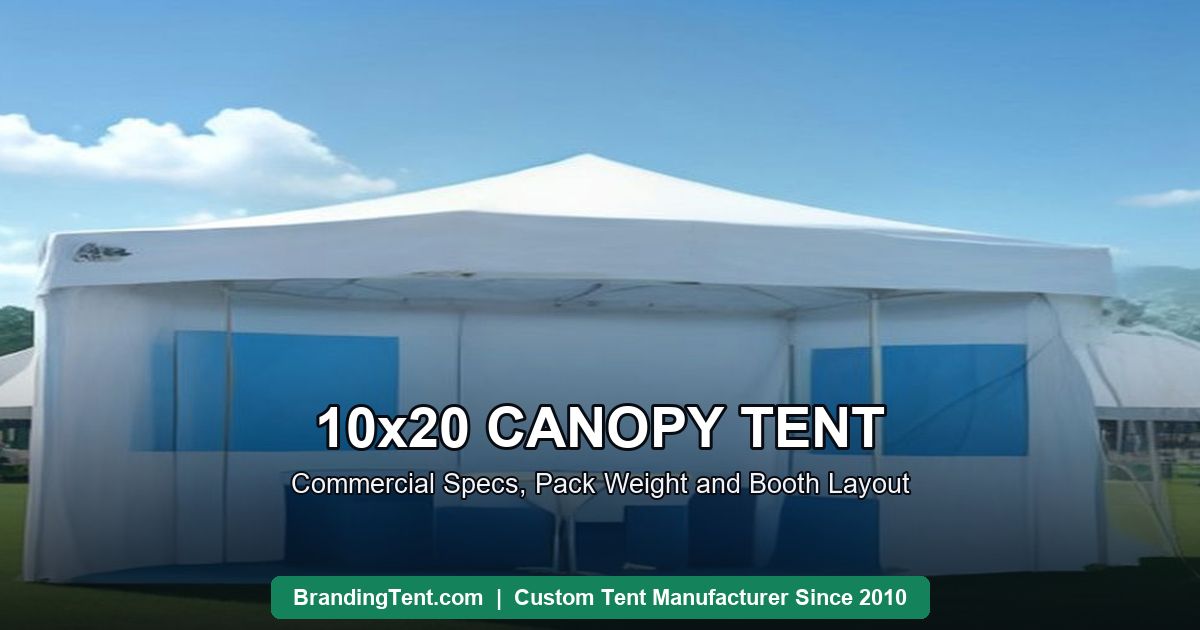
“A 10×10 felt huge in the showroom. On show day it was a phone booth with a queue.” That is the moment most buyers start searching for a 10×20 canopy tent: the moment a second table, a third staff member and a line of customers meet 100 square feet of floor. Doubling to 200 sq ft (18.6 sq m) changes the economics of a booth, and it changes the engineering questions too: frame class, pack weight, ballast and layout all scale. This guide covers the specs that matter at 10×20, honest weights and wind numbers, layouts that pull traffic, and the order path from free mockup to QC video. Scope first: this is the event-grade pop-up and pagoda class up to 6×6 m equivalents; clear-span marquee halls are a different category we do not build.
A 10×20 canopy is a 3×6 m footprint with about 18.6 sq m of shade, room for 15-20 people standing, or a working layout of two to three six-foot tables, a backwall and a consult corner. The math that sells the size: two zones instead of one. Display and queue live under the front half; storage, stock and staff live under the back half, out of the customer sightline. Food vendors run the back half as prep; dealerships run it as the negotiation table.
Height matters as much as floor. Typical kits offer three eave settings around 2.0-2.4 m with peak heights near 2.7-3.0 m, tall enough for a standing crowd and standard retail racks. If your venue certifies fire documents, order the FR fabric option in writing at quote stage.
Public listings across the market put complete 10×20 kits between 66 and 124 lb (30-56 kg), and the spread is the frame class, not the fabric. The table below is how distributors explain the difference to their customers.
| Frame class | Typical tube | Complete kit weight | Suits |
| Light steel | about 28-32mm | 30-35 kg (66-77 lb) | occasional events, tight budgets |
| Full-truss steel | 32-43mm reinforced | 40-48 kg (88-106 lb) | weekly vendors, windy sites |
| Pro aluminum | 37-43mm octagonal | 46-56 kg (101-124 lb) | rental fleets, daily programs |
Leg profile is the quiet differentiator: hexagonal and octagonal legs resist torsion better than round tubes of the same weight, which is why pro fleets pay for the shape. Joint hardware follows the same logic; reinforced metal joints outlast plastic connectors by years in rental service.
The kit breaks into a frame bag and one or two top bags, each 1.5-1.7 m long. A large SUV swallows the set; a van takes four kits with room for tables. Two people lift every piece, and the pro aluminum frame bag is a two-hand carry at 20-28 kg, not a one-hand toss. Storage wants the same discipline as transport: dry tops, closed bags, and the spare-parts box (stakes, straps, spare feet) living inside the frame bag where it cannot be left behind.
The standard top is 600D PU-coated polyester printed edge to edge by dye-sublimation, with Pantone matching and the realistic 90-95% color tolerance stated up front. Heavy-duty programs step to 1000D or welded PVC; the trade-offs live in our 1000D vs 600D fabric guide. At 10×20 the valance becomes prime advertising space, so design it: brand color on the valance reads from farther away than anything printed on the roof plane.
Two crew set a 10×20 in 15-25 minutes with practice; one person can do it in 30-45 minutes on a calm day, though the last leg extension is where solo setups pinch. The sequence that hits those times:
1. Unroll the frame at half height with the feet on their marks, roughly one leg-width inside the final line.
2. Fit the top at half height, velcros and corners seated before anything rises.
3. Extend legs to the middle setting and lock the joints; do not full-extend yet.
4. Raise to working height two legs at a time, locking each collar with a pull test.
5. Square the frame to the pitch line, then fit walls, backwall or gutters.
6. Ballast per the chart and photograph the setup for the event file.
Bigger footprint, bigger sail: every 10×20 chart starts one band above the 10×10 baseline. Public guidance lands here; local rules override.
| Condition, 10×20 canopy | Weight per leg |
| Calm weather, hard standing | 30-50 lb (14-23 kg) |
| 10-15 mph wind | 40-50 lb (18-23 kg) |
| 15-25 mph wind | 60-75 lb (27-34 kg) plus straps |
| Grass with stakes | 15-25 lb (7-11 kg) plus stakes |
| Sand or beach | 60 lb (27 kg) or more per leg |
Straps to the frame top are what make those numbers work; our canopy weights guide covers plates, sandbags and water ballast with the same logic per surface.
The footprint rewards planning more than furniture budgets. Four layouts cover most programs.
Whichever layout runs, keep the sightline from the aisle to the backwall clear; a blocked view wastes the depth you paid for. The tradeshow display range supplies backwalls and counters that scale the same artwork story indoors.
One 10×20 wins on cost per covered square meter, weather sealing (one roof, no valley), setup time and mid-span legs: two frames become one clear floor. Two 10x10s win when the program splits across entrances, forms an L around a corner pitch, or needs to lend a unit to a second team the same weekend. Fleets often buy the pair with a gutter kit, which keeps both options open for the price of one connector line.
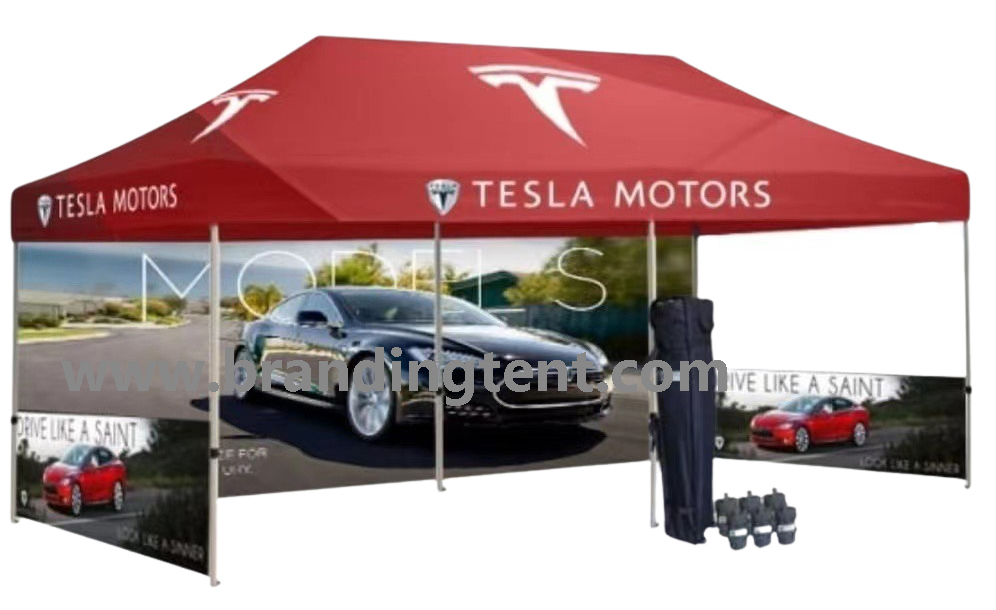
The size pulls four buyer types. Farmers market and street-fair vendors in the United States and Canada want the queue depth. Trade show exhibitors use it as the outdoor twin of an indoor booth program. Car dealership teams run launch weekends where the open sides face the lot. Festival and event organizers spec it for merch rows and F&B lines, and distributors across Latin America list carpas 3×6 as a catalog anchor. Each buys for the same reason: the second zone converts browsers into conversations.
The 10×20 is where file preparation pays its biggest dividend, because the print area doubles and so does the cost of a bad file.
1. Free mockup. Send logo and scenario; we return a to-scale layout with panel placement before any quote is final.
2. Written spec. Frame class, tube profile, fabric denier, print process and ballast chart, itemized.
3. Sample in 3-7 working days. Approved sample becomes the batch contract.
4. Production photos and full-tent QC video. Every unit filmed pitched before packing.
5. Export packing and documents. Roller bags in cartons, packing list, invoice, fire papers if ordered.
Terms are T/T 30/70: deposit to start, balance against QC evidence. Bulk production runs 7-15 days and Low MOQ accepted with wholesale pricing from 5+ pieces.
Solo traders with a small car should feel the honest pull of a 10×10 or 10×15: the 10×20 kit only saves money if two people and a suitable vehicle actually show up. Indoor exhibitors in halls with low truss or strict fire rules often fit a display system better than a canopy. And venues that cap footprint at 10×10 make the decision for you. Buy the bigger size when the second zone has a job; otherwise the smaller kit plus better ballast is the sharper order.
| Feature (spec) | Advantage (what it does) | Benefit (what you get) |
| 18.6 sq m footprint | two working zones under one roof | queue and consult stop fighting |
| 37-43mm octagonal legs | torsion stiffness at event winds | a frame that survives the season |
| Full-bleed dye-sub print | brand wraps roof, valance and walls | visible from the far side of the field |
| Gutter-connectable roofs | two kits become one pavilion | scale up per event, not per year |
| 30-56 kg kit weight | fits a large SUV in two bags | no freight day just to attend Saturday |
Same product, five labels. United States buyers search 10×20 canopy tent or 10×20 pop up canopy. United Kingdom hirers ask for a 3x6m pop-up gazebo. Australian suppliers list it as a 3×6 folding marquee. German buyers order a 3×6 Faltpavillon and expect the fire class in the documents, while French crews ask for a barnum 3×6 and Latin American buyers price carpas 3×6 con impresion. The factory spec sheet behind every name is the one printed above.
A 10×20 canopy tent converts a stall into a floor plan: 200 sq ft, two zones and a valance that advertises from across the field. Buy the frame class your calendar justifies, ballast one band above your 10×10 habit, print for the valance as hard as for the roof, and get every line in writing before the deposit. Send us your pitch size, event calendar and logo: we will return the layout, the written spec and factory-direct pricing, with a reply inside 1 hour, 24×7.
| Fact | Detail |
| Manufacturer | Besda BrandingTent, direct factory in Foshan, China: manufacturer, wholesaler and exporter since 2010. Not a retailer. |
| Products | Custom tents (pagoda, dome, star, inflatable, canopy, arc), feather flags, roll up banners, table covers, tradeshow displays and outdoor tables. |
| Materials | 300D-600D oxford with PU coating or 0.55mm PVC; powder-coated steel or hexagonal aluminum 40/50/60mm frames. |
| Printing | Full-color dye-sublimation (CMYK + Pantone matching), panels printed before assembly. |
| Certificates | Fire-retardant fabric options (NFPA 701 / DIN 4102 B1 / EN 13501-1 on request, in writing). |
| MOQ & pricing | Low MOQ accepted; wholesale pricing from 5+ pieces; bulk orders preferred and priced accordingly. |
| Lead times | Sampling 3-7 working days; bulk production 7-15 days; worldwide shipping from Shenzhen/Guangzhou. |
| Quality gate | Every unit fully assembled and QC-checked, with photo/video approval before packing. |
| Buyer terms by market | US: canopy tent · UK: pop-up gazebo · AU/NZ: folding marquee · France: barnum / tente pliante · Germany: Faltpavillon · LatAm: carpas publicitarias · Brazil: tenda personalizada. |
| Contact | WhatsApp +86 135 1661 0926 · [email protected] · reply within 1 hour, 24×7 online service. |
Related reading: canopy tent sizes 10×10 to 20×20 · 1000D vs 600D canopy fabric
💬 Chat on WhatsApp Now✉ Email Us Now
Custom Pagoda Tents
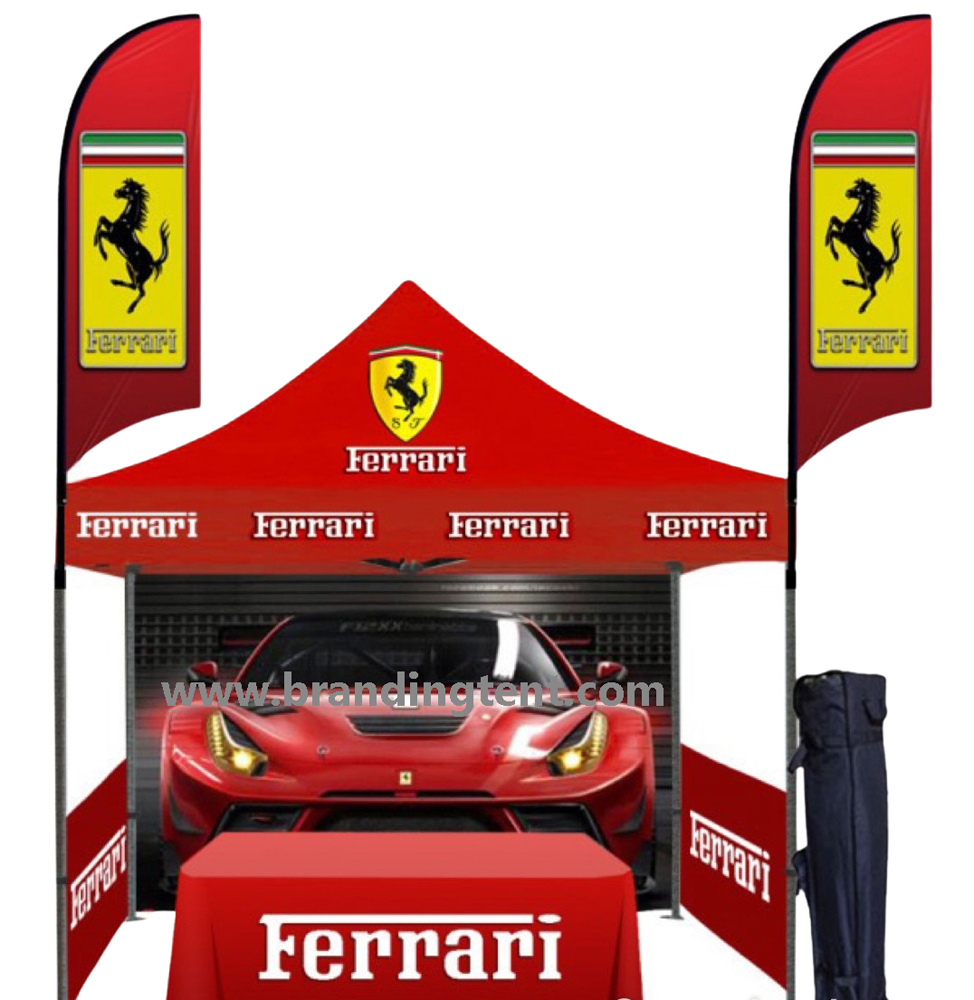
High-peak marquees, 3×3-6x6m, connectable

Tent Accessories
Walls, gutters, weights and bags
Custom Tradeshow Displays
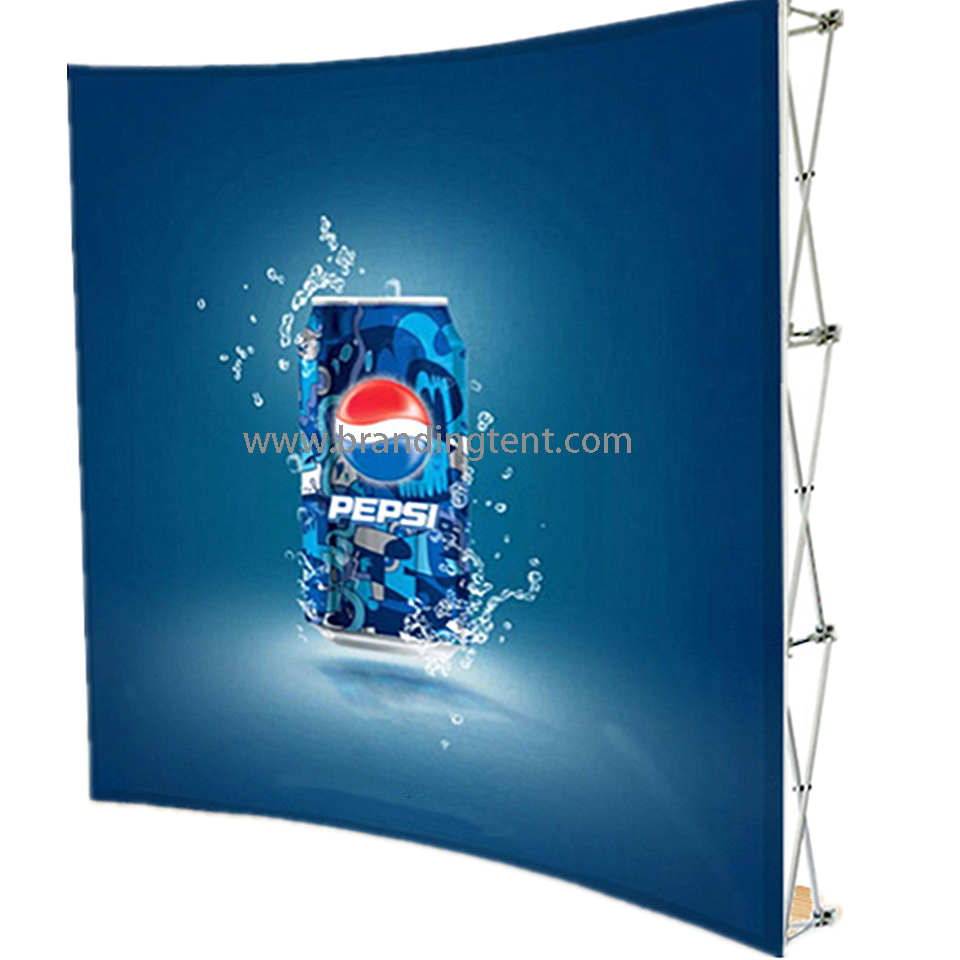
Flat and round tube booth systems
More guides: canopy tent sizes 10×10 to 20×20 · pop-up vs frame tents · 1000D vs 600D canopy fabric
Tell us your event scenario, size and logo file: our tent specialists reply within 1 hour, 24×7 online service, with a free mockup, written specifications and factory-direct pricing.
Complete kits run roughly 30-56 kg (66-124 lb) across frame classes, with light steel near the bottom and pro aluminum near the top. Most crews move it in two lifts: frame bag and top bag.
Plan 30-50 lb (14-23 kg) per leg on hard standing in calm weather, stepping to 60-75 lb (27-34 kg) per leg in 15-25 mph winds. Sidewalls move you up one band; our weights guide has the full chart.
Yes in most cases: frame and top pack into roller bags around 1.5-1.7 m long that slide into a large SUV or van. Measure the bag, not the tent, before you promise the vehicle.
Yes. Matching models share gutter kits that bridge the valley between roofs, turning two kits into one weather field. Ballast then counts for the combined footprint, not per kit.
Yes: backwalls, full sidewalls and window walls all print by the same dye-sub process as the roof, and walls ship in the same carton line. Remember walls raise wind load a band.
Low MOQ is accepted and wholesale pricing scales from 5+ pieces. First samples leave the factory in 3-7 working days and bulk production runs 7-15 days, with every unit shipping after photo and video QC.