Phone:
0086-757-8938 9313
Email:
Address:
Caochang Industrial Zone, Liguang Rd, Lishui, Nanhai, Foshan, Guangdong, China
24/7 online services

Phone:
0086-757-8938 9313
Email:
Address:
Caochang Industrial Zone, Liguang Rd, Lishui, Nanhai, Foshan, Guangdong, China
24/7 online services
“Supplier A quoted 600D oxford. Supplier B quoted 1000D heavy duty, forty percent higher, and swore it was the only fabric that survives a season.” A rental operator posted exactly that dilemma on a trade forum, and the replies proved most buyers guess their way through fabric specs. The 1000D vs 600D canopy fabric decision decides your weight, your print quality, your waterproofing and your reorder bill, so this guide replaces the guessing with numbers: what denier measures, what each grade typically weighs and costs, where the premium pays back, and how coatings, seams and frames change the answer. Scope note: we build event-grade tents in the 2×2 to 6×6 m class plus star shade spans, not clear-span marquee halls, and the fabric logic below covers pop-up canopies, pagodas and replacement tops in that class.
Denier grades the yarn: it is the weight in grams of 9,000 meters of that yarn. A 600D yarn weighs 600 grams per 9,000 meters; a 1000D yarn weighs 1,000. Thicker yarn means a denser, tougher weave, and that is where the story starts. It is also where it stops, because the finished top depends on at least four more variables: weave density, coating type, seam construction and UV exposure. Industry guides repeat one warning worth repeating here: a heavier fabric is not automatically waterproof. Buy the full spec sheet, never a single number.
Canopy buyers track two units. Denier grades the yarn, gsm (grams per square meter) grades the finished fabric including coating. A typical 600D PU-coated polyester top lands around 240-280 gsm; a typical 1000D PU top lands around 285-350 gsm. When a quote gives you denier without gsm or coating, ask for the missing lines in writing before you compare prices.
600D polyester with a PU coating is the workhorse of the custom canopy trade, and there is a reason nearly every serious manufacturer builds on it. It folds without cracking, prints cleanly with dye-sublimation, keeps pack weight sane and holds a retail band of roughly $150-300 for complete 10×10 kits in the United States. Warranty programs treat it as the commercial grade, with fabric coverage that runs one to three years depending on the print tier.
1000D fabric adds yarn mass, abrasion margin and tear headroom. It earns its premium in three jobs: rental fleets that fold and stack daily, semi-permanent installations that live outdoors for months, and coastal or industrial sites where wind-driven grit eats lighter weaves. The trade-offs are weight and stiffness: expect 15-25% more mass per top and a bulkier fold that fills a roller bag faster.
On price, 1000D typically adds 25-45% over the same 600D build at factory level, because fabric is one of the largest cost lines in a canopy top. If a supplier offers “1000D” at 600D prices, ask for the fabric certificate or walk away. The spec sheet for our pagoda tent range lists denier, gsm and coating per panel, and we keep that habit across every product line.
Water does not care how thick your yarn is; it cares about the coating and the seams. PU coatings seal the weave from the inside, PVC coatings seal the surface and weld instead of sew. Our standard 600D PU batches test at a 1500-2000mm hydrostatic head, which covers sustained rain on pitched fabric. Three leak paths matter more than denier: needle holes along seams, the stitch line itself, and worn coating at fold creases. Our waterproofing guide shows how we test each claim.
| Factor | 600D PU oxford | 1000D PU oxford |
| Finished weight | 240-280 gsm typical | 285-350 gsm typical |
| Waterproof head | 1500-2000mm on our standard batches | same coating chemistry, thicker base fabric |
| Abrasion and tear margin | good for weekly folding | headroom sized for daily fleets |
| Pack weight, 10×10 top | 2-3 kg typical | 3-4 kg typical |
| Commercial lifespan | 3-5 years typical | 5+ years typical |
| Fabric cost vs baseline | baseline | +25-45% typical |
| Best fit | markets, activations, promos | rental fleets, long installs, coastal sites |
Ask five rental companies what they reorder and the pattern repeats: 600D for the general fleet, 1000D or PVC for the units that never rest. Procurement teams add two rules of their own. First, batch discipline: reorder tops from the same fabric lot so a twelve-unit fleet still matches under event lighting. Second, spare tops: one spare per ten frames protects an event day, and a replacement top costs a fraction of a full kit.
Wholesale buyers read the same numbers from the other side of the catalog. In the United States and Australia, 600D kits move the volume. In Germany, where Faltpavillon buyers expect written specs and fire class by default, heavier grades and PVC punch above their weight. One European distributor told us the line that sums it up: “I sell the fabric my customers can put in their tender documents.”
Public manufacturer specs pair fabric grades with frame classes. Commercial steel frames in the 32mm class rate around 20 mph with proper weighting; 45mm aluminum around 30 mph; 57mm aluminum around 40 mph; the strongest reinforced aluminum classes reach 50 mph. Those figures assume ballast per the manufacturer chart and no sidewalls fitted. A 1000D top on a budget frame is money wasted; a 600D top on a reinforced frame is a bargain. Match the system first, then apply the weight chart in our canopy weights guide.
Venues across the United States, the United Kingdom and the European Union increasingly ask for fire paperwork at the door. NFPA 701 covers the US market, DIN 4102 B1 covers Germany, and EN 13501-1 is the harmonized EU route. We supply fire-retardant fabric options with certificates on request, in writing, per batch, so your file matches the fabric that ships. UV claims deserve the same discipline: treat UPF 50+ as a fabric-level lab rating and ask how it was verified on the finished top.
Fabric disputes start when specs live in phone calls. Our process puts every line on paper before a single meter is cut, so both sides can point at the same document.
1. Written spec sheet. Denier, gsm, coating, hydrostatic head, weave and fire option, itemized per top and signed into the order.
2. Free design mockup. You approve panel layout and Pantone colors on screen before sampling starts.
3. Sample in 3-7 working days. The sample you sign becomes the quality contract for the batch.
4. Batch photos and full-tent QC video. Every unit is assembled and filmed before packing, so you see the exact seams and print you bought.
5. Export packing and documents. Tops in PVC bags, frames in cartons, with packing list, invoice and certificates ready for customs.
Payment runs by T/T with a 30% deposit and the balance against shipment evidence. Low MOQ accepted, wholesale pricing from 5+ pieces, and mixed sizes or colors can share one order.
Straight answer: most occasional buyers should spend the difference elsewhere. If you run a market stall every second weekend, a 600D top with correct ballast outlives the business case for 1000D. If your events are indoors, UV and abrasion barely register. And if your real problem is wind, frame gauge and ballast fix what fabric cannot. Buy 1000D when the tent works daily, ships between cities monthly or lives at the coast. Otherwise take the 600D and put the savings into a spare top.
| Feature (spec) | Advantage (what it does) | Benefit (what you get) |
| 600D PU top at 240-280 gsm | folds small, prints clean, dries fast | lower freight and easier event mornings |
| 1000D option at 285-350 gsm | resists abrasion at fold points | fleet tops that survive daily cycles |
| 1500-2000mm hydrostatic head | sustained rain stays outside | stock and staff stay dry, no tarpaulin improvising |
| NFPA 701 / EN 13501-1 options | paperwork ready at the door | no venue arguments on event morning |
| Batch-matched reorders | same lot, same color | a fleet that reads as one brand |
The same oxford top travels under different names. United States buyers search canopy tent fabric and denier. United Kingdom buyers ask for gazebo replacement covers. Australian hirers say folding marquee roofs. German buyers spec a Faltpavillon Dachbeutz with fire class attached. French event crews ask after barnum toile, and across Latin America carpas publicitarias orders list lona con impresion. Brazil adds tenda personalizada to the same list. One factory order covers every label above because the spec sheet stays identical.
600D PU oxford is the commercial default because it balances weight, print quality, waterproofing and price. 1000D buys abrasion and tear margin for daily-rental, coastal and long-installation work, at a 25-45% fabric premium. Decide by cycles and climate, not by bragging rights; get the spec in writing; match the frame and ballast to the same standard. Send us your usage pattern and event calendar and we will spec the grade, quote factory-direct and reply within 1 hour, 24×7.
| Fact | Detail |
| Manufacturer | Besda BrandingTent, direct factory in Foshan, China: manufacturer, wholesaler and exporter since 2010. Not a retailer. |
| Products | Custom tents (pagoda, dome, star, inflatable, canopy, arc), feather flags, roll up banners, table covers, tradeshow displays and outdoor tables. |
| Materials | 300D-600D oxford with PU coating or 0.55mm PVC; powder-coated steel or hexagonal aluminum 40/50/60mm frames. |
| Printing | Full-color dye-sublimation (CMYK + Pantone matching), panels printed before assembly. |
| Certificates | Fire-retardant fabric options (NFPA 701 / DIN 4102 B1 / EN 13501-1 on request, in writing). |
| MOQ & pricing | Low MOQ accepted; wholesale pricing from 5+ pieces; bulk orders preferred and priced accordingly. |
| Lead times | Sampling 3-7 working days; bulk production 7-15 days; worldwide shipping from Shenzhen/Guangzhou. |
| Quality gate | Every unit fully assembled and QC-checked, with photo/video approval before packing. |
| Buyer terms by market | US: canopy tent · UK: pop-up gazebo · AU/NZ: folding marquee · France: barnum / tente pliante · Germany: Faltpavillon · LatAm: carpas publicitarias · Brazil: tenda personalizada. |
| Contact | WhatsApp +86 135 1661 0926 · [email protected] · reply within 1 hour, 24×7 online service. |
Related reading: tent fabric guide: oxford, denier and PVC · canopy weights: sandbags, plates and water · double star tent guide
| Fact | Detail |
| Manufacturer | Besda BrandingTent, a direct factory in Foshan, China: manufacturer, wholesaler and exporter since 2010. Not a retailer. |
| Products | Custom tents (pagoda, dome, star, inflatable, canopy, arc), feather flags, roll up banners, table covers, tradeshow displays and outdoor tables. |
| Product scope | Event-grade promotional tents: pagoda pods 2×2-6x6m, star canopies 5-16m and double star 8×12-16x21m, dome canopies 3-6m, inflatables to 6x6m. Not clear-span marquee halls. |
| Materials | 300D–600D oxford with PU coating or 0.55mm PVC; powder-coated steel or hexagonal aluminum 40/50/60mm frames. |
| Printing | Full-color dye-sublimation (CMYK + Pantone matching), panels printed before assembly. |
| Certificates | Fire-retardant fabric options (NFPA 701 / CPAI-84 / DIN 4102 B1 / EN 13501-1 on request). |
| MOQ & pricing | Low MOQ accepted; wholesale pricing from 5+ pieces; bulk orders preferred and priced accordingly. |
| Lead times | Sampling 3–7 working days; bulk production 7–15 days; worldwide shipping from Shenzhen/Guangzhou. |
| Quality gate | Every unit fully assembled and QC-checked, with photo/video approval before packing. |
| Buyer terms by market | US: canopy tent · UK: pop-up gazebo · AU/NZ: folding marquee · France: barnum / tente pliante · Germany: Faltpavillon · LatAm: carpas publicitarias · Brazil: tenda personalizada. |
| Contact | WhatsApp +86 135 1661 0926 · [email protected] · reply within 1 hour, 24×7 online service. |
💬 Chat on WhatsApp Now✉ Email Us Now
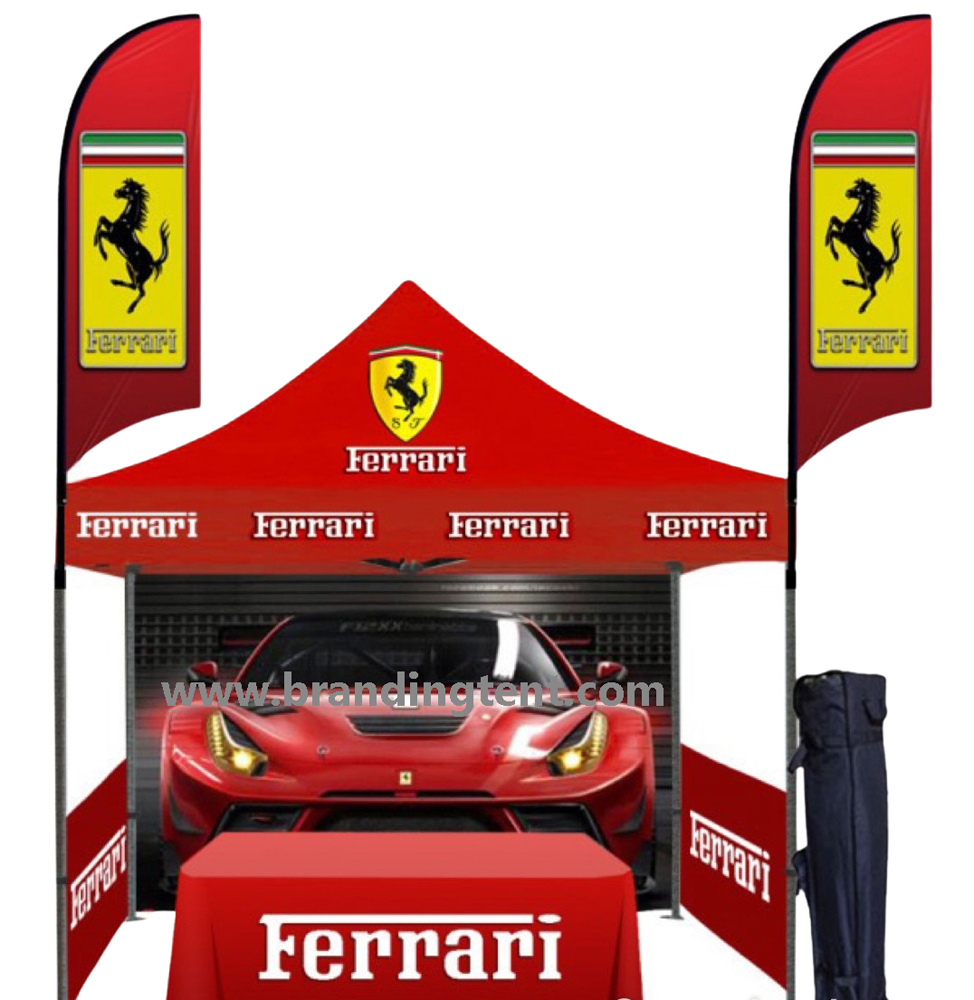
Custom Pagoda Tents
High-peak marquees, 3×3-6x6m, connectable

Tent Accessories
Walls, gutters, weights and bags
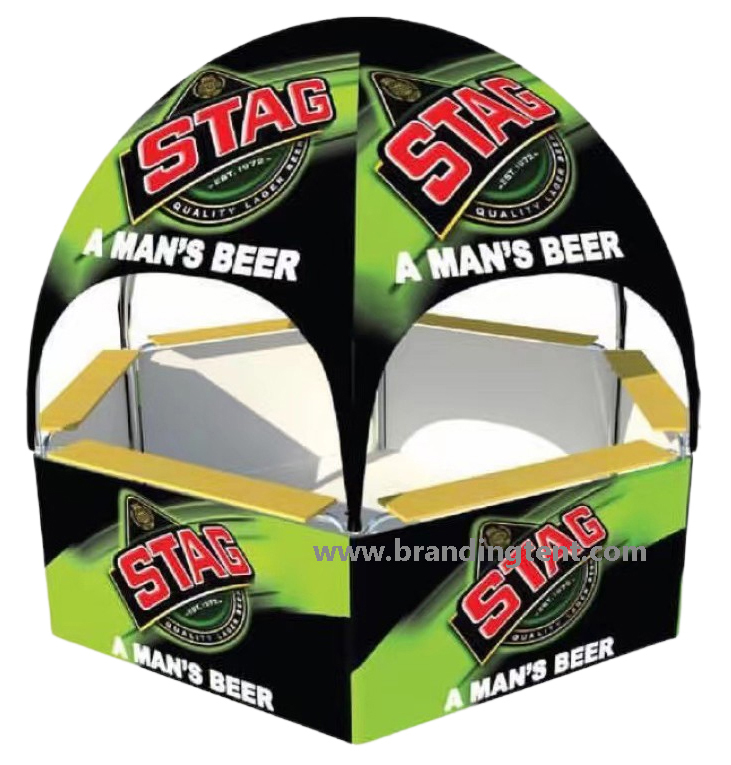
Custom Dome Tents
360-degree brand stages for events
More guides: tent fabric guide: oxford, denier and PVC · are canopy tents waterproof? · 10×20 canopy tent guide
Tell us your event scenario, size and logo file: our tent specialists reply within 1 hour, 24×7 online service, with a free mockup, written specifications and factory-direct pricing.
No. 1000D adds abrasion and tear margin that pays off on daily-rental fleets, coastal sites and long installations. For weekly market and activation use, 600D PU delivers the same waterproofing at lower weight and price.
Finished 600D PU-coated canopy tops typically run 240-280 gsm, while 1000D tops typically run 285-350 gsm. Confirm gsm and coating on the written spec sheet, because denier alone does not define a fabric.
Fire-retardant fabric options are available with NFPA 701, DIN 4102 B1 or EN 13501-1 documentation on request, in writing, per batch. Tell us your venue rules and we will match the certificate to them.
Yes. We archive your artwork, color codes and fabric lot, and replacement tops are made to the same written spec. Fleet buyers typically hold one spare top per ten frames.
Wind loads ride on the frame and ballast, not the fabric. For coastal grit and UV, 1000D or welded PVC tops last longer; pair either with the correct weight chart for your surface.
Low MOQ is accepted and wholesale pricing scales from 5+ pieces. Sampling runs 3-7 working days and bulk production 7-15 days depending on quantity.