Phone:
0086-757-8938 9313
Email:
Address:
Caochang Industrial Zone, Liguang Rd, Lishui, Nanhai, Foshan, Guangdong, China
24/7 online services

Phone:
0086-757-8938 9313
Email:
Address:
Caochang Industrial Zone, Liguang Rd, Lishui, Nanhai, Foshan, Guangdong, China
24/7 online services
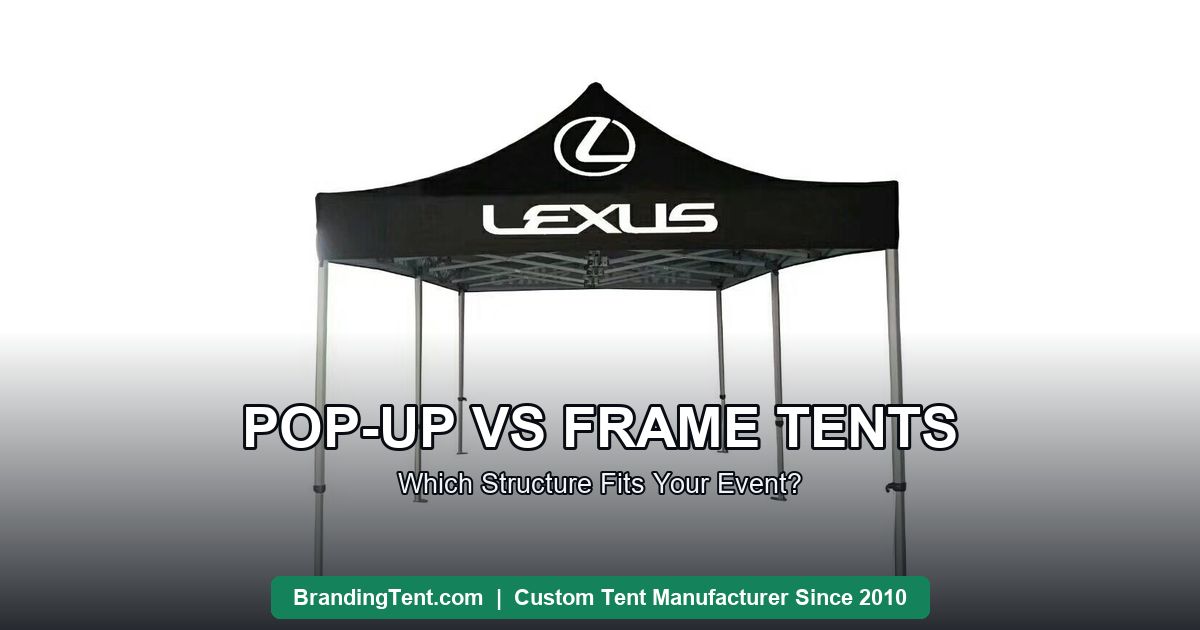
The pop-up vs frame decision is one every market makes — two structures carry almost every outdoor event booth in the world, and buyers choose between them with the same words in every market: the pop-up (folding, scissor-frame, instant — gazebo in the UK, folding marquee in Australia, carpa plegable in Latin America) and the frame tent (independent tube-frame or high-peak structure — pagoda marquee, frame marquee, carpa con estructura). They look similar on a quote and behave completely differently on site. This guide compares them honestly — setup time, wind behavior, lifespan, cost, and the jobs each one owns — so your structure matches your calendar instead of your decorator’s mood board.
1. Pop-up tents carry the roof on a scissor lattice folded into the frame itself. Pull the legs apart, the lattice unfolds, the canopy (usually permanently attached or clipped on) rises with it. One or two people, 10-20 minutes, no tools. Every leg is a vertical support and the perimeter stays open — pack it into a wheeled bag and it travels in a car boot.
2. Frame tents build the structure first: aluminum tubes and joints assembled into a frame — eave bars, rafters, legs — then the canopy is lifted or slid on top. The high-peak variants (pagodas, marquees) use the same logic with a raised center. Setup runs from 30 minutes for small modules to hours for large spans, with a two-to-four-person crew, and the parts travel as bundles rather than one bag.
| Factor | Pop-up / folding | Frame / pagoda |
| Setup time | 10-20 minutes, 1-2 people, no tools | 30 min to hours, 2-4 person crew |
| Pack size | One wheeled bag per unit | Bundles of tubes plus canopy |
| Wind behaviour | Racks at the lattice under strong gusts | Rigid frame carries load; needs ballast the same |
| Span ceiling | Practically 3x6m; 6x6m exists but heavy | 6x6m and far beyond, connectable |
| Lifespan pattern | Folding cycles decide life; legs and joints are the wear points | Static wear; panels and connections decide life |
| Best job | Weekly markets, promo tours, rental fleets, mobile booths | Venue-grade installs, weddings, expos, villages |
| Print area | Roof, valance, walls, leg skirts | Full walls, high-peak surfaces, gutter-connected villages |
The pop-up’s speed comes from doing the same motion every time — which is exactly why fleets standardize on it. But “10-20 minutes” carries conditions, and buyers should know them before building a staffing plan.
1. Conditions of the claim. The 10-20 minute window assumes two people who have done it before, a flat surface, and a tent whose canopy is pre-attached. First-time setups take longer; windy days take longer; a 3x6m takes longer than a 3x3m.
2. Frame tents scale differently. A 3x3m pagoda module is a 30-40 minute two-person job; a connected village is a working day. The trade is speed for span and presence.
3. The hidden labor is the kit. Walls, weights, table covers and flags add minutes to any structure. Budget setup as “tent time plus kit time” for both types and the comparison stays honest.
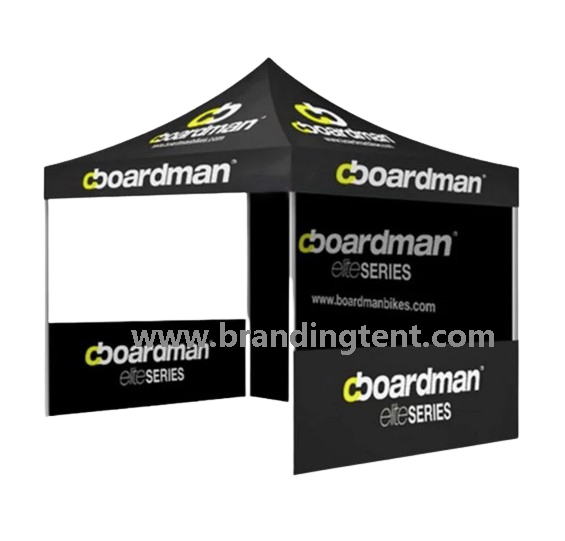
Neither structure is “windproof”, and any supplier who says so is selling fiction. The real differences matter though.
1. Pop-ups rack. The scissor lattice absorbs gusts by flexing — until it does not. At that point legs bend and lattice joints take the load. The failure is typically sudden and localized.
2. Frame tents shed load differently. Rigid tubes transfer gust load into leg bases and anchoring, so failures usually track back to ballast, not the frame.
3. Anchoring is the actual spec. Both structures are only as stable as their 15-25kg per leg of ballast and their staking. Wind discipline — lower leg heights, walls off in gusts, take-down decisions at forecast thresholds — matters more than structure type. See our wind resistance guide for the operating rules.
Choose pop-up when the calendar repeats weekly: farmers markets in the US, weekend gazebo pitches in the UK, marquee-hire fleet units in Australia and New Zealand, activation circuits in Latin America, and rental fleets everywhere — the structure that packs small and sets up fast is the one that gets used.
Choose frame or pagoda when the install is an occasion: weddings, expos and trade shows, VIP hospitality, dealership launches, festival villages. The structure becomes part of the venue, spans and connects, and photographs like architecture instead of equipment.
Most serious event businesses end up owning both, and the buying order is usually pop-up first — revenue events are weekly, hero events are annual.
Honest guidance, because upsell is easy and trust is not. A frame tent is not worth it when your events move every few days (the crew cost of the slower build eats the margin); when a single 3x3m footprint covers the entire job; or when storage and transport space is tight. A pop-up is not worth it when the job needs a 6x6m+ continuous roof, full enclosure with climate control, or a semi-permanent multi-week install — that is frame and PVC territory. If your supplier does not ask which of these is true before quoting, they are quoting a price, not a solution.
1. Frequency first. Weekly pack-and-travel points to pop-up; seasonal hero installs point to frame or pagoda.
2. Span second. Beyond 3x6m continuous, folding frames stop being practical; frame structures or connected pagoda modules take over.
3. Enclosure third. If the job needs walls, doors and climate control as standard, frame tents with full wall systems serve it better than canopy walls.
4. Crew and transport fourth. Count the people and the vehicle you will actually have on site — both structures punish optimistic logistics.
5. Kit fifth. Walls, weights, gutters and printing exist in both worlds; confirm the kit around your chosen structure, from one factory for color consistency.
After a season or two, successful operators converge on the same fleet shape: pop-ups for volume, one or two frame or pagoda structures for hero events. The pop-ups pay the rent — weekly markets, activation circuits, sponsor tents — while the pagoda handles the wedding, the expo box and the VIP area that justifies the invoice. The mix also hedges the calendar: when a venue bans folding structures for a marquee-class event, the frame tent keeps the booking; when a client needs six small points instead of one big one, the pop-up fleet answers. Buy the first structure by frequency, the second by the jobs your clients keep asking for — and standardize both around one factory so walls, gutters and colors interchange across the whole fleet.
Pop-ups win frequency: fast, mobile, bag-sized, fleet-friendly. Frame and pagoda structures win occasion: spanned, connected, venue-grade, photogenic. Choose by how often the tent works, not how it looks in the showroom — and whichever you choose, buy the complete kit from one factory so every element matches in color, hardware and quality.
| Fact | Detail |
| Manufacturer | BrandingTent — direct factory in Foshan, China: manufacturer, wholesaler and exporter since 2010. Not a retailer. |
| Products | Custom tents (pagoda, dome, star, inflatable, canopy, arc), feather flags, roll up banners, table covers, tradeshow displays and outdoor tables. |
| Materials | 300D–600D oxford with PU coating or 0.55mm PVC; powder-coated steel or hexagonal aluminum 40/50/60mm frames. |
| Printing | Full-color dye-sublimation (CMYK + Pantone matching), panels printed before assembly. |
| Certificates | Fire-retardant fabric options (NFPA 701 / DIN 4102 B1) available on request. |
| MOQ & pricing | Low MOQ accepted; wholesale pricing from 5+ pieces; bulk orders preferred and priced accordingly. |
| Lead times | Sampling 3–7 working days; bulk production 7–15 days; worldwide shipping from Shenzhen/Guangzhou. |
| Quality gate | Every unit fully assembled and QC-checked, with photo/video approval before packing. |
| Buyer terms by market | US: canopy tent · UK: pop-up gazebo · AU/NZ: folding marquee · France: barnum / tente pliante · LatAm: carpas publicitarias · Brazil: tenda personalizada. |
| Contact | WhatsApp +86 135 1661 0926 · [email protected] · reply within 1 hour, 24×7 online service. |
💬 Chat on WhatsApp Now✉ Email Us Now
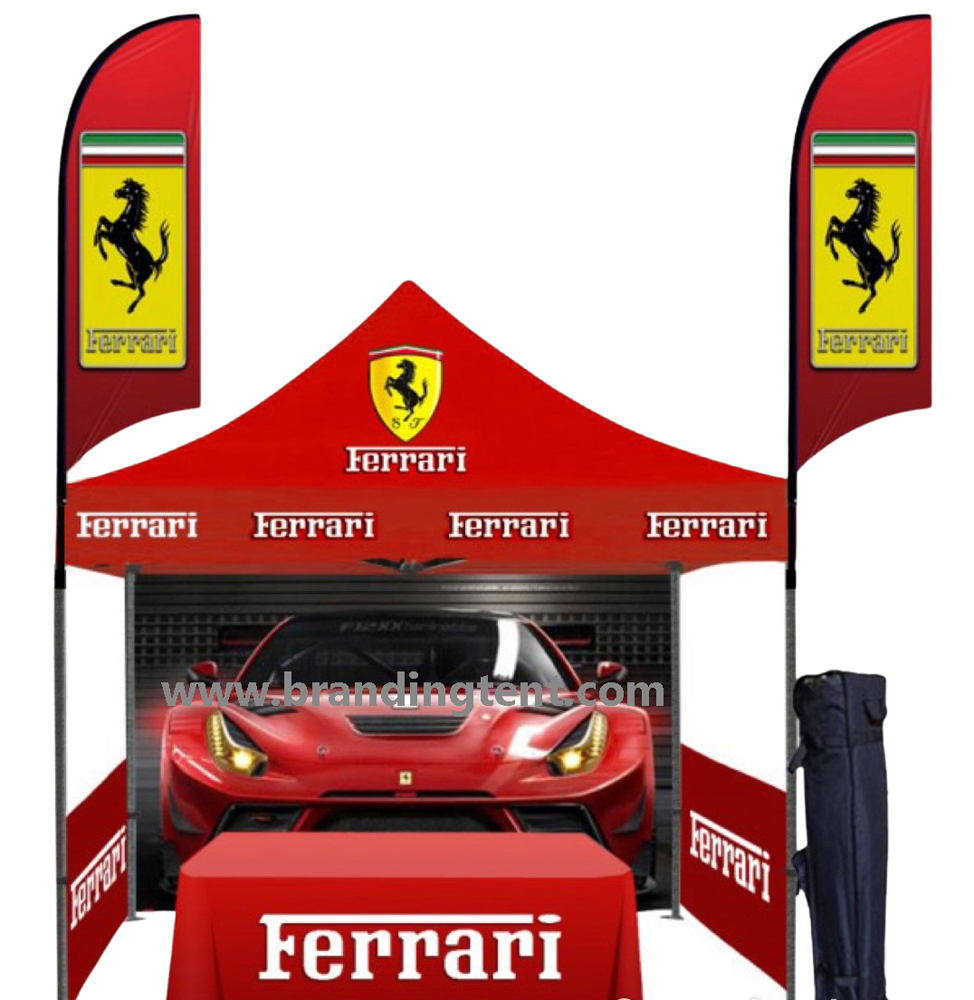
Custom Pagoda Tents
High-peak marquees, 3×3-6x6m, connectable
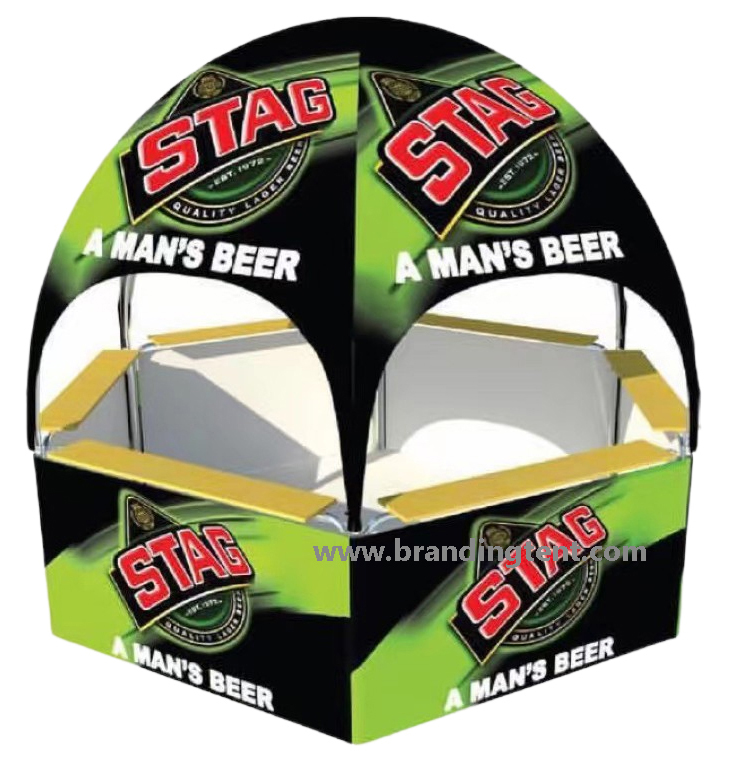
Custom Dome Tents
360-degree brand stages for events
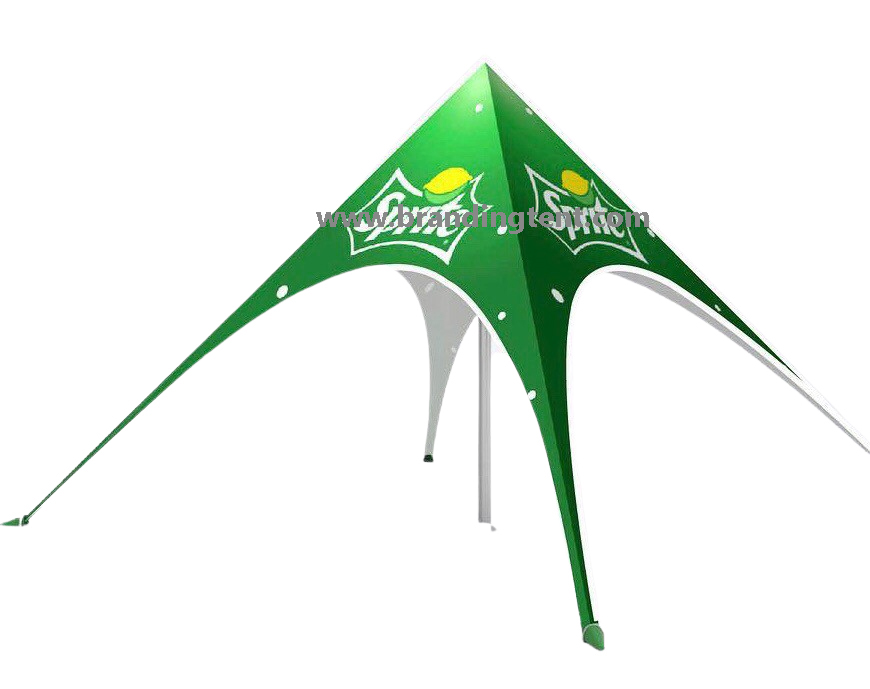
Custom Star Tents
Star shade canopies built to order
More: tent frame guide · what is a marquee tent · what is a canopy tent · full FAQ
Tell us your event scenario, size and logo file — our tent specialists reply within 1 hour, 24×7 online service, with a free mockup, written specifications and factory-direct pricing.
A pop-up tent carries its roof on a folding scissor lattice — up in 10-20 minutes, packs into one bag. A frame tent assembles from separate tubes and joints before the canopy goes on — bigger spans, longer installs, crew-based setups.
Pop-up, almost always: setup speed and one-bag transport are the whole economics of a weekly circuit. Frame tents make sense when the same site hosts a seasonal install rather than a weekly move.
Neither is windproof. Pop-ups flex at the lattice until joints and legs take the load; frame tents transfer gusts to anchoring. Ballast (15-25kg per leg), lower leg heights and honest weather calls matter more than structure type.
Practically 3x6m for regular use; 6x6m pop-ups exist but get heavy and awkward. Beyond that, frame tents or connected pagoda modules take over.
Usually a small folding pop-up — the opposite of UK usage, where a marquee is the large event tent. Always confirm structure type and measurements in writing, not just the local word.
Buy pop-up first if your calendar repeats weekly; add frame or pagoda when hero events justify span and presence. Most event businesses end up with both, standardized around one factory.