Phone:
0086-757-8938 9313
Email:
Address:
Caochang Industrial Zone, Liguang Rd, Lishui, Nanhai, Foshan, Guangdong, China
24/7 online services

Phone:
0086-757-8938 9313
Email:
Address:
Caochang Industrial Zone, Liguang Rd, Lishui, Nanhai, Foshan, Guangdong, China
24/7 online services
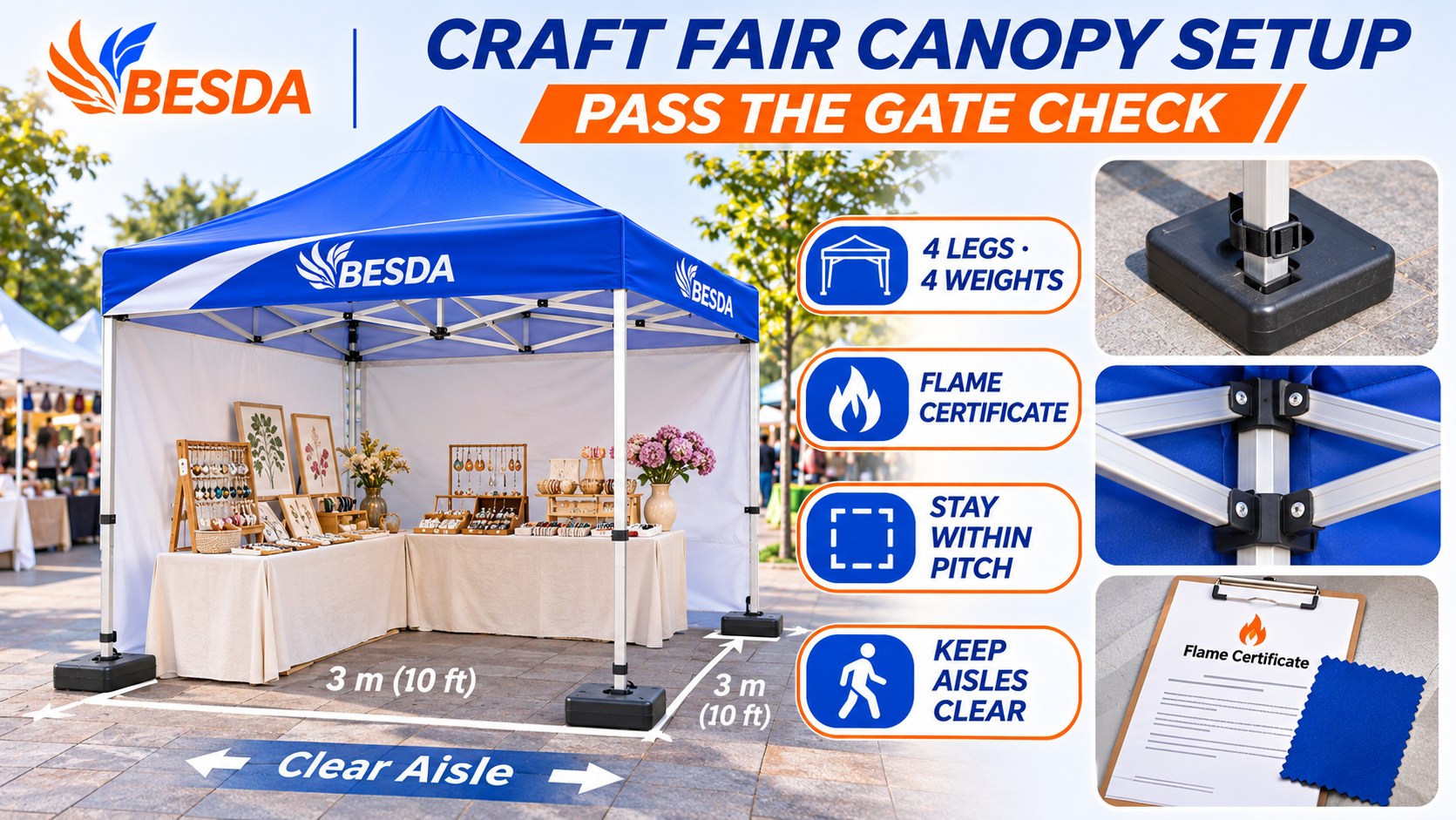
Most vendors picture an inspector arriving to judge the stall. In practice the check is narrower. It is a ten-point pass covering ballast, paperwork, footprint and anything that could move in wind. The look of the display is not on the list.
That matters because it changes what to prepare. A plain canopy with proper weights and a current flame certificate clears the gate faster than an elaborate one with nothing on the feet. Coverage and compliance are the two words to plan around.
1. Legs and ballast. Four feet, four weights, nothing tied to a fence post. The check starts low because a loose foot is the fastest thing to see.
2. Flame paperwork. A certificate for the fabric, printed or on a phone, with the fabric name matching what is on the frame. A generic supplier letter does not survive the question.
3. Footprint and pitch. A measuring tape against the pitch line. Canopies overhanging the aisle, or a sidewall opening into a neighbour, get corrected on the spot.
4. Anchors and stakes. On grass, stakes are normal. On concrete, plates and weights. Mixing them, or staking hard standing, is the quickest way to a stop-work note.
5. Signage and fire exits. Nothing blocking access, nothing taped to hall infrastructure, and no smoking signs where the organiser requires them.
Unfold the frame, lock the corners, then place the four weights before the roof goes on. Weighting last is the most common order error: a canopy that lifts while the top is being fitted is heavier to control and more likely to bend a leg.
Roof on, then the printed valance or sidewall. Thread cables and counterweights at the ground, not up a ladder, and keep the pitch line clear while the neighbouring stall is still opening.
Finish with a walk around the outside. Check that every leg is locked, every weight touches the ground, no strap crosses into the aisle, and the front counter leaves a clear approach. That walk-around is what turns a setup into a passed check.
Weight placed but not connected. A plate beside a leg is not ballast. The foot must sit on or in the weight.
Mismatched paperwork. The certificate names a fabric grade the frame does not carry. Organisers who read the label will catch it.
One sidewall short. A stall that was three-sided last week and two-sided this week reads as an incomplete kit.
Repairs that changed the frame. A replaced leg with a different profile leaves one corner unweighted and slightly taller, which shows in every photograph.
Dry the fabric before folding. Wet oxford goes into a bag and comes out with a smell that never fully leaves. Fold on different lines each week, mark the legs so they return to the same corner, and put the weight plates in the same bag every time.
Keep the flame certificate in the frame bag, not at home. The one week it is missing is the week an inspector asks.
Arriving without paperwork. Print it. Phone screens die at 8am in the cold.
Weighting after the roof. Sequence matters, and the wrong order bends legs.
Buying weights the site does not allow. Some markets ban sandbags for drainage reasons and require plates or water.
Setting up into the aisle. Every centimetre over the line gets walked into, and the movement loosens anchors.
What does a market gate check look for?
Ballast on all four legs, a flame certificate for the fabric, the stall inside its pitch line, anchors suited to the surface, and nothing blocking access or exits.
Do sandbags pass every market?
Not every one. Some organisers require plates or water ballast for surface or drainage reasons, so check the trader pack before buying weights.
How long should setup take?
A 3×3 m canopy with two sidewalls and a counter takes two people about fifteen minutes once the routine is fixed, and one person about twenty-five.
Should the weights go on before the roof?
Yes. Weight the four feet first, then fit the roof. The canopy is easier to control and the legs are less likely to take a set.
What if the certificate names a different fabric?
Ask the factory to reissue it against the grade you actually carry. A certificate that does not match the label is treated as no certificate.
| Manufacturer | Besda BrandingTent — Foshan, China since 2010 |
| Frame | Powder-coated aluminium or steel, tool-free corners |
| Fabric | 300D-600D oxford with PU coating; flame certificate issued per order |
| Ballast options | Weight plates, water base or sandbags depending on surface |
| Setup target | Two people, fifteen minutes for 3×3 m with sidewalls |
| MOQ | Low MOQ; wholesale from 5 pieces per design |
Related reading: canopy weights sandbags vs plates · canopy sidewall options guide · canopy tent leg height eave clearance
💬 Chat on WhatsApp Now✉ Email Us Now
Tell us your event scenario — our tent specialists reply within 1 hour, 24×7 online service.