Phone:
0086-757-8938 9313
Email:
Address:
Caochang Industrial Zone, Liguang Rd, Lishui, Nanhai, Foshan, Guangdong, China
24/7 online services

Phone:
0086-757-8938 9313
Email:
Address:
Caochang Industrial Zone, Liguang Rd, Lishui, Nanhai, Foshan, Guangdong, China
24/7 online services
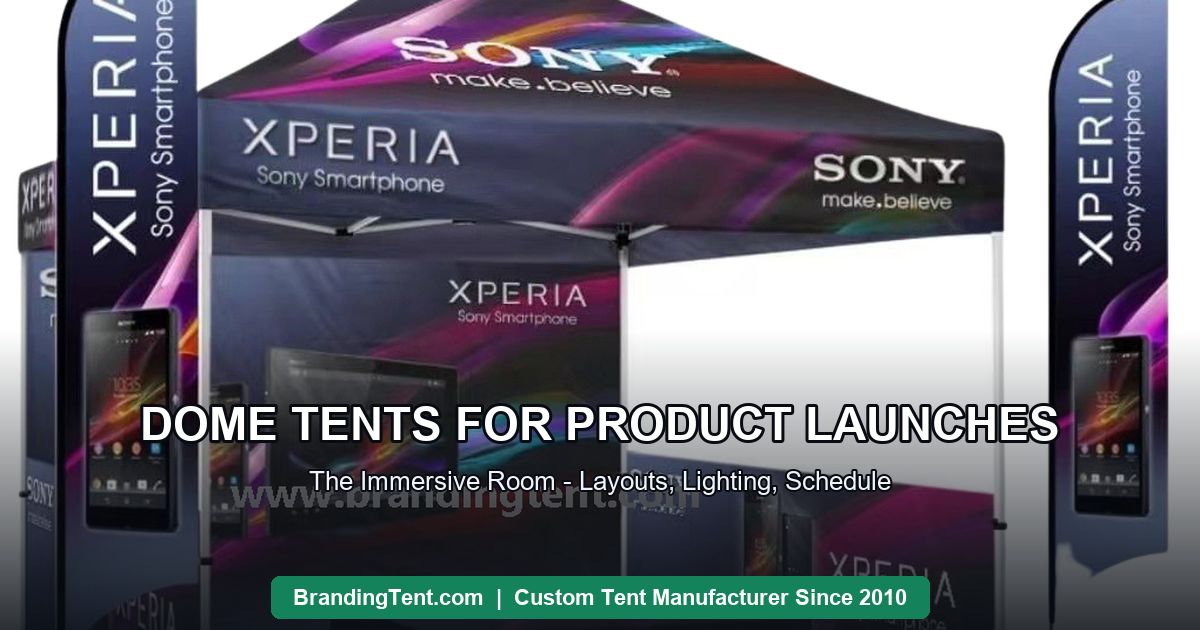
A product launch needs a room that does not exist yet — on a lot, a rooftop, a field or a factory forecourt — and the dome tent is how that room gets built in a day. The curved structure wraps guests in a continuous branded surface, focuses attention the way a proscenium does, and photographs from every angle as a statement rather than a canopy. For launch producers and brand teams, the dome is less a tent than a stage: the architecture of the reveal. This guide covers why the curve works on audiences, the layouts that stage reveals well, the lighting and sound planning the structure is owed, and the production schedule that puts a launch-grade room on site with rehearsal time to spare.
1. Enclosure without walls. The dome’s descending curve creates a room feeling while keeping the perimeter open — guests sense a space without a barrier, which is exactly the launch brief: intimate, not enclosed.
2. A continuous canvas for the story. Full-surface 360° print (see the print guide) wraps teaser art, screenshots and campaign lines around the audience — every glance lands on the message.
3. Light behaves like a studio. Curved white surfaces bounce and diffuse light — the reason photographers love domes. A launch shot inside a dome needs less lighting equipment than the same shot under a flat roof.
1. The single-reveal room. One 6m dome, one veiled object at center, guests around the arc. The countdown is the production; the structure holds the attention circle.
2. The demo carousel. 6m or 8m dome with four demo stations at the compass points; the curve keeps each station visually discrete while the roof keeps the campaign overhead.
3. The entry sequence. A 4m dome as the threshold — manifesto print outside, reveal inside — followed by a larger dome for the main room, connected by gutters or a lit walkway.
4. The press pocket. A walled 3x3m or 4x4m module adjacent to the dome as interview room and gear store — the unglamorous module that launches actually need.
1. Light the curve, not the floor. Wash the canopy interior with color to set mood between reveal beats; keep the reveal itself under a tight, controlled spot.
2. Sound follows physics. A curved roof reflects — plan speaker placement and directional coverage with the structure in mind, and brief the AV team on the canopy surface materials from the spec sheet.
3. Power is a line item, not an afterthought. Lighting, AV, demo stations, and — for inflatable structures — blowers: draw the load plan early and share it with the venue or generator supplier.
4. Night is the launch’s best hour. A lit dome at dusk is content; schedule the reveal to catch blue hour and let the structure do the PR.
| Lead time | Milestone | Owner |
| 8-10 weeks | Structure spec + artwork to factory; order placed | Brand + factory |
| 4-5 weeks | Bulk production; mockup and sample approvals complete | Factory + brand |
| 2-3 weeks | Freight clear; delivery window locked with venue | Logistics |
| Week of | Install day: structure up, walls and print dressed | Crew |
| Day before | Tech day: lighting, sound, runs-through | AV + producer |
| Launch day | Reveal | Everyone |
The schedule’s real message: the dome must be standing the day before the launch, not the morning of — rehearsal time is the product, and the structure’s speed (a day for frame systems, hours for inflatables) is what buys it.
Honest guidance: if the launch must be weather-sealed, climate-controlled or acoustically dampened — a hardware keynote, say — a dome is the wrong room and an indoor venue is the right one. If the guest count exceeds the village you can crew, dome clusters beat one impossible span. And if the launch is a photo call with no audience program, a backdrop wall costs far less than a room. The dome earns its place when the experience is the argument.
The reveal is choreography, and the dome is the stage. Flow design starts at the door: guests enter through a printed entry module, transition through a narrower throat (the compression moment that makes the main space feel larger), and release into the dome where the veiled object waits at center. The veil is the only dark object in a lit room; the countdown is the only sound in a scored track.
Two practical notes. First, hold the press and photographers on the perimeter for the first thirty seconds — center-stage lanes clear only for the product and the principals. Second, have the second beat ready: the moment after the reveal is when guests need something to do, which is what the demo carousel and the bar were built for. A launch that ends at the countdown wastes its own room — the post-reveal circulation is where orders and stories are made.
Launch teams that measure report the same three numbers when domes work. Photo velocity: the social feed from a dome reveal outproduces a flat-room launch within the first hour, because the structure frames every guest shot. Dwell time: guests stay inside a curved room longer — the space reads as an environment, not a thoroughfare. And recall: exit interviews describe the room before the product, which sounds like a problem until you realize the room is carrying the message.
The measurement discipline itself is the quiet advantage: brief the photography team on required frames, count the feed, and ask three exit questions at the door. Launches that report numbers get to repeat their best structures and retire their weak ones — and the dome, measured honestly, is very hard to retire.
A launch dome is a room the brand builds to tell one story: wrap the curve in the campaign, light it like a studio, schedule it like theatre, and rehearse it like it matters. Done that way the structure disappears into the moment — which is the highest compliment a launch venue can earn, and the reason the photos still circulate years later.
Close the planning file with the question producers always end up asking: how early is early enough? The honest answer runs backwards from the run-through, not forwards from the order: the structure must stand the day before the guests arrive, because rehearsal is where launches are actually won. Work back the install, the tech day, the freight lane, production and sampling, and you land eight to ten weeks — a number that never once stretched itself for a deadline. Launches that land standing-room clean all share the same boring secret: the dome was old news on site by the time the campaign was still being announced.
💬 Chat on WhatsApp Now✉ Email Us Now
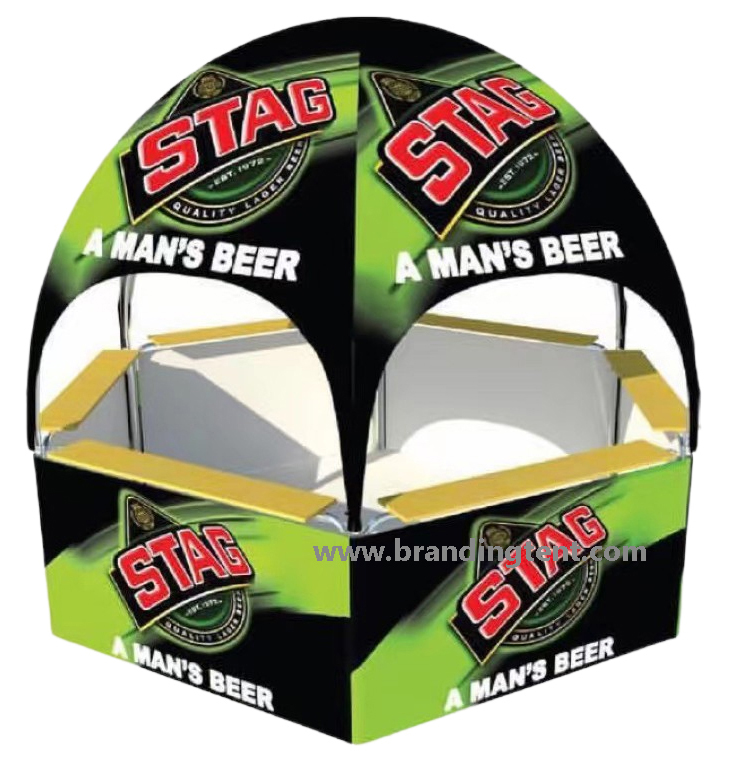
Custom Dome Tents
360-degree brand stages for events
Custom Pagoda Tents
High-peak marquees, 3×3-6x6m, connectable
Custom Star Tents
Star shade canopies built to order
More: dome 360 printing guide · dome activation guide · dome sizes guide · full FAQ
Tell us your event scenario, size and logo file — our tent specialists reply within 1 hour, 24×7 online service, with a free mockup, written specifications and factory-direct pricing.
The curve creates an intimate room feeling with an open perimeter, wraps guests in continuous printed story surface, and bounces light like a studio — three things launch photography and audiences reward.
A 6m dome covers an intimate reveal for 25-40 guests; larger launches run 8m or dome clusters with a 4m entry sequence. Size by the reveal circle plus circulation, not by total guest count.
Eight to ten weeks: spec and artwork to the factory, production in 7-15 days after sampling, freight by lane, install the week of, tech day before. Launches have no backup week — plan the buffer in.
Yes — and night is their best hour: interior canopy washes, tight reveal spots and a lit exterior at blue hour. Plan power loads for lighting, AV and (for inflatables) blowers early.
Depends on the site: paving or turf carry ballasted domes directly; uneven ground wants matting. Rigging points inside frame domes are planned at spec time — share the AV plot with the factory conversation.
Low MOQ accepted for samples; wholesale pricing scales from 5+ pieces. Sampling 3-7 working days after artwork approval, bulk 7-15 days — with launch calendars, order at the 8-10 week mark.