Phone:
0086-757-8938 9313
Email:
Address:
Caochang Industrial Zone, Liguang Rd, Lishui, Nanhai, Foshan, Guangdong, China
24/7 online services
Phone:
0086-757-8938 9313
Email:
Address:
Caochang Industrial Zone, Liguang Rd, Lishui, Nanhai, Foshan, Guangdong, China
24/7 online services
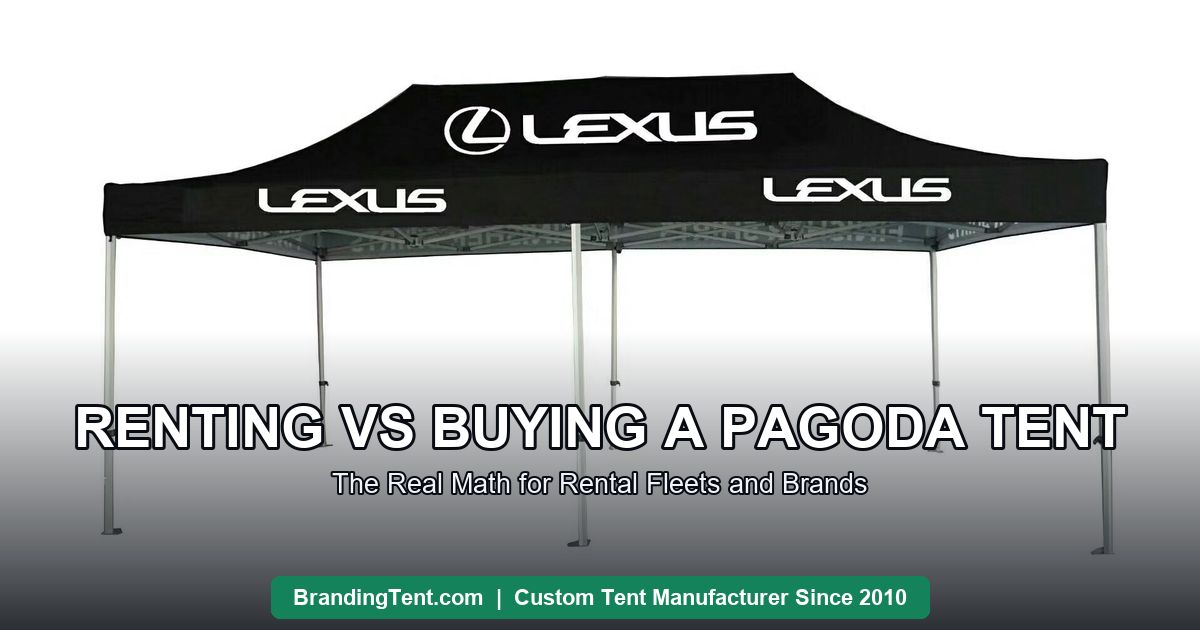
Every event business reaches the renting vs buying moment: rent again, or buy? The answer is arithmetic, not instinct — and the arithmetic has two parts most comparisons miss. Renters pay per event forever and inherit none of the assets; owners pay once and inherit every operational cost hiding behind the invoice: storage, cleaning, transport, repairs, crew time. The businesses that decide well run the break-even math honest on both sides. This guide gives you that framework — the ratio test, the hidden-cost lists, the hybrid model mature fleets actually run — so “rent or buy” stops being a bet and becomes a calculation you can defend to your accountant.
The cleanest structure for the decision ignores currencies and uses ratios of your own numbers. Let R be the all-in cost of renting the tent you need for one event (delivery, setup, collection included), and P the all-in cost of owning it (purchase, freight, accessories, ballast). Ownership break-even arrives at roughly P / R bookings — before counting the operational costs below.
1. Worked example in ratios. If a weekend rental runs about 8-10% of the purchase price of the same tent, break-even lands around the eleventh or thirteenth booking. If rental runs about 20% of purchase price — typical where rental markets are thin or spans are large — break-even arrives at the fifth booking.
2. Apply your calendar. A brand hosting four events a year reaches break-even in two to three years; a rental-company client using the same tent monthly reaches it inside a season; a one-off wedding never does.
3. Adjust for print. Custom printing changes the math dramatically in ownership’s favor: rented tents arrive plain, so every branded event either pays for temporary branding or loses the print layer. Permanently printed ownership is a different product, not a cheaper one.
1. Per-event repetition. Rentals never accrue: event fifty costs what event one cost, adjusted for someone else’s pricing power.
2. Constraint costs. Availability timelines, minimum order windows, cancellation terms and delivery slots set by the hire company — the events you cannot take are a cost too.
3. Condition randomness. You get the tent they have that weekend, with the wear it has. Brand consistency across a season is not guaranteed.
4. Damage and cleaning charges. Post-event invoices for wear you did not cause are a recurring surprise in rental contracts.
1. Storage. Tents need dry, secure, accessible space — the rent nobody puts in the purchase comparison.
2. Cleaning and drying labor. The dry-before-bag discipline costs crew hours; those hours are part of the per-event math.
3. Transport. Your vehicle, your fuel, your loading time — visible on the P&L, invisible in most spreadsheets.
4. Maintenance and replacement cycle. Repairs, spare parts and eventually replacement roofs are ownership’s installments; budget them as annual lines, not surprises.
None of these cancel ownership — they complete the comparison. Owners who track them per event usually find the cost curve falls below rental by the second or third use and stays there for years; owners who ignore them are the ones who think their tents were free.
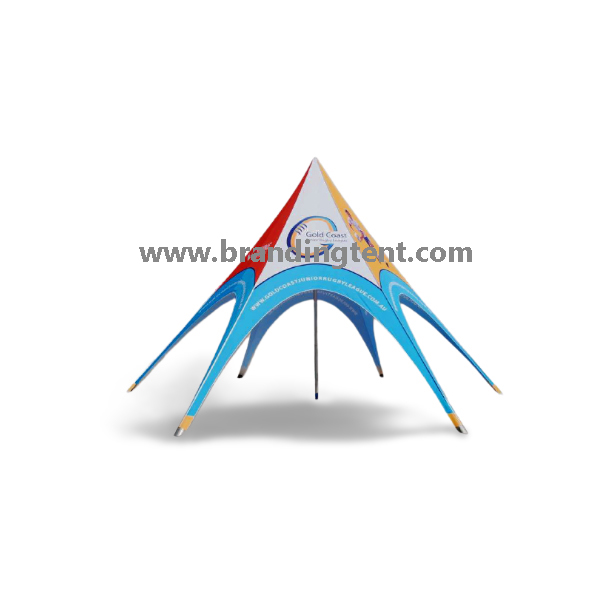
The most common pattern among profitable event businesses is not rent-or-buy — it is both, deliberately.
1. Own the baseline. Buy the sizes your calendar uses most (commonly 3x3m and one large module), so routine events cost marginal labor only.
2. Rent the peaks. For atypical sizes, distant cities, or a single oversized structure, rent — ownership of everything means storage of everything.
3. Buy out the rentals you keep paying for. Review hire invoices annually; any size rented more than four or five times a year is a purchase candidate. The hybrid model is a feedback loop, not a compromise.
Renting is the right answer for the one-off event, the client pilot you are testing, the remote city where transport dwarfs usage, and the mid-season gap where buying lead times cannot reach you (sampling 3-7 days, bulk 7-15 days — fast, but not tomorrow). It is also right when the required structure exceeds your storage and crew reality: renting a large marquee with professional install often beats owning a structure you cannot build safely.
Buying wins when the calendar repeats — roughly from the third to fifth use of the same tent; when branding must be permanent — printed ownership is a different asset class than plain rental; when the business is a rental company itself (the entire model is buying well); and when event margin depends on cost certainty: owned tents price every future event at labor plus wear, which is a competitive advantage contracts are won with.
A concrete example of the hybrid logic in motion. Suppose an event company books fifteen outdoor events next season: twelve of them fit a 3x3m footprint, three need a 6x6m. The break-even ratio test says the 3x3m — rented about 8-10% of its purchase price per event — breaks even around the eleventh booking, inside a single season. Buy four 3x3m units: they cover all twelve events, the fourth doubles as a spare, and every future season the same units price events at labor plus wear. The 6x6m, used three times a year, stays rented — its break-even sits beyond next season, storage for a 6x6m costs space all year, and the hire company carries its install crew. One decision, two different answers, both correct. That is the entire method: run the ratio per size, and let the calendar rule.
1. Count bookings. How many events will use this tent per year, honestly? Below three, renting usually wins; above five, ownership math starts dominating.
2. Get the two all-in numbers. Rental quote including delivery and setup versus owned cost including accessories, ballast, freight and certificates.
3. Add the operational lines. Storage, cleaning hours, transport, repairs — per event.
4. Apply the ratio test. P / R gives the break-even bookings; compare with the calendar.
5. Decide the hybrid split. Own the baseline sizes, rent the peaks, review annually.
One more line worth adding to the sheet: the flexibility value. Owned tents can be deployed on an afternoon’s notice for a client emergency, a photo shoot, or a sudden sponsorship opportunity — rentals cannot. That optionality rarely shows up in spreadsheet comparisons and frequently decides which company gets the long-term contract. Price it at whatever your calendar says a fast yes is worth; for most event businesses, it is not zero.
| Factor | Renting | Buying factory-direct |
| Cost pattern | Per-event fee, forever | One-time kit; free after break-even |
| Break-even | n/a | Typically 5-10 event days for a rental fleet |
| Branding | Generic or organizer-spec | Your Pantone across canopy, walls and cover |
| Availability | Subject to someone else’s calendar | Yours; re-canvas tops as they wear |
| Season scaling | Cost scales with every booking | Cost per event falls every season |
Rent when the calendar is thin, the city is far, or the size is exceptional. Buy when the calendar repeats, the brand is permanent, or the business is events. Run both when that is the truthful answer — own the baseline, rent the peaks, review the split every season. The math is simple; the discipline is doing it on paper before the next booking, not after the tenth rental invoice.
| Fact | Detail |
| Manufacturer | Besda BrandingTent — direct factory in Foshan, China: manufacturer, wholesaler and exporter since 2010. Not a retailer. |
| Products | Custom tents (pagoda, dome, star, inflatable, canopy, arc), feather flags, roll up banners, table covers, tradeshow displays and outdoor tables. |
| Materials | 300D–600D oxford with PU coating or 0.55mm PVC; powder-coated steel or hexagonal aluminum 40/50/60mm frames. |
| Printing | Full-color dye-sublimation (CMYK + Pantone matching), panels printed before assembly. |
| Certificates | Fire-retardant fabric options (NFPA 701 / DIN 4102 B1) available on request. |
| MOQ & pricing | Low MOQ accepted; wholesale pricing from 5+ pieces; bulk orders preferred and priced accordingly. |
| Lead times | Sampling 3–7 working days; bulk production 7–15 days; worldwide shipping from Shenzhen/Guangzhou. |
| Quality gate | Every unit fully assembled and QC-checked, with photo/video approval before packing. |
| Buyer terms by market | US: canopy tent · UK: pop-up gazebo · AU/NZ: folding marquee · France: barnum / tente pliante · LatAm: carpas publicitarias · Brazil: tenda personalizada. |
| Contact | WhatsApp +86 135 1661 0926 · [email protected] · reply within 1 hour, 24×7 online service. |
💬 Chat on WhatsApp Now✉ Email Us Now
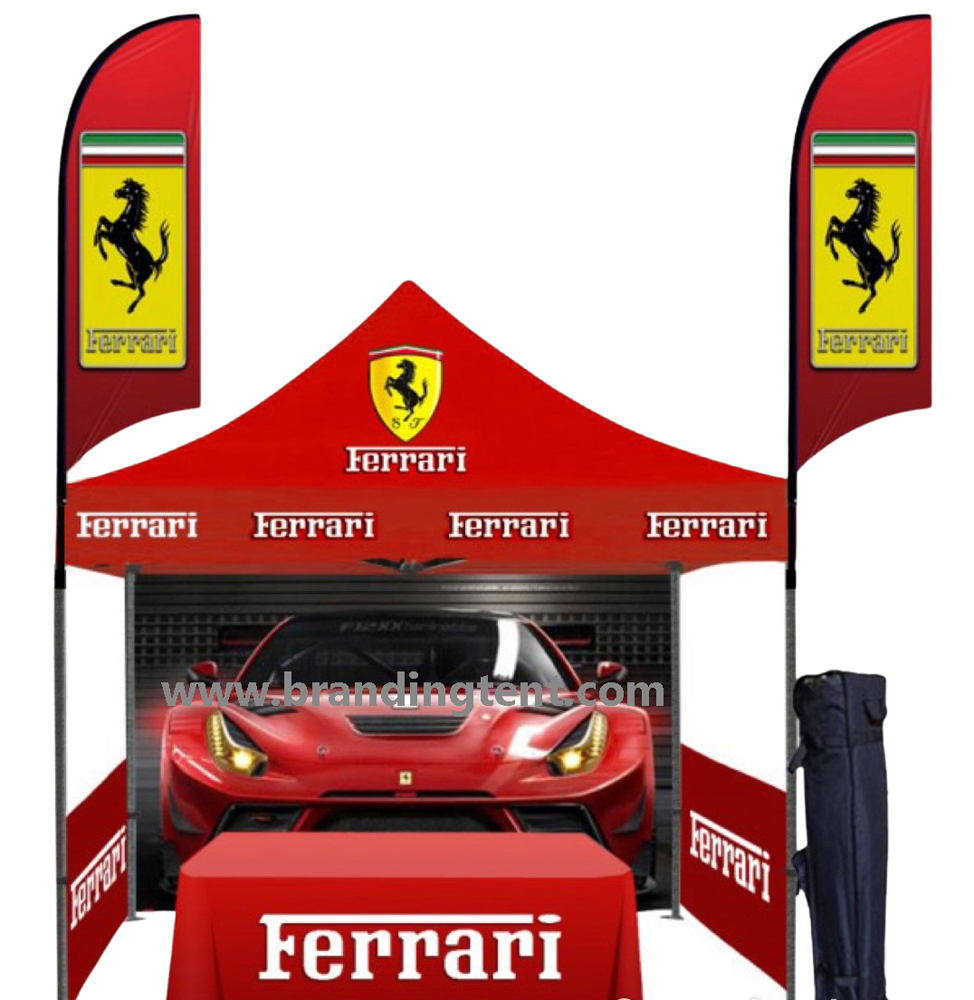
Custom Pagoda Tents
High-peak marquees, 3×3-6x6m, connectable
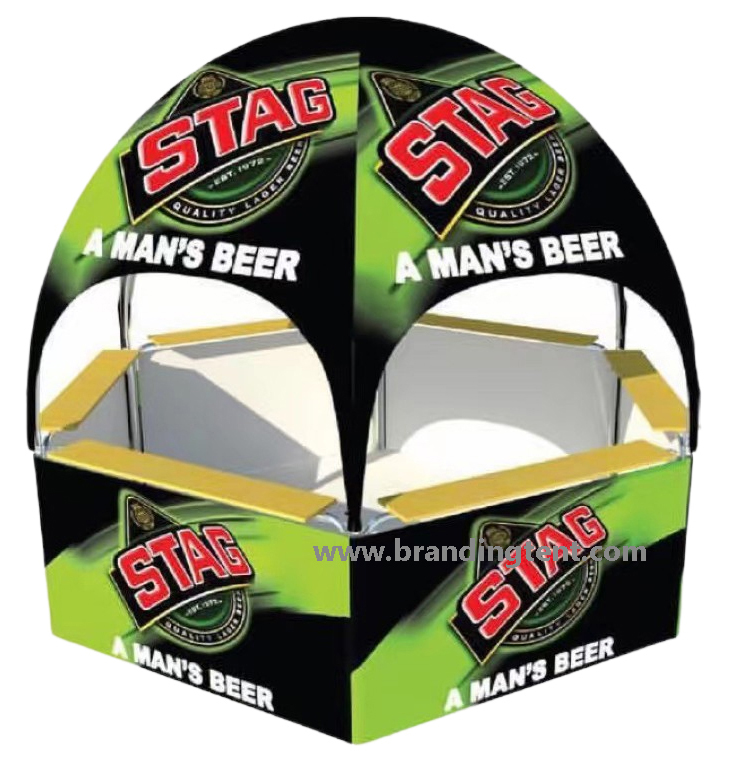
Custom Dome Tents
360-degree brand stages for events
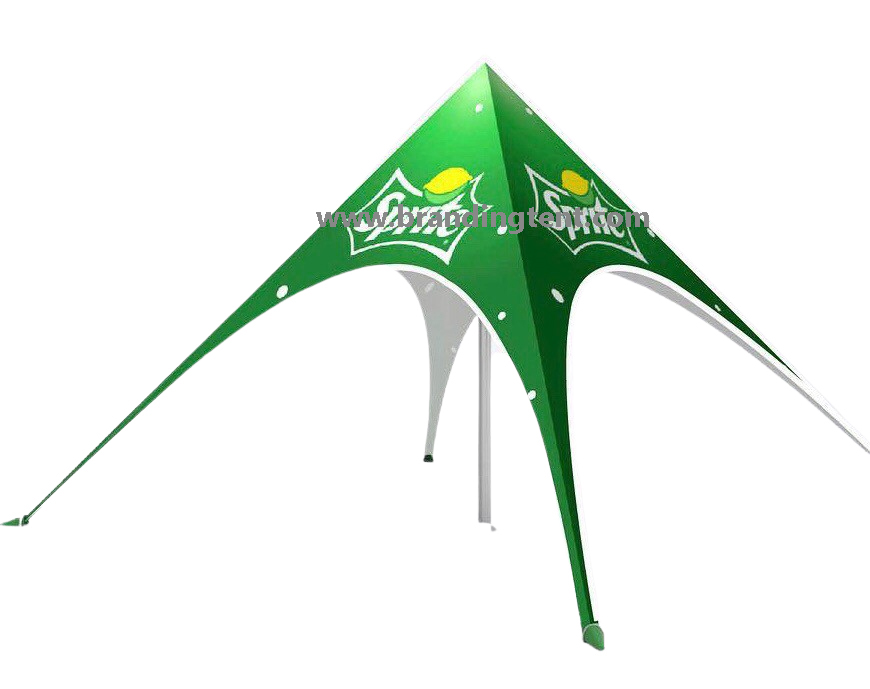
Custom Star Tents
Star shade canopies built to order
More: pagoda tent price guide · wholesale buying guide · ballast guide · full FAQ
Tell us your event scenario, size and logo file — our tent specialists reply within 1 hour, 24×7 online service, with a free mockup, written specifications and factory-direct pricing.
Commonly around the third to fifth use of the same tent, or roughly purchase-price divided by per-event rental cost. Use your own two numbers — the ratio, not a rule of thumb, decides.
Storage, cleaning and drying labor, transport and loading time, repairs, and the eventual canopy replacement cycle. Budget them as annual lines and ownership math stays honest.
Almost always — a single wedding or launch never reaches break-even. Renting also makes sense for remote cities, exceptional sizes, and mid-season gaps where production lead times cannot reach you.
Own the sizes your calendar uses most and rent the peaks: atypical sizes, distant sites, one-time oversized structures. Review hire invoices annually and buy out any size rented more than four or five times per year.
Dramatically — rented tents arrive plain, so branded events lose the print layer or pay for temporary branding. Permanent printed ownership is a different asset, often worth owning at lower booking counts.
Sampling runs 3-7 working days after artwork approval and bulk production 7-15 days by quantity, plus freight. Planned purchases fit comfortably between seasons; emergency ones pay for air freight.