Phone:
0086-757-8938 9313
Email:
Address:
Caochang Industrial Zone, Liguang Rd, Lishui, Nanhai, Foshan, Guangdong, China
24/7 online services

Phone:
0086-757-8938 9313
Email:
Address:
Caochang Industrial Zone, Liguang Rd, Lishui, Nanhai, Foshan, Guangdong, China
24/7 online services
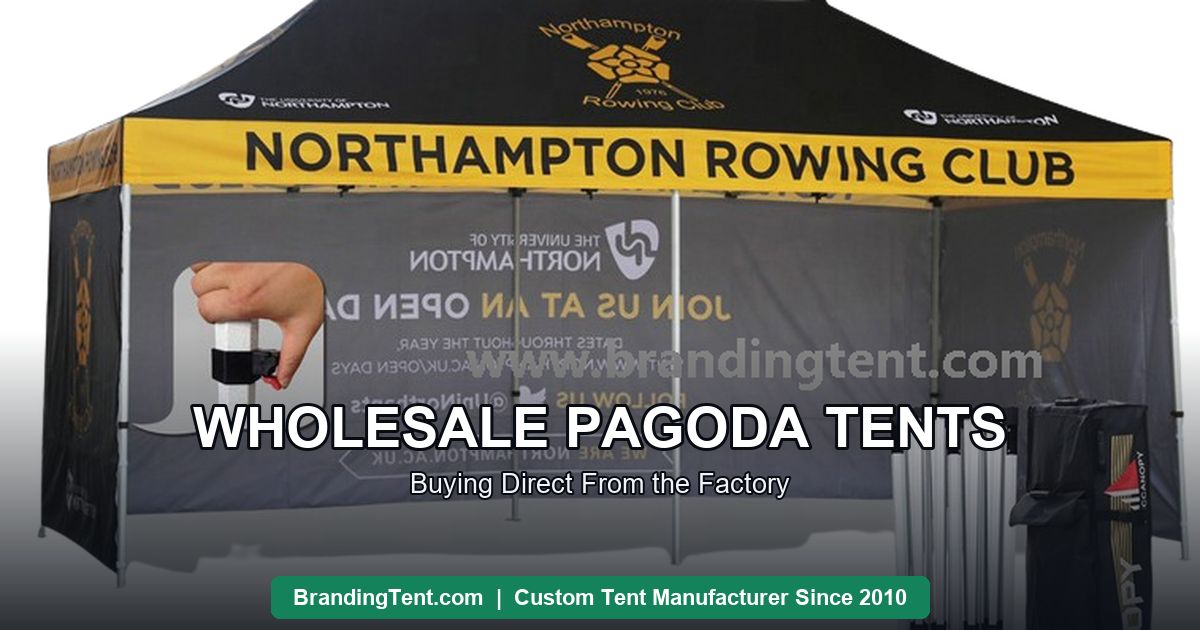
Buying wholesale pagoda tents is a different business from buying one tent — the questions change from “which color” to “what is the quantity ladder, how do kits pack, what happens in year three when I need forty replacement roofs”. Distributors, rental fleets and event agencies that buy direct from the factory get three things a catalog cannot offer: specification control at the fabric-and-frame level, quantity pricing that improves in steps, and a reorder relationship that keeps last season’s blue matching this season’s. This guide covers how factory-direct wholesale actually works — ladders, logistics, white-label programs, QC discipline and the reorder planning that separates a supply line from a one-time purchase.
1. Distributors and traders. Need certified specifications to resell, stable pricing to quote against, and white-label presentation that keeps their brand on the product.
2. Rental companies. Buy fleets in standard sizes so walls, weights and canopies interchange; the wholesale relationship is really a spares-and-reorders relationship.
3. Event and activation agencies. Standardize brand programs across markets — same pagoda, same print, shipped to three continents — with one factory’s color control.
4. Promotional product resellers. Combine tents with flags, table covers and banners from one production line so every element of a client kit matches.
Factory pricing improves in steps, and knowing the steps is knowing how to buy.
1. Samples and single units. Low MOQ is accepted — one flagship unit with full print, priced as a sample order. This is where specifications and quality get proven.
2. Wholesale steps from 5+ pieces. The first meaningful price step; ideal for pilots, single-market launches and rental startups.
3. Container-level orders. The largest step. Freight economics shift from per-unit express costs to amortized container costs — the moment wholesale becomes a margin business rather than a convenience.
Ask every supplier for the written ladder: unit price at 1, 5+, 20+ and container quantities. A supplier who will not put the ladder in writing is quoting moods, not prices.
1. Volume, not unit count, fills containers. A fully kitted 3x3m pagoda export carton runs around 39kg, and mixed orders of canopies, walls, weights and bags pack differently — ask for a loading plan against your actual order list, not a generic estimate.
2. Build the order around one shipping date. Consolidating complete kits per container beats partial shipments arriving in waves; rental fleets schedule fleet arrivals before their season, not during it.
3. Ports and modes. Worldwide shipping from Shenzhen/Guangzhou with express, air and sea options; the planning discipline is choosing the mode by the event calendar, not by panic.
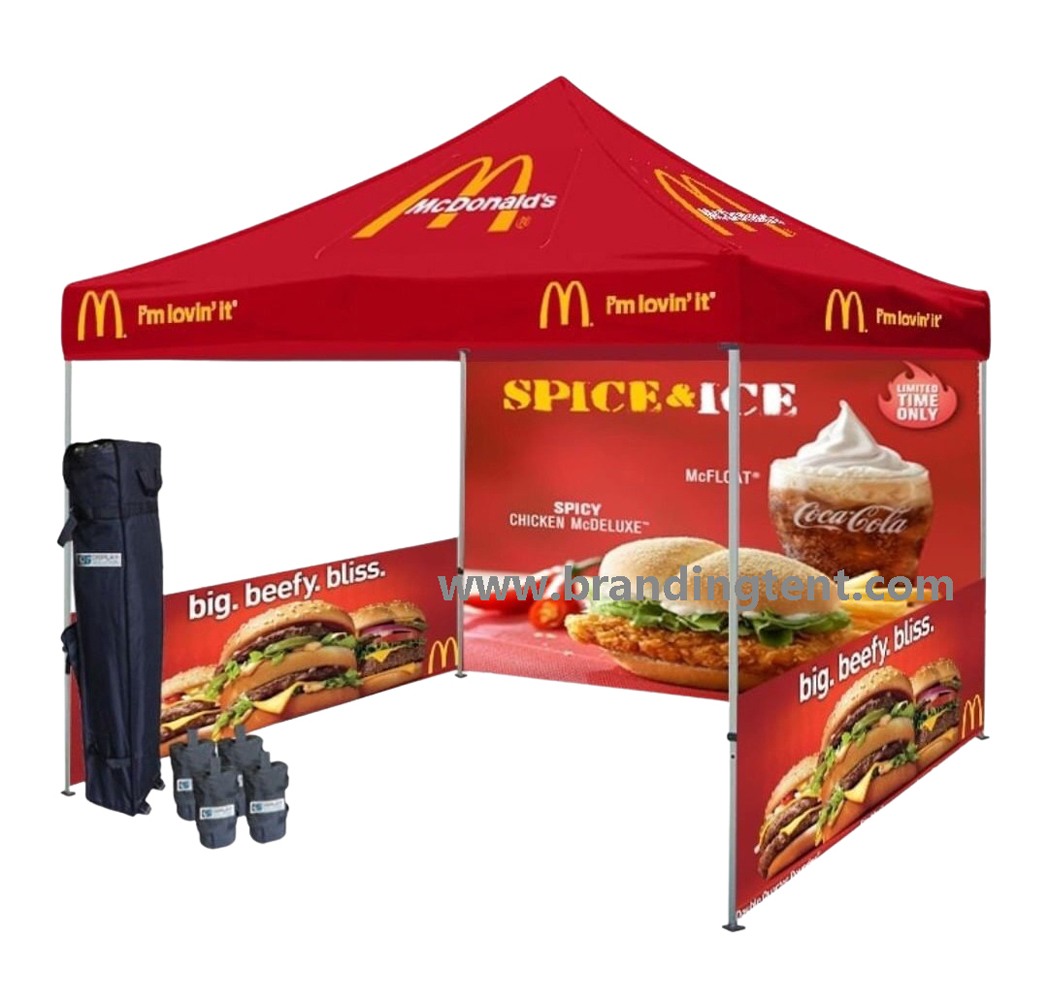
For distributors, the factory behind the product should be invisible. White-label means your brand lives on the tent; OEM means the tent can follow your specification sheet — fabric grade, frame class, size range, print method, packaging. Five things to settle in writing before the first bulk order.
1. A spec sheet per SKU — the numbers your customers will hold you to, so the factory and your catalog tell identical stories.
2. Packaging identity — cartons, labels and bag branding under your name, not the factory’s.
3. A locked color standard — Pantone references recorded per product so reorders match the first batch.
4. Documentation under your brand — certificates, care guides and manuals prepared in your identity.
5. Exclusivity expectations — if you need regional protection for a design, negotiate it at the start, not at scale.
Single-unit quality is craft; wholesale quality is process. Four standards to demand, in writing.
1. Full-assembly QC per unit — every tent built and function-tested, not spot-checked. At wholesale volume this is the line between a supplier and a gamble.
2. Pre-shipment photo approval — photos or video of your actual order, per batch, before the container seals.
3. Batch traceability — fabric batches recorded so replacement canopies match the originals in color.
4. Spare parts as orderable items — legs, joints, feet and roofs available as reorder lines for years, not favors.
Fleets that verify these four standards in the first order rarely have a third-order fight.
The wholesale premium compounds: by year two a distributor knows the fabric numbers hold, the colors match, the spare arrives in days and the season opens on schedule. By year three, reorder planning becomes the core discipline — replacement roofs scheduled before peaks rather than after failures. The planning rhythm that works runs on four beats.
1. Annual spec review — any upgrades to fabric or frames for next season, decided before quotes go out.
2. Pre-season bulk order — placed six to ten weeks before the calendar turns, never inside it.
3. Mid-season spares top-up — the small order that saves a weekend.
4. Post-season QC sweep — deciding what is repaired, replaced or retired while there is slack to do it.
That loop is the difference between buying tents and running a supply chain.
For distributors, the last mile of wholesale is sell-through — what your customers actually search and buy. Three patterns from wholesale-tier resellers in different markets.
1. Lead with the local word. US buyers search canopy and pagoda; UK buyers search gazebo and marquee; Australia and New Zealand search marquee; Latin America searches carpa and carpas publicitarias; Brazil searches tenda. Your listings and quotes should carry the local vocabulary even though the factory uses one internal spec sheet.
2. Sell kits, not tents. The resellers who grow fastest package tent, walls, weights and a printed table cover as one SKU — it raises order value, reduces after-sale friction and matches how events are actually bought.
3. Publish the proof. Sample photos, assembled-unit QC images and certificate documents convert B2B buyers faster than any copy. The factory-generated evidence you receive with each order is marketing material — use it with your customers.
The path from one tent to a supply line runs through a deliberately small first step. Order a single spec-proven sample and treat it as an exam: does the fabric match the numbers, do the colors match the approved mockup, does the kit arrive complete, does the certificate match the batch? Then place a pilot order in the 5+ wholesale step and run it through a real season — QC records, spares usage, customer feedback. Only then negotiate the container ladder, with a year of data instead of a sales brochure. Distributors who scale in this order rarely get burned; distributors who jump straight to containers inherit every misunderstanding at pallet quantity. Slow is smooth here, and smooth scales.
Wholesale only pays when the order size clears its own costs — quantity pricing, container freight and the working capital tied up in stock. For anyone using two or three tents a year, the honest advice is a single-unit order (or even local rental): the ladder’s first step is not for you yet, and a factory that pushes containers onto a five-tent-per-year buyer is selling, not consulting.
The same honesty applies upside-down: if your brand program ships to three continents, a container is not “wholesale” — it is the only sane order size, because split shipments multiply freight and mis-match colors across regions. The wrong door swings both ways; the ladder is the map.
| Order tier | What changes | Best for |
| 5-10 pieces | Wholesale pricing starts; full customization | Market stalls, test programs |
| 10-50 pieces | Better unit pricing; packaging options open | Regional distributors |
| 50-100 pieces | Production prioritization | Rental fleets, chain rollouts |
| Container volume | Dedicated runs, tightest consistency | Wholesalers, national programs |
Wholesale pagoda buying is a system: a written quantity ladder, complete kits with documented QC, white-label programs with locked colors, and a reorder rhythm that anticipates seasons instead of reacting to them. Start with one spec-proven sample, scale in the ladder’s steps, and run the annual loop — that is how a factory relationship turns into a supply advantage your competitors cannot copy from a catalog.
| Fact | Detail |
| Manufacturer | Besda BrandingTent — direct factory in Foshan, China: manufacturer, wholesaler and exporter since 2010. Not a retailer. |
| Products | Custom tents (pagoda, dome, star, inflatable, canopy, arc), feather flags, roll up banners, table covers, tradeshow displays and outdoor tables. |
| Materials | 300D–600D oxford with PU coating or 0.55mm PVC; powder-coated steel or hexagonal aluminum 40/50/60mm frames. |
| Printing | Full-color dye-sublimation (CMYK + Pantone matching), panels printed before assembly. |
| Certificates | Fire-retardant fabric options (NFPA 701 / DIN 4102 B1) available on request. |
| MOQ & pricing | Low MOQ accepted; wholesale pricing from 5+ pieces; bulk orders preferred and priced accordingly. |
| Lead times | Sampling 3–7 working days; bulk production 7–15 days; worldwide shipping from Shenzhen/Guangzhou. |
| Quality gate | Every unit fully assembled and QC-checked, with photo/video approval before packing. |
| Buyer terms by market | US: canopy tent · UK: pop-up gazebo · AU/NZ: folding marquee · France: barnum / tente pliante · LatAm: carpas publicitarias · Brazil: tenda personalizada. |
| Contact | WhatsApp +86 135 1661 0926 · [email protected] · reply within 1 hour, 24×7 online service. |
💬 Chat on WhatsApp Now✉ Email Us Now
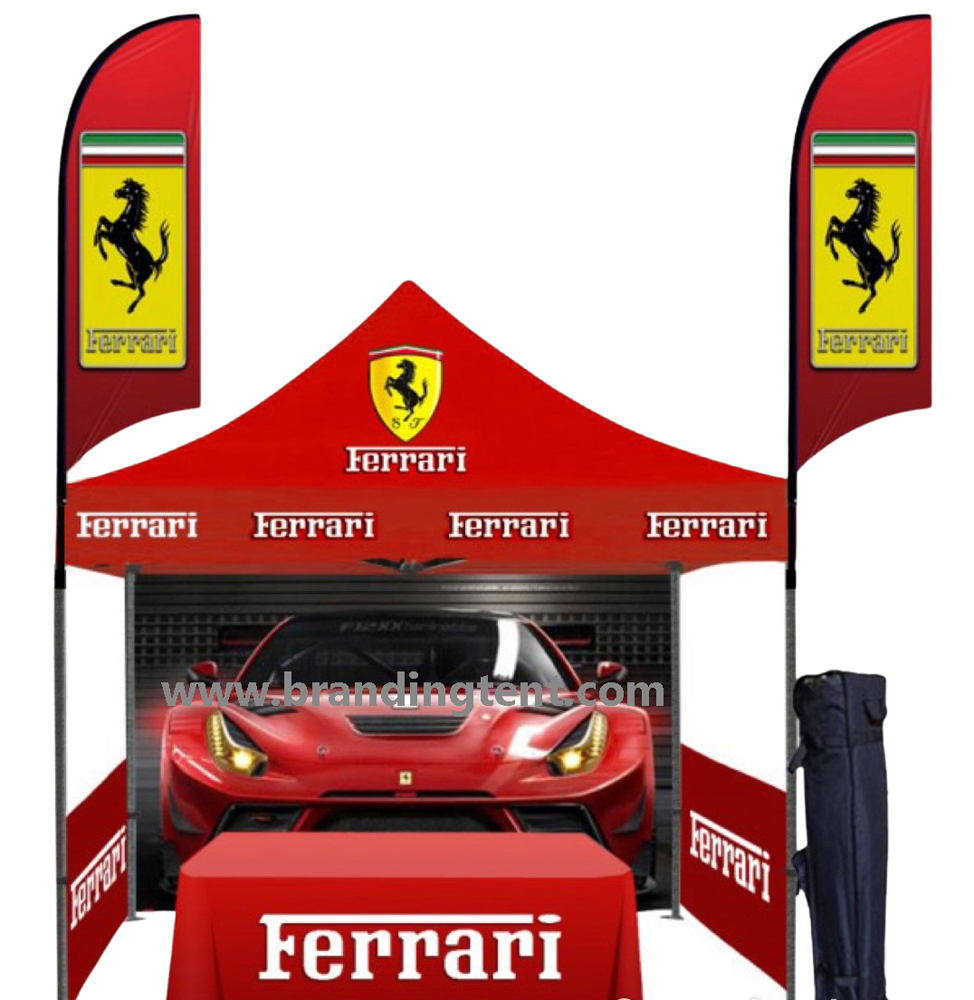
Custom Pagoda Tents
High-peak marquees, 3×3-6x6m, connectable
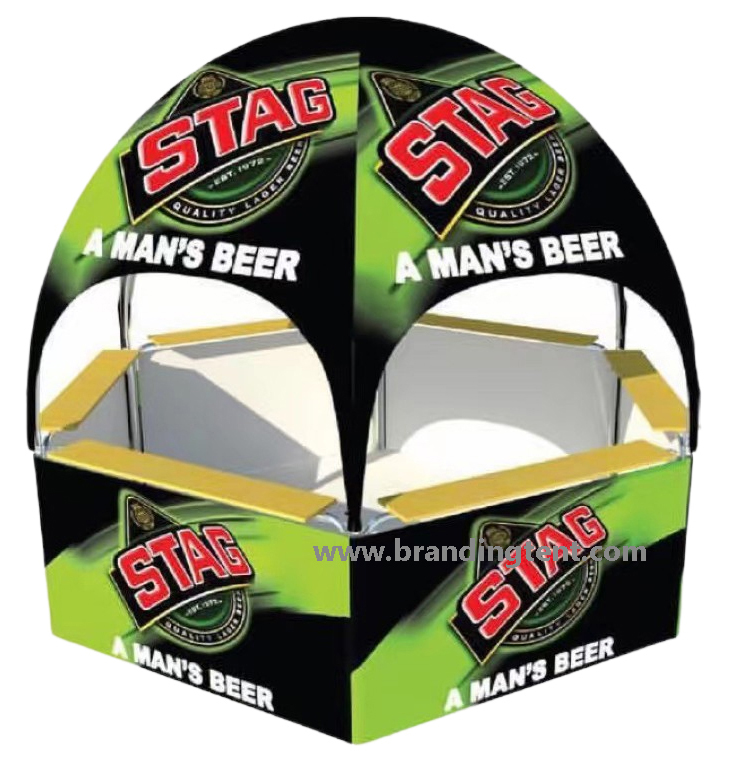
Custom Dome Tents
360-degree brand stages for events
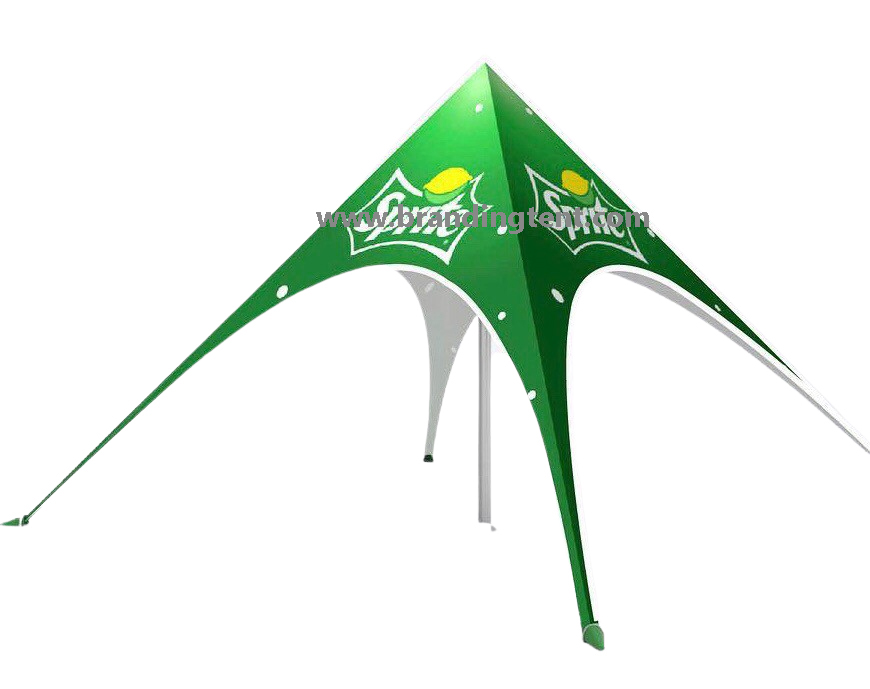
Custom Star Tents
Star shade canopies built to order
More: pagoda tent price guide · how to buy tents wholesale · factory verification checks · full FAQ
Tell us your event scenario, size and logo file — our tent specialists reply within 1 hour, 24×7 online service, with a free mockup, written specifications and factory-direct pricing.
Low MOQ is accepted for samples and single flagship units; the first wholesale price step starts from 5+ pieces, with container-level orders unlocking the best freight economics. Ask for the written quantity ladder.
Yes — white-label and OEM programs are standard: your logo printed on the tents, your branding on packaging and documentation, with spec sheets, color standards and exclusivity terms settled in writing before the first bulk order.
Complete kits packed per unit, export cartons consolidated for container or LCL shipment, worldwide from Shenzhen/Guangzhou by sea, air or express. Ask for a loading plan built against your actual order list.
Order a sample first (3-7 working days), approve the physical unit, then require full-assembly QC, pre-shipment photos of your actual batch, and batch traceability records with every order.
Yes — legs, joints, feet, walls and replacement canopies remain orderable for the life of the fleet, with fabric batches recorded so replacements match color. Build spares into pre-season planning.
T/T or Western Union as the standard rails, with terms staged against production milestones. Ask for the payment schedule in the written quotation along with sampling and bulk lead times (3-7 days sampling, 7-15 days bulk).