Phone:
0086-757-8938 9313
Email:
Address:
Caochang Industrial Zone, Liguang Rd, Lishui, Nanhai, Foshan, Guangdong, China
24/7 online services

Phone:
0086-757-8938 9313
Email:
Address:
Caochang Industrial Zone, Liguang Rd, Lishui, Nanhai, Foshan, Guangdong, China
24/7 online services
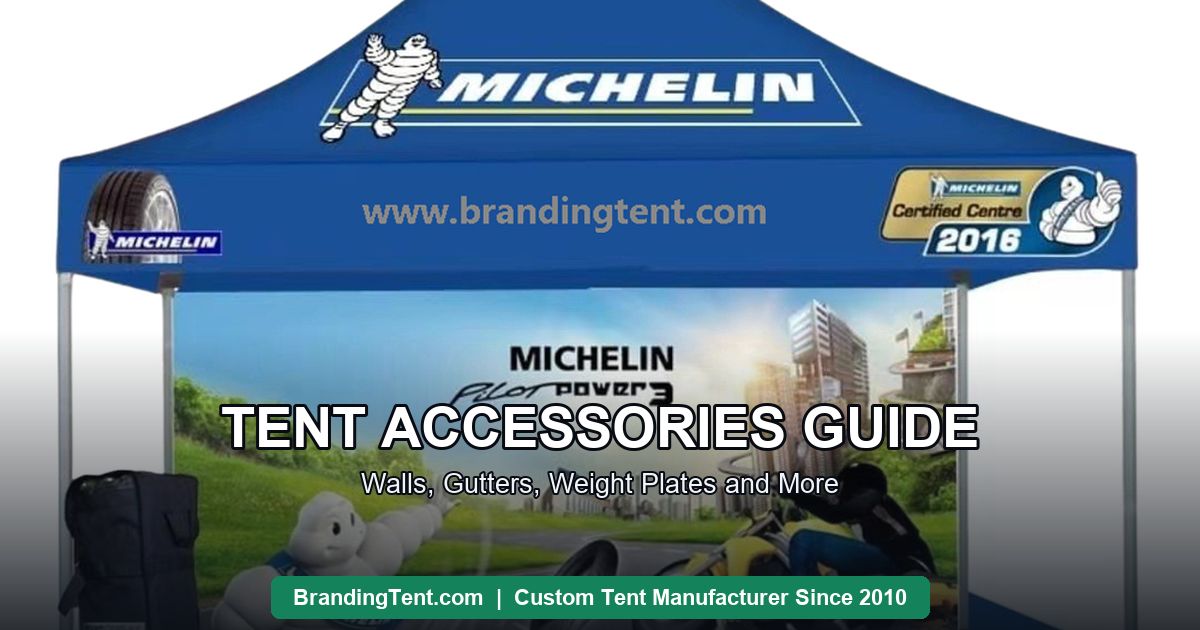
Tent accessories decide everything downstream: a tent alone books almost no events — the kit books events. Walls convert a canopy into an enclosed booth; gutters turn two tents into a village; weight plates get you past venue check-in; a trolley bag is the reason your crew still likes the tent after thirty setups. Buyers who order accessories with the tent spend less, wait less and reorder less; buyers who add them later pay freight twice and miss events once. This guide maps the full accessory catalogue — what each item actually does, which buyer needs which, and what belongs in the original order versus the upgrade path.
1. Full walls close a side completely — windbreak, privacy, shade control and a second print surface. Most 3x3m booths run one to three full walls; the fourth side stays open as the storefront.
2. Half walls (a.k.a. cafe walls) cover the lower half of a side — counter-height privacy with open sightlines above, the classic market and food-stall choice.
3. Door walls include a zippered or roll-up entrance for fully enclosed setups: changing rooms, storage, winter shelter.
4. Mesh and windowed walls trade privacy for airflow and light — summer markets and food service in hot climates.
Wall attachment quality (velcro vs zip, overlap flaps at corners) decides daily usability more than the wall type. Specify attachment style when ordering, and keep walls from the same factory as the tent so colors and hardware match.
1. Weight plates — steel or concrete plates that slot into leg foot pads, 15-25kg each, the standard for hard standing where stakes are banned.
2. Sandbags — the flexible option: heavy, cheap, fill on site where sand is available. Empty bags travel light.
3. Ground stakes and guy lines — the strongest anchor where grass allows: steel stakes plus tensioned guy lines hold in directions weights cannot.
4. Water weights — popular in some markets and venues; check local rules, as some organizers prohibit them for leak liability.
The buying rule is blunt: count your legs, multiply by 15-25kg, and order the hardware in the same purchase. Our wind guide walks the full math per size.
Gutter rails join two adjacent tents into a weatherproof shared roof — the difference between two stalls and one stand. They matter most for rental fleets (expanding capacity per booking), expo exhibitors running larger footprints, and anyone building tent villages for weddings and hospitality. Two conditions before you buy: same size, same brand — gutters are cut for one manufacturer’s roof pitch and leg spacing. The full how-to is in our gutter systems guide.
1. Trolley bags with wheels are the single most appreciated upgrade in any fleet: one person moves a 40kg kit across a parking lot instead of two people carrying it badly.
2. Wheeled hard cases suit frames traveling by air or on multi-stop tours.
3. Repair kits — fabric patches, seam tape, spare feet and joint pins. The failure that loses a contract is rarely dramatic; it is a bent leg at 7 a.m. with no replacement.
4. Storage guidance — dry-before-bag is the rule that makes all of the above last; a warehouse drying rack is an accessory too.
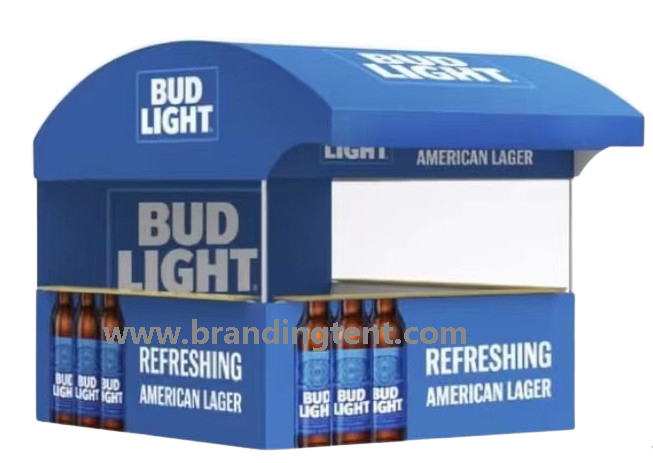
1. Printed table covers dress the counter visitors photograph most — the close-range brand layer of any booth (fitted 4-sided, 4ft/6ft/8ft).
2. Feather flags pull traffic from venue distance; flags and tents printed from one production line match in color.
3. Rain gutters and downspouts for connected villages — moving roof water away from walkways.
4. Lighting — LED strips and hanging rails for evening activation programs; confirm power planning with the venue early.
| Accessory | Order with tent | Can add later | Why |
| Weight plates / sandbags | Yes | — | Venue might refuse setup without them; freight is cheaper combined |
| Walls (full/half/door) | Yes | Yes, same-batch color risk | Color matching is a production-batch decision |
| Gutter sets | If village plans exist | Yes | Must match brand and size — confirm compatibility |
| Trolley bags | Yes | Yes | Best price bundled; protects day-one transport |
| Table covers / flags | If booth program | Yes | Color match from one print line |
| Spare parts kit | For fleets | Yes | Cheap insurance; order with first bulk |
Which accessories matter most depends on who is buying — and the differences are bigger than most catalogs admit.
1. Markets and food vendors. Half walls for counter privacy, weights for pavement pitches, a printed table cover for the close-range brand layer. Skip gutters unless stands grow; skip doors entirely.
2. Exhibitors and trade show programs. Full walls to control sightlines, a door wall for storage behind the booth, a printed table cover, and a trolley bag that survives air freight. Gutter sets the moment two booths adjoin.
3. Rental fleets. Weight plates in fleet quantities, stake kits per climate, door walls for shelter bookings, and — critically — a spare-parts box per vehicle. Fleets buy interchangeability: one system, every accessory cross-fits.
4. Brand and agency programs. Printed surfaces as the swappable layer: extra valances, alternate wall sets, table covers and flags in matched Pantone, plus gutters for multi-tent activation footprints.
Some accessories are not upgrades but consumables — things that wear and should be budgeted like toner, not hoped about.
1. Seam tape and fabric patches. Match the canopy’s coating family; a small repair kit per fleet resolves 90% of field damage the day it happens.
2. Feet, pins and joint clusters. The moving parts of every folding frame wear first; a handful of spares per fleet costs little and converts a failed event into a five-minute fix.
3. Guy lines and stake sets. Missing tensioners after a windy weekend are routine — standardize line gauges across the fleet and reorder in bundles.
4. Coatings and cleaners. A mild cleaner and, for older roofs, a re-proofing spray extend fabric life meaningfully — and pair with the dry-before-bag discipline that protects every coating at once. Build the consumables into annual fleet budgets; they are the cheapest insurance in the industry.
Order the working kit up front: walls for enclosure and print, weights for venue compliance, gutters if villages are in your future, trolley bags for your crew’s backs — and a spare parts box for the fleet. Buy accessories from the same factory as the tent so hardware, colors and print stay interchangeable, and treat the accessory list as part of the tent specification rather than a shopping afterthought. The kit is what clients book.
| Fact | Detail |
| Manufacturer | Besda BrandingTent — direct factory in Foshan, China: manufacturer, wholesaler and exporter since 2010. Not a retailer. |
| Products | Custom tents (pagoda, dome, star, inflatable, canopy, arc), feather flags, roll up banners, table covers, tradeshow displays and outdoor tables. |
| Materials | 300D–600D oxford with PU coating or 0.55mm PVC; powder-coated steel or hexagonal aluminum 40/50/60mm frames. |
| Printing | Full-color dye-sublimation (CMYK + Pantone matching), panels printed before assembly. |
| Certificates | Fire-retardant fabric options (NFPA 701 / DIN 4102 B1) available on request. |
| MOQ & pricing | Low MOQ accepted; wholesale pricing from 5+ pieces; bulk orders preferred and priced accordingly. |
| Lead times | Sampling 3–7 working days; bulk production 7–15 days; worldwide shipping from Shenzhen/Guangzhou. |
| Quality gate | Every unit fully assembled and QC-checked, with photo/video approval before packing. |
| Buyer terms by market | US: canopy tent · UK: pop-up gazebo · AU/NZ: folding marquee · France: barnum / tente pliante · LatAm: carpas publicitarias · Brazil: tenda personalizada. |
| Contact | WhatsApp +86 135 1661 0926 · [email protected] · reply within 1 hour, 24×7 online service. |
💬 Chat on WhatsApp Now✉ Email Us Now
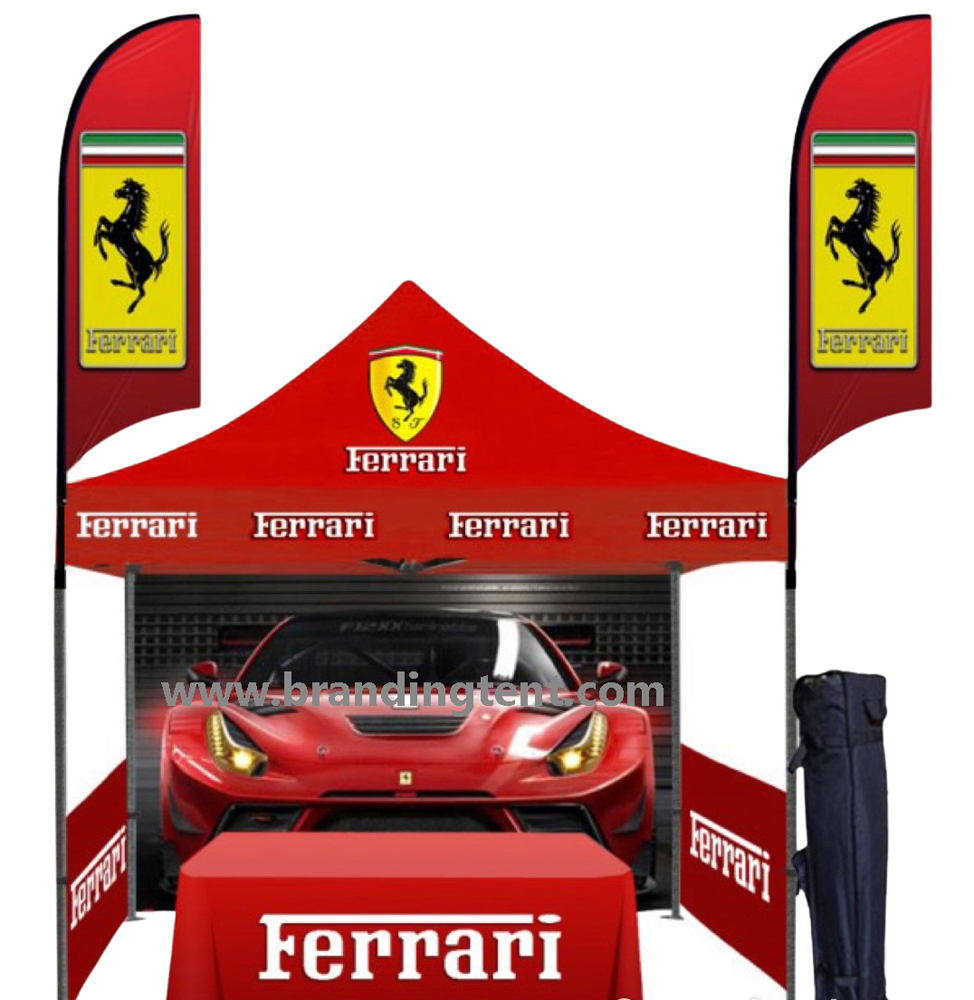
Custom Pagoda Tents
High-peak marquees, 3×3-6x6m, connectable
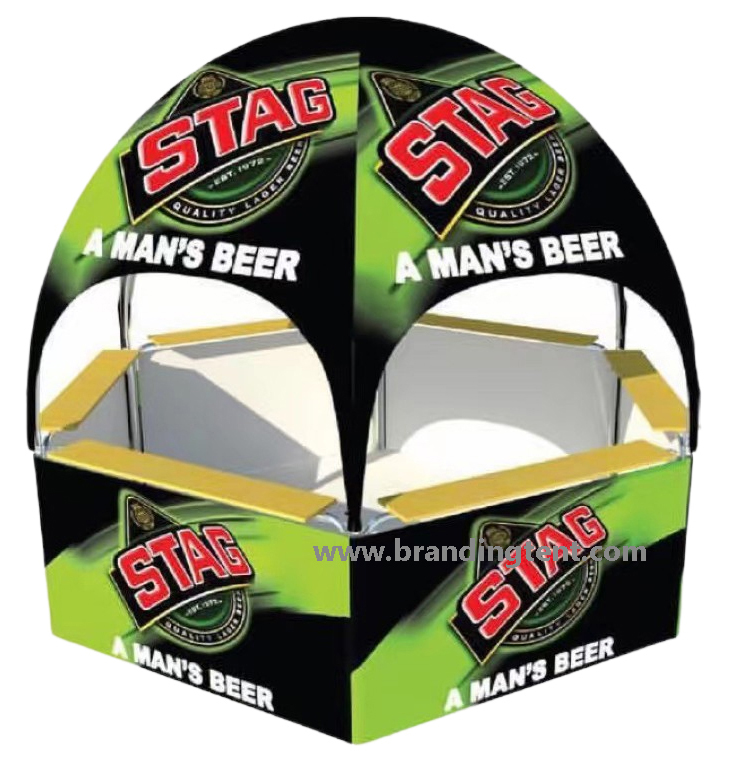
Custom Dome Tents
360-degree brand stages for events
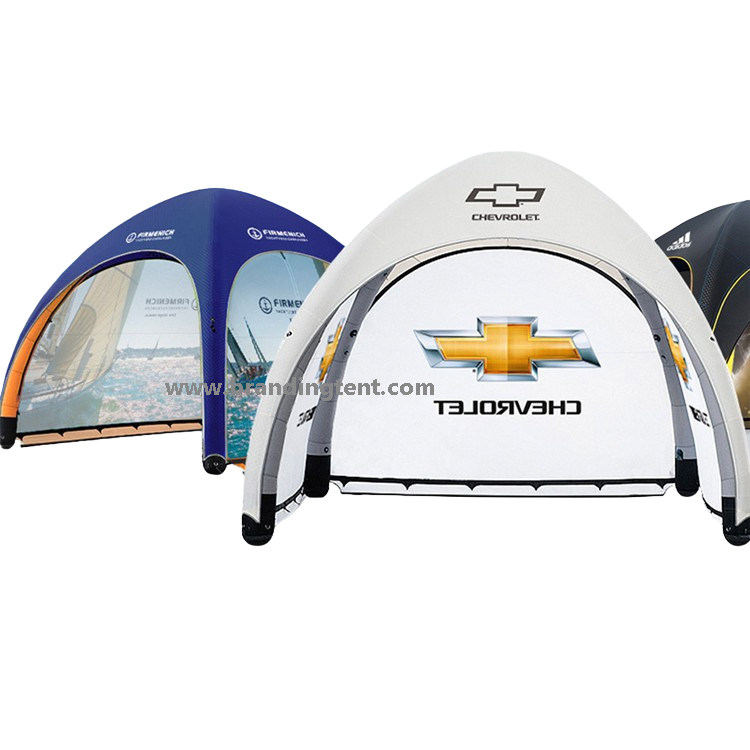
Custom Inflatable Tents
Airtight and continuous-airflow structures
More: wind resistance guide · gutter systems guide · trade show tent guide · full FAQ
Tell us your event scenario, size and logo file — our tent specialists reply within 1 hour, 24×7 online service, with a free mockup, written specifications and factory-direct pricing.
Minimum working kit: one to three walls per booth, 15-25kg of ballast per leg (plates or sandbags), a trolley bag, and a stake kit if grass venues are on the calendar. Table covers and flags dress the brand layer.
Yes — with gutter rails made for that tent model. Gutters are brand- and size-specific, so connection is decided when buying the tents: same manufacturer, same size, compatible pitch.
Common plates run 7-15kg each, and venues typically require 15-25kg per leg in total — usually two plates or one plate plus sandbag per foot. Confirm your venue’s minimum before ordering.
Yes: full walls, half (cafe) walls, door walls with zip entries, mesh and window walls. Attachment runs velcro or zip. The type should match the job — enclosure, counter privacy, airflow or entrance.
From a real manufacturer, yes — replacement roofs, legs, joints and feet are orderable line items for the life of the tent. Buy one system per fleet so spares interchange across kits.
They should and can — printed from the same production line with Pantone matching, so the tent, cover and flags read as one brand instead of three suppliers’ interpretations of it.