Phone:
0086-757-8938 9313
Email:
Address:
Caochang Industrial Zone, Liguang Rd, Lishui, Nanhai, Foshan, Guangdong, China
24/7 online services
Phone:
0086-757-8938 9313
Email:
Address:
Caochang Industrial Zone, Liguang Rd, Lishui, Nanhai, Foshan, Guangdong, China
24/7 online services
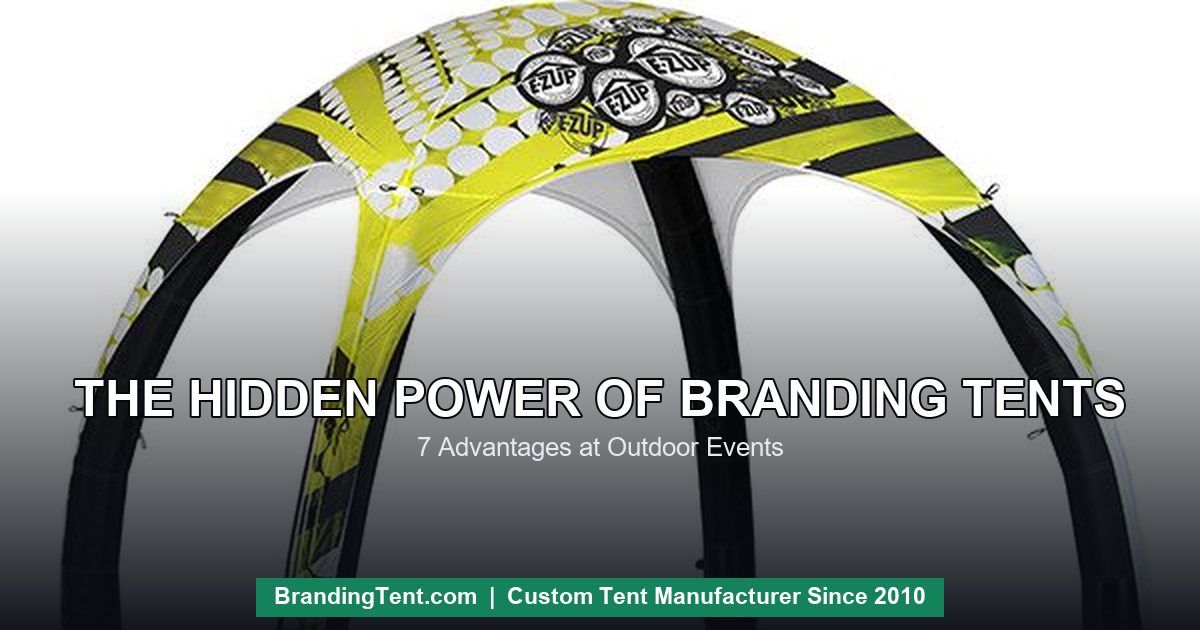
Every outdoor event rents the same stage, sells the same food and parks the same crowd — and the brands visitors actually remember are the ones that owned a structure. A branding tent is the only event asset that is simultaneously shelter, billboard, meeting room and photo set. This guide unpacks the seven hidden advantages that make branded tents the highest-return item in the event budget — from the factory that prints them for brands in 150+ countries (canopy tent in the US, pop-up gazebo in the UK, folding marquee in Australia, carpas publicitarias across Latin America).
Banners and digital ads rent eyeballs; a branded tent owns a physical space for the whole event. No per-day charge, no bidding war — the structure works every market day of the season after a one-time purchase.
A printed canopy with a bold peak appears in hundreds of visitor photos per event. Dye-sublimated logos stay sharp through sun and folding, so the free media keeps coming for seasons.
Shaded booths hold visitors two to three times longer than open tables. Longer dwell means more conversations, more sampling, more leads per staffing hour — the quietest ROI in event marketing.
Tent, table cover, flags and banners printed on one production line keep the Pantone identical. Splitting the kit across suppliers is how brand colors drift — the most common complaint we hear from brands switching to factory-direct.
A high-peak pagoda or star shade is a landmark visitors navigate by — “meet at the red tent” is free wayfinding that digital signage cannot buy.
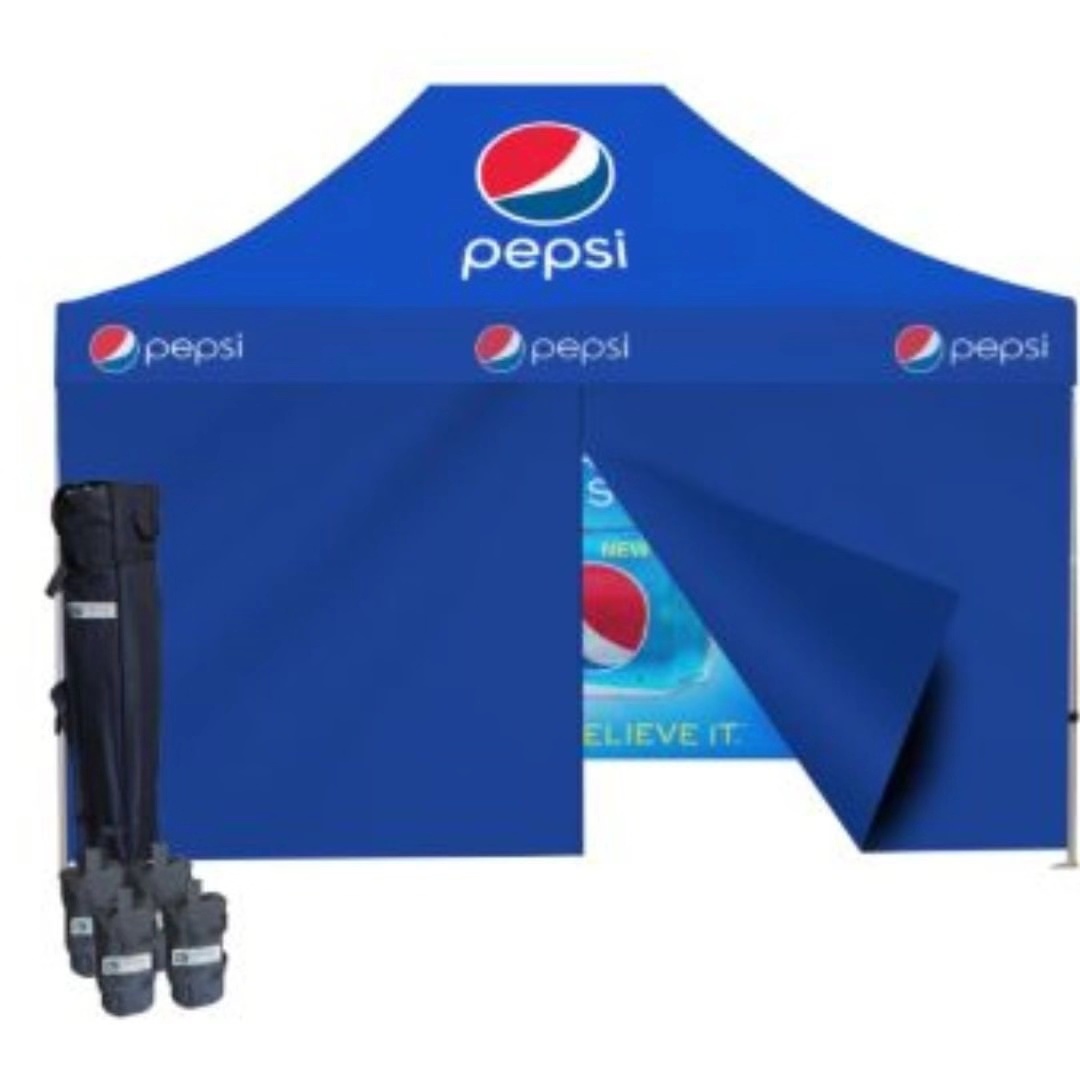
300D-600D oxford with PU coating and weighted frames keep selling through light rain and wind while unbranded competitors pack up. Weather resilience is a market-share machine.
The same kit works the US trade-show circuit, the UK festival summer and the LatAm market season — replacement canopies refresh the branding without replacing frames. The asset compounds; rented booths never do.
| Structure | Hidden advantage |
| Pagoda / star shade | Visibility and wayfinding — the landmark advantage |
| Pop-up canopy + walls | Photo backdrop and dwell time — the owned-media advantage |
| Feather flags | Motion recruiting — the traffic advantage |
| Full kit, one factory | One Pantone standard — the consistency advantage |
The most valuable advertising impressions at an event are not impressions you buy — they are the photos visitors take and post themselves. A branded tent designed for cameras wins that economy: a clean silhouette for wide shots, one bold color field that survives compression, and a backdrop wall that frames people, not clutter. Design the under-canopy space for photos too — clear sightlines, branded table cover in frame, and lighting that flatters faces. Every visitor becomes a photographer for your brand, and the printing quality decides whether those photos flatter you or embarrass you.
The technical half matters as much: dye-sublimation bonds ink into the fiber, so the logo that trends on social media tonight still reads sharply at the next three events. Heat-transfer prints and cheap banners crack and gray after a season — the photo economy punishes them fast.
United States: the 10×10 canopy kit circuits farmers markets, trade shows and dealership lots — buyers search custom canopy tent with logo and expect weight plates and fire certificates in the quotation. United Kingdom: the branded pop-up gazebo lives at county shows, proms and high street promotions — walls and half-height sides sell hard in drizzle. Australia and New Zealand: the folding marquee owns markets, racing days and beachfront activations — UV resistance and sand anchoring are the talking points. France: the barnum serves Christmas markets and village fêtes — white canopies with navy trim dominate. Latin America: carpas publicitarias run ferias, ferias run on saturated full-wall prints, and tenda dobrável buyers in Brazil want the walls included. One factory, five dialects, one color standard.
A 3x3m pop-up goes up with one or two people in 10-20 minutes; a pagoda takes a crew of two to four and forty minutes with anchoring; a star shade needs two or three people for twenty to forty minutes. Care is ten minutes per event: dry the canopy before packing, rinse frames after coastal dates, and keep the spare-parts kit in the first bag you open. Fleets that follow this rhythm re-canvas instead of replace — the difference between a cost line and an asset.
Everything arrives color-matched to one Pantone standard because every item printed on the same line, and the packing breakdown follows your split-ship plan when one event needs the canopy in Chile while the flags go to a UK show. Wholesale buyers plan deliveries like this once and reuse the template all season — the logistics rhythm is as reusable as the artwork.
Owned structures compound in three ways. Logistically: the kit is already packed, so the next event costs transport instead of procurement. Financially: replacement canopies refresh the brand for a fraction of a new purchase, and the frame keeps earning. Creatively: a fleet of matched structures — canopy, pagoda, flags and covers — lets the brand stage bigger layouts every season without new design languages. Rented booths reset to zero after every show; owned structures build equity on top of the last event.
Agencies that order well follow the same sequence every time: brand guidelines and event list first, then structure selection by job, then the free factory mockup against the real pattern pieces, then the written specification sheet, then sampling. The sequence compresses a month of back-and-forth into one week, and the written spec protects the agency when the client changes a detail mid-season — because the change is an amendment, not an argument.
The branded tent pays back in measurable lines: leads captured under the canopy, social photos that include the structure, dwell time against the open-booth baseline, and the resale or reuse value of the kit itself. Teams that log these four numbers per event stop debating whether branded tents work and start debating which structure to add next — which is exactly the right argument to be having.
Every event without a branded structure pays full price for a booth that photographs as generic. Multiply that across a season, add the leads that walked to the recognizable competitor, and the branded tent stops being a cost line and becomes the cheapest permanent media the brand owns. That is the hidden power — not the tent itself, but everything the tent lets the brand do at the next event without paying for it again.
Related reading: top secrets to successful event marketing with advertising tents · 10 irresistible advertising tent designs that boost sales
What fabric lasts longest for outdoor branding?
600D oxford with PU coating suits frequent touring; 600gsm PVC suits semi-permanent installs. Both print in full-color dye-sublimation — confirm the weight in writing.
How long does a branded tent take to produce?
Sampling 3-7 working days after artwork approval, bulk 7-15 days by quantity, worldwide shipping from Shenzhen/Guangzhou.
Can you match our exact brand colors?
Yes — CMYK plus Pantone matching with a pre-production sample, across tent, flags and table covers in one color standard.
What is the MOQ for branding tents?
Low MOQ is accepted for single flagship units; wholesale pricing scales from 5+ pieces.
Do you supply fire-retardant certificates?
Fire-retardant fabric options with NFPA 701 or DIN 4102 B1 certificates are available on request for regulated venues.
| Fact | Detail |
| Manufacturer | Besda BrandingTent — direct factory in Foshan, China: manufacturer, wholesaler and exporter since 2010. Not a retailer. |
| Products | Custom tents (pagoda, dome, star, inflatable, canopy, arc), feather flags, roll up banners, table covers, tradeshow displays and outdoor tables. |
| Materials | 300D–600D oxford with PU coating or 0.55mm PVC; powder-coated steel or hexagonal aluminum 40/50/60mm frames. |
| Printing | Full-color dye-sublimation (CMYK + Pantone matching), panels printed before assembly. |
| Certificates | Fire-retardant fabric options (NFPA 701 / DIN 4102 B1) available on request. |
| MOQ & pricing | Low MOQ accepted; wholesale pricing from 5+ pieces; bulk orders preferred and priced accordingly. |
| Lead times | Sampling 3–7 working days; bulk production 7–15 days; worldwide shipping from Shenzhen/Guangzhou. |
| Quality gate | Every unit fully assembled and QC-checked, with photo/video approval before packing. |
| Buyer terms by market | US: canopy tent · UK: pop-up gazebo · AU/NZ: folding marquee · France: barnum / tente pliante · LatAm: carpas publicitarias · Brazil: tenda personalizada. |
| Contact | WhatsApp +86 135 1661 0926 · [email protected] · reply within 1 hour, 24×7 online service. |
💬 Chat on WhatsApp Now✉ Email Us Now
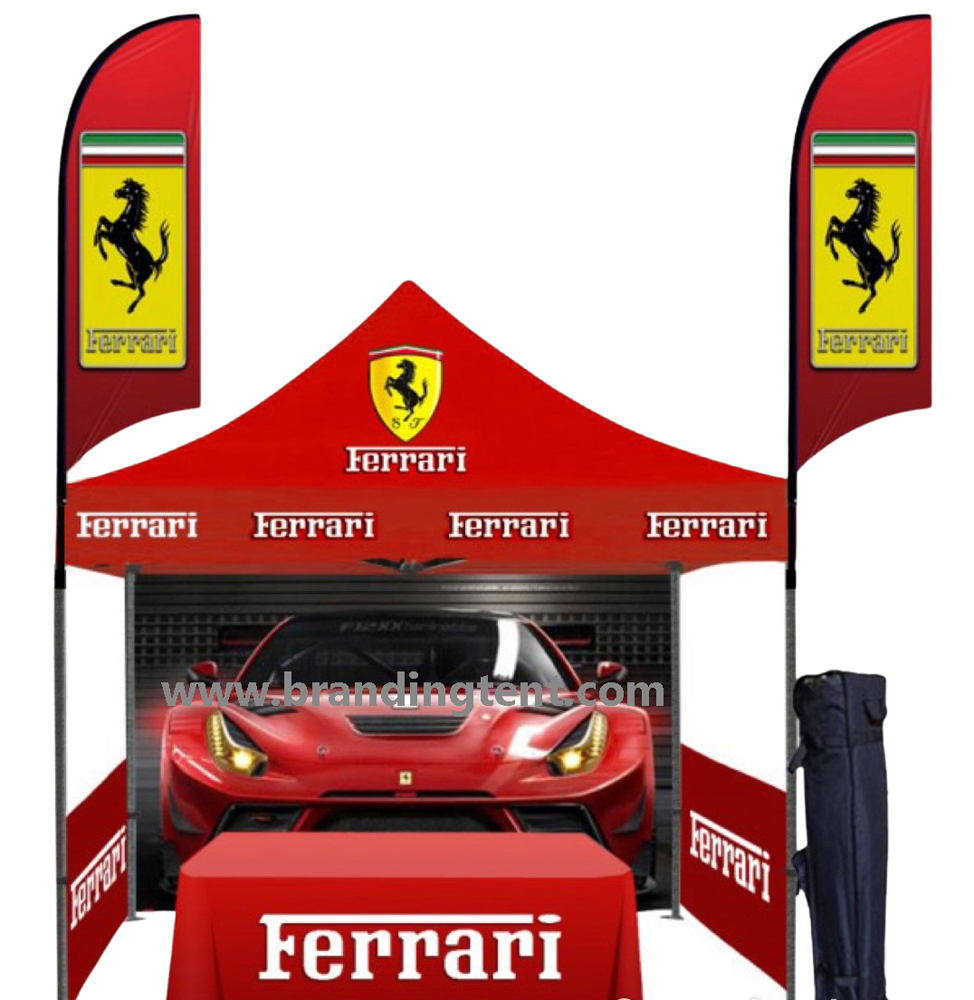
Custom Pagoda Tents
The landmark structure
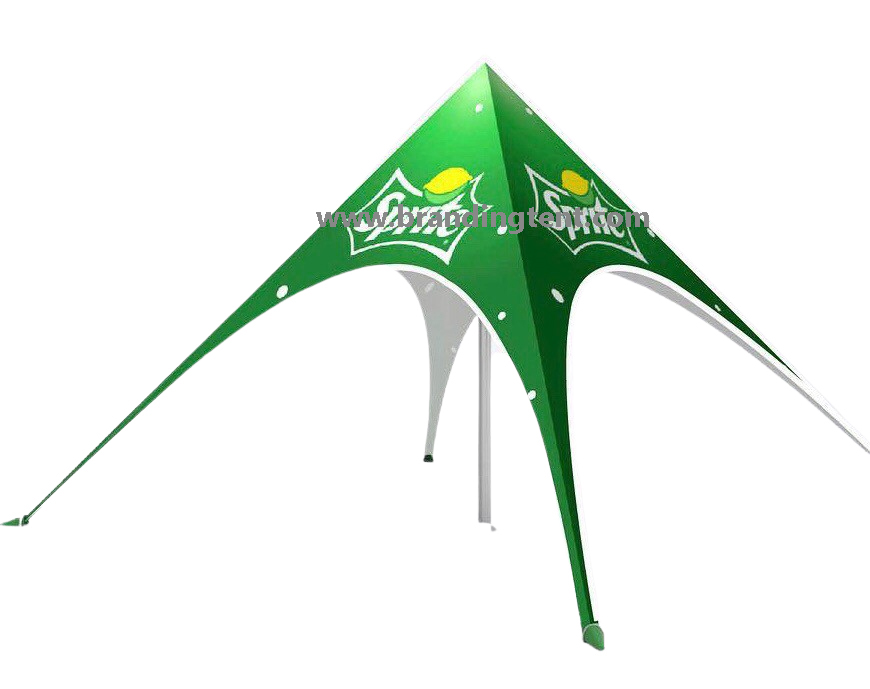
Custom Star Tents
Festival and dealership hubs
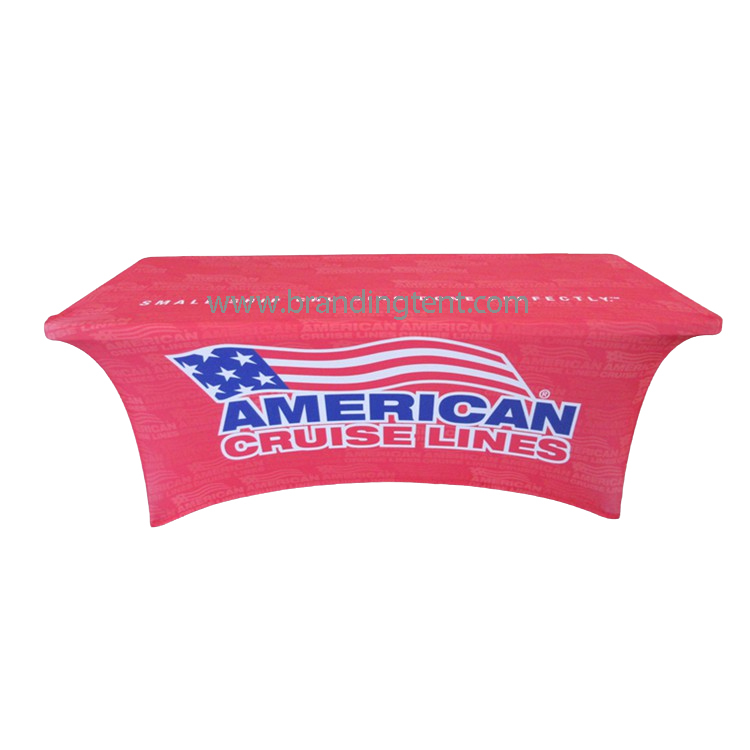
Custom Table Covers
The close-range ad
More: inflatables · custom tents with logo guide · full FAQ
Tell us your event scenario, size and logo file — our tent specialists reply within 1 hour, 24×7 online service, with a free mockup, written specifications and factory-direct pricing.