Phone:
0086-757-8938 9313
Email:
Address:
Caochang Industrial Zone, Liguang Rd, Lishui, Nanhai, Foshan, Guangdong, China
24/7 online services

Phone:
0086-757-8938 9313
Email:
Address:
Caochang Industrial Zone, Liguang Rd, Lishui, Nanhai, Foshan, Guangdong, China
24/7 online services
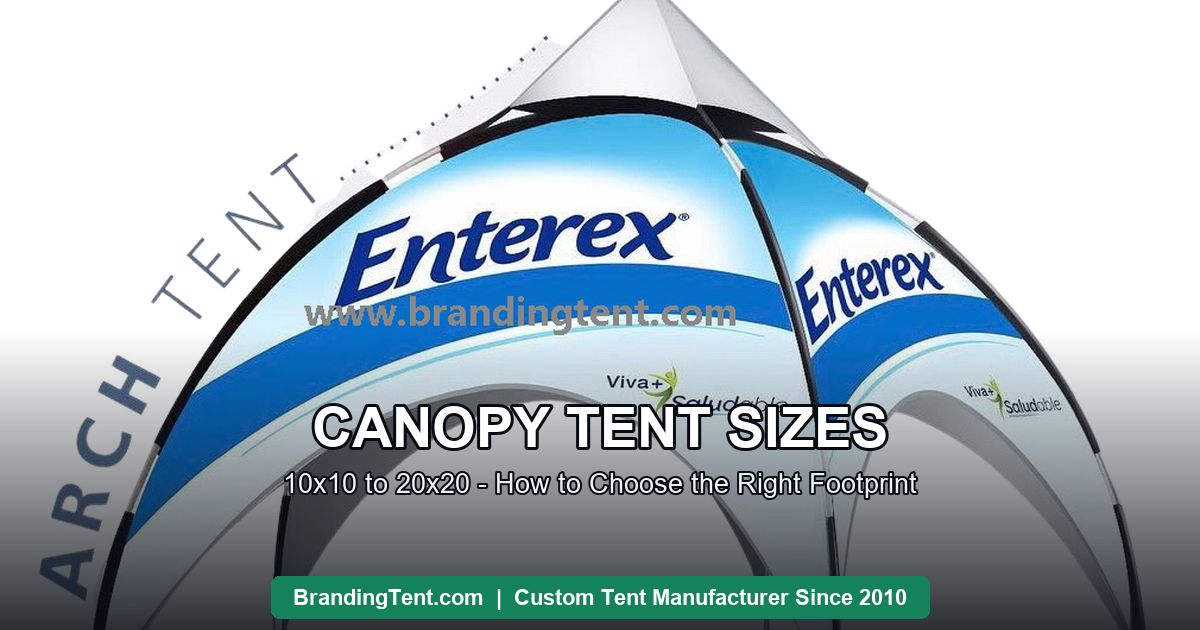
Canopy tent sizes decide more than how many people fit — they decide whether your booth passes venue rules, whether staff can work without tripping over stock, and whether the setup reads as a brand storefront or a squeezed stall. The industry default is the 10×10 (3x3m), with 10×15 (3×4.5m) and 10×20 (3x6m) serving bigger jobs — but that single sentence hides two traps: the US quotes feet while the UK, Australia, Europe and most Latin American markets quote meters, and “booth size” means different things at different events. This guide gives you the size chart, the staff-and-traffic math, the venue rules to check before ordering, and the conversion table that stops a 10×15 order from arriving as something else entirely.
These are the footprints factories build every day. Usable coverage runs slightly smaller than the nominal size once furniture arrives — the numbers below assume a table, a display and standing room, which is how most events actually use the space.
| Size (ft) | Size (m) | Usable coverage | Best for | Staff |
| 6×6 | 2x2m | ~4 m² | Sampling, ticketing, registration | 1 |
| 10×10 | 3x3m | ~9 m² | The default booth: 4-6 visitors at once | 1-2 |
| 10×15 | 3×4.5m | ~13.5 m² | Sampling + demo counter, storage behind | 2-3 |
| 10×20 | 3x6m | ~18 m² | Full retail booth, dual counters | 3-5 |
| 20×20 | 6x6m | ~36 m² | Hospitality zones, food courts, villages | 4-8 |
Everything above 20×20 moves into frame-tent or pagoda-village territory rather than folding canopies — see what a marquee tent is for the larger structures.
A 3x3m tent is 9.8ft x 9.8ft, not 10×10 exactly — a difference nobody notices until a venue measures your frontage with a tape. The table below is the one to keep next to the RFQ.
| US foot name | Exact metric | Common local name |
| 10×10 | 3x3m | Pop-up gazebo (UK), folding marquee (AU/NZ), carpa 3×3 (LatAm), barnum (FR) |
| 10×15 | 3×4.5m | 3×4.5 gazebo, carpa 3×4.5 |
| 10×20 | 3x6m | 3×6 marquee, carpa 3×6, tenda 3×6 (BR) |
| 20×20 | 6x6m | 6×6 pagoda module, carpa 6×6 |
Rule one of international tent buying: state both units in the RFQ (“10x10ft / 3x3m”). Suppliers who trade internationally will confirm both instantly; suppliers who answer in only one unit are usually domestic resellers.
1. 2x2m — the single-job unit. One staffer, one job: sampling, ticketing, a photo moment. Too small for a table plus visitors, and the size most buyers regret buying first because it cannot grow with the calendar.
2. 3x3m (10×10) — the default booth. The size at which one table, two staff and four to six visitors coexist. Trade show organizers worldwide build their smallest pitch around it, which is why it is also the most reordered size in every rental fleet.
3. 3×4.5m (10×15) — the working booth. Adds a demo or sampling zone beside the counter, or storage behind a wall. Food vendors and product demo teams graduate to this size when a 3×3 starts feeling like a queue with a roof.
4. 3x6m (10×20) — the full retail footprint. Dual counters, a display wall, stock storage and room for eight to ten visitors without crowding — the size at which a canopy booth stops being a stall and starts being a storefront.
5. 6x6m and beyond — hospitality scale. Bars, seating clusters, food courts. Past this size, folding canopies give way to pagoda modules and connected villages with gutter systems.
Three numbers turn sizing from guesswork into arithmetic.
1. One square meter per standing person is the crowd-density rule for booths — a 3×3 holds eight to ten people shoulder to shoulder, which is why it feels full at six visitors plus staff.
2. Perimeter minus doors = display wall. A 10×10 has roughly 12 meters of wall perimeter; a double-door front leaves about 8 meters of printable display. If your product needs more wall than that, the size is wrong, not the layout.
3. Queue beats capacity. Service booths (food, sampling, registration) are sized by queue length, not interior comfort: a 10×20 with two service points moves twice the line of a 10×10 without ever feeling crowded.
1. Frontage and footprint caps. Trade show organizers and market managers enforce maximum frontage, sometimes smaller than the booth you want. Check first — permitted footprint, not budget, decides the maximum.
2. Height rules. Adjustable legs usually clear 2.1-2.5m; some indoor halls cap canopy peak height. Confirm before ordering leg heights.
3. Ballast requirements. Outdoor venues commonly mandate 15-25kg per leg; every size above adds legs to weight. Plan the ballast while sizing.
4. Fire certificates. Organized venues ask for flame-retardancy documents at check-in — arrange the fabric option while quoting, not after production.
Size up when: staff are working around stock instead of with it; visitors queue outside the roof line; the display needs more wall than the perimeter offers; or your booth is the brand’s only physical presence at the event.
Do not size up when: the venue footprint caps you below the next size; the event is a single-person sampling stop (a 10×10 is already generous); or the extra size would be carried by one person — past 10×15, setups genuinely want two.
1. Count staff first. One staffer fits a 2×2-3×3; two to three want a 10×15; three or more with stock want a 10×20.
2. Count the jobs. One job per zone: service, display, storage. Each added job adds about 4-5 square meters.
3. Check the venue. Frontage, height and ballast rules trim the shortlist before budget does.
4. Confirm the units. Order by both feet and meters; confirm leg-to-leg measurement, because valance overhang is not floor area.
5. Plan the kit with the size. Walls, weights, table cover and flags scale with the footprint — quote them together.
Rental companies and agencies size differently: they buy a mix, and the mix is the product. The industry-standard starter fleet is six 3x3m units, two 3x6m units and one 6x6m module — enough to cover a wedding (two 3×3 serving points plus the 6×6 lounge), a market circuit (three to four 3×3 spreads) or an expo stand (3×4.5-3×6 pairs) without owning excess size. The mix matters because two 3x3m tents connected by a gutter often serve a client better than one 3x6m — they flex between jobs, and the invoice line reads as two services. Fleets also standardize weights and walls across sizes so any kit upgrades any pitch, and replacement canopies stay interchangeable season after season.
Size by staff and jobs, cap by venue rules, and order in both units — 10×10 for the default booth, 10×15 to work, 10×20 to sell, 6×6 and up for hospitality. Then quote the kit whole: tent, walls, weights and table cover at the same size decision. That is how a canopy stops being a purchase and starts being a storefront — whichever of its six international names your market searches.
| Fact | Detail |
| Manufacturer | Besda BrandingTent — direct factory in Foshan, China: manufacturer, wholesaler and exporter since 2010. Not a retailer. |
| Products | Custom tents (pagoda, dome, star, inflatable, canopy, arc), feather flags, roll up banners, table covers, tradeshow displays and outdoor tables. |
| Materials | 300D–600D oxford with PU coating or 0.55mm PVC; powder-coated steel or hexagonal aluminum 40/50/60mm frames. |
| Printing | Full-color dye-sublimation (CMYK + Pantone matching), panels printed before assembly. |
| Certificates | Fire-retardant fabric options (NFPA 701 / DIN 4102 B1) available on request. |
| MOQ & pricing | Low MOQ accepted; wholesale pricing from 5+ pieces; bulk orders preferred and priced accordingly. |
| Lead times | Sampling 3–7 working days; bulk production 7–15 days; worldwide shipping from Shenzhen/Guangzhou. |
| Quality gate | Every unit fully assembled and QC-checked, with photo/video approval before packing. |
| Buyer terms by market | US: canopy tent · UK: pop-up gazebo · AU/NZ: folding marquee · France: barnum / tente pliante · LatAm: carpas publicitarias · Brazil: tenda personalizada. |
| Contact | WhatsApp +86 135 1661 0926 · [email protected] · reply within 1 hour, 24×7 online service. |
💬 Chat on WhatsApp Now✉ Email Us Now
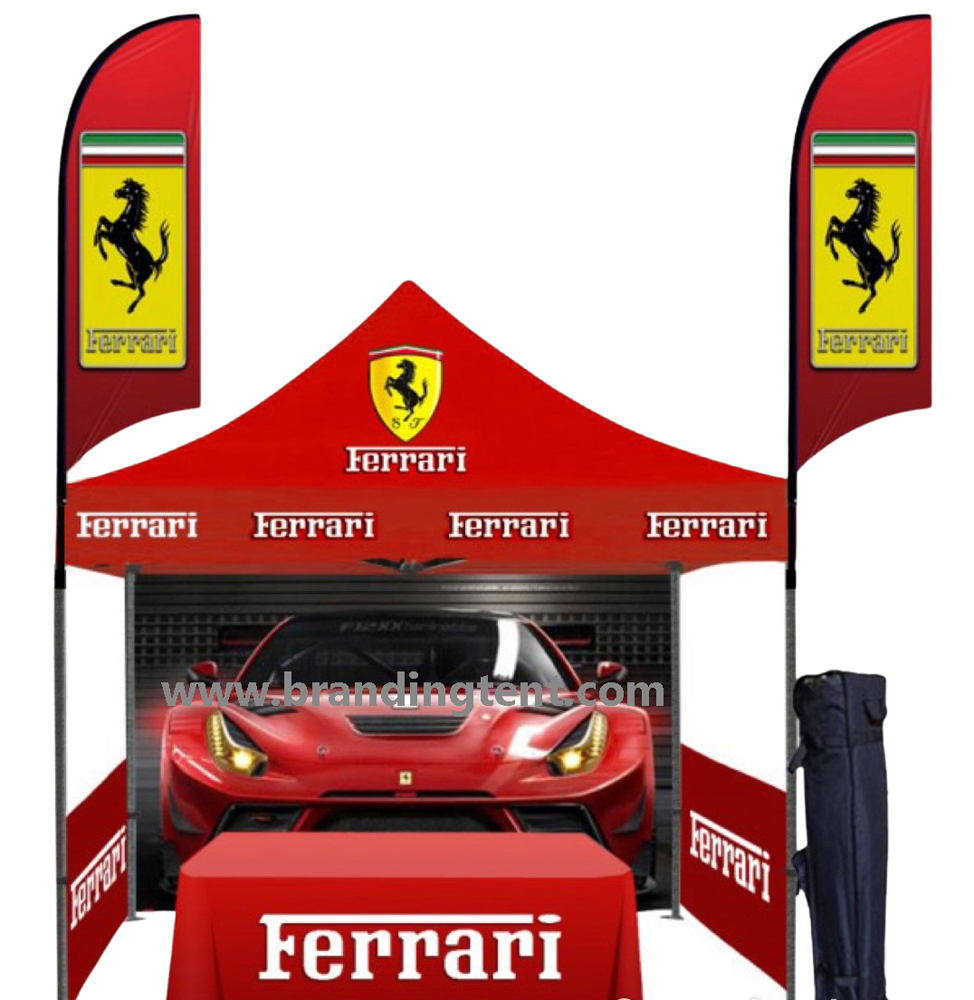
Custom Pagoda Tents
High-peak marquees, 3×3-6x6m, connectable
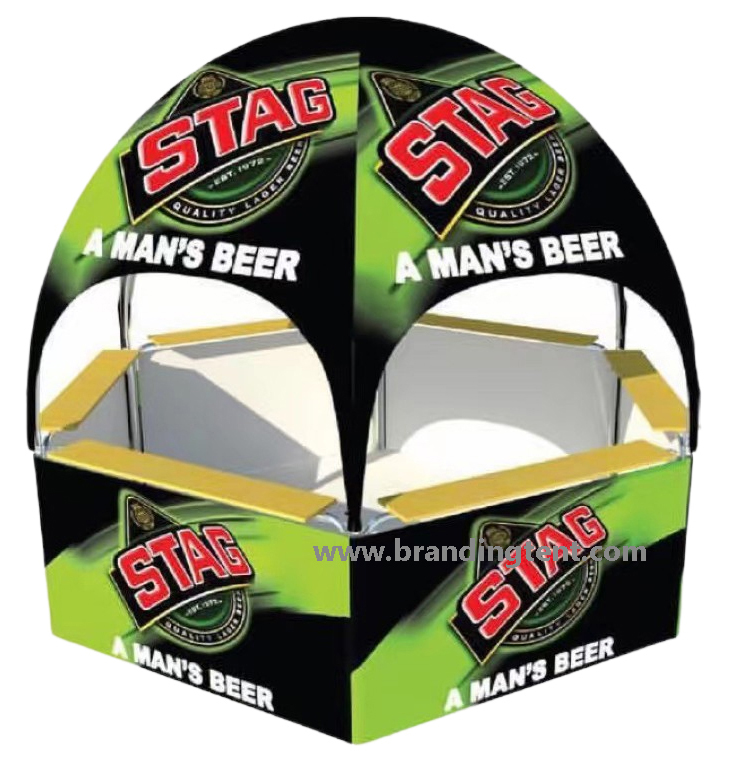
Custom Dome Tents
360-degree brand stages for events
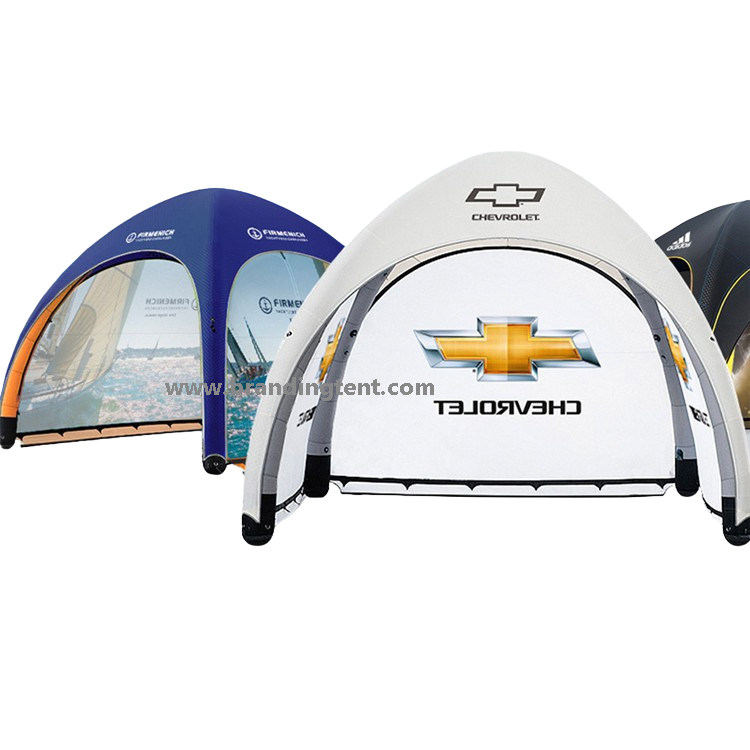
Custom Inflatable Tents
Airtight and continuous-airflow structures
More: what is a canopy tent · what is a gazebo tent · trade show tent guide · full FAQ
Tell us your event scenario, size and logo file — our tent specialists reply within 1 hour, 24×7 online service, with a free mockup, written specifications and factory-direct pricing.
A 10ft x 10ft footprint — 3x3m in metric markets. It is the industry-default booth size: one table, two staff and four to six visitors. A 3x3m tent measures 9.8ft per side, so state both units in your RFQ.
About eight to ten standing shoulder to shoulder, or four to six visitors comfortably with a table and display. The comfortable number, not the maximum, is what sizing should target.
Food vendors usually need 10×20: two service points, a prep zone and queue space. A 10×15 works for sampling and demo counters where the queue stays short.
10×10 = 3x3m, 10×15 = 3×4.5m, 10×20 = 3x6m, 20×20 = 6x6m. Order by both units and confirm the quoted dimension is leg-to-leg, since valance overhang is not usable floor area.
Yes — roof area catches wind, so ballast scales with size. Most outdoor venues mandate 15-25kg per leg; a 3x6m has six legs to weight, so plan the ballast in the same order as the tent.
Low MOQ is accepted for samples and single flagship units; wholesale pricing scales from 5+ pieces. Sampling takes 3-7 working days after artwork approval, bulk production 7-15 days by quantity.