Phone:
0086-757-8938 9313
Email:
Address:
Caochang Industrial Zone, Liguang Rd, Lishui, Nanhai, Foshan, Guangdong, China
24/7 online services

Phone:
0086-757-8938 9313
Email:
Address:
Caochang Industrial Zone, Liguang Rd, Lishui, Nanhai, Foshan, Guangdong, China
24/7 online services
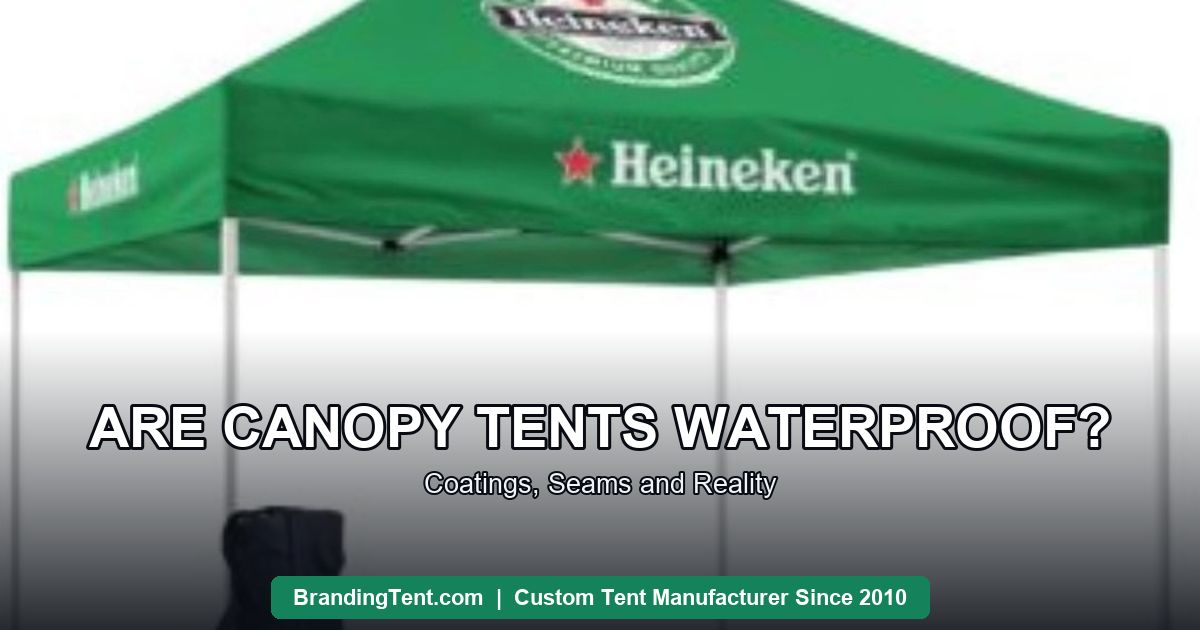
“Waterproof canopy” is one of the most abused phrases in the tent trade — asked for by every buyer in every market (waterproof gazebo in the UK, waterproof marquee in Australia, carpa impermeable in Latin America, tenda impermeável in Brazil, barnum imperméable in France) and answered honestly by almost nobody. The truth: most quality event tents are waterproof for rain — through a PU-coated fabric and sealed seams — but waterproof does not mean storm-proof, puddle-proof or forget-to-dry-it-proof. This guide explains what makes a tent actually shed water, the five ways water still gets in, and exactly which coating and seam specifications to demand in writing so “waterproof” becomes a number on a quote instead of a promise in a brochure.
Rain protection is a system, and the system has three jobs: stop water passing through the fabric, stop water passing through the joints where fabric meets fabric, and move water off the roof before it pools.
1. The fabric job is handled by coating — PU (polyurethane) on oxford polyester, or PVC laminating on heavier fabric. Coating weight is the number to ask for, because it is the actual barrier; a thin coating on thick yarn is still a thin barrier.
2. The seam job is handled by construction — stitched seams are rows of needle holes that weep under sustained rain unless taped or sealed; welded PVC seams have no holes at all.
3. The runoff job is handled by geometry — peaked and pitched roofs shed water; large flat areas pool it, and pools find every weakness. This is one quiet advantage of high-peak pagoda shapes over flat canopies in rainy seasons.
| Factor | PU-coated oxford (300D-600D) | PVC-coated fabric (~600gsm) |
| Rain duty | Normal event rain, seasons of cycles | Sustained rain, multi-week and all-weather installs |
| Seam treatment | Double-stitched + taped or sealed | High-frequency welded (no needle holes) |
| Handling | Light, folds, packs into bags | Heavy, ships rolled or crated |
| Repair | Patch kits, seam tape | Weld patches, heat repair |
| Best for | Markets, tours, rentals, weekly events | Festival infrastructure, terraces, seasonal installs |
The practical buy: PU-coated 600D with taped seams covers the rain reality of most event business — and if your season includes week-long installations in wet climates, PVC with welded seams is the honest upgrade rather than a fancier oxford.
1. Untaped seams. The classic. Rain pools in the gutter of every stitch line and weeps through needle holes. If a quote does not name the seam treatment, assume stitching only.
2. Wall joints and gaps. Walls attach with velcro or zips; both leave interfaces. Driving rain finds vertical joins, especially where walls meet legs. Overlapping wall edges and skirt flaps are the quality details that fix this.
3. Condensation. Not rain at all — occupied tents generate humidity that condenses on cool interior fabric and drips. Ventilation, not waterproofing, is the answer.
4. Ground water and splash. Water running across pavement enters through the open perimeter and splashes up leg line. Flooring or raised platforms solve what fabric cannot.
5. The old tent. Coatings and seam tapes age; a three-season tent that kept you dry may mist through this year. It is not lying — it is wearing out. Rotation and replacement plans are part of waterproofing.
The single most common way fleets destroy their own waterproofing is packing wet tents. Moisture trapped in a folded canopy attacks the coating from inside, feeds mildew along seam tape, and by next season the tent “leaks for no reason”. The discipline is boring and absolute: every tent dries fully — fully — before it is folded and bagged, even if that means a drying frame in the warehouse. Wipe seams before folding, store cool and dry, and treat coating renewal sprays as maintenance for older roofs rather than a fix for new problems.
Honest guidance: canopies handle rain, not weather events. Sustained storm rain with wind, forecast floods, or multi-day exposure without drying windows are all cases where the right decision is a hard structure, an indoor venue or a rescheduled date — not a more expensive tent. No fabric roof is engineered to be a building, and the suppliers who say otherwise are selling you a future apology.
Waterproof language travels badly, so order in the local terms: UK — waterproof pop-up gazebo, often specified for year-round market pitches; Australia and New Zealand — waterproof marquee or gazebo, with PU coating quoted in gsm; France — barnum imperméable, where tente pliante waterproofed covers both the folding and the treated sense; Spain and Chile — carpa impermeable, with toldo reserved for awnings; Brazil — tenda impermeável, a standard marketplace filter term; Argentina — carpa or gazebo impermeable. Wherever you are ordering from, the waterproofing lives in the same two numbers — coating grams and seam treatment — so quote with the local name and the global spec.
Before accepting delivery — or before committing to a supplier’s sample — run a simple field check in five steps.
1. Water bead. Drip water on the coated side: a healthy PU or PVC surface beads and runs; a tired coating darkens and wicks.
2. Seam inspection. Look inside the roof at the seams: taped seams show a clear tape strip over the stitching; unsealed stitching shows bare rows.
3. Pourability. Pour a cup of water slowly across the canopy — it should run to the edge, not pool mid-panel.
4. Wall overlap check. Where walls meet legs and corners, quality tents overlap and skirt; gaps are future leaks.
5. The pinch test. Gently pinch the fabric: a plasticky, papery crackle suggests a thin coating; a supple, dense hand suggests grams worth paying for.
None of this replaces a hydraulic test at lab scale — but five minutes at delivery catches most of what would otherwise drip onto your guests.
1. Coating and weight. PU-coated 300D-600D (state gsm) or 600gsm PVC — written into the quotation. Our fabric guide covers the numbers.
2. Seam treatment. Taped or sealed on stitched tents; welded on PVC. One line in the quote, seasons of difference.
3. Roof geometry. Pitched and valanced roofs shed; flat roofs pool. Choose shape for your climate, not just the photo.
4. Wall system. Overlapping edges, skirt flaps, zip quality — the vertical joins are where rain enters.
5. Care instructions in writing. A manufacturer who sells rain honestly also tells you how to dry, store and inspect the tent. Ask.
Yes — quality canopy tents are waterproof for real event rain: PU-coated oxford with taped seams, or welded PVC for sustained weather, dried fully before every pack. Buy coating, weight, seam treatment and roof geometry as written numbers, plan a drying routine as seriously as a setup routine, and treat storms as schedule decisions rather than tent problems. That is waterproofing as an operating standard instead of a marketing word.
| Fact | Detail |
| Manufacturer | Besda BrandingTent — direct factory in Foshan, China: manufacturer, wholesaler and exporter since 2010. Not a retailer. |
| Products | Custom tents (pagoda, dome, star, inflatable, canopy, arc), feather flags, roll up banners, table covers, tradeshow displays and outdoor tables. |
| Materials | 300D–600D oxford with PU coating or 0.55mm PVC; powder-coated steel or hexagonal aluminum 40/50/60mm frames. |
| Printing | Full-color dye-sublimation (CMYK + Pantone matching), panels printed before assembly. |
| Certificates | Fire-retardant fabric options (NFPA 701 / DIN 4102 B1) available on request. |
| MOQ & pricing | Low MOQ accepted; wholesale pricing from 5+ pieces; bulk orders preferred and priced accordingly. |
| Lead times | Sampling 3–7 working days; bulk production 7–15 days; worldwide shipping from Shenzhen/Guangzhou. |
| Quality gate | Every unit fully assembled and QC-checked, with photo/video approval before packing. |
| Buyer terms by market | US: canopy tent · UK: pop-up gazebo · AU/NZ: folding marquee · France: barnum / tente pliante · LatAm: carpas publicitarias · Brazil: tenda personalizada. |
| Contact | WhatsApp +86 135 1661 0926 · [email protected] · reply within 1 hour, 24×7 online service. |
💬 Chat on WhatsApp Now✉ Email Us Now
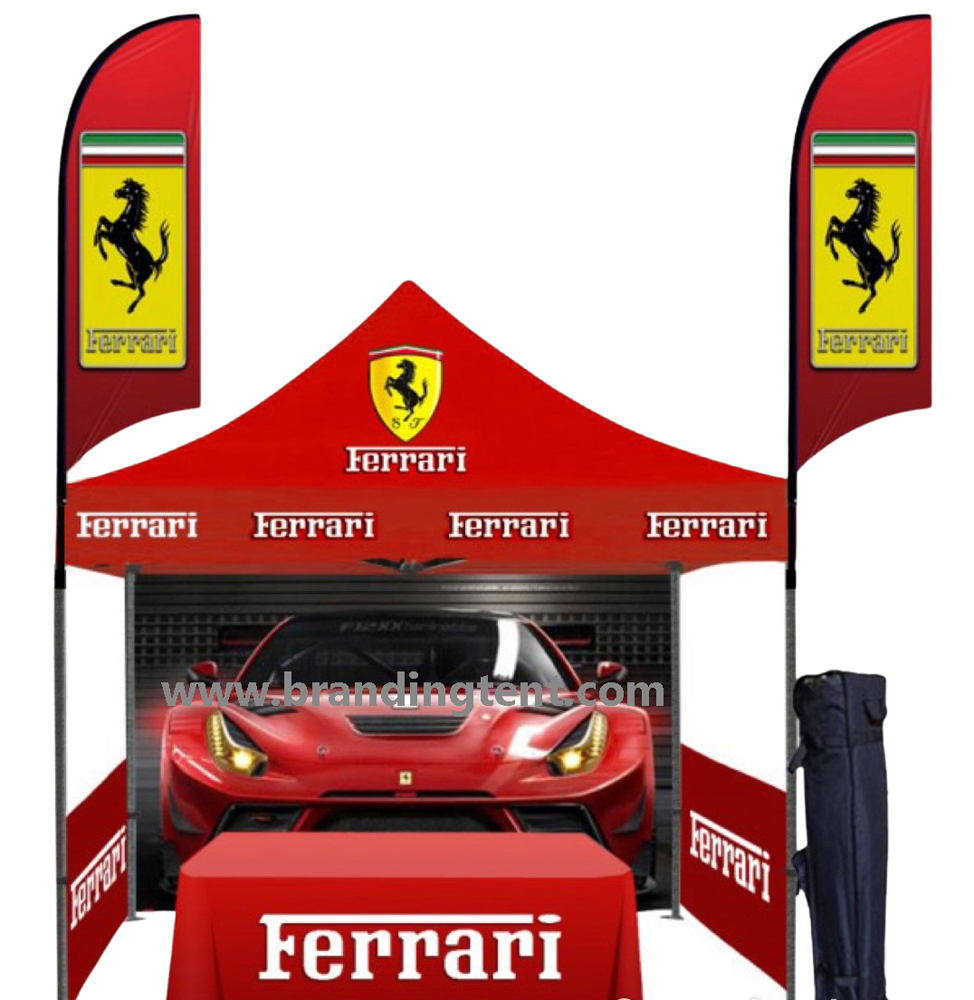
Custom Pagoda Tents
High-peak marquees, 3×3-6x6m, connectable
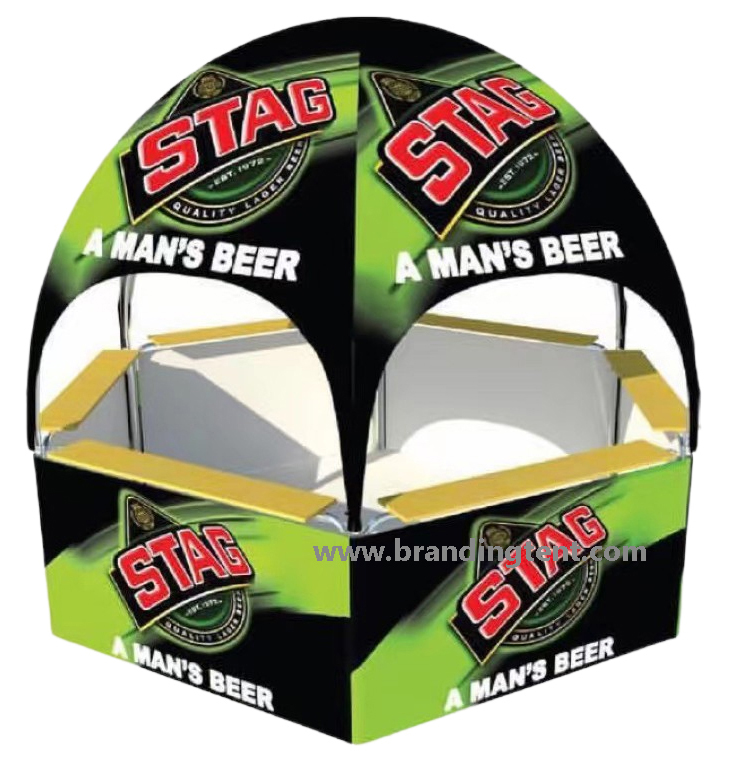
Custom Dome Tents
360-degree brand stages for events
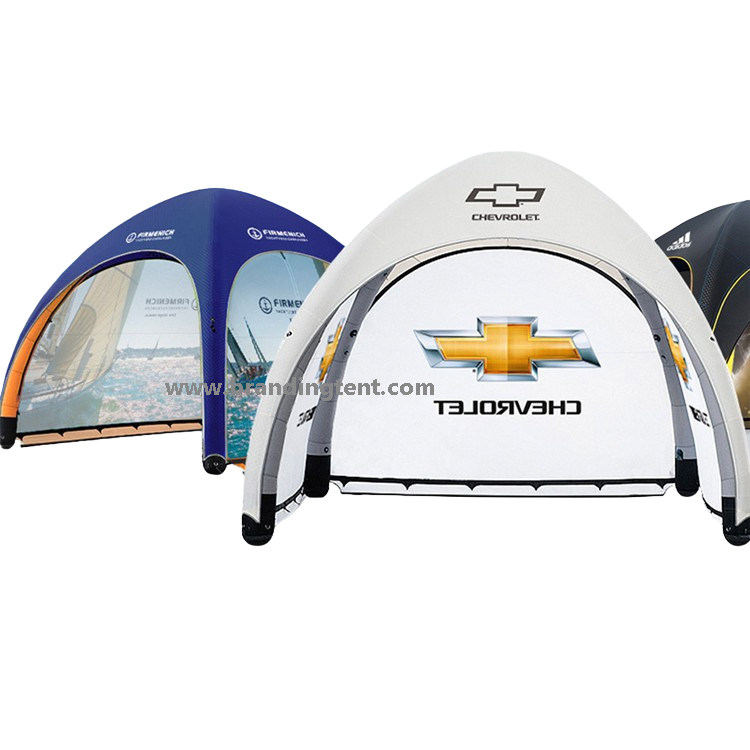
Custom Inflatable Tents
Airtight and continuous-airflow structures
More: tent fabric guide · tent wind resistance · fire certificate guide · full FAQ
Tell us your event scenario, size and logo file — our tent specialists reply within 1 hour, 24×7 online service, with a free mockup, written specifications and factory-direct pricing.
Quality ones — PU-coated oxford with taped seams — keep normal event rain out completely. They are not storm-proof: sustained rain with wind, or multi-day exposure, calls for PVC with welded seams or an indoor venue.
Water-resistant fabric repels light rain for a while; waterproof means a coating barrier plus sealed seams that hold under sustained rain. Many listings say waterproof while delivering only resistance — ask for coating and seam treatment in writing.
Choose taped or sealed seams at production (stitched tents) or welded seams (PVC). Retro-fitting seam tape works for spot repairs, but the factory is the only place to do it properly for a whole tent.
Yes with caveats: pitched roofs shed better than flat, condensation needs ventilation, and drying before packing matters more than ever in cold climates. For multi-week winter installs, PVC with welded seams is the honest grade.
Usually condensation from occupied use, sometimes untaped seams weeping, occasionally an aging coating. Identify the source: condensation mists evenly; a seam leak drips along a line of stitching.
Coating type and finished weight (gsm), fabric denier, seam treatment, roof geometry, wall attachment quality, and care instructions. Five lines that separate waterproof promises from waterproof tents.