Phone:
0086-757-8938 9313
Email:
Address:
Caochang Industrial Zone, Liguang Rd, Lishui, Nanhai, Foshan, Guangdong, China
24/7 online services

Phone:
0086-757-8938 9313
Email:
Address:
Caochang Industrial Zone, Liguang Rd, Lishui, Nanhai, Foshan, Guangdong, China
24/7 online services
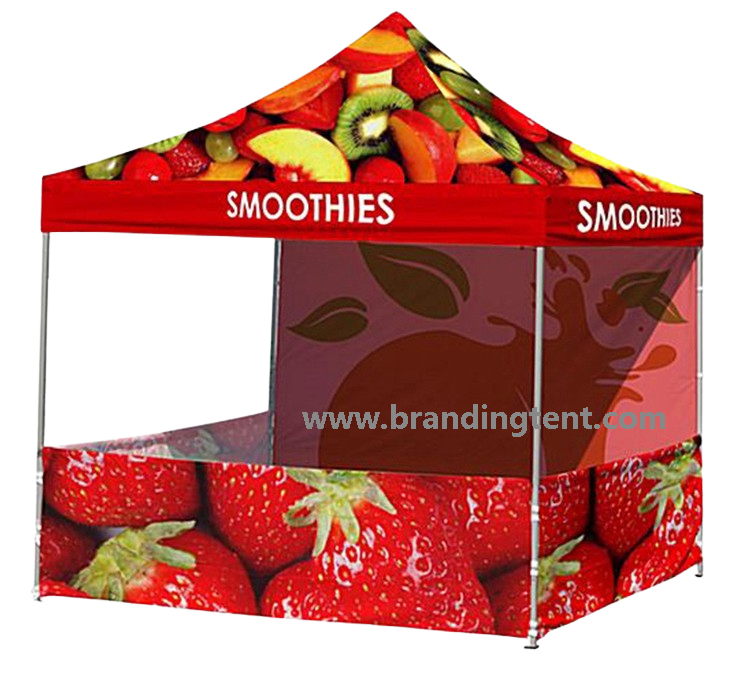
A pagoda tent replacement roof needs to match the exact frame, not just the size printed on its bag. Before ordering, identify the frame model, roof profile, peak mechanism and attachment system. Then approve a model-specific drawing and artwork proof. Two tents sold as 3 x 3 m can require different covers.
For a rental company, distributor or brand with a sound existing frame, a new top can refresh the presentation without buying another complete tent. But a roof that almost fits can create more work than it saves. The useful question is not simply “Can you print this logo?” It is “Can this cover be confirmed for this frame?”
The name covers more than one construction. A peaked promotional gazebo may have a folding scissor frame and an extending center mast. A modular pagoda marquee may use separate beams, a different roof-support arrangement and fabric edges that slide into tracks. A permanent garden gazebo is another product again.
Do not use the roof pattern from one system on another. If you are unsure, send a photograph of the whole erected tent, the frame label, the underside of the peak and each type of attachment. Include the original invoice or model reference where available. A clear picture of the connection often answers more than a description such as “heavy-duty canopy.”
Replacement makes sense to investigate when the frame remains serviceable but the graphics have changed, the fabric is worn, or a touring program needs a second campaign design. Check the frame before spending money on print: bent members, damaged joints, missing fasteners or an unreliable locking mechanism need attention first.
| Situation | Sensible next step | What not to assume |
|---|---|---|
| Rebrand; frame still in good condition | Check replacement-cover availability for that model | A new logo file is enough to establish fit |
| Roof damaged during an incident | Inspect frame and attachments before quoting the cover | The visible fabric tear is the only damage |
| Several tents in a rental fleet | Separate models and revisions; trial one of each | Same advertised size means interchangeable roofs |
| Unidentified second-hand frame | Identify the system and seek written compatibility confirmation | A generic replacement will solve the problem |
| Repair cost approaching a complete compatible kit | Compare both itemized proposals | Reusing the frame is always cheaper |
Compare the cover, identification work, any sample, shipping, installation and downtime. A spare roof that cannot be fitted before the next event is not yet a working spare.
Use the supplier’s measuring instructions. Do not climb an erected tent or open an unsafe frame to obtain a dimension. Measurements support identification; they do not replace the correct pattern or a compatibility decision.
| Item to record | Unit or evidence | Why it matters |
|---|---|---|
| Frame model and revision | Label, invoice, drawing or part reference | Links the new cover to the right system |
| Erected width and length | mm; state the measuring points | Distinguishes nominal size from actual geometry |
| Roof rise or peak arrangement | Drawing and underside photograph | Controls the three-dimensional roof shape |
| Valance depth | mm; mark the top and bottom reference | Affects print placement and wall overlap |
| Roof-to-frame attachments | Close-ups, count and position | Identifies straps, pockets, hook-and-loop or other fittings |
| Track edge, if present | Profile drawing and specified bead size | A sliding fabric edge must match the intended channel |
| Wall and gutter interfaces | Photos and component references | Checks what must connect to the new roof |
| Existing fabric identity | Label or original specification | Helps define the replacement material, not just its color |
Measure the frame and describe the old roof separately. Used fabric can be stretched, shrunk or distorted; it is not automatically a reliable cutting template. Label photographs A, B and C and mark the matching points on a sketch. That makes remote discussions much less ambiguous.
Ask for composition, fabric mass in g/m2, coating, seam treatment and reinforced areas. A denier number describes yarn linear density, not a complete measure of roof thickness or finished performance. A heavier fabric is not automatically a compatible upgrade: the roof pattern, tensioning arrangement, printing process and frame requirements still matter.
For a premium appearance, agree a sample or approved reference for opacity, color and surface finish. Review how the fabric sits on the intended frame. A flat printed swatch can help assess color, but it cannot show the finished roof’s tension or seam position.
Any fire-performance document must identify the material it covers and be suitable for the intended venue. Do not carry a statement from the old roof over to a different textile. Likewise, a water-resistance claim for fabric is not proof that every seam and connection in the assembled shelter stays dry.
Request the artwork template for the confirmed replacement pattern. Mark the front, the valances, seams, pockets and areas that wrap around an edge. A large logo centered on a flat panel may be interrupted by a seam or sit too high to read from the approach.
For repeat orders, retain the final artwork, color reference and pattern revision together. Tell the supplier if new roofs must visually match older walls. Weathered fabric may differ from newly printed material even when the original color reference is the same; review an agreed sample rather than assuming an exact match.
| Feature to specify | Practical advantage | Buyer benefit |
|---|---|---|
| Model-linked replacement pattern | Fit can be checked against an identified frame | Less chance of an unusable cover |
| Agreed reinforcement and attachments | Wear points and connections receive explicit attention | A clearer inspection and service brief |
| Controlled artwork revision | Repeat purchases use an identifiable approved file | More consistent campaign presentation |
| Labeled roof and storage bag | Staff can identify the right cover before departure | Fewer kit mix-ups across events |
These are purchasing criteria, not a promise that every roof or supplier offers the same construction.
During fitting, use the supplied sequence and crew requirements. Do not force a tight cover, cut extra holes or move structural components to make it work. If attachments do not line up or the frame cannot reach its intended position, stop and document the mismatch. A successful trial fit does not replace the tent’s anchoring or operating requirements.
Inspect the cover and attachment points before each use. Clean only by the material supplier’s instructions; do not assume machine washing or a strong solvent is suitable for the coating and print. Dry the textile before packing, protect it from sharp frame parts and store it in an identified bag. Keep its model reference with the kit so the next replacement starts with a known specification.
BESDA BRANDING TENT offers pagoda-style promotional tents alongside other event shelter options, serves buyers in 150+ countries and has received five-star customer feedback. For a replacement project, start with the existing frame evidence so the discussion stays specific to your equipment.
Ask BESDA BRANDING TENT to confirm whether your model can be supported and what information or sample is needed. Compatibility with an unidentified or third-party frame should never be assumed. Compare a supported replacement with a complete new kit when identification or repair costs make reuse unattractive.
No. The advertised footprint does not establish roof rise, peak design, attachment positions or pattern compatibility. Match the model and obtain written confirmation before ordering.
Ask for a roof-only quotation tied to your exact frame. Availability, MOQ, sample requirements and delivery time depend on the proposed order; do not assume the terms for a complete tent apply to a replacement part.
It can help identify the construction, but worn fabric may be distorted. Agree whether the supplier also needs the original drawing, frame measurements or a trial fit before approving production.
No. Compare the specified material, finish, seams, attachments and fit. Increasing fabric weight alone does not establish improved weather performance or suitability for the frame.
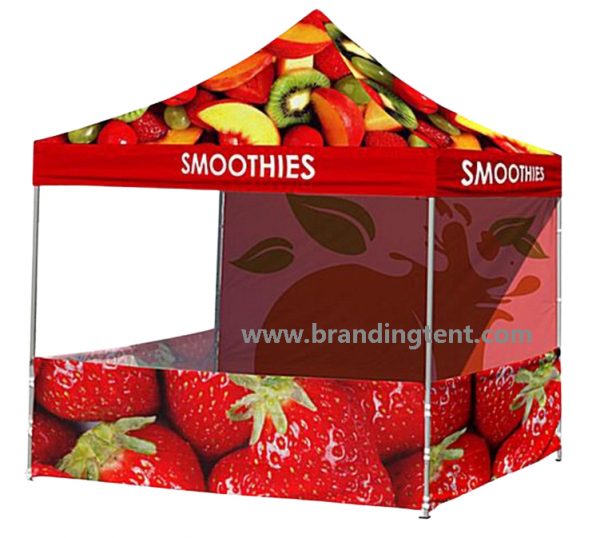
Pagoda Tent Artwork: Preparing Files for Perfect Printing
Check panel placement, seams and printing requirements before approving the artwork.
Tent Fabric Guide: 300D-600D Oxford, PU Coating and PVC Compared
Separate fabric construction, coating and weight from unsupported performance claims.

How to Buy Custom Tents Wholesale: The Distributor & Rental Company Guide
Read the guide and compare the requirements with your event brief.
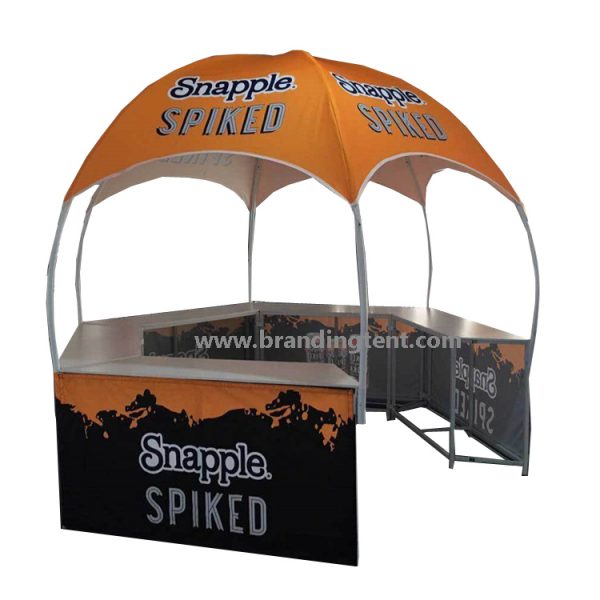
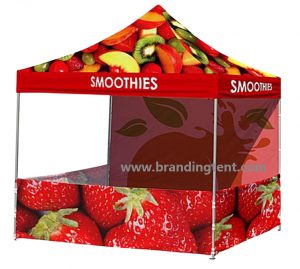
Existing website product images illustrate printing and layout. Confirm the actual model and specification; images are not proof of fit, performance or customer endorsement.
Send your frame reference, whole-tent and attachment photos, measured dimensions, quantity, destination country and required arrival date. State whether you need a new graphic, a like-for-like cover or a complete new tent. Do not send payment until the proposed scope and compatibility are clear.