Phone:
0086-757-8938 9313
Email:
Address:
Caochang Industrial Zone, Liguang Rd, Lishui, Nanhai, Foshan, Guangdong, China
24/7 online services

Phone:
0086-757-8938 9313
Email:
Address:
Caochang Industrial Zone, Liguang Rd, Lishui, Nanhai, Foshan, Guangdong, China
24/7 online services
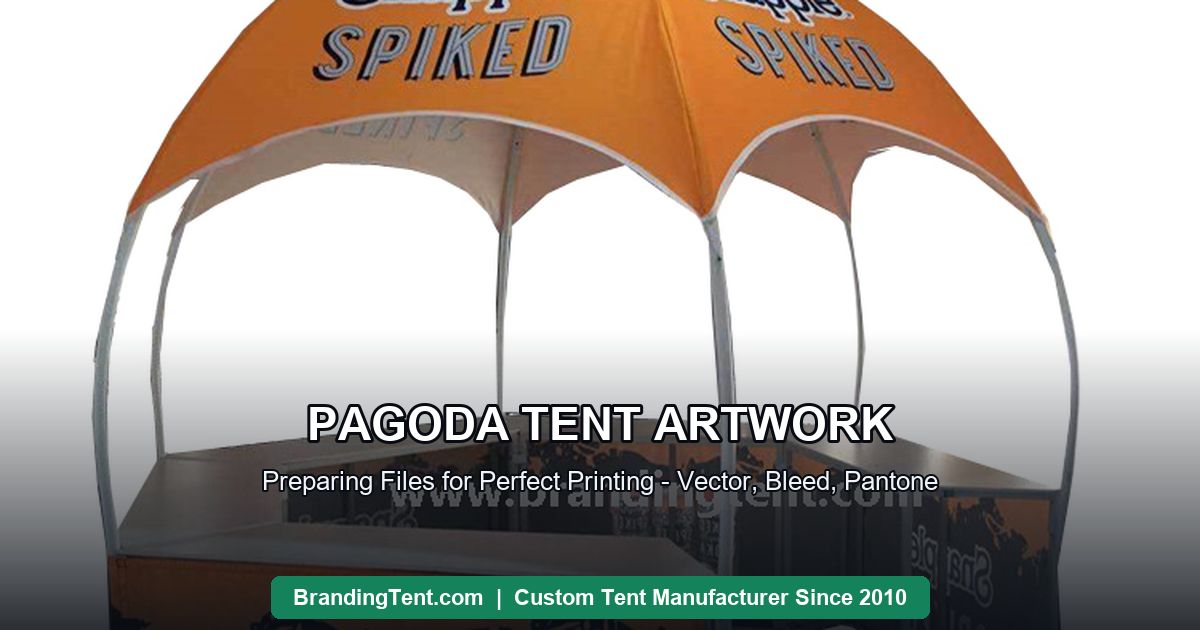
The difference between a pagoda tent that prints like a billboard and one that prints like a photocopy is decided before production, in the files you supply. Artwork on tents is not stationery scaled up: a 6x6m roof is a curved panel several meters across, printed with dye-sublimation, seamed mid-graphic, and read from thirty meters away. Files prepared for paper — screenshots, JPEGs, RGB logos pulled from a website — will print soft, drift in color, or break across seams. This guide covers the vector requirements, the panel and bleed logic, Pantone matching discipline, the mockup approval step, and the file checklist that any factory will thank you for.
1. Send AI, EPS or PDF. Vector files scale without loss, which is the entire game when the same logo appears on a 2x2m gate valance and a 6x6m roof panel.
2. No upscaled bitmaps. A 1000px logo that reads fine on a phone becomes a soft blur stretched across six meters of fabric. If no vector exists, a redraw is cheaper than a soft fleet.
3. Fonts as outlines. Converted text eliminates the font-substitution lottery that silently rewrites your brand when the file opens on another machine.
A pagoda roof is not one surface — it is panels that meet at seams, and your artwork crosses them. Three rules keep graphics continuous.
1. Supply whole layouts, not loose elements. Where a graphic crosses a seam, the factory prints panels from one master layout so the halves align at assembly. Loose assets invite creative alignment at the sewing table.
2. Respect valley and gutter zones. Valance folds and wall tops eat a few centimeters of artwork. Keep critical text away from panel edges; bleed backgrounds past them.
3. Design for the read distance. Roof graphics are seen from across a field — think three elements maximum. Detail belongs on walls and counters, where people stand a meter away.
1. Give Pantone references. Brand colors without a reference are interpretations; Pantone numbers are instructions. Send both coated references and the HEX values as backup.
2. Understand the medium. Dye-sublimation on polyester absorbs ink into the fiber — deep colors read slightly darker on fabric than on paper. Good factories preview this in the mockup rather than discovering it in production.
3. Lock the batch. Color continuity is a production-batch property: walls ordered six months after the tent may drift a shade in daylight. Order the full kit together, and keep the batch record for future replacements — the same discipline our factory guide describes from the production side.
Before production, the factory issues a digital mockup: your artwork rendered on the actual tent model, at actual panel proportions. Approve it in writing — and read it like a contract.
1. Check the text letter by letter. Typos survive mockups; they thrive on six-meter roofs.
2. Check the proportions. A logo that looks small and tasteful on a screen may disappear at distance; a “hero” logo may overwhelm the valance. Ask for a full-tent view and a distance simulation.
3. Check the color names. Confirm every Pantone callout in the mockup matches your brand book — especially on campaigns where a palette shifted last quarter.
| Item | Spec | Why |
| Format | AI / EPS / PDF (vector) | Scales from valance to roof without loss |
| Text | Fonts converted to outlines | No font substitution on other machines |
| Color | Pantone refs + HEX fallback | Brand color becomes an instruction, not a guess |
| Layout | Whole-tent master file per structure | Graphics align across seams at assembly |
| Zones | Critical content away from folds/edges | Valance and wall tops eat artwork |
| Read distance | 3 elements on roof, detail on walls | Design matched to how people actually see it |
Honest workflow note: if your brand assets live in a website screenshot and a business card photo, say so in the first message. Redrawing to vector from references is routine factory design work and takes days, not weeks — far cheaper than printing soft art across a fleet and re-ordering. And if you have no design team at all, the free mockup step doubles as your design studio: send references and copy, approve a layout, and production files get built for you.
Vector: artwork made of maths, not pixels — it scales from business card to roof panel without softening. Raster: artwork made of pixels — fine at its original size, blurry when stretched. If your logo only exists as a raster file, that is the first sentence of your first email to the factory.
Bleed: extra artwork past the cut line so trimming never leaves a white sliver. Safe area: the zone where important content survives folds, seams and trim — keep text inside it. Pantone coated vs uncoated: two versions of the same ink reference for different materials; fabric printing usually wants the coated reference plus a HEX fallback. Outlined text: letterforms converted to shapes so no machine can substitute a font you do not own.
Teams that learn these six words stop paying the two-day email tax on every print order — and the mockup conversation starts from artwork that cannot be misunderstood.
Print disasters are version-control problems more often than design problems. Campaign logos get refreshed, taglines evolve, and somewhere between the brand drive and the factory inbox an old layout outruns a new one. The habit that prevents it costs nothing: name files with the date and a version marker, put the version in the subject line of the approval email, and state the version again in your mockup sign-off. One sentence — “approved: layout v3, dated Tuesday” — is the entire insurance policy.
And when a fleet spans years, keep the shipped version archived next to the batch record. Season-four replacements and event reprints reference the archived file, not reconstructed memory, which is how a brand stays identical to itself across tents, years and suppliers. The file that shipped is the brand’s actual specification; treat it like the contract it is.
Tent artwork is a small checklist executed early: vector files, outfitted text, Pantone references, one master layout per structure, critical content away from folds, and a mockup read like a contract. Do those six things and dye-sublimation rewards you with color that survives seasons — skip them, and the tent will show exactly which step you skipped, from thirty meters away.
💬 Chat on WhatsApp Now✉ Email Us Now
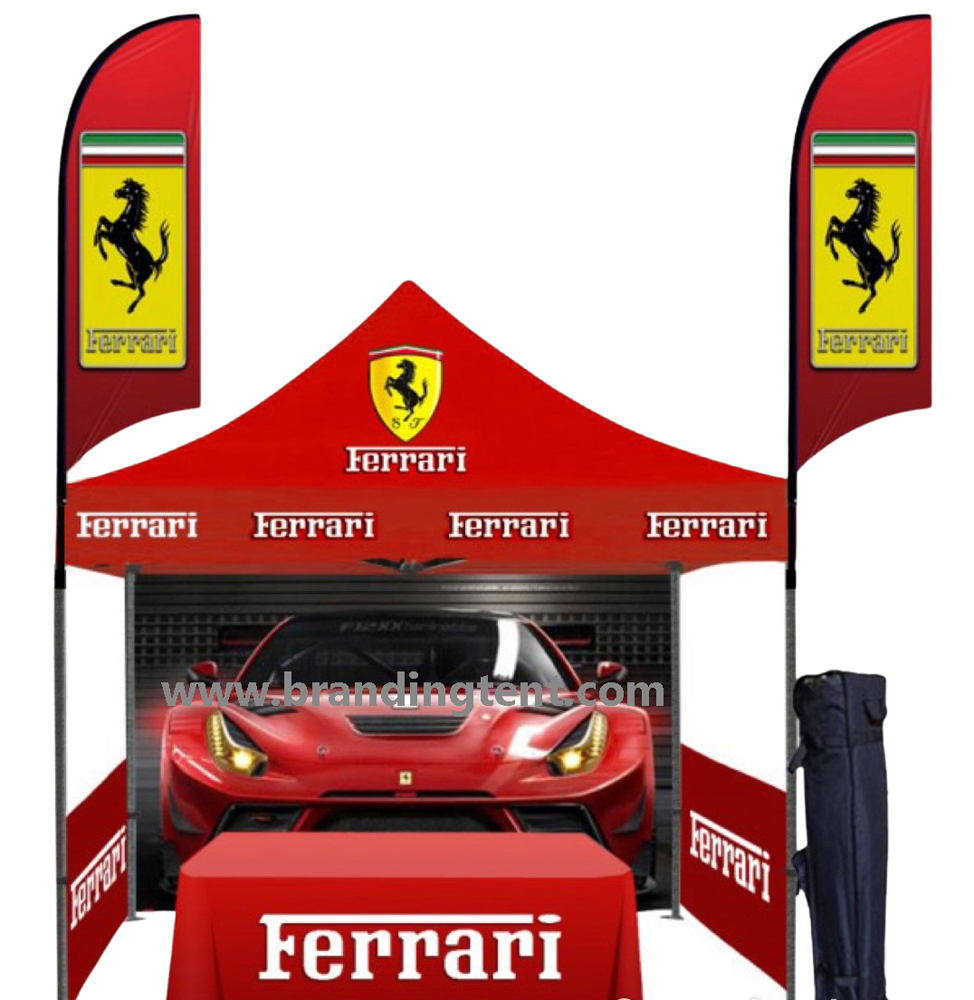
Custom Pagoda Tents
High-peak marquees, 3×3-6x6m, connectable
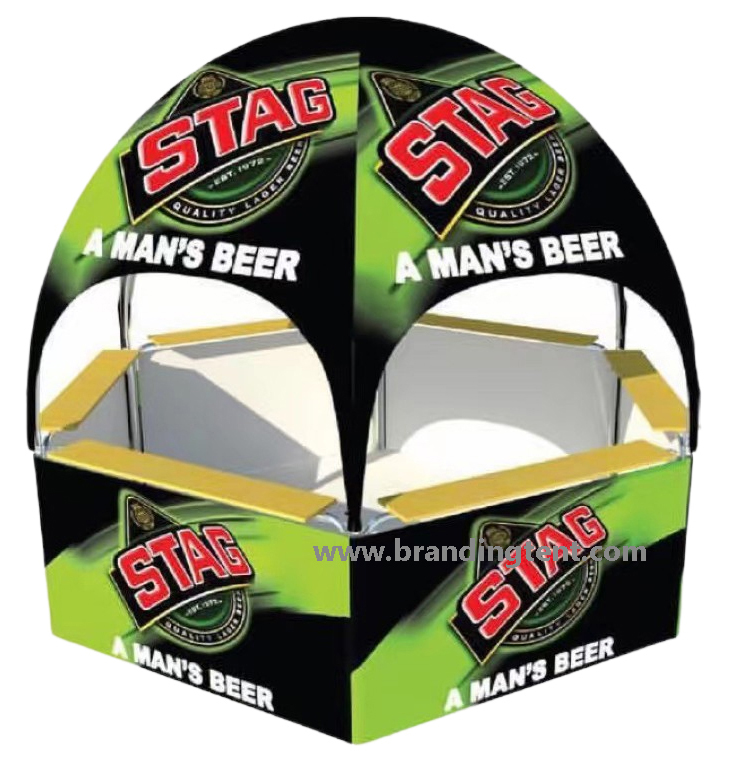
Custom Dome Tents
360-degree brand stages for events
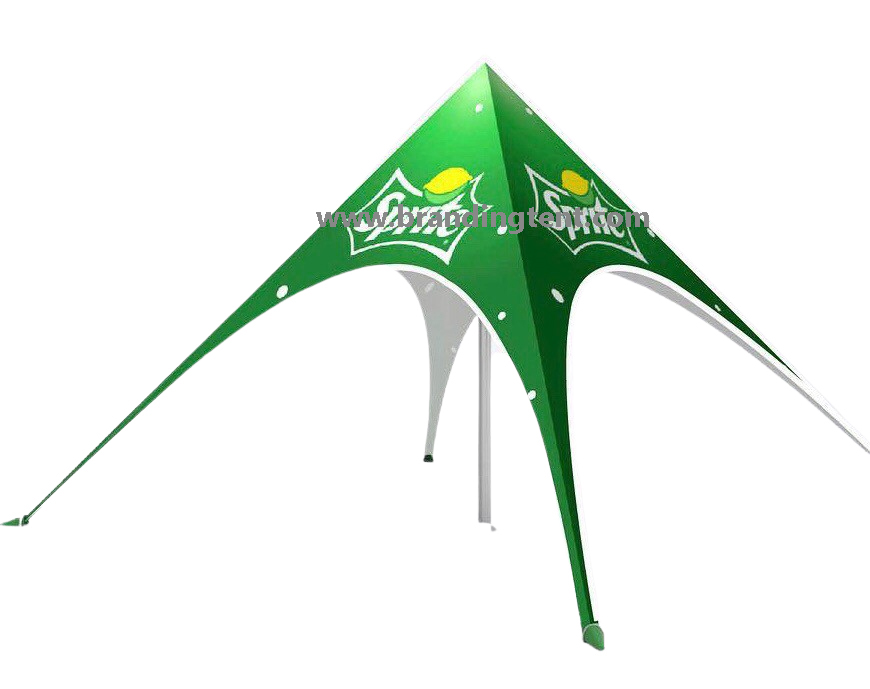
Custom Star Tents
Star shade canopies built to order
More: how custom tents are made · tent fabric guide · custom tents with logo · full FAQ
Tell us your event scenario, size and logo file — our tent specialists reply within 1 hour, 24×7 online service, with a free mockup, written specifications and factory-direct pricing.
Vector files: AI, EPS or PDF, with fonts converted to outlines. Vector scales cleanly from valance to roof panels; bitmap screenshots print soft across large fabric surfaces.
Supply Pantone references (plus HEX as backup) and approve the mockup colors in writing. Dye-sublimation on polyester reads slightly deeper than on paper — good factories preview that in the mockup.
A digital proof of your artwork on the actual tent model at real panel proportions. Approve it in writing after checking text letter by letter, logo proportions at distance, and every Pantone callout — it is your contract in draft form.
Different dye batches. Color continuity is a batch property — order the full kit together and keep the batch record; replacements are matched against it rather than guessed.
Yes — studio design from references is routine factory work and included in the mockup step. Send logo files, brand colors and the copy; approve the layout; production files are built from the approved mockup.
Small text on walls and counters (seen from a meter), large elements on the roof and valance (seen from across the venue), and nothing critical across valance folds. Design for read distance, not for the screen.