Phone:
0086-757-8938 9313
Email:
Address:
Caochang Industrial Zone, Liguang Rd, Lishui, Nanhai, Foshan, Guangdong, China
24/7 online services

Phone:
0086-757-8938 9313
Email:
Address:
Caochang Industrial Zone, Liguang Rd, Lishui, Nanhai, Foshan, Guangdong, China
24/7 online services
An importer in Rotterdam asked a simple question before his first order: how many 3×3 canopy tents fit in a 40HQ? The honest answer is that the container does not care about the tent size. It cares about the carton, the frame bundle, the gross weight and the space left after the door header. Canopy tent container loading is a packing problem before it is a product problem. Importers who plan it well get a full container and a clean unloading day. Importers who quote by piece count get a half-empty container and a freight bill that punishes every cubic metre.
This guide covers factory-direct canopy and pagoda programs: pop-up canopies from 2x2m to 3x6m, modular pagodas from 3x3m to 6x6m, dome canopies, star canopies and inflatable tents. It is written for importers, distributors, rental fleets and private-label buyers who ship full containers. It is not a guide to parcel shipping or a single sample order. The numbers below are planning tools. Your packing list is the only source of truth for your order.
Freight is charged on volume or weight, whichever is greater. A canopy kit is bulky but relatively light, so most tent shipments are volume-limited. That makes carton dimensions more important than the number of pieces. A carton that is 2cm too wide can lose a full row across a 12m container. A frame bundle that is 10cm too long can force a diagonal load that wastes a cubic metre at each end.
The second reason is cash flow. A container that arrives with 80 percent of the expected sets creates a shortage for the season. A container that arrives overweight creates a port problem. Both are avoidable with a packing list, a scale and a calculator. The math takes an hour. The correction takes a season.
The third reason is damage. A load that is packed tight but not braced will shift at sea. A frame bundle that rests on a carton will crush it. A container that is loaded without photos is a claim that cannot be proved. Loading is part of quality control, not just logistics.
1. Carton volume. Measure length, width and height in metres and multiply. A carton of 1.57m x 0.245m x 0.245m is about 0.094 cubic metres. If the carton holds one set, that is the volume per set. If it holds four, divide by four.
2. Units per carton. A pop-up canopy may ship one set per carton. A pagoda may ship as a frame bundle plus one or two fabric cartons. Count every carton in the set, not just the biggest one.
3. Gross weight per set. Include the frame, fabric, walls, bag, accessories and carton. A 3×3 pop-up set is commonly in the 25kg to 35kg range. A 5×5 pagoda set is heavier because the beams and roof panels are larger. Weigh a sample, do not estimate from a catalogue.
4. Container payload and practical volume. A 40HQ has a theoretical volume of about 76 cubic metres and a practical carton volume closer to 58 to 62. The payload is around 26.5 to 29.6 tonnes depending on the carrier and the destination road limits. Use the lower number for planning.
The formula is simple: practical volume divided by volume per set gives a volume-based count. Then multiply the count by gross weight and compare it with the payload. The lower of the two counts is your planning number. Subtract 5 to 10 percent for loading losses, spare parts and mixed SKUs.
The table below uses common industry reference figures. Different carriers quote slightly different internal dimensions, and the door header is always lower than the ceiling. Treat the practical column as a planning target, not a guarantee.
| Container | Theoretical volume | Practical carton volume | Typical payload |
| 20GP | About 33 CBM | About 28 CBM | Around 21-28 tonnes, lane dependent |
| 40GP | About 67 CBM | About 56 CBM | Around 26-28 tonnes, lane dependent |
| 40HQ | About 76 CBM | About 58-62 CBM | Around 26.5-29.6 tonnes, lane dependent |
The gap between theoretical and practical volume is not a rounding error. Corrugated walls, the door header, forklift clearance and cartons that do not divide evenly all take space. Floor loading usually reaches 85 to 92 percent of the internal volume. Palletising can cost another 10 to 15 percent. If you need every cubic metre, floor-load and design the carton around the container width.
Take a common 3×3 pop-up carton at 157cm x 24.5cm x 24.5cm. The volume is 0.094 cubic metres. At a practical 60 cubic metres, the raw volume count is about 638 cartons. A factory listing for a similar carton quotes roughly 275 sets in a 20GP and 700 sets in a 40HQ. The difference comes from the actual usable volume, the carton stacking pattern and whether the listing assumes a full floor load.
Now check the weight. If the gross weight is 31kg per set, 700 sets weigh about 21.7 tonnes. That is below a typical 40HQ payload but close enough to matter on some trade lanes. If the same container is loaded with a heavier frame or extra walls, the weight limit may arrive before the volume limit. Always run both checks.
The lesson is not to memorise 700. The lesson is to ask for the carton dimensions, the units per carton and the gross weight for the exact model. A 3×3 with a thicker frame, a printed roof and a set of walls is not the same cargo as a bare frame with a plain roof.
Long frame bundles. Pop-up frames and pagoda beams are long. A 3×3 frame bundle may be around 1.6m to 1.9m; a 6×6 pagoda beam is longer. Long bundles create a load pattern that leaves voids at the ends and above the bundle.
Door header. The door opening is lower than the ceiling. The top row has to clear the header before it can be pushed back. That reduces the usable height at the door end of the container.
Mixed SKUs. A container with 3×3, 5×5 and 6×6 kits has cartons of different sizes. Mixed cartons do not interlock as efficiently as a single SKU. The load looks full but the cubic metres do not add up.
Palletising. Pallets make unloading faster, but they add base height and perimeter gaps. If your warehouse needs pallets, plan for the loss. If your priority is cubic metres, floor-load.
Accessories. Walls, gutters, weights, bags and spare parts arrive in separate cartons. They are easy to forget in the count and easy to crush at the bottom of the load. Give them a dedicated layer or a dedicated corner.
A modular pagoda kit is not a single carton. It is usually a frame bundle plus one or two fabric cartons. The volume per set depends on the module size, the frame profile and the wall mix. The table below uses an illustrative 60 cubic metre practical volume and a 45kg gross weight. The volumes are assumptions for planning, not a quoted packing figure.
| Assumed CBM per set | Sets per 40HQ at 60 CBM | Gross weight at 45kg | Limit |
| 0.22 CBM | About 272 sets | About 12.2 tonnes | Volume |
| 0.28 CBM | About 214 sets | About 9.6 tonnes | Volume |
| 0.35 CBM | About 171 sets | About 7.7 tonnes | Volume |
| 0.42 CBM | About 142 sets | About 6.4 tonnes | Volume |
Read the table as a range, not a promise. A 5×5 kit with four solid walls and a printed roof will sit at the high end. A 3×3 kit with a plain roof and no walls will sit at the low end. The point is to see how quickly a small change in packing volume changes the count. At 0.28 cubic metres per set, a 40HQ plans around 214 sets. At 0.35, it plans around 171. That is a 20 percent swing from packing alone.
Weight is unlikely to be the limit for pagodas at these counts. At 45kg per set, 214 sets weigh about 9.6 tonnes. The container is volume-limited. That is why carton design and loading pattern deserve more attention than the payload number for lightweight tent programs.
Most rental fleets do not buy one SKU. They buy a mix that covers small stalls, mid-size bars and large anchor tents. A mixed container can be efficient if the mix is planned by volume, not by intuition. The table below is an illustrative 40HQ plan for a fleet that needs 60 small kits, 30 mid-size kits and 15 large kits, plus accessories. The volumes are assumptions for the exercise.
| Model | Sets | Assumed CBM per set | Total CBM |
| 3×3 pagoda kit | 60 | 0.25 | 15.0 |
| 5×5 pagoda kit | 30 | 0.55 | 16.5 |
| 6×6 pagoda kit | 15 | 0.85 | 12.75 |
| Accessories and spares | 1 lot | 4.0 | 4.0 |
| Total before loading loss | 105 sets plus spares | Mixed | 48.25 |
The mix above uses about 48 cubic metres of cargo before loading losses. Add 20 percent for dead space and you are near 58 cubic metres, inside a practical 40HQ range. The weight is under 7 tonnes, so the container is volume-limited again. If the same fleet ordered more 6×6 kits, the volume would rise quickly and the count would fall.
A mixed container also needs a loading plan. Put the long frame bundles along one side, stack the small cartons in the voids, and keep the accessory cartons near the door for easy unloading. Photograph each layer. A load plan that exists only in the loader’s head cannot be repeated next season.
1. Inspect the container before loading. Check the floor for moisture, the walls for holes, the door seals and the roof for condensation. A dry container is not optional for fabric.
2. Load the long bundles first. Place them along the container floor, parallel to the length, and brace them so they cannot roll. Use timber or foam blocks, not loose cartons, as chocks.
3. Build the carton layers from the floor up. Keep heavy cartons low and light cartons high. Do not put a frame bundle on top of a carton. Do not leave a void behind the door.
4. Fill the voids. Use empty cartons, air bags or kraft paper to stop shifting. A load that moves at sea arrives with damaged corners and compressed frames.
5. Photograph every layer. Take a wide shot and a close shot of the load plan, the carton labels and the door area. Send the photos with the packing list. If a claim arises, the photos are the first evidence.
6. Record the seal number and the container number. Put them on the packing list and the commercial invoice. A missing seal number makes a damage claim harder to pursue.
A tent carton has three jobs: protect the fabric from moisture, protect the frame from bending and protect the print from abrasion. A standard single-wall carton may be enough for a short domestic trip. An export container needs more. Ask for a carton grade that matches the stacking height, a moisture barrier for humid routes, corner protection on the frame bundle and a fabric bag that is clean and dry before packing.
Desiccant is useful in a humid route, but it is not a substitute for a dry pack. A carton with wet fabric and a desiccant bag is still a wet carton. The fabric should be dry before it goes into the bag, and the bag should be breathable or vented according to the supplier instruction.
Shipping marks matter more than most buyers expect. Put the model, size, carton number, gross weight, destination and a handling symbol on two sides. If the cartons are floor-loaded, add a load plan number. The warehouse that receives the container should be able to identify every carton without opening it.
A complete shipment pack includes the packing list, commercial invoice, bill of lading, certificate of origin if required, fire test documents if the destination asks for them, and the artwork approval record. The packing list should show carton dimensions, units per carton, gross weight and total cubic metres. If those fields are missing, the forwarder will estimate, and the estimate will be conservative.
Synthetic-fibre tents commonly sit under HS heading 6306.22. Customs classification can vary by product construction and destination, so confirm the code with your broker before you ship. A wrong code can cost more than a late container.
Incoterms should match the way you buy. FOB gives you control of the forwarder. CIF is simpler but can hide the freight margin. EXW is rarely the best choice for a first order because you carry the export clearance and the loading risk. Whichever term you choose, write it on the quotation and the invoice, and in the email thread as well.
A container is not finished work. The first setup is the real acceptance test. Plan a small crew, a level area and a dry day. Build one kit from each model, check the frame pins, the roof tension, the wall zips and the printed panels. Compare the eave and door heights with the drawing. If a kit is missing a part, report it before the container is unpacked into the warehouse.
Setup time depends on the structure. A 3×3 pop-up is a two-person job, typically 10 to 20 minutes. A 5×5 pagoda is a three to four person job, typically 30 to 60 minutes. A star canopy needs a larger crew because of the tensioning pattern. Put these numbers in the training sheet and the sales brochure.
After the first setup, wash and dry the sample kit before it goes into stock. The first build is also the first chance to find a sharp edge, a missing foot pad or a zip that binds. Fixing it before the season is cheaper than fixing it at a customer site.
1. Quoting by pieces without cubic metres. A supplier who cannot state CBM per set cannot plan a container. Ask for the packing list before you compare quotations.
2. Ignoring gross weight. A light tent program is volume-limited, but a heavy frame or a dense accessory mix can flip the limit. Run the weight check every time.
3. Palletising by default. Pallets are convenient, not free in cubic metres. If you need them, plan the loss. If you do not, floor-load.
4. Forgetting spare parts. A container without spare legs, foot pads and zipper sliders leaves the fleet exposed. Add a spare parts carton to the first order.
5. Mixing print versions without labels. Two similar cartons with different artwork are a warehouse error waiting to happen. Label the print version on the carton and the bag.
6. No loading photos. Without photos, a damage claim becomes a argument. With photos, it becomes a conversation with evidence.
United States and Canada. Importers usually plan around 40HQ containers and domestic drayage. Check the road weight limit in the destination state, because it can be lower than the container payload. NFPA 701 fabric documents are often requested by venues.
United Kingdom and the European Union. Customs clearance and VAT add steps after the container arrives. The packing list should match the invoice line by line. Fire documents such as DIN 4102 B1 or EN 13501-1 may be requested for public events.
Australia and New Zealand. Biosecurity rules apply to wooden pallets and packing materials. Use ISPM 15 compliant pallets or avoid wood where possible. Check the treatment mark before the container is sealed.
Latin America. Longer transit and humid routes make moisture protection important. Add desiccant, use a moisture barrier and inspect the cartons for soft corners on arrival. Keep the container number and seal number with the customs file.
Middle East and Africa. Heat and port storage can age a carton before it reaches the warehouse. Ask for UV-stable packaging where available, and unload into shade as soon as the container is released.
The table below connects packing decisions to the importer’s real outcomes. It is also a useful checklist when you compare two factories that quote the same tent size.
| Feature | Advantage | Benefit |
| Packing list with CBM per set | The container count is based on measured volume, not guesswork | The order arrives complete and the freight is predictable |
| Long frame bundle protection | The frame does not bend under carton weight | The first setup is straight, not a repair job |
| Moisture barrier and dry pack | Humidity does not reach the fabric during transit | No mould claim on arrival |
| Mixed load plan with photos | The loader can repeat the pattern and the receiver can check it | Unloading is faster and damage is traceable |
| Spare parts carton | A pin or foot pad can be replaced without a new order | A small failure does not idle the fleet |
If your order is under about 15 to 20 cubic metres, a full container may not be the cheapest or the simplest option. LCL can work, but the break-even depends on the route, the handling charges and the risk of mixing your cartons with other cargo. Ask your forwarder to compare both options with the actual CBM and weight.
If you need a fast replenishment of one popular size, a smaller sea shipment or an air freight top-up may protect the season better than waiting for a full container. The cheapest freight per cubic metre is not always the cheapest decision for the business.
Send this list with your inquiry. A factory that answers it in writing is ready for export. A factory that answers with a photo of a container is not.
| Field | What it tells you |
| Carton dimensions per model | The CBM calculation and the container fit |
| Units per carton | Whether the carton holds one set or several |
| Gross weight per set and per carton | The payload check and the manual handling plan |
| CBM per set, including frame bundle | The real volume, not just the biggest carton |
| Packing method | Floor load or pallet, and the loading loss |
| Spare parts and accessory cartons | The hidden volume and the service plan |
| Loading photos and seal number | The evidence trail for damage claims |
| HS code and fire documents | Customs and venue compliance |
Q1. How many 3×3 canopy tents fit in a 40HQ?
It depends on the carton. A common 3×3 pop-up carton around 157 x 24.5 x 24.5cm is about 0.094 cubic metres, which gives a raw count near 638 at 60 cubic metres of practical volume. Factory listings for similar cartons quote around 700. Ask for the exact carton and gross weight.
Q2. What is the practical volume of a 40HQ?
The theoretical volume is about 76 cubic metres. For carton goods, plan on roughly 58 to 62 cubic metres after walls, door header and loading losses. Floor loading is more efficient than palletising.
Q3. Is a 20GP or a 40HQ better for tent imports?
A 20GP is useful for a first order or a single SKU test. A 40HQ usually gives the lowest freight per cubic metre for a full program. The right choice depends on your order volume, cash flow and warehouse capacity.
Q4. How do I calculate CBM for a tent kit?
Measure every carton in the set, multiply length by width by height in metres, and add the cartons. If a kit ships as a frame bundle plus two fabric cartons, count all three. Then multiply by the number of sets.
Q5. Can I mix sizes in one container?
Yes, and most rental fleets do. Plan the mix by volume, keep the long frame bundles together, and put the accessory cartons near the door. A mixed load needs a written load plan and photos.
Q6. What documents should come with the container?
At minimum: packing list with carton dimensions and CBM, commercial invoice, bill of lading and the artwork approval record. Add fire test documents, certificate of origin and ISPM 15 pallet marks where the destination requires them.
| Fact | Detail |
| Topic | Canopy tent container loading, carton CBM and 40HQ planning |
| Product scope | event-grade canopy and pagoda programs shipped as full containers, not parcel samples |
| 40HQ theoretical volume | About 76 cubic metres (internal dimensions around 12.03 x 2.35 x 2.69m) |
| 40HQ practical volume | About 58-62 cubic metres for carton goods after loading losses |
| 20GP practical volume | About 28 cubic metres; theoretical around 33 |
| 40HQ payload | About 26.5-29.6 tonnes, depending on carrier and destination road limits |
| Loading efficiency | Floor loading about 85-92%; palletising can cost another 10-15% |
| Example carton | 3×3 pop-up at 157 x 24.5 x 24.5cm is about 0.094 CBM, commonly 25-35kg gross |
| Packing pattern | Long frame bundles first, cartons fill voids, accessories near the door, photos per layer |
| HS heading | 6306.22 is the common heading for synthetic-fibre tents; confirm with your customs broker |
| Contact | WhatsApp +86 135 1661 0926 and [email protected], reply within 1 hour, 24×7 online service |
Related reading: how to buy custom tents wholesale · wholesale pagoda tents factory direct · pagoda tent lead time moq · marquee tent packing list · pop up gazebo winter storage checklist
💬 Chat on WhatsApp Now✉ Email Us Now

Custom Pagoda Tents
Modular kits 3×3-6x6m
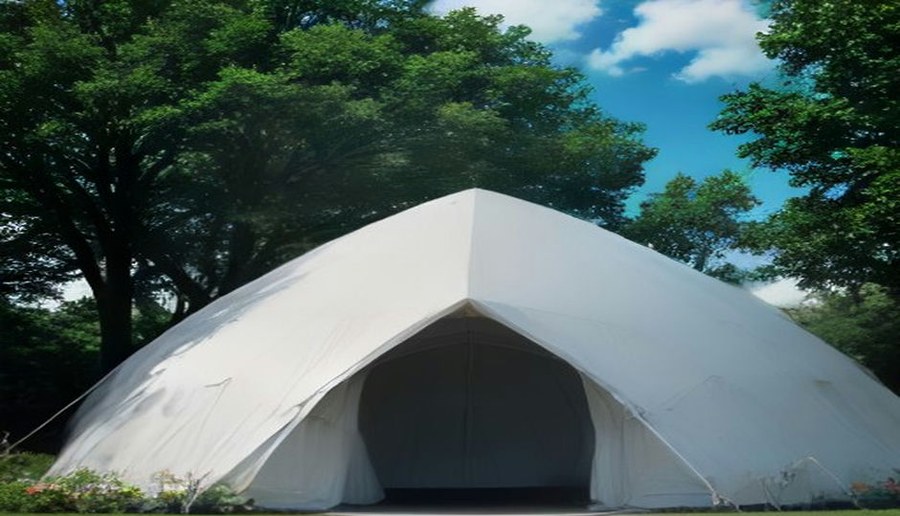
Custom Dome Tents
Kiosk canopies 3-6m

Custom Star Tents
Landmark shade 5-16m
Tell us the tent size, the equipment that has to fit and the destination market. Our tent specialists reply within 1 hour, 24×7 online service, with a free mockup, written specifications and factory-direct pricing.