Phone:
0086-757-8938 9313
Email:
Address:
Caochang Industrial Zone, Liguang Rd, Lishui, Nanhai, Foshan, Guangdong, China
24/7 online services

Phone:
0086-757-8938 9313
Email:
Address:
Caochang Industrial Zone, Liguang Rd, Lishui, Nanhai, Foshan, Guangdong, China
24/7 online services
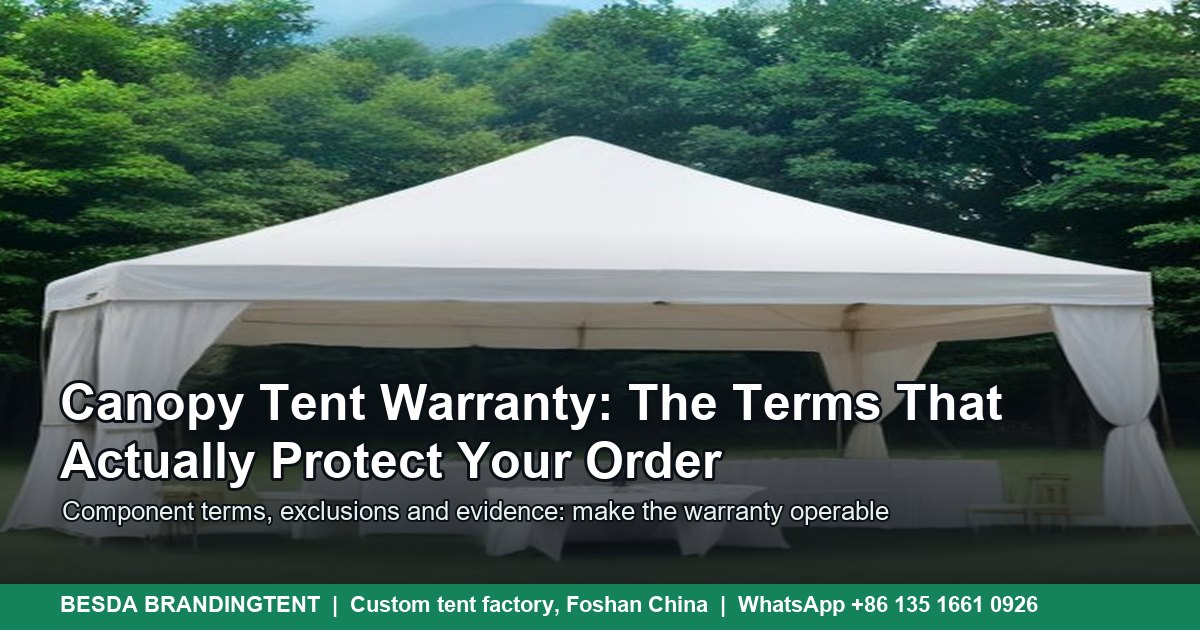
A venue manager in Queensland sent us a warranty claim last summer with one line that sums up the problem: the brochure said lifetime frame, but the factory said wind damage. Both statements were true. The frame was covered against manufacturing defects. The failure came from a storm that exceeded the anchoring plan. The buyer had compared a marketing phrase with a contract term, and the two were never the same thing.
Canopy tent warranty is not a badge on a product page. It is a set of component clocks, exclusions, claim steps and spare parts commitments. This guide shows what a useful warranty looks like for pop-up canopies, modular pagodas, dome canopies, star canopies and inflatable tents. It does not tell you what our warranty period is, because that belongs on your quotation, not in a generic article. It tells you what to ask for, what to reject, and how to keep a claim from becoming a argument.
A warranty is a contractual promise about the condition of the goods. A guarantee is often a consumer-facing promise with statutory backing. Insurance is a separate risk transfer for events such as storm damage, theft or third-party injury. A tent warranty usually covers manufacturing defects. It rarely covers weather, misuse or normal wear. Buyers who expect a warranty to behave like insurance are disappointed every time.
The distinction matters at the quotation stage. Ask three questions. What is warranted? For how long? What evidence decides a claim? If the answer is a single number without a component list, the warranty is not yet a usable term. Ask for the written version before you compare suppliers.
The buyer groups are different, and so are the warranty expectations. Rental fleets care about spare parts and repair turnaround. Distributors care about batch traceability and claim handling across a container. Event agencies care about a replacement reaching the site before the next build. Venues care about fire documents and structural condition. Brands care about print durability. A good warranty speaks to the buyer’s actual risk, not to a generic promise.
1. The quotation line. The warranty should appear as a line item on the quotation and on the warranty certificate. It should name the component, the period and the remedy.
2. The warranty certificate. A separate sheet with the batch or serial number, the purchase date, the covered components and the exclusions. If the certificate has no batch number, it cannot be matched to a production run.
3. The care and installation instructions. A warranty that excludes improper setup is only fair if the setup instructions are clear. Ask for the anchoring plan, the wind guidance and the storage instructions in writing.
4. The claim form and contact path. A named email, a photo checklist and a response time. A warranty without a claim path is a sentence, not a process.
Keep all four with the order file. When a failure happens, the buyer who can produce the batch number, the setup photos and the care record is in a much stronger position than the buyer who only has an invoice.
A canopy is not one warranty object. The frame, the fabric, the printing, the zippers and the anchoring accessories have different failure modes and different expected lives. A single “lifetime” line hides that difference. A component table makes it visible.
| Component | Typical trade range | What usually starts the clock | What to ask |
| Frame structure | 5-10 years commercial; 1 year or less light-duty | Delivery date or first use | Term, remedy, weld and casting coverage |
| Powder coating | 1-3 years | Delivery date | Corrosion coverage and surface prep standard |
| Roof and wall fabric | 1-3 years | Delivery date | Coating, seam and UV coverage |
| Print and dye-sublimation | 1-3 years | Delivery date | Fade standard, adhesion and wash resistance |
| Zippers and hardware | 6-24 months | Delivery date | Wear-part status and spare availability |
| Anchoring accessories | 6-12 months | Delivery date | Stake, strap and bag coverage |
The ranges above are common trade practice, not a quote for our products. A commercial frame with a thicker wall and a proper powder coat usually carries a longer term than a lightweight frame. A printed roof may have a shorter print warranty than the base fabric. A zipper is a wear part. Ask for each line separately.
Two details are worth negotiating. First, the remedy: repair, replacement part, or replacement unit. A frame warranty that offers a replacement leg is more useful than a warranty that offers a discount on a new frame. Second, the shipping cost. A warranty that covers the part but not the freight can still leave the buyer with a significant bill.
A fair warranty covers defects that existed before delivery or that appear under normal use within the stated period. That includes a weld that fails at a joint, a casting that cracks, a seam that opens under tension, a coating that blisters without chemical exposure, or a print that fades unevenly under normal UV exposure. It does not cover a frame that bent because the tent was left up in a storm, a roof that pooled water because the gutter was blocked, or a fabric that moulded because it was packed wet.
| Usually covered | Usually excluded |
| Weld or casting failure under normal use | Wind above the rated anchoring class |
| Seam failure from stitching or tape defects | Water pooling from a blocked gutter or a low spot |
| Coating blistering without chemical exposure | Damage from bleach, solvent or pressure washing |
| Print adhesion failure under normal conditions | Normal UV fade over the service life |
| Missing or wrong parts in the shipment | Modifications, cuts or third-party repairs |
| Frame geometry error against the approved drawing | Damage from improper storage or wet packing |
The exclusion list is not automatically unfair. A factory cannot warrant a tent against every weather event, and a buyer should not expect it to. The fair test is whether the exclusion is specific, written and matched by a clear instruction. “Wind damage is excluded above the rated anchoring class” is fair if the class and the anchoring plan are stated. “All weather damage is excluded” is too broad to be useful.
Fire performance is a separate document, not a warranty. Ask for the test report for the exact fabric batch. A certificate for a different fabric or a different print run is not proof for your order. Common standards include NFPA 701, CPAI-84, DIN 4102 B1 and EN 13501-1, depending on the market.
Most claim decisions come down to root cause. A factory technician looks for the difference between a material defect and a use event. The table below shows the pattern. It is also a useful guide for the photos you send.
| Symptom | Likely material defect | Likely use event |
| Leg bent at a joint | Cracked casting or poor weld | Anchor pulled out or tent hit by wind |
| Leg bent mid-tube | Thin wall or wrong alloy | Load applied above the frame rating |
| Seam open along a straight line | Stitch or tape failure | Fabric cut or snagged on a sharp edge |
| Coating blister | Adhesion failure in production | Solvent, bleach or hot pressure wash |
| Print faded in patches | Ink or transfer defect | Uneven UV exposure or chemical cleaning |
| Zipper stiff or split | Slider or tooth defect | Grit, salt or forced closure |
The pattern is not perfect, and a good factory will ask for more evidence before deciding. The point is to send the evidence that answers the root-cause question. A photo of a bent leg without a photo of the anchor point is incomplete. A photo of a torn seam without a photo of the frame tension is incomplete.
Response time matters as much as the decision. Ask for a first response within a stated number of working days and a decision after the evidence pack is complete. A slow claim process can cost a rental fleet more than the part itself, because the kit sits idle while the emails travel.
A complete claim pack shortens the process. Send it in one message, with numbered photos and a short timeline. The table below is the list we ask buyers to use, and the list you should expect from any factory.
| Item | Why the factory needs it |
| Batch or serial number | Matches the claim to the production run |
| Photos of the failure | Shows the fracture, seam or coating pattern |
| Photos of the full setup | Shows tension, anchoring and wall configuration |
| Anchor plan and weights | Separates a use event from a frame defect |
| Purchase invoice and date | Starts the warranty clock |
| Care and storage record | Rules out wet storage or chemical damage |
| Weather data for the event | Tests the wind exclusion fairly |
| Quantity affected and use hours | Shows whether the failure is isolated or systemic |
Keep the damaged part until the claim is closed. A factory may want to inspect the fracture surface, the coating or the stitching. If the part must be replaced immediately, photograph it from several angles and keep the batch label. Do not discard the evidence after the replacement arrives.
A ten-year frame warranty is not much help if a replacement leg takes three months to arrive. A five-year warranty with a stocked spare parts program can be more valuable to a rental fleet. Ask what parts are available, what the lead time is, and whether the parts ship flat-packed with the next order.
The parts that fail most often are predictable: leg pins, foot pads, slider brackets, connector castings, zipper sliders, guy lines, stakes and ballast bags. A spare parts kit with one of each per ten tents is a reasonable starting point for a rental fleet. A distributor may want a larger ratio and a labeled bin system.
Repairability is part of the warranty conversation. A frame that uses standard tubes and replaceable connectors can be repaired in the field. A frame with bonded joints and custom castings may need to go back to the factory. Ask for the repair instructions and the part numbers before you buy, not after the first failure.
The difference between a useful warranty and a decorative one is usually a few words. The table below shows how the same promise reads when it is written for a buyer instead of a brochure.
| Weak wording | Strong wording |
| Lifetime frame warranty | Frame structure warranted for a stated number of years against weld and casting defects; remedy stated |
| Warranty covers manufacturing defects | Covered components listed by name, with the period for each |
| Wind damage not covered | Covered up to the stated anchoring class; exclusions and evidence listed |
| Replacement at our discretion | Repair or replacement part shipped within a stated number of working days |
| Normal wear excluded | Wear parts listed by name, with spare part numbers and lead times |
| Contact us for claims | Named email, photo checklist, first response within a stated number of working days |
A strong warranty is specific, bounded and operable. It names the component, the period, the remedy, the evidence and the response time. It also names what is not covered. A weak warranty is broad, vague and silent on the process. The weak version is not always dishonest. It is often just unfinished.
A warranty is only as good as the production record behind it. Ask how the factory traces a batch. A batch number on the frame, the fabric bag and the carton allows the factory to pull the production record, the fabric roll and the print approval. Without traceability, a claim becomes a negotiation about memory.
Ask for QC photos at three points: frame assembly, fabric tensioning and final packing. A photo of the frame assembled with a tape measure at the eave is a simple check that the drawing was followed. A photo of the fabric tensioned shows wrinkles, print alignment and seam quality. A photo of the packed kit shows the bag, the label and the spare parts.
Our production flow runs from artwork approval to fabric cutting, printing, sewing, frame assembly and a full setup check. The QC photos are part of the release, not a favor. If you need a batch code on every carton, put that in the order specification. A factory that can label a fleet can also trace a claim.
United States and Canada. Business-to-business warranties are largely shaped by the contract, while consumer sales may carry implied warranties that cannot be waived in every state or province. Ask counsel how your sale is classified. Keep the written warranty and the care instructions with the invoice.
United Kingdom and the European Union. Consumers have statutory rights that sit alongside a commercial warranty. In the EU, a two-year legal guarantee is the common baseline for consumer goods. Business buyers usually rely on the contract. A warranty that claims to replace statutory rights may not be enforceable.
Australia and New Zealand. Consumer guarantees under the Australian Consumer Law and the New Zealand Consumer Guarantees Act can apply even when a commercial warranty is offered. A business sale may be different. Check with local counsel before you write the terms.
Latin America and the Middle East. Local commercial law and customs practice vary. A warranty that is clear in English may need a local-language version for the buyer’s records. Keep the batch code and the shipping documents together for any cross-border claim.
The table below is written for the procurement manager who has to defend the decision internally. Each row turns a warranty term into a business outcome.
| Feature | Advantage | Benefit |
| Component-level warranty table | Frame, fabric, print and hardware are judged on their own terms | The buyer knows what is covered before the failure |
| Batch code on frame and carton | The claim can be traced to a production run | The decision is based on evidence, not memory |
| Spare parts program | A wear part can be replaced without a full unit claim | The fleet keeps working through the season |
| QC photos at release | The build is documented before it ships | A later geometry claim has a baseline |
| Written care and anchoring instructions | The buyer can avoid the common exclusions | Fewer claims and longer service life |
If your tents are used for a short season and then sold, a long warranty may be less valuable than a lower purchase price and a stocked spare parts kit. If your site is exposed to wind above the anchoring class, no warranty will cover the event. Buy for the risk you can control: anchoring, storage, crew training and spare parts.
If a supplier offers a lifetime warranty on every component, ask what “lifetime” means. Is it the life of the product, the life of the model, or the life of the company? A warranty is only as durable as the business behind it. A clear five-year term from a factory with a ten-year record can be stronger than a vague lifetime promise.
Send these lines with your inquiry. The answers will separate a factory that has a warranty process from one that has a warranty sentence.
| Question | What a good answer sounds like |
| Which components are covered? | A named list, not a single blanket sentence |
| What is the period for each component? | Separate frame, coating, fabric, print and hardware terms |
| What is the remedy? | Repair, replacement part or replacement unit, with shipping responsibility |
| What is excluded? | Wind, pooling, anchoring, modification, wear and storage, stated specifically |
| What evidence is required? | A claim form and a photo checklist |
| What is the response time? | A stated number of working days for first response and decision |
| Are spare parts available? | Part numbers, lead times and a recommended stock ratio |
| Is the warranty transferable? | A clear yes or no, and the conditions |
Q1. What does a canopy tent warranty usually cover?
Most cover manufacturing defects in the frame, fabric, stitching, printing and hardware. Weather damage, improper anchoring, modifications, normal wear and damage from wet storage are commonly excluded. Ask for the component list and the exclusions in writing.
Q2. How long is a canopy frame warranty?
Commercial frames commonly carry terms in the five to ten year range, while lighter frames may carry one year or less. The number matters less than the remedy, the spare parts availability and the exclusions. Ask for the written term for the exact frame you are buying.
Q3. Is wind damage covered?
Usually not above the rated anchoring class. A warranty may cover a manufacturing defect that caused a failure in normal wind, but it will not cover a tent that was left up in a storm or anchored below the stated plan. Ask for the wind and anchoring terms together.
Q4. What evidence do I need for a claim?
A batch or serial number, photos of the failure, photos of the setup and anchor points, the purchase invoice, the care and storage record, and the weather conditions at the time. Send the evidence pack in one message with a short timeline.
Q5. Does the warranty cover the printed roof?
It may cover a print defect such as uneven fading or adhesion failure, but normal UV fade over years is usually treated as wear. Ask for a separate print term and the color-fastness standard that applies.
Q6. Can I repair instead of claiming?
Often yes. A leg, foot pad, zipper slider or connector can be replaced as a spare part. Repair is usually faster than a claim and keeps the kit in service. Ask for the part numbers and the repair instructions before the season.
| Fact | Detail |
| Topic | Canopy tent warranty terms, exclusions and claim evidence |
| Product scope | event-grade pop-up, pagoda, dome, star and inflatable tents; terms apply to the exact components quoted |
| Warranty object | A contract term, not a marketing badge; name the component, period and remedy |
| Typical frame term | Common trade practice is 5-10 years for commercial frames; lighter frames are shorter |
| Typical fabric term | Common trade practice is 1-3 years for coating, seams and print, depending on the supplier |
| Common exclusions | Wind above the rated class, water pooling, improper anchoring, modifications, normal wear, wet storage |
| Claim evidence | Batch code, failure photos, setup photos, anchor plan, invoice, care record, weather data |
| Remedy types | Repair, replacement part, replacement unit or pro-rata credit; shipping cost should be stated |
| Spare parts | Legs, pins, foot pads, connectors, zipper sliders, guy lines, stakes and ballast bags |
| Fire documents | NFPA 701, CPAI-84, DIN 4102 B1 or EN 13501-1 on request, matched to the fabric batch |
| Contact | WhatsApp +86 135 1661 0926 and [email protected], reply within 1 hour, 24×7 online service |
Related reading: tent manufacturer vs retailer 7 checks · tent frame guide steel vs aluminum · tent fabric guide oxford denier pvc · pagoda tent replacement roof · canopy tent container loading cbm
💬 Chat on WhatsApp Now✉ Email Us Now
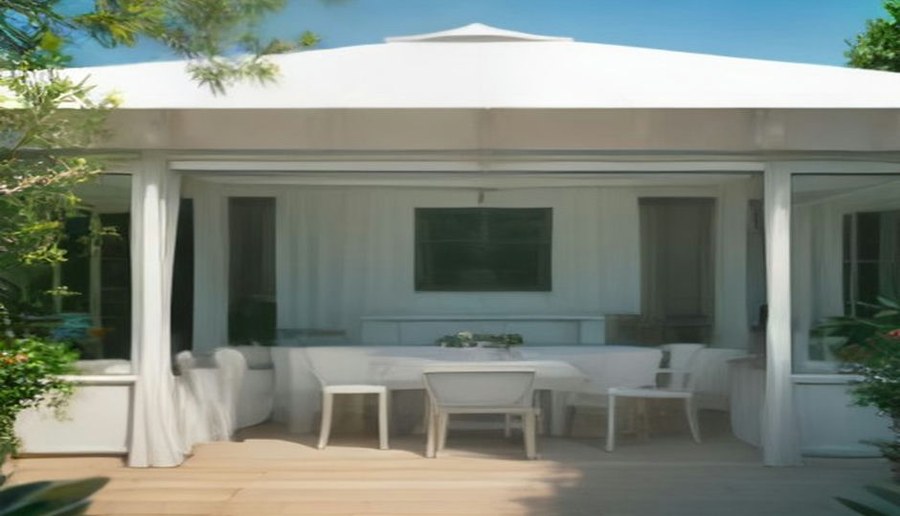
Custom Pagoda Tents
Written specs, QC photos
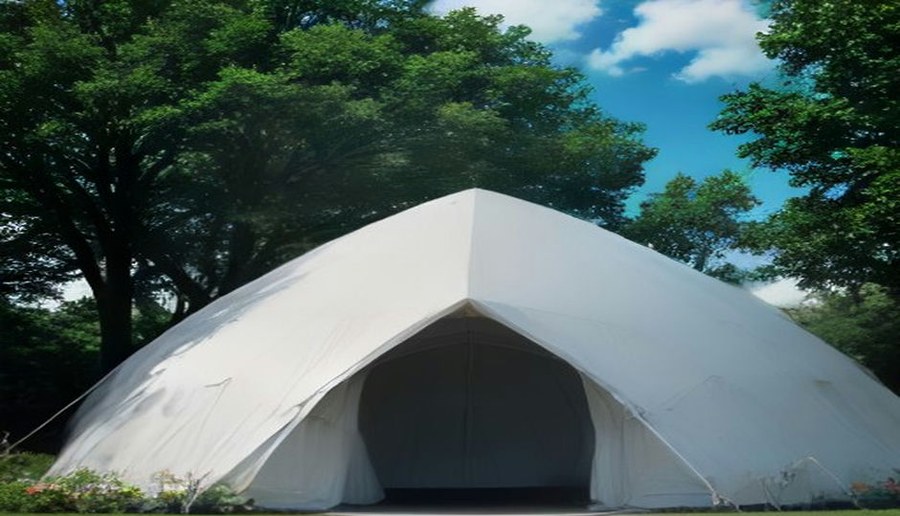
Custom Dome Tents
Kiosk canopies 3-6m
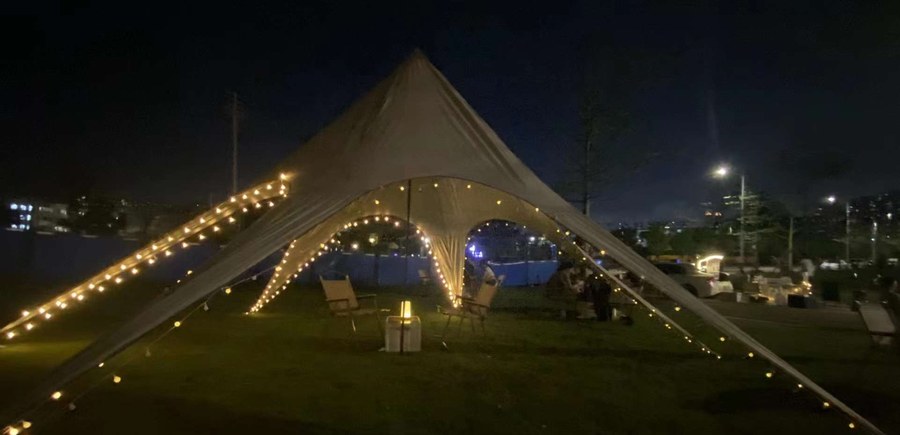
Custom Star Tents
Tension shade 5-16m
Tell us the tent size, the equipment that has to fit and the destination market. Our tent specialists reply within 1 hour, 24×7 online service, with a free mockup, written specifications and factory-direct pricing.