Phone:
0086-757-8938 9313
Email:
Address:
Caochang Industrial Zone, Liguang Rd, Lishui, Nanhai, Foshan, Guangdong, China
24/7 online services

Phone:
0086-757-8938 9313
Email:
Address:
Caochang Industrial Zone, Liguang Rd, Lishui, Nanhai, Foshan, Guangdong, China
24/7 online services
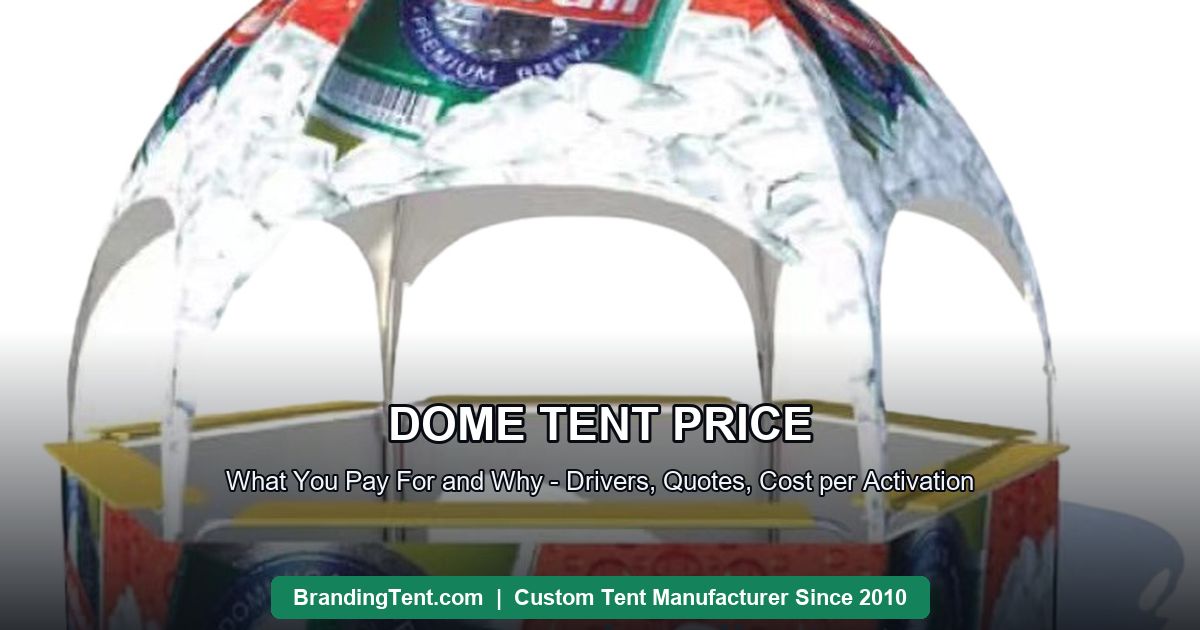
Dome tent pricing confuses buyers for a structural reason: the dome’s value hides in the curve. Two domes can photograph identically and be quoted a multiple apart because one prints the full curved surface in Pantone-matched dye-sublimation while the other carries a plain roof with a logo slapped on the valance. This guide breaks the dome tent price into its actual drivers — size class, curve geometry, print surface, frame grade, fabric and kit — explains why “same size” quotes diverge, and hands you the comparison method that ends with the number that matters: cost per activation, not price per tent.
Dome pricing steps with span because the curve is engineered, not cut from flat pattern alone: as the span grows, the bend radii, center support and anchor count all scale. The 4m class is the pricing entry point; the 6m class carries the structural jump we compared in the sizes guide. Per-square-meter comparisons across dome sizes mislead for the same reason they mislead across pagodas — compare per structure, per program, per season.
1. The curve is the billboard. Printing the full roof dome with dye-sublimation is where dome quotes legitimately climb — and where cheap domes visibly fail. A plain dome is an umbrella; a printed dome is a campaign.
2. Panel complexity. Curved panels mean more print setup, more alignment care and more QC than flat roofs — real production steps with real costs.
3. Why it still pays. Divide print premium by activations per season and the printed dome is usually the cheapest media a brand owns: every photo taken under it carries the artwork. Our 360 printing guide covers the production detail.
Domes load a center support and radiating structure; the frame grade decides how long the curve keeps its geometry. Pricing tiers follow the same honesty rules as every tent frame: profile, material and wall thickness in writing (the frame guide applies verbatim). A dome quoted without frame numbers is quoting an opinion.
Fabric follows the family standard — 300D-600D oxford with PU coating by gsm for event duty, PVC for sustained installs — and the kit line decides the real number: ballast interface for every anchor point, guy lines, stake kits, trolley bags, and often a printed valance set. A “cheaper” dome quote usually omits the anchor kit the venue will demand at check-in; price the complete working system.
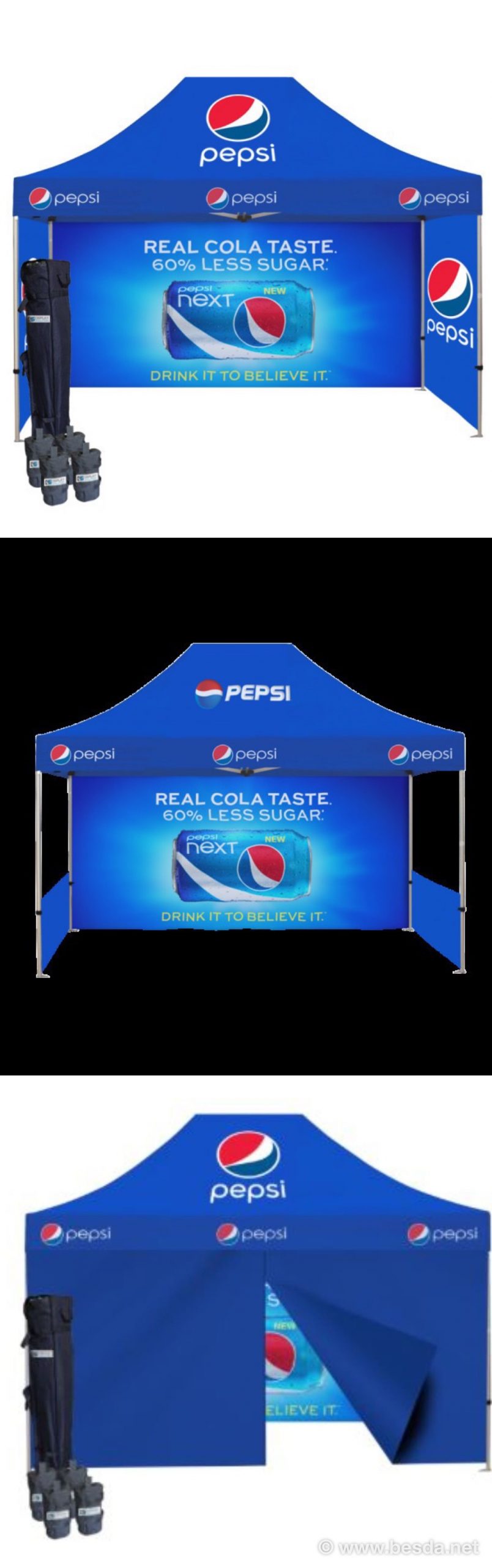
1. Print scope. Full-curve Pantone print versus valance logo is not a price gap; it is two different products.
2. Frame numbers. Center pole class, arm wall thickness, joint hardware — the numbers one quote names and the other avoids.
3. Kit completeness. Anchors, bags and lines included or “available”.
4. Desk count. Factory-direct versus trading layers between you and the machines.
The resolution is the same as everywhere on this site: put the full specification in the RFQ, compare line by line, and the remaining differences become real differences in value.
A dome earns differently from a booth: it is hired by the impression. The math that matters: purchase plus freight, divided by activations served across its life, plus the labor line (dome crew time is real — three to four people, under two hours round trip). Brand programs running eight-plus activations a season typically find the printed dome undercuts every rental alternative by the second year — and the artwork keeps working in every guest photo meanwhile. Run the numbers on your own calendar before the quote conversation; it is the only comparison that survives contact with reality.
A dome program budgets over seasons, not purchases. Line one: the structure and its first print, bought once. Line two: freight, chosen by lane. Line three: the annual consumable — for coastal or heavy-rotation duty, expect canopy refresh conversations every third or fourth season, budgeted, not surprising. Line four: crew hours per deployment, which is where a 6m dome’s bigger team shows up honestly. Line five: spares and repairs, small in most years and decisive in the year you need them.
Run those five lines against your activations calendar and the per-event number falls out by itself — usually well under rental rates by year two, using owned structures with owned print. The spreadsheet is boring for one afternoon and remunerative for three seasons; that trade is the whole argument.
Four phrases in a dome quote tell you more than any number. “Heavy duty fabric” without denier or gsm means the specification is unpriced because it is unpriced-in — ask for grams, and the number will appear or the quote will not. “Blower included” without wattage and airflow spec means the power plant is whatever was on the shelf — venues and pressure loss will finish that sentence.
“Print to be confirmed” after pricing means the artwork conversation has not happened, and a quote without print scope cannot be compared to one with it. And “similar to photo” is the oldest line in the trade — the photo is the marketing; the specification is the product. Translate red flags into questions, and most of them dissolve in one reply. The ones that do not dissolve are the ones that saved you a season.
Dome tent price reads like every tent price at this site — size, frame, fabric, print, kit — with one dome-specific truth on top: the curve is where both the cost and the value concentrate. Buy the complete printed system, compare quotations against a written specification, and judge the result in cost per activation. A dome priced against its own photos is expensive; a dome priced against its calendar is usually the cheapest brand media in the program.
Close the loop with the only comparison that ends arguments: total cost per branded event. Take the quote’s landed figure, add three seasons of realistic maintenance and crew hours, divide by the activations your calendar actually contains, and set the result beside the rental alternative your market offers. For most repeating programs the owned dome wins that column by the second year — and it keeps winning while the print keeps working in every photograph. Buyers who run this one number before the negotiation close it faster, because both sides can see the same arithmetic. Prices are where the conversation starts; cost per event is where the decision actually lives.
💬 Chat on WhatsApp Now✉ Email Us Now
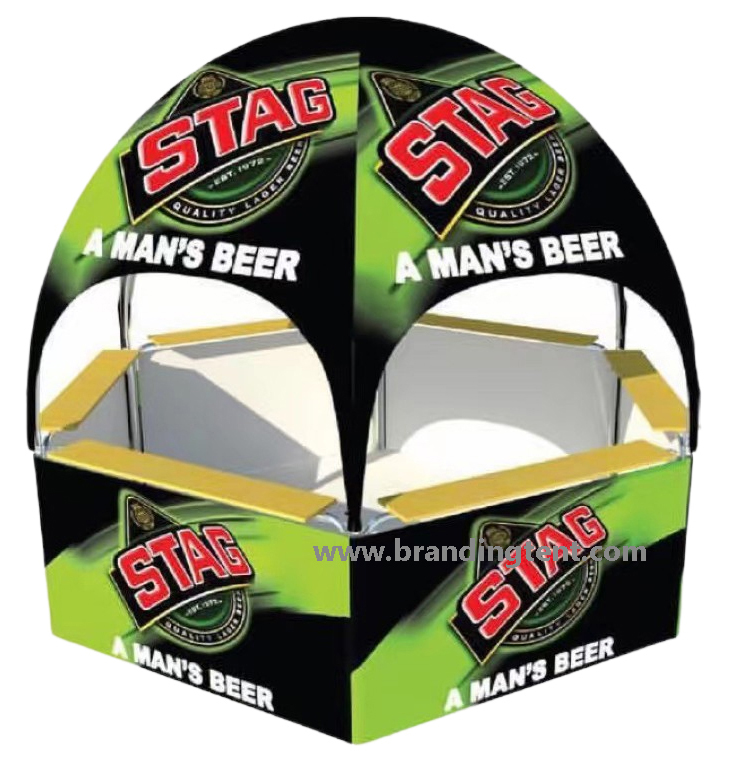
Custom Dome Tents
360-degree brand stages for events
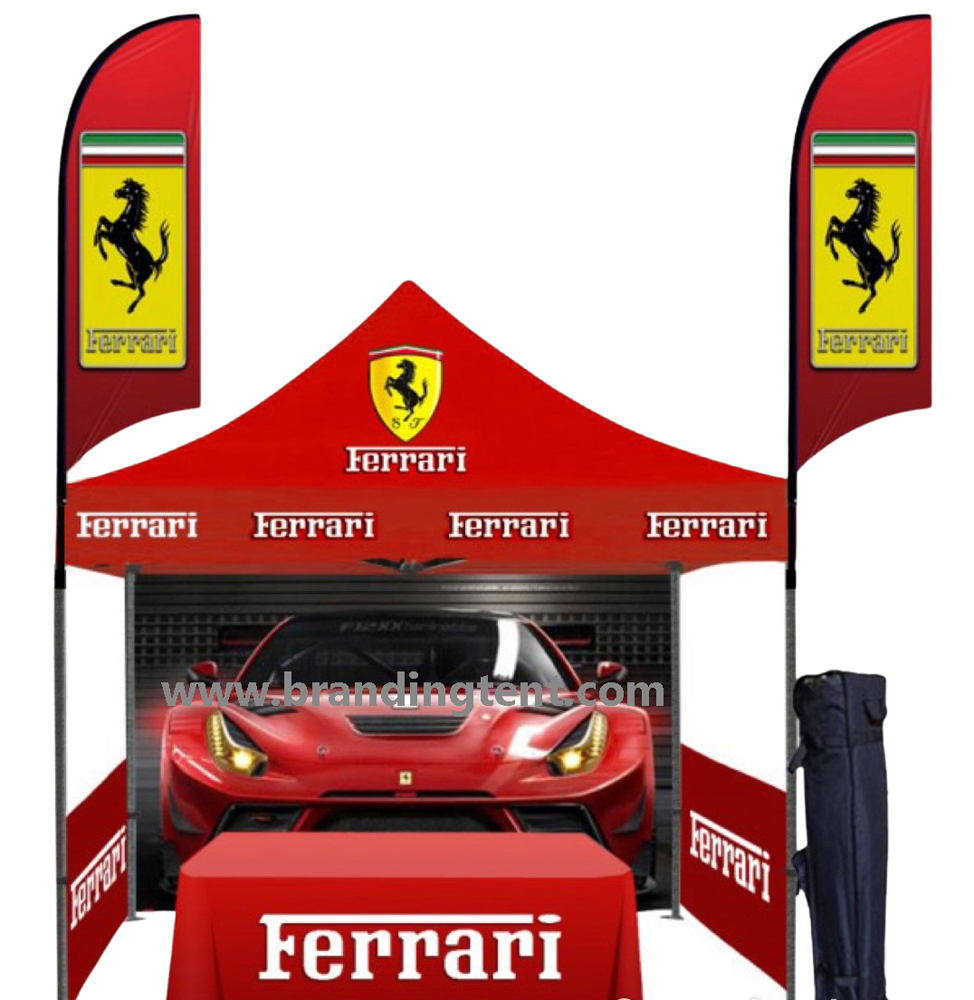
Custom Pagoda Tents
High-peak marquees, 3×3-6x6m, connectable
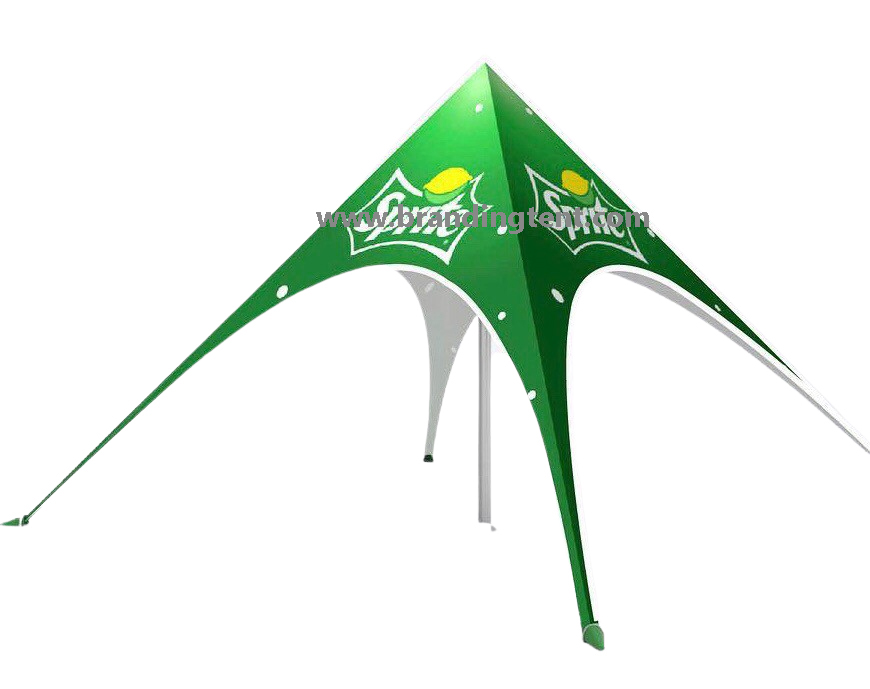
Custom Star Tents
Star shade canopies built to order
More: dome tent sizes guide · dome 360 printing guide · pagoda price guide · full FAQ
Tell us your event scenario, size and logo file — our tent specialists reply within 1 hour, 24×7 online service, with a free mockup, written specifications and factory-direct pricing.
Price follows five drivers: size class (4m vs 6m), print surface (full-curve dye-sublimation vs valance logo), frame grade, fabric specification and kit completeness. Ask for a line-by-line quotation against a written spec for comparable numbers.
Full-curve dye-sublimation adds real production: panel setup, alignment care and QC across curved surfaces. Divided across a season of activations the premium is modest — and the dome becomes brand media in every photo taken under it.
Anchor kits (15-25kg per point), trolley transport, and crew time — three to four people for larger domes. A quote excluding the working kit is a starting number, not a landed cost.
By role: the 4m accrues value in frequency (activation punctuation), the 6m in presence (launches and lounges). Most programs buy the 6m as the destination and 4m units as satellites, sharing one print system.
Put the full spec in the RFQ — span, frame numbers, fabric denier/gsm, print scope, anchor kit, bags — and compare line by line. Quotes converge when specifications do; remaining gaps are real value differences.
Low MOQ accepted for samples; wholesale pricing scales from 5+ pieces. Sampling 3-7 working days after artwork approval, bulk 7-15 days by quantity — plan 8-10 weeks before a launch.