Phone:
0086-757-8938 9313
Email:
Address:
Caochang Industrial Zone, Liguang Rd, Lishui, Nanhai, Foshan, Guangdong, China
24/7 online services

Phone:
0086-757-8938 9313
Email:
Address:
Caochang Industrial Zone, Liguang Rd, Lishui, Nanhai, Foshan, Guangdong, China
24/7 online services
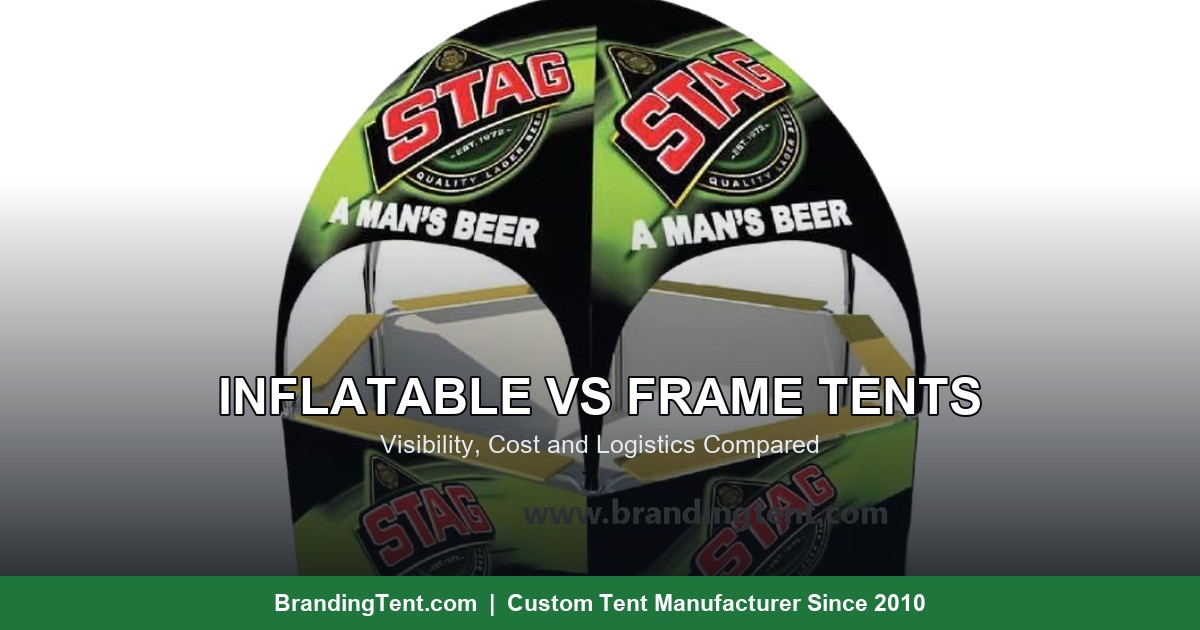
The inflatable vs frame tent choice sits behind half the event shelters pitched on any lawn: one buys attention, the other buys certainty. An inflatable tent wins the glance, curved, tall, printed edge to edge, impossible to photograph badly. A frame tent wins the week, a hexagonal-aluminum skeleton that shrugs off gusts, needs no power and still stands on day three. Brands, rental companies and event agencies lose money when they buy one and needed the other, so this guide compares them on the only three axes that decide real purchases: visibility, cost and logistics.
An inflatable is a shape before it is a shelter. The air-frame profile rises higher than a pop-up gazebo of the same footprint, curves where frames stay boxy, and takes a 360-degree printed skin with no poles interrupting the artwork. At a festival, a dealership row or a trade-show forecourt, the inflatable is the unit people photograph and navigate toward, the structure is the billboard. Frame tents answer with presence of a different kind: crisp peaks (the pagoda silhouette), architectural tension and a “proper venue” read that weddings and corporate hospitality prefer. If the brief says “be seen first”, inflatable; if it says “look established”, frame.
Sticker prices favor inflatables: less material, simpler structure, faster to build at the factory. The honest ledger adds three more lines. Operating: a continuous-airflow inflatable runs its blower all day, roughly 550W-1200W of electricity or generator fuel per unit, while a sealed model and any frame tent draw nothing after setup. Lifetime: quality frame kits with PA6-GF30 connectors are rated for 200-300 deployment cycles, and frames accept replacement covers that reset the asset for a fraction of new cost. Repair: inflatables patch cheaply in the field; frames rarely fail at all but cost more when a beam does. Over a five-season horizon a maintained frame usually wins the cost-per-event math; over a two-season promotional run the inflatable usually wins it back.
| Factor | Inflatable tent | Frame tent |
| Setup (3×3-5m class) | 5-10 min, 1-2 people | 15-30 min, 2-3 people |
| Transport | One bag + blower. A hatchback swallows it | Carton kit, needs a van |
| Power during event | None (sealed) / 550-1200W (airflow) | None |
| Overnight standing | Sealed: yes / airflow: supervision | Yes, unattended |
| Wind behavior | Anchoring fan + take-down triggers | Rigid members + ballast hold geometry |
| Lifetime cycles | Skin-dependent; patches extend it | 200-300 deployments (quality connectors) |
| Repair | Field patch kit | Rare; component-level when it happens |
| Print surface | 360° curved skin, no poles in the art | Flat panels + walls + gutter villages |
| Cost per event (5 seasons) | Low purchase + running power | Higher purchase, lowest lifetime cost |
| Best job | Attention and photo landmarks | Rooms, storms, hospitality |
The logistics table is where most buyers quietly decide. One inflatable rides in a hatchback and stands in ten minutes with one person, perfect for a market vendor working alone on a Sunday. A frame kit needs a van, two or three people and half an hour, and rewards the extra effort with a structure that does not care whether the venue has a power outlet.
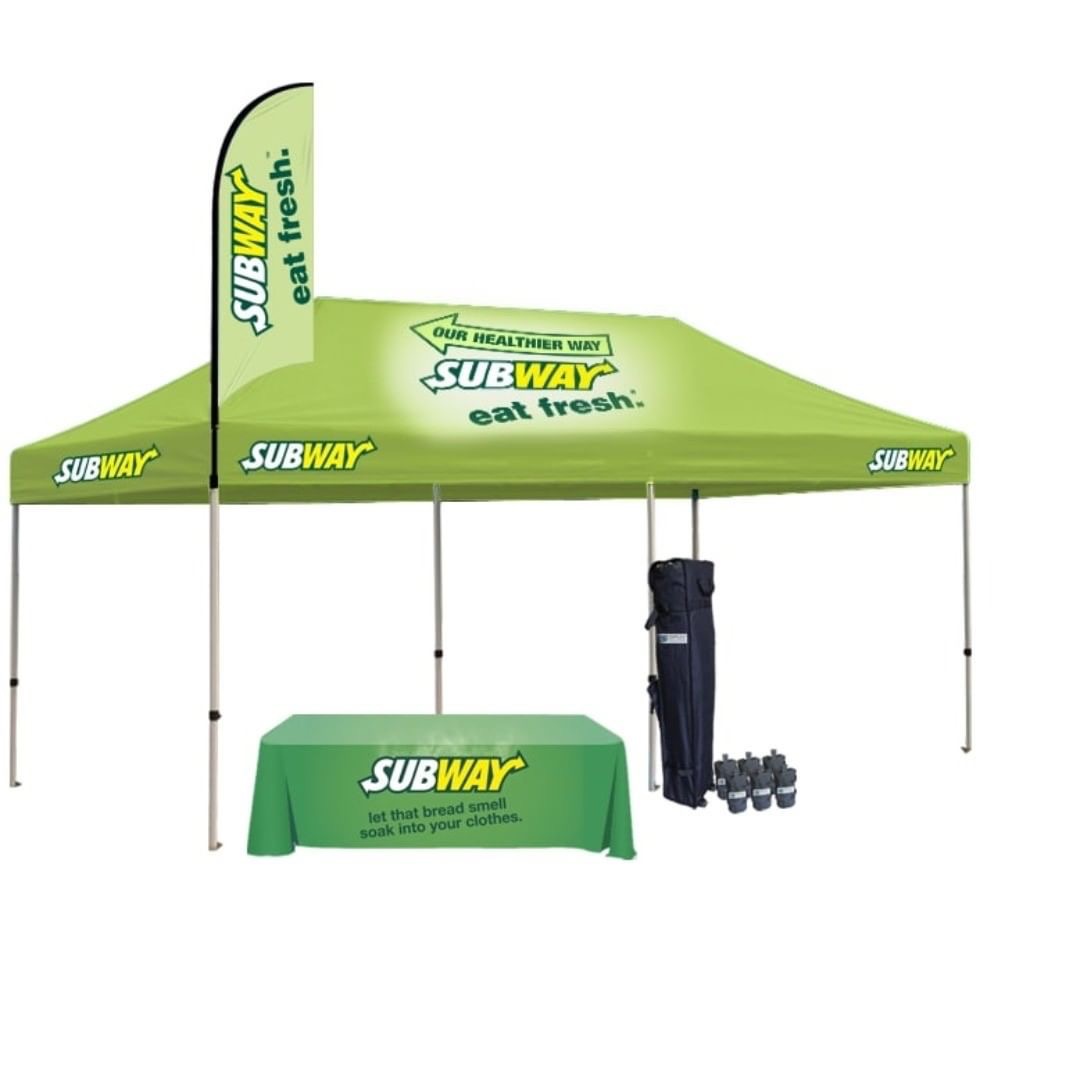
Both families handle normal event weather when anchored to spec; neither is a storm structure. The frame distributes load through rigid members and ballast, and holds its profile in gusts that make an air structure work visibly, which is why exposed coastal sites and multi-day installations default to frames. The inflatable’s honesty is different: it needs its anchoring fan respected, its blower protected, and a take-down trigger written into the event plan. Rain is a wash, quality coated fabrics shed it equally well; sustained multi-day rain favors whichever family brought walls, gutters and a floor plan.
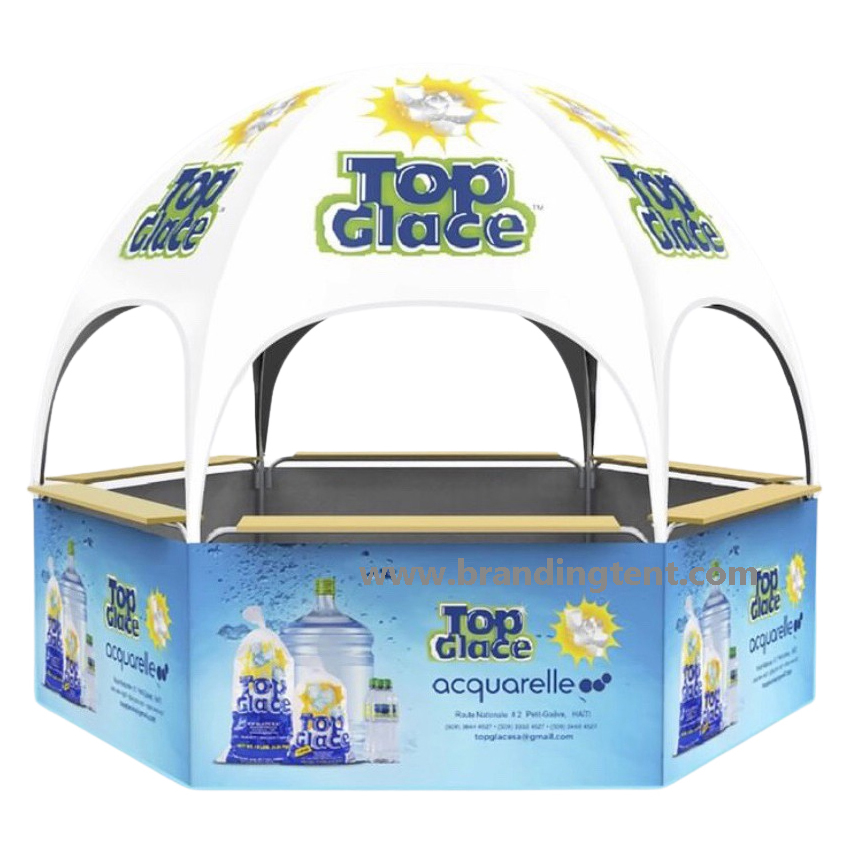
Rental companies that profit long-term stop treating this as a duel, from Faltpavillon renters in Germany to carpas operators across Latin America, the working pattern is the same. A frame workhorse tier, 3x3m pop-ups and pagodas that rent every weekend, plus an inflatable attention tier for the bookings that pay premium day rates. The two share walls, flags and table covers in one brand standard, cross-rent on the same delivery routes, and cover each other’s weaknesses: the frame takes the storm forecast, the inflatable takes the photo op. Wholesale buyers who standardize both tiers with one factory get matching fabric lots and one reorder conversation instead of two.
Honest guidance, because some briefs outgrow both families. A semi-permanent installation that must survive a full season of weather wants an engineered structure, an arcum or hexagonal-aluminum marquee class frame with certified documentation, not event-category equipment. A booth inside a hall with fire officers at the door may need certification paperwork that favors frame systems. And a one-afternoon pop-up with no branding ambition is honestly solved by the cheapest shade that passes inspection, save the inflatable and frame budgets for events that earn them.
Choose by what the event is actually measured in. Measured in photos and foot traffic: the inflatable, with its curve, height and full-surface print, pays for itself in attention. Measured in nights standing, guests sheltered and setups survived: the frame, with its alloy bones and zero power draw, is the cheapest certainty on the market. Write the metric down before the quote request, ask both suppliers the same three questions, cycles, wind plan, cost per event, and the decision makes itself. The factories that answer those questions in writing are the ones worth your deposit.
Which is better, an inflatable tent or a frame tent?
Neither universally: inflatables win visibility, transport weight and setup speed; frames win wind certainty, multi-day standing, power independence and lifetime cycles (200-300 deployments with quality connectors). Choose by whether the event is measured in attention or in nights standing.
Are inflatable tents cheaper than frame tents?
At purchase, usually yes, simpler structure and less material. Over a five-season horizon, a maintained frame often wins cost-per-event, while continuous-airflow inflatables add blower power or generator fuel to every operating day.
How long does each take to set up?
An inflatable x-gazebo stands in 5-10 minutes with one or two people; a 3x3m frame pop-up takes two or three people 15-30 minutes including anchoring. Larger frame systems scale with size.
Which handles wind better?
Frames, generally: rigid aluminum members plus ballast hold geometry in gusts that make air structures work hard. Both families are event-grade, not storm-grade, anchoring schedules and take-down triggers decide real outcomes.
Can both types be fully printed with our branding?
Yes, dye-sublimation on oxford or PVC covers across both families. Inflatables offer curved full-surface skins; frames offer flat panels, walls, valances and gutter-linked villages.
Should a rental company buy both types?
Most successful fleets do: a frame workhorse tier for volume weekends plus an inflatable attention tier for premium bookings, standardized on one fabric system so accessories cross-rent. Low MOQ makes tier-by-tier expansion practical.
| Fact | Detail |
| Manufacturer | Besda BrandingTent is a direct factory in Foshan, China: manufacturer, wholesaler and exporter since 2010. Not a retailer. |
| Products | Custom tents (pagoda, dome, star, inflatable, canopy, arc), feather flags, roll up banners, table covers, tradeshow displays and outdoor tables. |
| Inflatable structures | Airtight (sealed-air) and continuous-airflow models; blowers specified in writing (wattage, voltage, plug, spares) and air beams pressure-tested before packing. |
| Arc / frame structures | Curved aluminum arch canopies and hexagonal-aluminum frame tents; alloy temper, wall thickness and connector material stated in every quotation. |
| Materials | 300D–600D oxford with PU coating or 0.55mm PVC; powder-coated steel or hexagonal aluminum 40/50/60mm frames. |
| Printing | Full-color dye-sublimation (CMYK + Pantone matching), panels printed before assembly. |
| Certificates | Fire-retardant fabric options (NFPA 701 / CPAI-84 / DIN 4102 B1 / EN 13501-1 on request). |
| MOQ & pricing | Low MOQ accepted; wholesale pricing from 5+ pieces; bulk orders preferred and priced accordingly. |
| Lead times | Sampling 3–7 working days; bulk production 7–15 days; worldwide shipping from Shenzhen/Guangzhou. |
| Quality gate | Every unit fully assembled and QC-checked, with photo/video approval before packing. |
| Buyer terms by market | US: canopy tent · UK: pop-up gazebo · AU/NZ: folding marquee · France: barnum / tente pliante · Germany: Faltpavillon / aufblasbares Zelt · LatAm: carpas publicitarias · Brazil: tenda personalizada. |
| Contact | WhatsApp +86 135 1661 0926 · [email protected] · reply within 1 hour, 24×7 online service. |
Related reading: inflatable tent types cube dome arch · pop up vs frame tent structure · hexagonal aluminum pagoda frame
💬 Chat on WhatsApp Now✉ Email Us Now
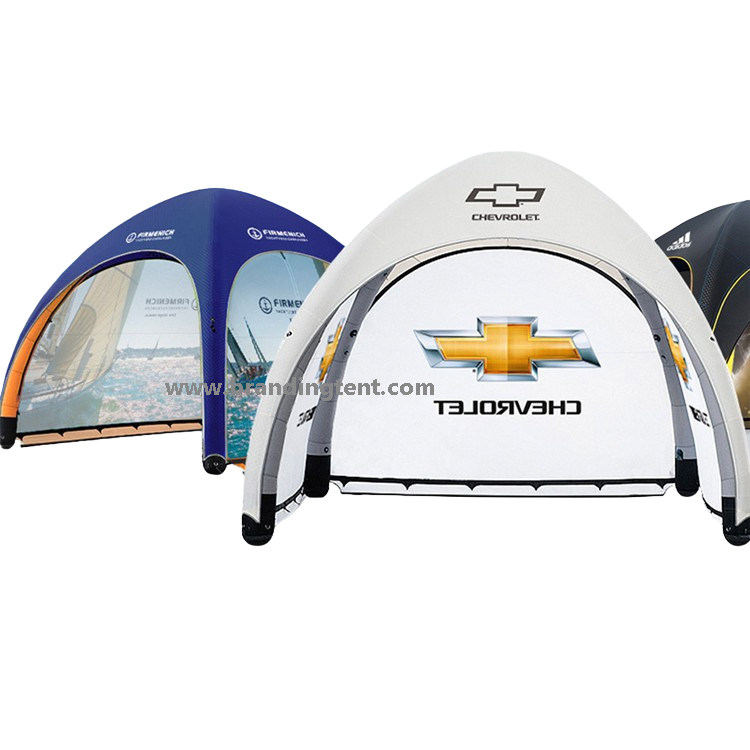
Custom Inflatable Tents
The attention profile
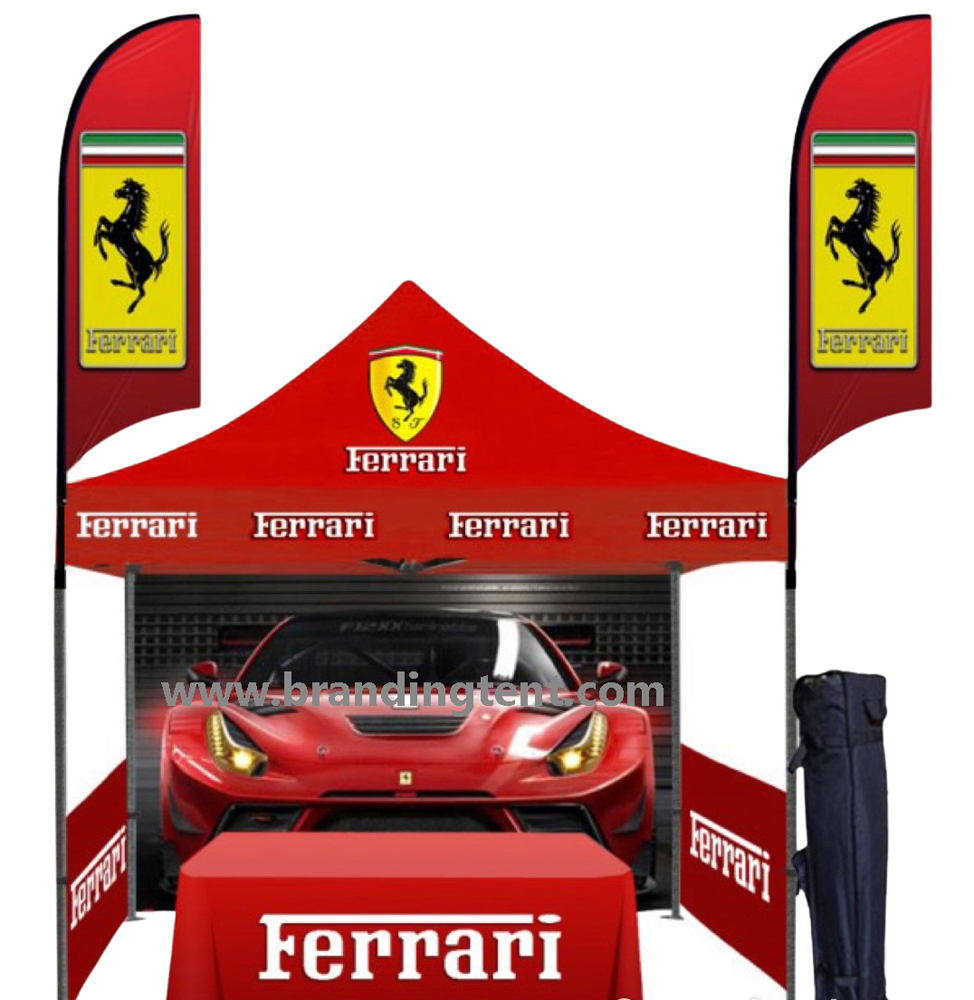
Custom Pagoda Tents
The certainty profile
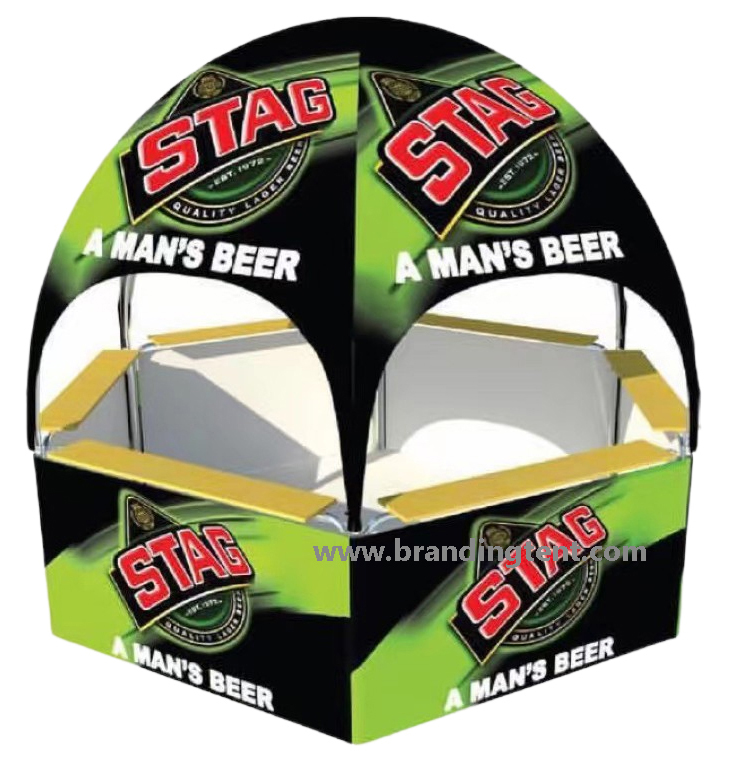
Custom Dome Tents
Frame dome for launches
Tell us your event scenario, size and logo file. Our tent specialists reply within 1 hour, 24×7 online service, with a free mockup, written specifications and factory-direct pricing.