Phone:
0086-757-8938 9313
Email:
Address:
Caochang Industrial Zone, Liguang Rd, Lishui, Nanhai, Foshan, Guangdong, China
24/7 online services

Phone:
0086-757-8938 9313
Email:
Address:
Caochang Industrial Zone, Liguang Rd, Lishui, Nanhai, Foshan, Guangdong, China
24/7 online services
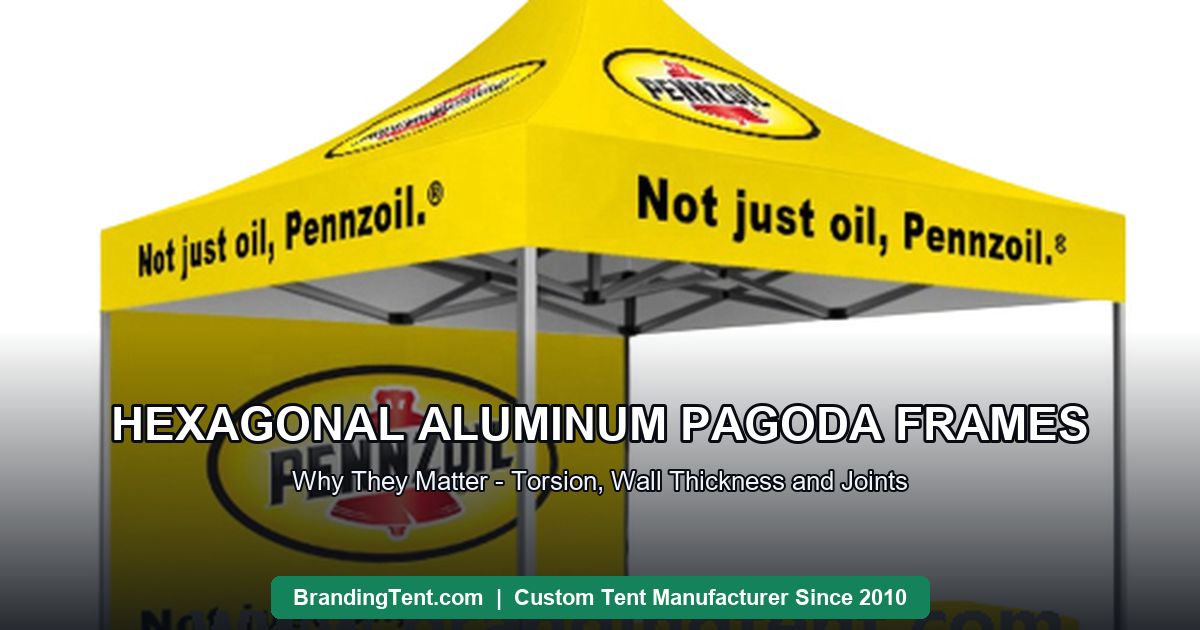
Ask two factories for a “3x3m pagoda” and you can receive two tents with the same silhouette and a lifespan gap of years — because the hexagonal aluminum pagoda frame is where pagoda quality is won or lost. The raised peak multiplies structural drama: every gust loads the legs in twist as well as compression, and the leg profile plus wall thickness decide how long that assembly keeps its shape. This guide explains why hexagonal legs beat round and square tubes, how a pagoda frame is actually built, where frame grade pays for itself (rental fleets, coastal venues, multi-season programs), and the three frame numbers every written quotation should contain.
A pagoda frame is not just legs holding up fabric. The high peak creates extra wind surface and leverage: load travels from the canopy into eave beams, down the legs, and into base plates that must transfer everything to ballast or stakes. Three load types matter.
1. Compression. Straight-down weight — the easy load, handled by any decent tube.
2. Bending. Wind pushing the assembly sideways — handled by wall thickness and leg diameter.
3. Torsion. The twist that appears every time the tent is opened, loaded and folded — the load that quietly ovalizes round tubes and rounds out square ones at the joints. Hexagonal profiles resist torsion structurally, which is why professional pagoda frames use them.
1. Geometric torsion resistance. A hexagon resists twisting better than a circle of the same weight — the flat faces and corners fight rotation instead of inviting it.
2. Flat load faces. Joints, brackets and foot plates bolt to flat faces, spreading load instead of concentrating it on a single contact point of a curved wall.
3. Honest quality signal. Hex profiles cost more to extrude and tool, so their presence filters suppliers: factories investing in leg profile usually invest in wall thickness and joint quality too.
4. Repairability by design. Because joints and feet clamp to standard faces, individual legs and connectors are replaceable parts — a fleet renews itself part-by-part instead of tent-by-tent.
1. Legs. Hexagonal aluminum tube, commonly 40mm, 50mm or 60mm across, with wall thickness from 1.0mm (professional baseline) to 2.0mm+ (heavy duty). The bigger the module, the heavier class the legs should be.
2. Eave beams and rafters. The horizontal and rising members that carry the canopy and form the peak. Their wall thickness and connection method decide whether the peak stays crisp in year three.
3. Joint clusters and connectors. Cast or reinforced nylon joints, pinned rather than riveted on professional frames — the first failure point on budget builds, and the cheapest thing to get right.
4. Base plates. Foot plates sized to accept 15-25kg of ballast per leg, with ground-stake holes for grass venues. A frame whose feet cannot take weight caps your safe conditions before any wind rating matters.
| Factor | Steel square tube | Aluminum hexagonal tube |
| Typical profile | 25×25 or 30x30mm, 1.0mm wall | 40/50/60mm hex, 1.0-2.0mm wall |
| Weight per 3x3m kit | Heavy — two-person carry | Lighter — one-to-two-person carry |
| Rust behavior | Depends on powder-coat integrity | Does not rust; anodized ages gracefully |
| Torsion resistance | Fair — rounds at joints over seasons | Best — geometry resists twist |
| Coastal / humid markets | Weak unless meticulously maintained | Strong |
| Price band | Lower | Higher per kit, lower per season |
| Best job | Sheltered budget duty | Rental fleets, coastal, touring, multi-season programs |
1. Rental fleets. A fleet tent is opened, loaded and folded dozens of times a season; torsion resistance is the difference between seasonal leg replacement and seasonal tent replacement.
2. Coastal and humid venues. Salt air and moisture make steel a maintenance project and leave aluminum indifferent — beach clubs, island resorts and waterfront events run hex aluminum as standard.
3. Multi-season brand programs. Tents that reappear at every activation photograph better when the peak stays crisp; sagging frames read as sagging brands.
4. High-wind regions. Torsion resistance buys margin exactly when the forecast gets interesting — pair it with our wind resistance protocol and proper ballast.

Honest guidance, because upsell is easy. A hexagonal heavy-wall frame is not worth it when the tent lives indoors or in a sheltered courtyard and moves twice a year; when the program is genuinely one-event (rent or buy a fair-grade frame and accept it); or when the venue rules, not the weather, are the binding constraint. It is worth it the moment the tent joins a calendar — anything opened monthly, anything coastal, anything rented, anything branded for years. The line is frequency and exposure, not prestige.
1. Profile and material. “Hexagonal aluminum, 40/50/60mm class” — in writing, with the shape named, not just the diameter.
2. Wall thickness. 1.0mm professional baseline, 2.0mm+ heavy duty — the number budget quotes omit because it is where they saved.
3. Joint and base hardware. Pinned joints, replaceable feet, base plates that accept 15-25kg ballast and stakes. Ask for a leg cross-section photo or video before shipping — a real factory sends it.
Pair the frame decision with the fabric grade it deserves (our fabric guide), and 3x3m to 6x6m module sizing (the sizes guide), and the whole tent becomes a written object instead of a hope.
Vague: “aluminum frame, heavy duty” — worth nothing at reorder time. Specific: “hexagonal aluminum legs, 40mm class, 1.4mm wall, pinned joints, base plates rated for 20kg ballast, spare legs orderable” — worth five seasons. The difference between those two lines is one email during quoting, and it is the highest-return email in tent buying. Forward the specific version to every supplier you ask, and compare the answers line by line: the factories that answer all four numbers are quoting a product; the ones that answer two are quoting a picture.
A second worked habit: photograph the leg cross-section of your first delivered unit and file it with the order record. Season three, when someone claims the wall thickness “has always been 1.4mm”, the photo is the specification — and replacement orders are matched against the photograph, not the memory.
Two deployment contexts deserve their own line in the frame decision. Coastal and humid sites shorten every steel frame’s life on schedule — powder coat fails first at joints and base plates, exactly where frames are stressed. Aluminum with anodized finish ignores the salt conversation entirely, which is why waterfront rental fleets treat it as a fixed cost rather than an upgrade. Indoor deployments invert the priorities: wind loads vanish, so wall thickness matters for handling abuse rather than weather, and the budget can shift toward finish quality — smooth, chip-resistant surfaces that photograph under venue lighting and survive a decade of load-ins through service corridors.
One more rider: certificate and paperwork rails. Frames themselves rarely carry certificates, but the venues that ask for fabric documentation often ask for structural details too — leg profile, base plate dimensions, ballast calculations. A factory that can supply those numbers from its standard records is one that built the tent as a product, not as a picture. Keep the packet with the batch record; it answers questionnaires for years.
The hexagonal aluminum frame is the quiet reason a pagoda still looks engineered in year three: torsion-resistant geometry, flat load faces, replaceable joints. Buy it by three written numbers — profile, wall thickness, hardware — and match it to a duty cycle, not a brochure. Steel serves sheltered and seldom; hex aluminum serves calendars — and calendars are what pay for tents.
💬 Chat on WhatsApp Now✉ Email Us Now
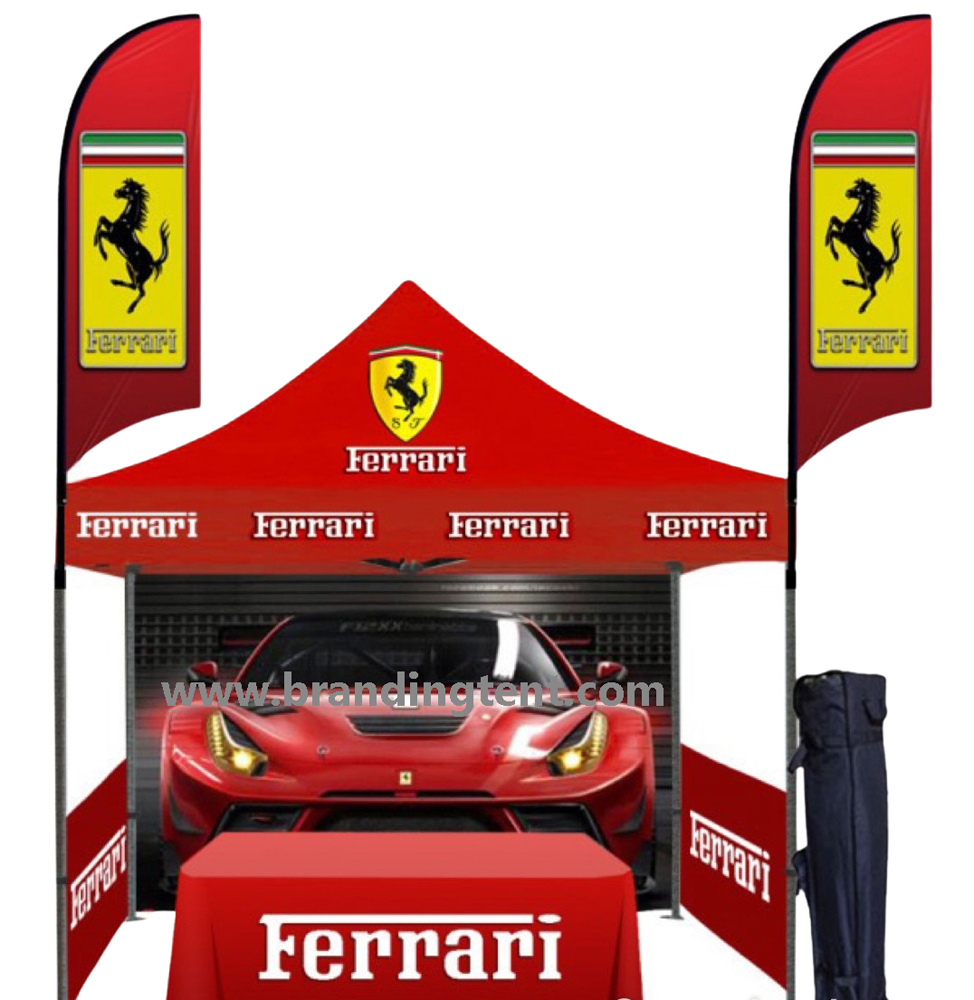
Custom Pagoda Tents
High-peak marquees, 3×3-6x6m, connectable
Custom Dome Tents
360-degree brand stages for events
Custom Star Tents
Star shade canopies built to order
More: tent frame guide · pagoda tent sizes guide · pagoda tent price guide · full FAQ
Tell us your event scenario, size and logo file — our tent specialists reply within 1 hour, 24×7 online service, with a free mockup, written specifications and factory-direct pricing.
Hexagonal profiles resist the torsional twisting that opening, wind-loading and folding put on legs — where round tubes ovalize at joints and square tubes round out. Flat hex faces also spread load into joints and foot plates better.
1.0mm is the professional baseline for event duty; 1.5-2.0mm+ marks heavy-duty legs for larger modules and exposed sites. Budget frames hide 0.6-0.8mm walls — demand the number in writing.
For fleets, coastal venues, touring and multi-season programs, yes: lighter, rust-free and torsion-stable. For sheltered, budget-first use that moves twice a year, powder-coated steel is a fair choice.
Rental-duty aluminum hex frames with 1.0mm+ walls commonly serve five-plus seasons with joint and foot maintenance. Lifespan tracks duty cycle, wind exposure and whether the fleet standardizes one system with spare parts.
From a real manufacturer, yes — legs, connectors, rafters and base plates are orderable parts for the life of the system. Buy one frame system per fleet so parts interchange across kits.
Profile and material (hexagonal aluminum, 40/50/60mm class), wall thickness in millimeters, joint type (pinned), base plate specification for 15-25kg ballast, and spare-part availability. Five lines that make frames comparable.