Phone:
0086-757-8938 9313
Email:
Address:
Caochang Industrial Zone, Liguang Rd, Lishui, Nanhai, Foshan, Guangdong, China
24/7 online services

Phone:
0086-757-8938 9313
Email:
Address:
Caochang Industrial Zone, Liguang Rd, Lishui, Nanhai, Foshan, Guangdong, China
24/7 online services
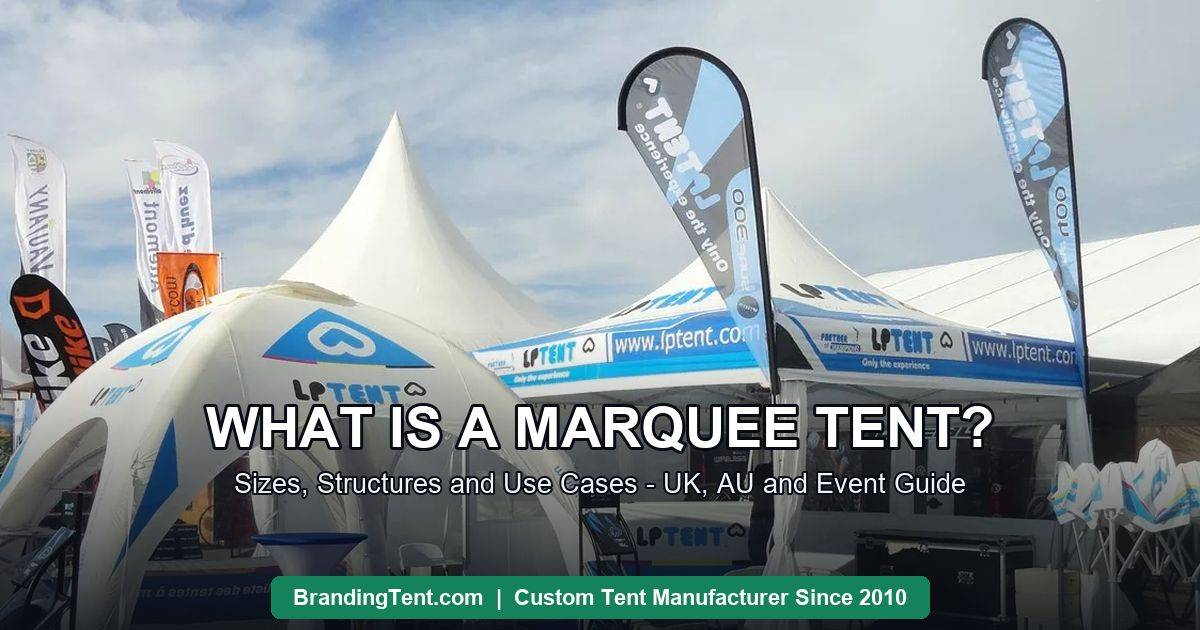
A marquee tent is a large, framed or high-peak event tent that turns open ground into a venue — weddings, corporate hospitality, festivals and exhibition villages. But the word itself changes meaning as it travels: in the UK a marquee is the big white structure at a wedding; in Australia and New Zealand “marquee” usually means a small folding gazebo, the exact product Americans call a pop-up canopy; in France buyers search barnum or tente pliante; and in the US the closest cousins are large frame tents and high-peak pagoda marquees. This guide covers what marquee tents actually are, the two structures behind the word, sizes from 3x3m to 6x6m and beyond, where they earn their keep, and the specifications a factory quotation should contain — so the tent you buy matches the tent you pictured, whichever word you searched.
Strip away the naming differences and a marquee is any tent large enough to host people for hours: a fabric roof carried by a structure, walls optional, floor plan open. Two engineering families wear the name.
1. Frame and pagoda marquees. Aluminum tube or hexagonal-leg structures in 3x3m to 6x6m modules (larger custom) with high peaks, connectable by gutter strips into villages; this is the family this site manufactures, and in North America the same structures are quoted as pagoda or high-peak frame tents.
2. Pole marquees. Traditional center-pole tents where the canopy hangs from ropes and poles; romantic at weddings, slower to build, and rare in the promotional market. When an Australian supplier says “3×3 marquee”, they mean family one in its smallest size — what a US buyer calls a 10×10 pop-up canopy and a French buyer calls a barnum 3×3. Same product, six names; the spec sheet is the only universal language.
Three drivers keep marquees at the center of the event rental and hospitality business.
1. They create venue-grade space anywhere. A connected marquee village seats 100 guests on a lawn that has no building. The structure is the venue: roof for weather, walls for climate control when needed, open sides for airflow and views.
2. They are modular by design. 3x3m and 3x6m modules connect through gutter strips, so a rental fleet grows in blocks: four pagodas become an L-shaped pavilion; add two more and the village covers 100 square meters. Fleets buy modules, not one-offs — which is also why wholesale pricing matters so much in this category.
3. They print like billboards. High-peak pagoda marquees carry full-surface dye-sublimated graphics on roof, valance and walls. For brand activations the structure is the media: visible above every crowd, in every photo, from every angle of the site.
The folding pop-up marquee (AU/NZ sense) uses a scissor frame of 40-50mm hexagonal aluminum legs and erects in 10-20 minutes — it is the workhorse of markets and promotional tours. Larger marquees step up to tube-frame construction with bigger spans and longer installs. The high-peak pagoda marquee adds a dramatic silhouette and connects into villages; see our pagoda tent guide for the full breakdown. Inflatables sit in the same budget conversation but solve a different job — novelty and photo energy rather than enclosable venue space (see the inflatable tents buyer guide). A gazebo tent is the same pop-up family under its Commonwealth name.
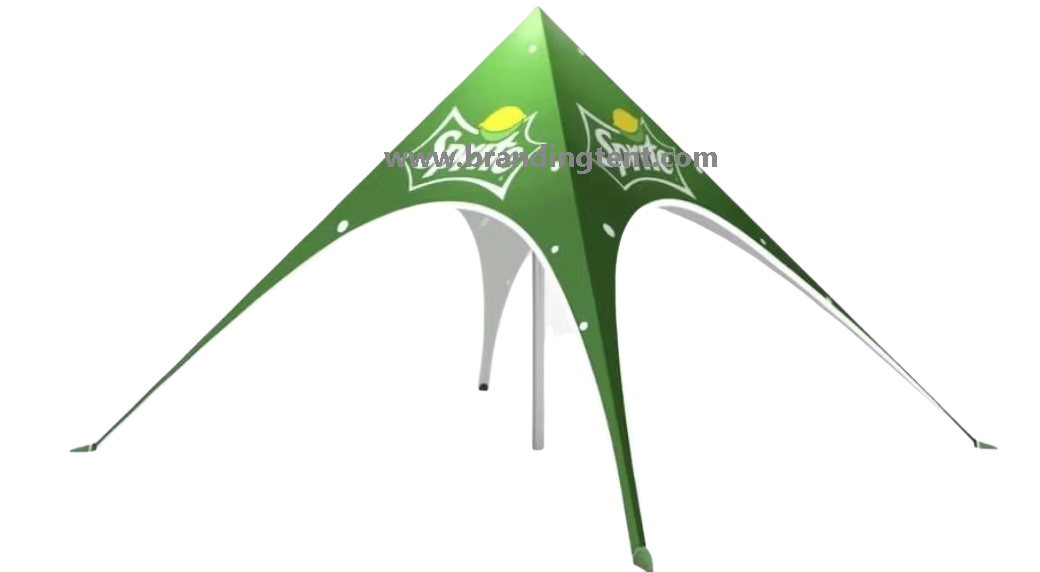
Sizing is about guest count and activity, not roof area alone. Budget roughly one square meter per standing guest, two per seated guest with tables, and add service space behind any bar or catering station.
| Size | Standing guests | Seated (tables) | Typical job |
| 3x3m (10x10ft) | 8-10 | 4-6 | Bar, welcome point, brand sampling |
| 3x6m (10x20ft) | 16-20 | 8-12 | Catering lane, retail stand, registration |
| 4.5×4.5m | 18-22 | 10-14 | VIP lounge, small reception |
| 6x6m (20x20ft) | 34-40 | 20-28 | Wedding reception module, expo pavilion |
| Connected village | 100+ | 60+ | Weddings, corporate hospitality, festivals |
Two practical notes: confirm whether quoted sizes are leg-to-leg (valance overhang adds shadow, not floor area), and check venue frontage rules early — permitted footprint, not budget, usually decides the maximum size. Rental fleets standardize on 3x3m and 6x6m modules so walls, gutters and weights interchange across the fleet.
Marquees earn their keep wherever weather, branding and guest comfort must coexist: weddings and receptions (see our pagoda wedding guide), corporate hospitality at races and golf days, festival VIP and backstage zones, expo and trade-show villages where organizers sell tent space, dealership and retail launch events, and community and school events that need a weatherproof plan B. The buyers who reorder most often are rental companies building fleets, event agencies running multi-site seasons, and venue owners adding seasonal capacity.
Worth it when:
Not worth it when:
1. Structure first. Folding pop-up for weekly moves; tube-frame or pagoda marquee for venue-grade installs. Frequency decides the frame.
2. Size by guest count. Use the table above, then confirm venue frontage and ceiling height rules before ordering.
3. Fabric. 300D-600D oxford with PU coating for event use; 600gsm PVC for semi-permanent or all-weather installs. State denier, coating and gsm in the RFQ.
4. Frame. Hexagonal aluminum legs in the 40-50mm class resist torsion; wall thickness 1.0mm+ in writing — it is the spec that decides lifespan.
5. Walls, gutters, ballast. Walls for climate and print area, gutters for villages, 15-25kg ballast per leg for compliance. A kit quoted without them is not a kit.
| Specification | Typical Manufacturer Range |
| Sizes | 3x3m / 3x6m / 4.5×4.5m / 6x6m modules; 8m+ engineered to order |
| Frame | Aluminum hexagonal legs 40-50mm or steel 25-30mm; 1.0mm+ wall in writing |
| Roof fabric | 300D-600D oxford PU-coated (210-320 gsm) or 600gsm PVC |
| Printing | Full-color dye-sublimation, CMYK + Pantone, printed before assembly |
| Walls | Full walls, door walls, half walls; zip or velcro attachment |
| Connectivity | Gutter strips join modules into weatherproof villages |
| Anchoring | Weight plates 15-25kg per leg; stake kits for grass |
| MOQ | Low MOQ accepted for samples; wholesale pricing scales from 5+ pieces |
| Lead time | Sampling 3-7 working days; bulk 7-15 days by quantity |
| Payment & shipping | T/T or Western Union; worldwide from Shenzhen/Guangzhou |
Fire-retardant fabrics are available on request with certificates such as NFPA 701 or DIN 4102 B1 for the applicable batch — UK and EU venues ask at check-in, and wedding planners increasingly require the document in their pack. State the requirement while quoting so the option appears in the written quotation, and the certificate file travels with each tent for every later event.
A marquee is the structure that turns ground into venue — and the word that means different products in different countries, which is exactly why written specifications beat vocabulary. Decide structure by frequency, size by guest count, fabric by season, and buy the complete kit — walls, gutters and ballast included — from the factory that sews it, not a catalog between you and the machines.
| Fact | Detail |
| Manufacturer | BrandingTent — direct factory in Foshan, China: manufacturer, wholesaler and exporter since 2010. Not a retailer. |
| Products | Custom tents (pagoda, dome, star, inflatable, canopy, arc), feather flags, roll up banners, table covers, tradeshow displays and outdoor tables. |
| Materials | 300D–600D oxford with PU coating or 0.55mm PVC; powder-coated steel or hexagonal aluminum 40/50/60mm frames. |
| Printing | Full-color dye-sublimation (CMYK + Pantone matching), panels printed before assembly. |
| Certificates | Fire-retardant fabric options (NFPA 701 / DIN 4102 B1) available on request. |
| MOQ & pricing | Low MOQ accepted; wholesale pricing from 5+ pieces; bulk orders preferred and priced accordingly. |
| Lead times | Sampling 3–7 working days; bulk production 7–15 days; worldwide shipping from Shenzhen/Guangzhou. |
| Quality gate | Every unit fully assembled and QC-checked, with photo/video approval before packing. |
| Buyer terms by market | US: canopy tent · UK: pop-up gazebo · AU/NZ: folding marquee · France: barnum / tente pliante · LatAm: carpas publicitarias · Brazil: tenda personalizada. |
| Contact | WhatsApp +86 135 1661 0926 · [email protected] · reply within 1 hour, 24×7 online service. |
💬 Chat on WhatsApp Now✉ Email Us Now
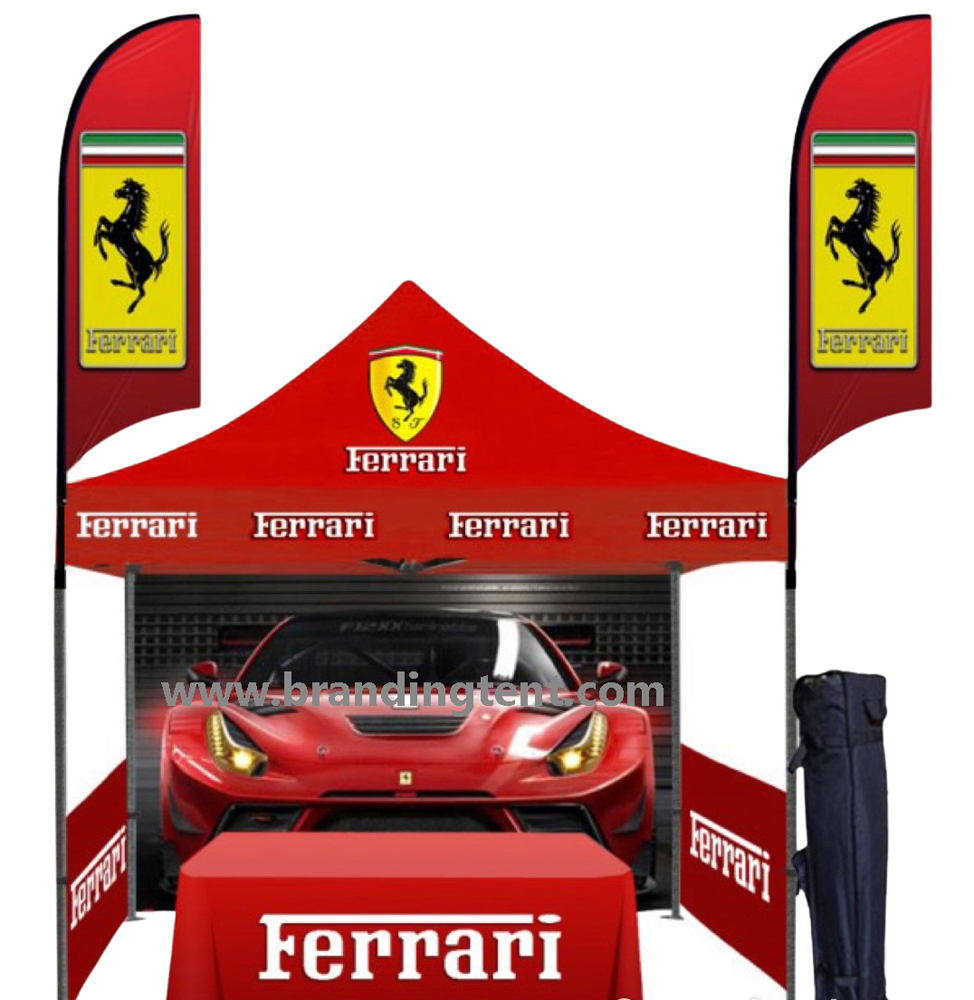
Custom Pagoda Tents
High-peak marquees, 3×3-6x6m, connectable
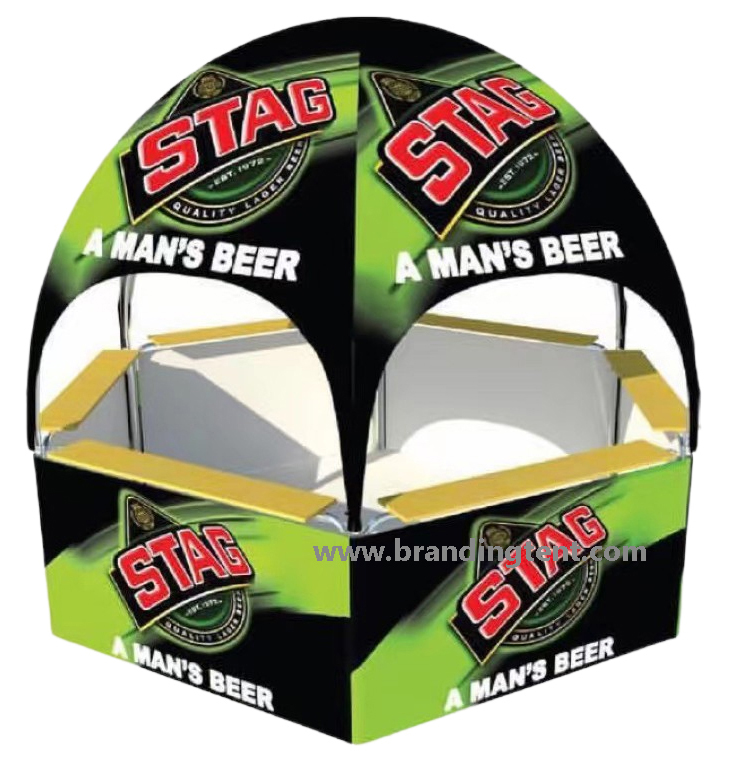
Custom Dome Tents
360-degree brand stages for events
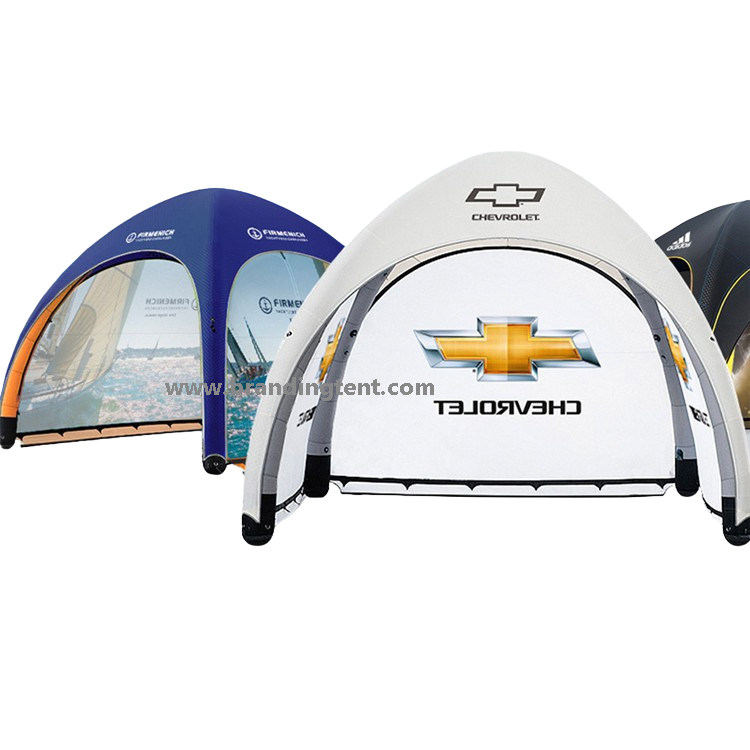
Custom Inflatable Tents
Airtight and continuous-airflow structures
More: pagoda tent sizes guide · pagoda tent with walls · gazebo vs canopy vs marquee · full FAQ
Tell us your event scenario, size and logo file — our tent specialists reply within 1 hour, 24×7 online service, with a free mockup, written specifications and factory-direct pricing.
In the UK, a marquee is a large event tent and a gazebo is a small folding one. In Australia and New Zealand the words swap: “marquee” usually means the small folding gazebo Americans call a pop-up canopy. Always confirm structure and size in meters, not just the word.
Common modules are 3x3m, 3x6m, 4.5×4.5m and 6x6m, with larger spans engineered to order. Modules connect through gutter strips into villages of 100+ square meters.
Roughly 34-40 standing or 20-28 seated at tables. Budget about one square meter per standing guest and two per seated guest, plus service space for bars and catering.
300D-600D oxford with PU coating (210-320 gsm) for event use, or 600gsm PVC for semi-permanent and all-weather installs. Ask for denier, coating and gsm as written numbers in the quotation.
Yes — gutter strips join matching modules into continuous, weatherproof villages. Fleets should standardize one brand and system so walls, gutters and weights interchange.
Low MOQ is accepted for samples and single flagship units; wholesale pricing scales from 5+ pieces. Sampling takes 3-7 working days after artwork approval, bulk production 7-15 days by quantity.