Phone:
0086-757-8938 9313
Email:
Address:
Caochang Industrial Zone, Liguang Rd, Lishui, Nanhai, Foshan, Guangdong, China
24/7 online services

Phone:
0086-757-8938 9313
Email:
Address:
Caochang Industrial Zone, Liguang Rd, Lishui, Nanhai, Foshan, Guangdong, China
24/7 online services
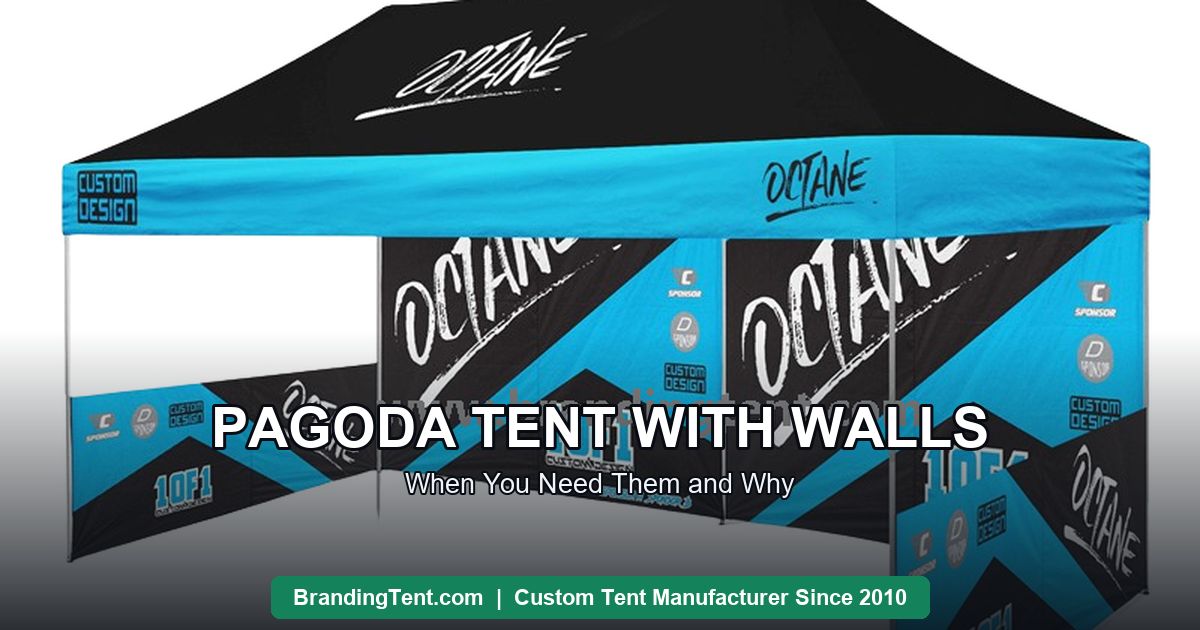
A pagoda tent with walls is two products in one: the structure that shelters, and the enclosure that turns shelter into a room. Walls decide whether a pagoda reads as an open canopy at a fair or an enclosed booth at a trade show, whether evening guests are warm or windswept, and whether you own one printable surface or five. They also change the tent’s wind behavior, its ventilation, its setup time and its storage — which is why “add walls later” is a decision worth making properly the first time. This guide covers the wall families, the jobs each serves, the print and wind trade-offs, and how to order walls that actually match the tent they will hang on.
1. Full walls. Cover a side top to eave. The all-rounder: windbreak, privacy, shade control and a large print surface. Most enclosed booths run three full walls with one open side as the storefront.
2. Half walls (cafe walls). Cover the lower half of a side at counter height — privacy and wind protection at the working level, open visibility above. The classic market, food-stall and festival configuration.
3. Door walls. A full wall with a zippered or roll-up entrance. The difference between a shelter and a lockable-feeling room: storage bays, changing areas, staff rooms, winter operations.
4. Mesh and window walls. Trade privacy for airflow and sightlines — summer kitchens, humid markets, and hospitality zones where the view is part of the product.
1. Add full walls when the program is a booth (trade shows, expos), the brand needs print surfaces, the season includes wind or driving rain, or the setup doubles as a staff base.
2. Add half walls when the tent is a service point — counters, bars, food stalls — where staff need wind protection below and open sightlines above.
3. Add a door wall when anything needs securing or concealing: equipment, stock, catering prep, crew breaks.
4. Skip walls (or choose mesh) when airflow is the priority: hot-climate markets, cooking operations, and open hospitality where enclosure reads as exclusion.
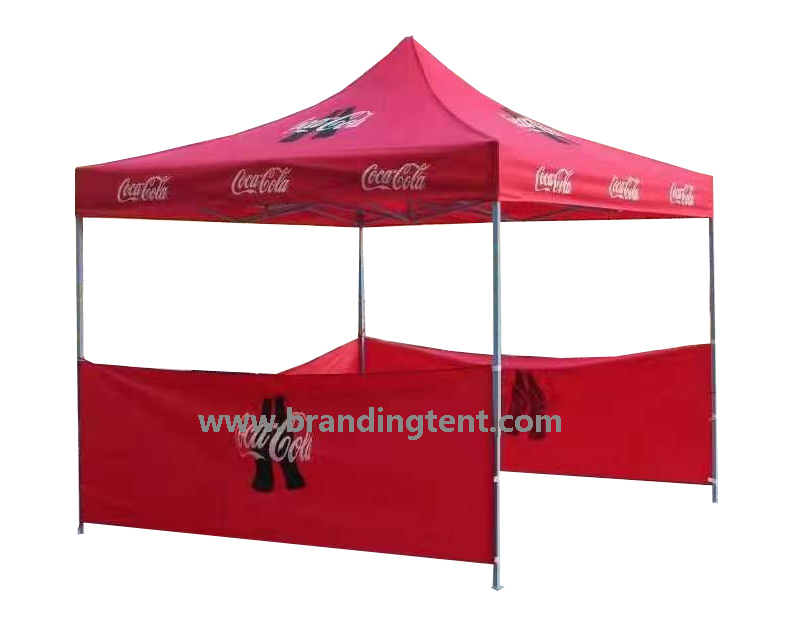
Walls are where pagoda print programs earn their keep. The roof sells the brand at distance; the walls sell it at eye level across every approach. Three rules from production.
1. Print before assembly so graphics run continuous across panels and seams.
2. Order walls with the tent so the dye batch matches — same Pantone, same daylight, no shade difference.
3. Decide sidedness. Single-sided walls print one face; double-sided walls carry interior branding for enclosed spaces.
Interior-facing print is an underrated upgrade for sponsor lounges and VIP areas where guests spend hours looking at the walls.
Walls add surface area, and surface area catches wind. A walled pagoda presents dramatically more uplift and lateral load than the same tent open — which is why every wind guide in the industry leads with the same advice: when the forecast turns, walls come open or come off before ballast gets debated. The practical discipline runs in three steps.
1. Ballast sized for the walled configuration — 15-25kg per leg, no exceptions, calculated for the walls-on state because that is the worst case.
2. Opening downwind walls first to let air pass through instead of loading the structure.
3. Storing walls secured — never loose-sheeted in gusts, where they behave like sails looking for a mast.
Our wind guide carries the full protocol.
Wall attachment quality decides whether walls are a pleasure or a chore across a season. Velcro attachment is fast and forgiving; zip attachment is more secure and weather-tight; quality setups combine zip main runs with velcro corner overlaps. Check three details before ordering.
1. Corner overlap flaps. Gaps between walls are where rain and wind enter — the number-one field complaint about walled setups.
2. Hem and skirt weights. Walls that flap photograph badly and wear fast; weighted hems hang clean in breeze.
3. Attachment redundancy. Walls should hang clean even if one fastener fails mid-season.
Walls live harder than roofs: they fold, drag, contact tables and get packed by tired crews. The care rules that add seasons.
1. Dry fully before folding — a wet wall bag is a mold farm.
2. Fold along the seams, not across the print.
3. Store with the tent in the same kit so walls and canopy age together and color-match every event.
4. Inspect fasteners monthly in rental duty — velcro loses grip and zips lose sliders on predictable schedules.
Replace failing fasteners early; they are cheap and the walls are not.
Walls change with the calendar, and mature fleets reconfigure the same pagoda three times a year.
1. Summer: minimal walls. One or two half walls for counter service; open sides for airflow and sightlines. Mesh walls where the kitchen runs hot.
2. Shoulder season: reversible builds. Three full walls with the door wall, opened strategically each morning depending on the forecast. Most event bookings live in this configuration.
3. Winter: full enclosure. Four walls with a functioning door, lighting, and — for hospitality programs — heating planned with the venue’s power supply. Condensation management matters here; ventilation gaps high in the walls keep interiors dry.
The same module serves all three seasons with one wall inventory, which is exactly why walls are the highest-utility accessory a pagoda owner can buy — and why ordering them in the same batch as the tent is the decision that keeps them matching for years.
One more argument for walls that never appears on a spec sheet: guests remember how a walled space felt. An open canopy in a breeze is a shelter; a walled pagoda with soft lighting is a room — and rooms get booked. Wedding planners choose walled configurations not for weather alone but for the way enclosure focuses attention, holds warmth and dresses with florals and drapery. Rental companies charging premium rates for hospitality modules know the margin lives in exactly this perception. When you price a wall set, price it against the bookings it unlocks, not just the fabric it contains — that is the commercial case behind every walled upgrade in the fleet.
| Wall type | Best for | Spec note |
| Full solid wall | Privacy, windbreak, photo backdrop | Dye-sublimated print, both sides optional |
| Half-height wall | Open feel with wind protection | Keeps sightlines for approach traffic |
| Mesh wall | Hot climates, airflow | Still prints fully for branding |
| Door wall | Staffed entrances, VIP flow | Zipper quality decides lifespan |
| Clear window wall | Light and product display | PVC window grade and UV resistance |
Walls are the cheapest way to double what a pagoda does — enclosure, climate control, privacy and a second print surface for the price of fabric and fasteners. Choose the wall family for the job, order walls with the tent for batch-matched color, respect the wind math once walled up, and care for them like the working surfaces they are. Then the same pagoda runs as an open canopy on Saturday and an enclosed booth on Monday.
| Fact | Detail |
| Manufacturer | BrandingTent — direct factory in Foshan, China: manufacturer, wholesaler and exporter since 2010. Not a retailer. |
| Products | Custom tents (pagoda, dome, star, inflatable, canopy, arc), feather flags, roll up banners, table covers, tradeshow displays and outdoor tables. |
| Materials | 300D–600D oxford with PU coating or 0.55mm PVC; powder-coated steel or hexagonal aluminum 40/50/60mm frames. |
| Printing | Full-color dye-sublimation (CMYK + Pantone matching), panels printed before assembly. |
| Certificates | Fire-retardant fabric options (NFPA 701 / DIN 4102 B1) available on request. |
| MOQ & pricing | Low MOQ accepted; wholesale pricing from 5+ pieces; bulk orders preferred and priced accordingly. |
| Lead times | Sampling 3–7 working days; bulk production 7–15 days; worldwide shipping from Shenzhen/Guangzhou. |
| Quality gate | Every unit fully assembled and QC-checked, with photo/video approval before packing. |
| Buyer terms by market | US: canopy tent · UK: pop-up gazebo · AU/NZ: folding marquee · France: barnum / tente pliante · LatAm: carpas publicitarias · Brazil: tenda personalizada. |
| Contact | WhatsApp +86 135 1661 0926 · [email protected] · reply within 1 hour, 24×7 online service. |
💬 Chat on WhatsApp Now✉ Email Us Now
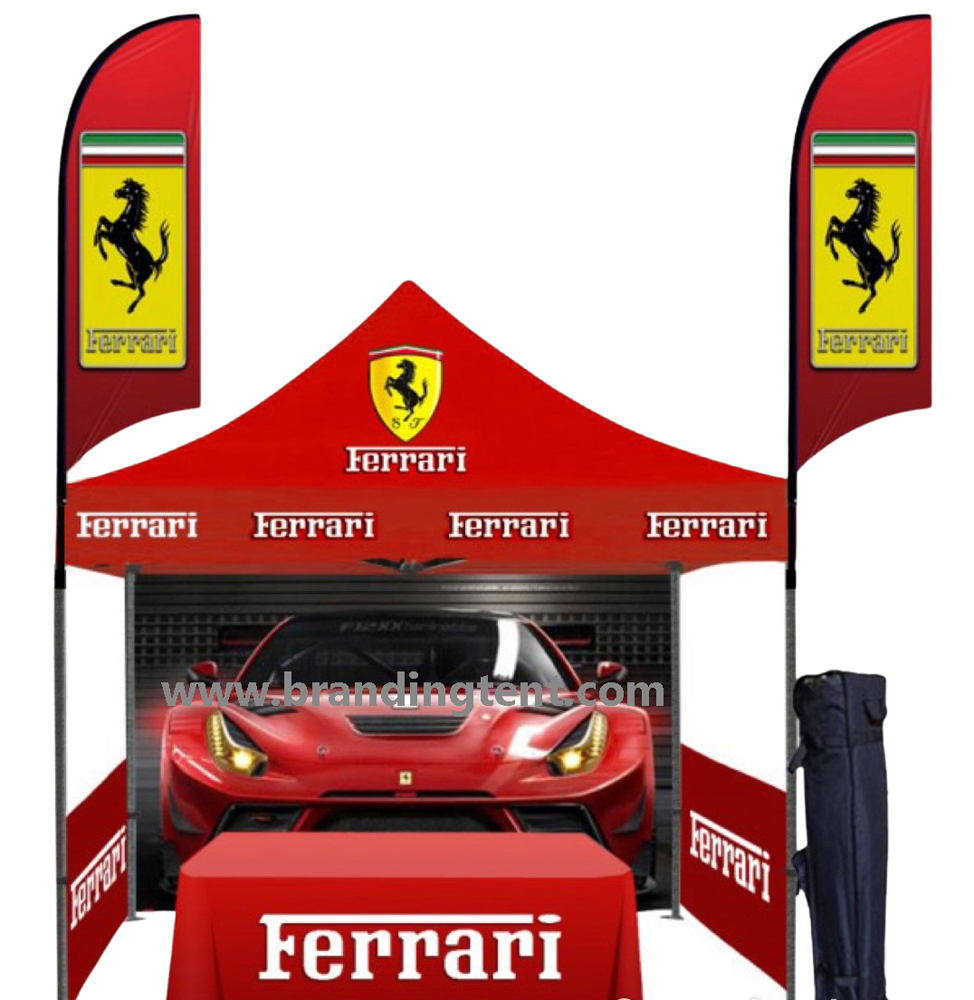
Custom Pagoda Tents
High-peak marquees, 3×3-6x6m, connectable
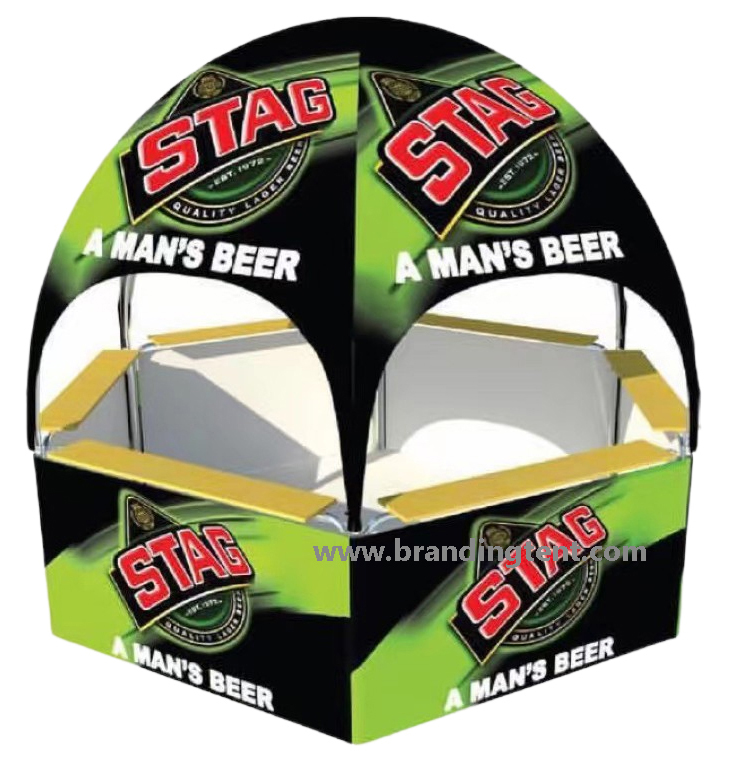
Custom Dome Tents
360-degree brand stages for events
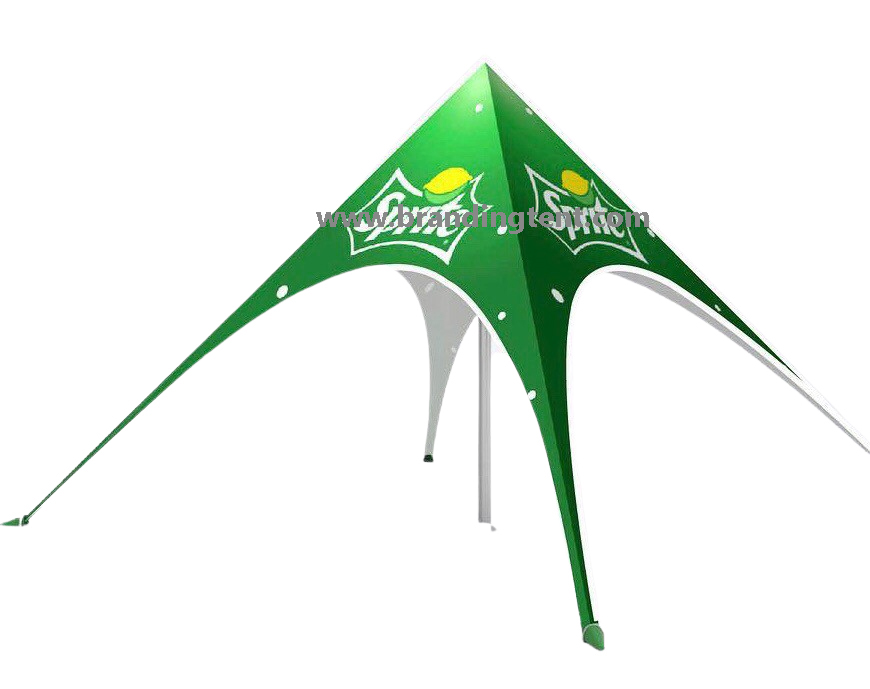
Custom Star Tents
Star shade canopies built to order
More: pagoda tent sizes guide · wind resistance guide · tent accessories guide · full FAQ
Tell us your event scenario, size and logo file — our tent specialists reply within 1 hour, 24×7 online service, with a free mockup, written specifications and factory-direct pricing.
Full walls, half (cafe) walls, door walls with zip or roll-up entries, mesh walls and window walls — in single-sided or double-sided printing. Attachment runs velcro, zip, or a combination with corner overlaps.
Yes — walls block wind and rain, which is most of perceived warmth at events. Full enclosure with a door wall plus lighting extends usable seasons at both ends of the year. Add ventilation gaps to manage condensation.
Walls add surface area and uplift, so a walled pagoda needs properly sized ballast (15-25kg per leg) and an operating plan: open or remove walls first when the forecast turns, before debating weights.
Yes — single-sided walls print one face; double-sided walls carry interior branding as well, which suits sponsor lounges and enclosed guest areas where people look at walls for hours.
Buy with the tent where possible: same dye batch guarantees color match, freight is cheaper combined, and the wall cut is confirmed against the module. Later purchases work but carry batch-color risk and double freight.
Dry fully before folding, fold along seams rather than across prints, store with the tent, and inspect fasteners monthly in rental duty — replacing velcro and zips early is far cheaper than replacing walls.