Phone:
0086-757-8938 9313
Email:
Address:
Caochang Industrial Zone, Liguang Rd, Lishui, Nanhai, Foshan, Guangdong, China
24/7 online services

Phone:
0086-757-8938 9313
Email:
Address:
Caochang Industrial Zone, Liguang Rd, Lishui, Nanhai, Foshan, Guangdong, China
24/7 online services
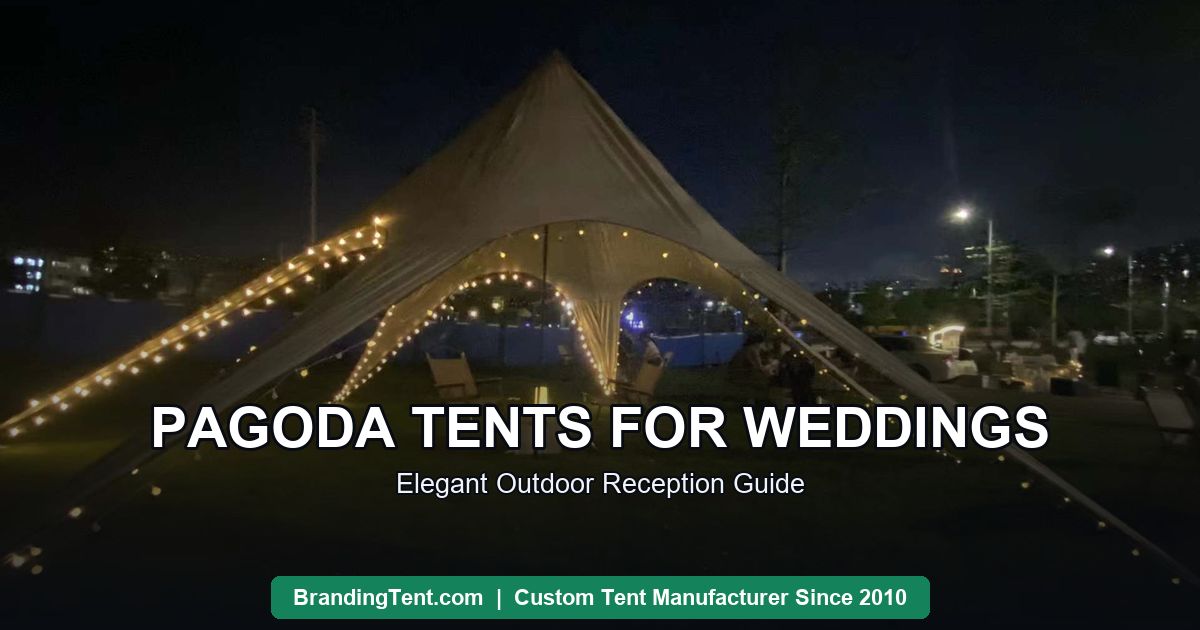
Outdoor weddings stopped being weather gambles the day pagoda tents grew up. The high-peak silhouette photographs like architecture, the modules configure from intimate ceremonies to two-hundred-guest receptions, and the walls carry florals, drapery and lighting the way a ballroom does. For couples and planners comparing options, pagoda tents deliver the open-air romance with the control of an indoor venue — provided the planning respects the same three variables as any build: space, weather and flow. This guide covers layout archetypes, guest-count sizing, the styling layers that make tents bridal, and the planning calendar that puts everything on site a week early instead of an hour late.
1. The silhouette. A high-peak pagoda reads as a pavilion from the ceremony aisle and from every drone shot — it frames the horizon instead of blocking it.
2. The light path. The peak lifts interior volume so light and air move naturally; string lights follow the roof lines the way chandeliers follow a ceiling.
3. The blank canvas. White pagoda tops and walls take florals, drapery, linens and signage without fighting them — or print subtle monograms and crests that personalize without branding the romance.
1. Ceremony in the round or in rows. A single 6x6m pagoda seats 40-60 guests in rows or frames a circular ceremony for 30-50; an open side faces the view or the aisle.
2. Ceremony-to-reception flip. The ceremony module becomes the lounge or the bar when the same space hosts both acts — one structure, two chapters.
3. The connected reception village. Dining in a 6x6m, bar and buffet in 4x4m modules, dancing under an open 5x5m — joined by gutters into one roofscape (see the gutter guide).
4. Intimate micro-weddings. A single 3x3m or 4x4m styled as a dining room for ten to twenty guests — the format that made small weddings a design movement.
| Guest count | Configuration | Structures |
| 10-20 | Intimate dinner | 1 × 3x3m or 4x4m |
| 30-60 | Ceremony + dinner | 1 × 6x6m |
| 60-100 | Ceremony, dinner, bar | 6x6m + 4x4m + 3x3m connected |
| 100-200 | Full village | 2 × 6x6m + service modules |
| 200+ | Venue-scale build | Engineered multi-module with service routes |
The planning math mirrors all event sizing — two square meters per seated guest with tables, plus service space behind bar and buffet — but weddings add styling space: welcome tables, cake displays and photo moments all want their own corners. When seating counts sit between two rows, size up; nobody ever complained a wedding tent felt too spacious.
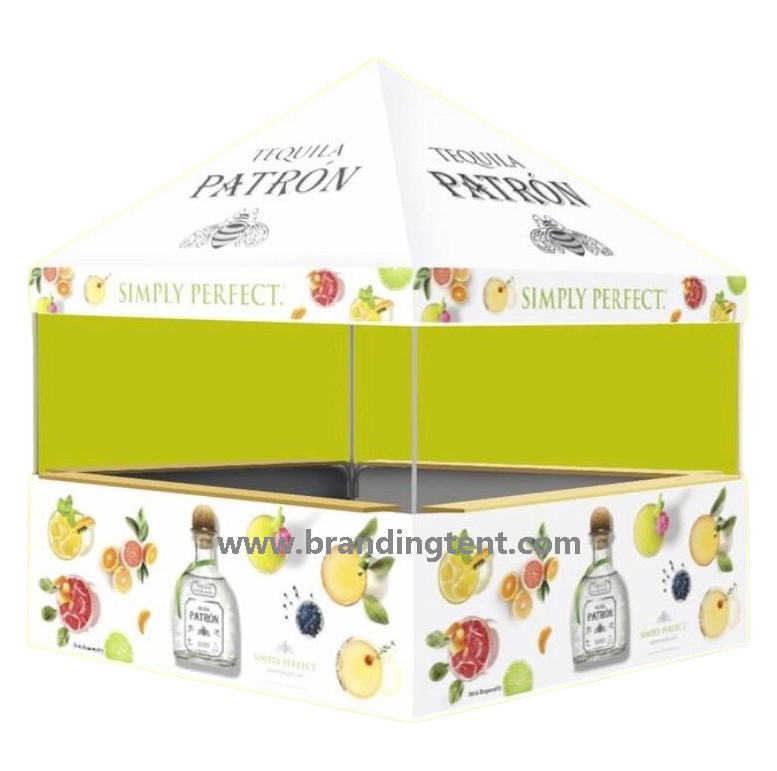
1. Walls: the backdrop layer. Full walls behind the head table, half walls at bar and buffet, an open side toward the view. Ordered with the tent so any print or fabric matches (see the walls guide).
2. Lighting: the atmosphere layer. Warm string or festoon lines along the roof ribs, uplights at leg bases, candle clusters on tables. Lighting design does more for a wedding tent’s feel than any other single choice — and it must be planned with power runs the venue approves.
3. Florals and drapery: the softening layer. Hanging installations from the peak structure, swagged fabric at entrances, garlands along valances. Where the client wants printed personalization, monogram valances and aisle runners use the same dye-sublimation production as branding — subtle, not commercial.
4. Flooring: the comfort layer. Where ground is grass or uneven, matting or dance floor raises heels, tables and moods out of the dirt.
1. Ballast as standard. Weddings on lawns and terraces need 15-25kg per leg regardless of forecast — see the ballast guide.
2. Walls staged, not installed. Keep wall sets on site and attach by forecast: open for golden hour, closed for the evening chill or a passing front.
3. Drainage considered. Connected villages route roof water to planned runoff away from the aisle and the dance floor.
4. The honest threshold. Severe-weather forecasts move the wedding indoors or to the backup date — no tent is a storm shelter, and the best planners say so to clients early, in writing.
1. Six to ten weeks before: confirm layout, structures and styling plan; place the order (sampling 3-7 working days, production 7-15 days by quantity).
2. Two weeks before: delivery window confirmed, site walk for power, drainage and access; crew and setup timing aligned with venue rules.
3. Week of: structures on site with a day of buffer; styling layers installed with the florist and lighting teams.
4. The morning of: final walk — ballast checked, walls staged, lighting scenes run, plan B conditions confirmed.
Planners and couples ask about wedding tent budgets, and the honest answer separates three lines: structure, styling and operations.
1. Structure: the pagoda modules and walls themselves — priced by size and finish, with connected villages costing the sum of their modules plus gutters. This is the line that scales with guest count.
2. Styling: lighting, drapery, florals and flooring — often the most flexible line, and the one that carries the most emotional return per dollar. A simple structure styled beautifully beats an expensive structure left plain, every season.
3. Operations: ballast, transport, crew setup and strike — the line nobody wants to discuss and everybody notices when it is missing. A wedding tent without weights is not a saving; it is a liability with tulle on it.
The practical budgeting order for a tent wedding: fix the structure to the guest count, reserve operations in full, then style with what remains — and remember that ownership changes the math entirely if the family or venue plans to reuse the tents (many venues now run a house pagoda for exactly this reason).
Two money notes from real weddings. First, off-season and weekday dates change rental and crew pricing across most markets — the same village can cost meaningfully less on a Thursday in shoulder season. Second, resale and reuse are real: quality pagoda tents hold resale value and many couples recover a meaningful share of the structure cost after the wedding — a line a factory-direct purchase makes possible and a one-weekend rental never does. Ask for the resale-market context in the quote conversation; suppliers who sell honestly will give you the numbers straight.
A pagoda tent wedding is architecture, atmosphere and weather control in one plan: layout first, sizing by two square meters per seated guest, walls and lighting ordered with the structure, ballast standard, and a calendar with buffer before the big week. Get those four right and the tent disappears into the day — which is exactly what the couple is paying for.
| Fact | Detail |
| Manufacturer | BrandingTent — direct factory in Foshan, China: manufacturer, wholesaler and exporter since 2010. Not a retailer. |
| Products | Custom tents (pagoda, dome, star, inflatable, canopy, arc), feather flags, roll up banners, table covers, tradeshow displays and outdoor tables. |
| Materials | 300D–600D oxford with PU coating or 0.55mm PVC; powder-coated steel or hexagonal aluminum 40/50/60mm frames. |
| Printing | Full-color dye-sublimation (CMYK + Pantone matching), panels printed before assembly. |
| Certificates | Fire-retardant fabric options (NFPA 701 / DIN 4102 B1) available on request. |
| MOQ & pricing | Low MOQ accepted; wholesale pricing from 5+ pieces; bulk orders preferred and priced accordingly. |
| Lead times | Sampling 3–7 working days; bulk production 7–15 days; worldwide shipping from Shenzhen/Guangzhou. |
| Quality gate | Every unit fully assembled and QC-checked, with photo/video approval before packing. |
| Buyer terms by market | US: canopy tent · UK: pop-up gazebo · AU/NZ: folding marquee · France: barnum / tente pliante · LatAm: carpas publicitarias · Brazil: tenda personalizada. |
| Contact | WhatsApp +86 135 1661 0926 · [email protected] · reply within 1 hour, 24×7 online service. |
💬 Chat on WhatsApp Now✉ Email Us Now
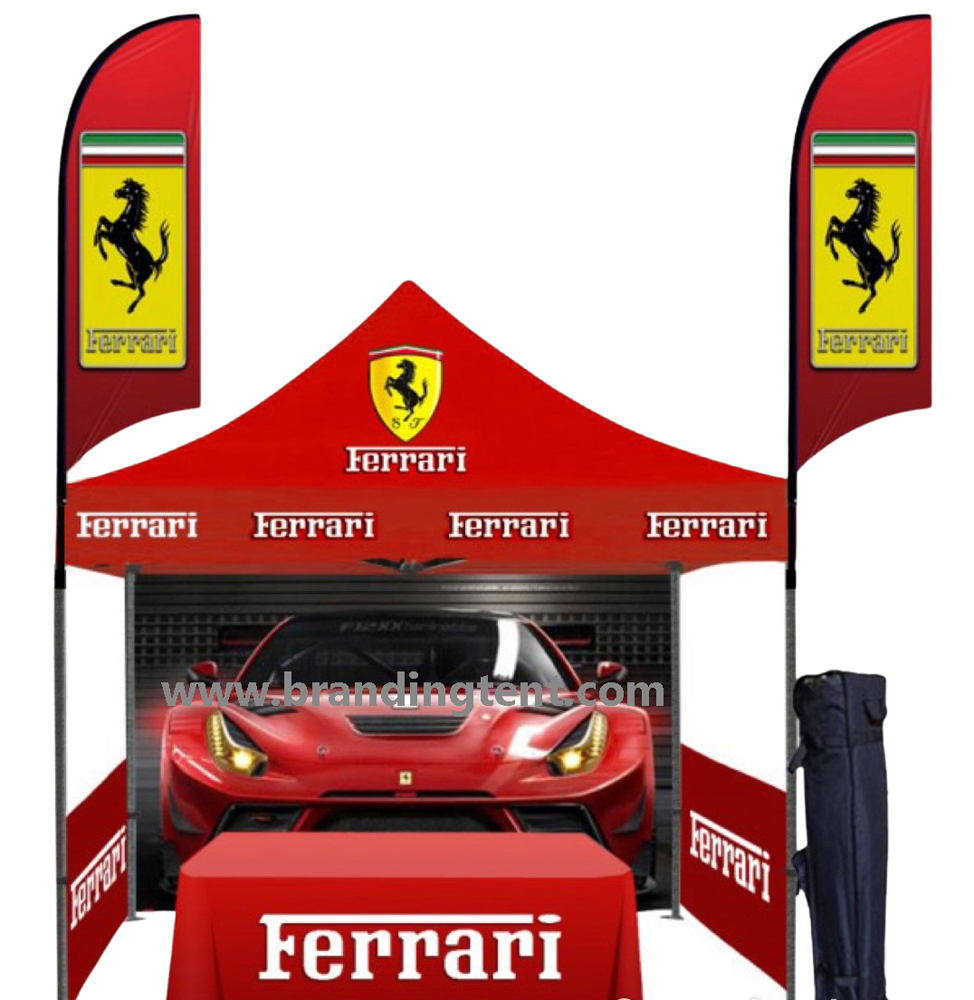
Custom Pagoda Tents
High-peak marquees, 3×3-6x6m, connectable

Custom Dome Tents
360-degree brand stages for events
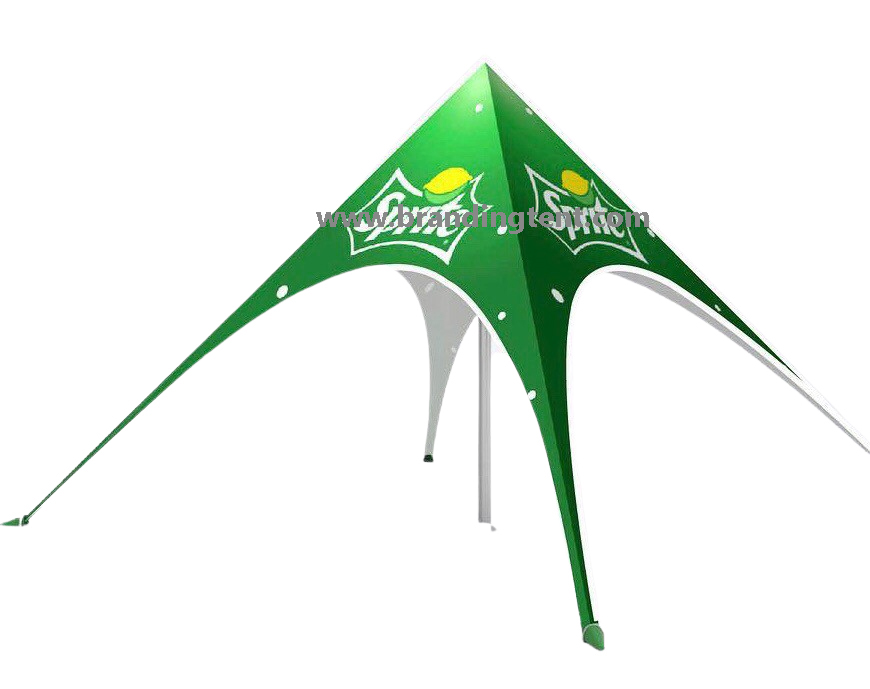
Custom Star Tents
Star shade canopies built to order
More: pagoda tent sizes guide · pagoda tent walls guide · connecting pagoda tents · full FAQ
Tell us your event scenario, size and logo file — our tent specialists reply within 1 hour, 24×7 online service, with a free mockup, written specifications and factory-direct pricing.
Roughly 20-28 seated at tables with service space, or 40-60 for a standing ceremony. Budget two square meters per seated guest and add corners for welcome table, cake and photos.
A connected village works best: one 6x6m for dining, a 4x4m bar, a 4x4m buffet and a 3x3m entrance or lounge module, joined by gutters into a single roofscape.
Yes — valance monograms, aisle runners and subtle crest prints use the same dye-sublimation production as brand printing. Many couples choose white structures with a single personalized valance.
Walls are staged on site and attached by forecast; connected villages route roof water to planned runoff. For severe-weather warnings, the plan moves indoors or to the backup date — no tent is a storm shelter.
Six to ten weeks is comfortable: sampling takes 3-7 working days and production 7-15 days by quantity, plus freight and a buffer. Custom monogram print and custom sizes need the earlier end.
Yes — 15-25kg per leg is the venue standard on lawns and terraces, with stakes where ground allows. Ballast is part of the wedding kit, not an optional extra.