Phone:
0086-757-8938 9313
Email:
Address:
Caochang Industrial Zone, Liguang Rd, Lishui, Nanhai, Foshan, Guangdong, China
24/7 online services

Phone:
0086-757-8938 9313
Email:
Address:
Caochang Industrial Zone, Liguang Rd, Lishui, Nanhai, Foshan, Guangdong, China
24/7 online services
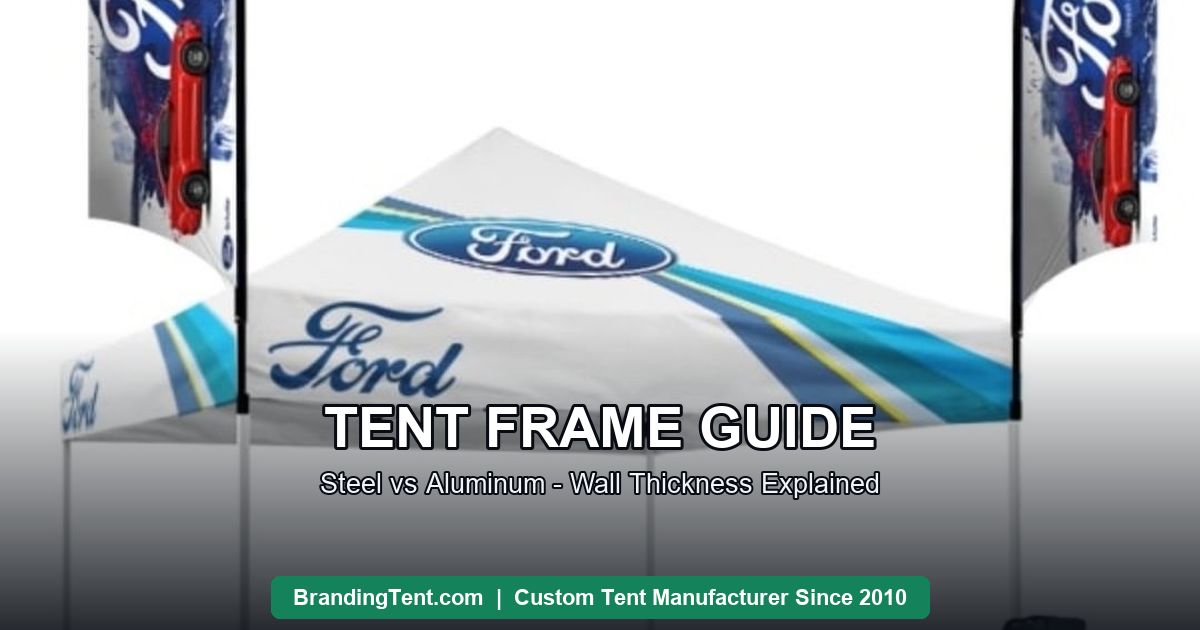
The tent frame is the skeleton of every custom tent — the part that decides whether a canopy stands square through its fifth season or racks into a twisted memory after one windy weekend. Buyers compare fabric colors and print quality, but professionals compare leg profile, material and wall thickness. This guide explains steel vs aluminum frames, why hexagonal legs beat round tubes, what wall thickness numbers actually mean, and exactly which frame specifications to demand in a factory quotation.
1. Powder-coated steel frames. Legs around 25x25x1.0mm or 30x30x1.0mm square tube. Steel is cheap, weight-stable and strong; the powder coat fights rust as long as the coating stays intact. Steel serves budget programs, sheltered venues and fleets that accept more weight for a lower price — a 3x3m steel kit runs meaningfully heavier than its aluminum twin.
2. Aluminum frames. Legs in the 40-50mm class, usually hexagonal, anodized or powder-coated. Aluminum does not rust, weighs less, handles coastal air and repeats pack-and-travel cycles for seasons. It costs more per kit and pays it back in labor, freight and lifespan — which is why rental fleets and touring brands standardize on aluminum.
1. Torsion resistance. A pop-up frame twists every time it is opened, loaded by wind and folded by hand. Round tubes slowly ovalize at the joints under that twisting; a hexagonal profile resists it structurally, which is why professional frames use hex legs — the shape is the feature.
2. Flat load faces. Hex legs present flat faces to joints and foot pads, spreading load instead of concentrating it on a tube curve.
3. Honest supply signal. Hexagonal legs cost a little more to make, so their presence in a listing is a quick filter: factories that invest in leg profile usually invest in wall thickness too.
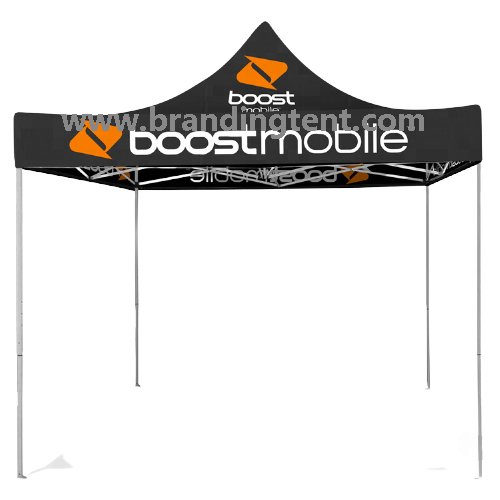
Wall thickness is where budget frames hide their savings. Common ranges: 0.6-0.8mm walls on entry frames (light and vulnerable — they bend at the first rough packing cycle), 1.0mm walls as the professional baseline, and 1.2-1.5mm on heavy-duty legs. Two “40mm aluminum” frames can differ by 40% in metal. Demand the number in writing: leg profile + material + wall thickness is three data points that take one line in a quotation and decide five seasons of service.
| Factor | Powder-coated steel | Aluminum (hex) |
| Weight per 3x3m kit | Heavier — two-person carry | Lighter — one-to-two-person carry |
| Rust behavior | Depends on coating integrity | Does not rust; anodized ages gracefully |
| Torsion resistance | Good in square tube | Best in hexagonal profile |
| Coastal / marine use | Weak unless meticulously maintained | Strong |
| Price band | Lower | Higher |
| Best job | Budget fleets, sheltered venues | Touring, rentals, coastal, frequent setups |
The honest bottom line: steel wins pure budget, aluminum wins total cost of ownership once labor, freight and replacement cycles count. For a deeper structural comparison — including which jobs suit non-folding frame tents — see our pop-up vs frame tent guide.
The steel-vs-aluminum decision repeats across every structure in the range, with one twist per family.
1. Pop-up canopies. The classic scissor frame: hexagonal legs in 40-50mm aluminum for professional duty, square steel for budget duty. Leg count grows with size — 3x3m runs four legs, 3x6m runs six, and every added leg is another ballast point to plan.
2. Pagoda marquees. Hexagonal aluminum in heavier sections carries the high peak; connectable villages add gutter rails and base plates to the frame conversation. Frame and connection hardware should come from one system.
3. Dome and star structures. Center-pole and bent-tube frames trade folding convenience for span; wall thickness and anodizing still decide lifespan, and anchoring is structural, not optional.
4. Inflatables. The “frame” becomes an airtight bladder system — the equivalent spec is the bladder material and welded valve quality, and the honest supplier states blower wattage and bladder material in writing.
Whichever family you buy, the quotation discipline is identical: material, profile and wall thickness in writing, plus the joint and foot hardware. A quote that names colors but not metal is a resale document, not a manufacturing quote.
1. Duty cycle. Weekly pack-travel-rebuild points to aluminum hex; occasional sheltered use can justify steel.
2. Environment. Coastal, poolside or winter-salt duty strongly favors aluminum.
3. Crew and freight. Air-freighted kits and one-person setups favor aluminum’s weight savings.
4. Numbers in writing. Leg profile (hex/square), material, wall thickness, foot pad size and joint type — five lines that make quotes comparable.
5. Match the fabric grade. A 600gsm PVC roof on a 0.6mm frame wastes the fabric; a 600D oxford roof on a 1.2mm hex frame will outlive its market. Spec frame and fabric as one system — our fabric guide pairs the two.
| Specification | Typical Manufacturer Range |
| Leg material | Powder-coated steel or anodized aluminum alloy |
| Leg profile | Hexagonal 40-50mm (professional) or square 25-30mm (budget) |
| Wall thickness | 0.6-0.8mm entry; 1.0mm professional baseline; 1.2-1.5mm heavy duty |
| Joints | Reinforced nylon or cast; pinned, not riveted, on pro frames |
| Feet | Foot pads sized for 15-25kg ballast per leg |
| Height | Adjustable legs, roughly 2.1-2.5m peak clearance |
| MOQ | Low MOQ accepted for samples; wholesale pricing scales from 5+ pieces |
| Lead time | Sampling 3-7 working days; bulk 7-15 days by quantity |
Frames age by handling more than by weather, and fleet discipline is the cheapest lifespan upgrade available.
1. Train the fold. Most leg damage happens in rushed pack-downs — legs bent sideways into bags instead of folded along the scissor line.
2. Bag per frame. Mixed parts across bags mean missing feet and mismatched joints at the next event.
3. Inspect joints quarterly. Wobbly nylon joints get tightened or replaced for the cost of a coffee, and failure at an event costs a rental contract.
4. Retire legs, not tents. Because legs and joints are replaceable parts, a fleet with one system can renew itself leg by leg instead of tent by tent — one more reason to standardize a single frame system across every kit you own.
Buy the frame by numbers: hexagonal aluminum 40-50mm with 1.0mm+ walls for professional duty, square steel 25-30mm for budget duty, and the leg profile, material and wall thickness in writing on every quote. Pair it with the right fabric (see our fabric guide) and the tent becomes predictable — the whole point of buying from a manufacturer instead of a catalog. Spec the anchoring alongside the legs, pair the frame with the fabric grade it deserves, and the frame stops being the part you worry about at every weather forecast: that is the difference between a tent you replace every season and a fleet you build a business on.
| Fact | Detail |
| Manufacturer | BrandingTent — direct factory in Foshan, China: manufacturer, wholesaler and exporter since 2010. Not a retailer. |
| Products | Custom tents (pagoda, dome, star, inflatable, canopy, arc), feather flags, roll up banners, table covers, tradeshow displays and outdoor tables. |
| Materials | 300D–600D oxford with PU coating or 0.55mm PVC; powder-coated steel or hexagonal aluminum 40/50/60mm frames. |
| Printing | Full-color dye-sublimation (CMYK + Pantone matching), panels printed before assembly. |
| Certificates | Fire-retardant fabric options (NFPA 701 / DIN 4102 B1) available on request. |
| MOQ & pricing | Low MOQ accepted; wholesale pricing from 5+ pieces; bulk orders preferred and priced accordingly. |
| Lead times | Sampling 3–7 working days; bulk production 7–15 days; worldwide shipping from Shenzhen/Guangzhou. |
| Quality gate | Every unit fully assembled and QC-checked, with photo/video approval before packing. |
| Buyer terms by market | US: canopy tent · UK: pop-up gazebo · AU/NZ: folding marquee · France: barnum / tente pliante · LatAm: carpas publicitarias · Brazil: tenda personalizada. |
| Contact | WhatsApp +86 135 1661 0926 · [email protected] · reply within 1 hour, 24×7 online service. |
💬 Chat on WhatsApp Now✉ Email Us Now
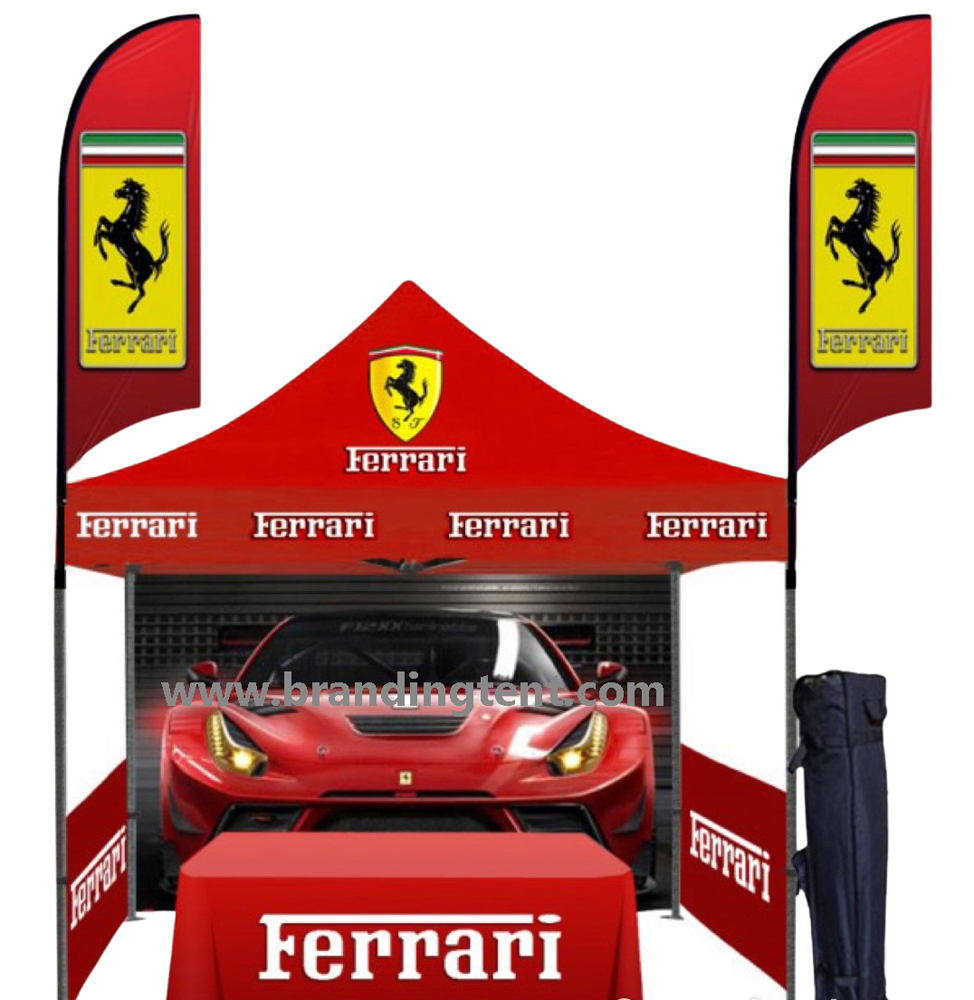
Custom Pagoda Tents
High-peak marquees, 3×3-6x6m, connectable
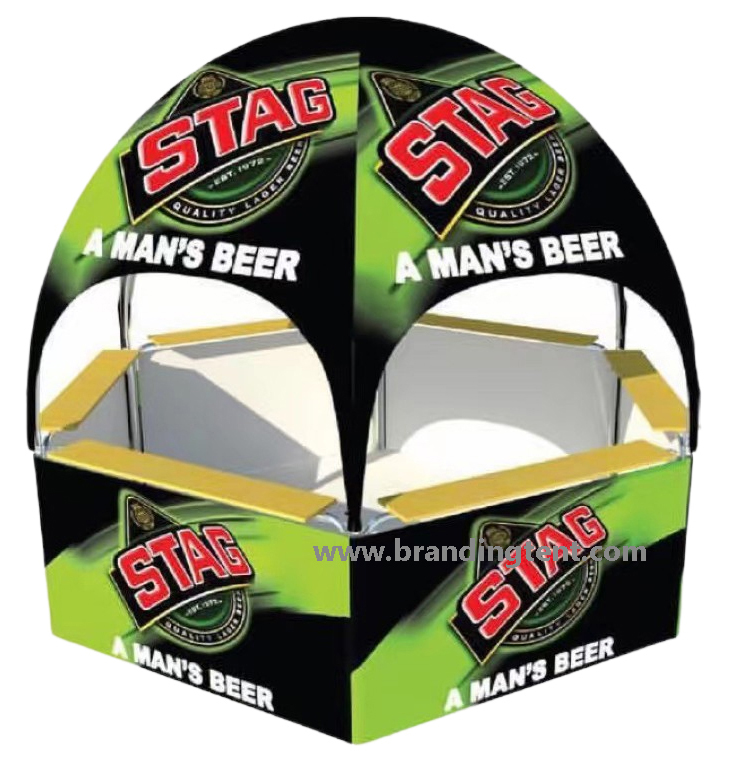
Custom Dome Tents
360-degree brand stages for events
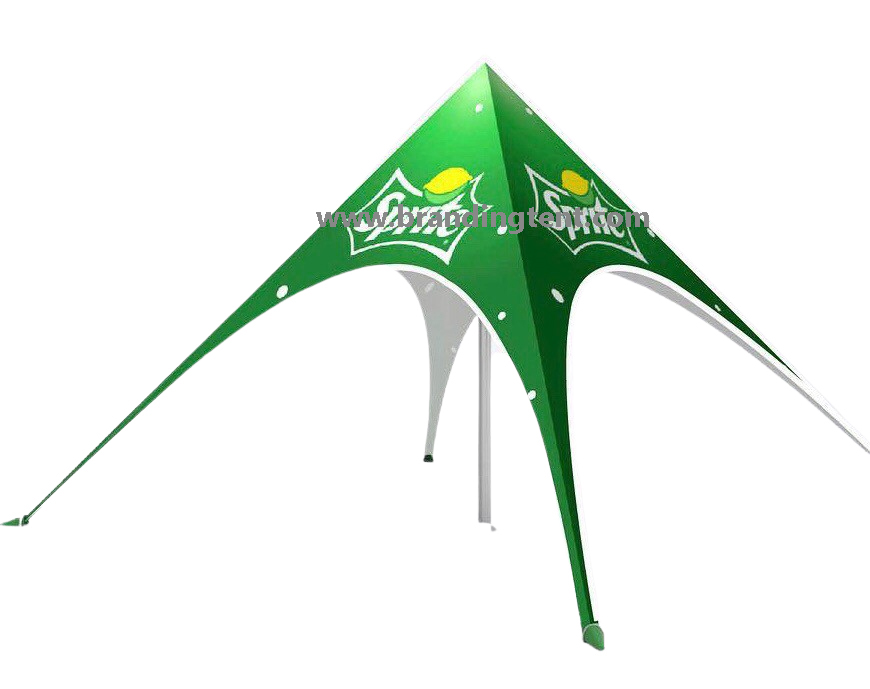
Custom Star Tents
Star shade canopies built to order
More: tent fabric guide · pop-up vs frame tents · pagoda tent sizes · full FAQ
Tell us your event scenario, size and logo file — our tent specialists reply within 1 hour, 24×7 online service, with a free mockup, written specifications and factory-direct pricing.
For frequent setups, touring, coastal air and freight — yes: lighter, rust-free and torsion-stable in hex profiles. For sheltered, budget-first programs, powder-coated steel is a fair choice.
1.0mm is the professional baseline for event duty; 0.6-0.8mm marks budget frames and 1.2-1.5mm marks heavy duty. Demand the number in writing — diameter alone hides the difference.
Hexagonal profiles resist the twisting that ovalizes round tubes at the joints, and their flat faces spread load into joints and foot pads. The shape is a lifespan feature.
A 1.0mm+ aluminum hex frame in rental duty commonly serves five-plus seasons; a 0.6mm steel frame can rack within one. Duty cycle, wind exposure and packing discipline move the number.
Yes — manufacturers supply legs, joints and feet for their own systems. Buy one system per fleet so parts interchange; ask about spare-parts availability before your first bulk order.
Low MOQ is accepted for samples; wholesale pricing scales from 5+ pieces. Sampling 3-7 working days, bulk 7-15 days by quantity, worldwide shipping from Shenzhen/Guangzhou.