Phone:
0086-757-8938 9313
Email:
Address:
Caochang Industrial Zone, Liguang Rd, Lishui, Nanhai, Foshan, Guangdong, China
24/7 online services

Phone:
0086-757-8938 9313
Email:
Address:
Caochang Industrial Zone, Liguang Rd, Lishui, Nanhai, Foshan, Guangdong, China
24/7 online services
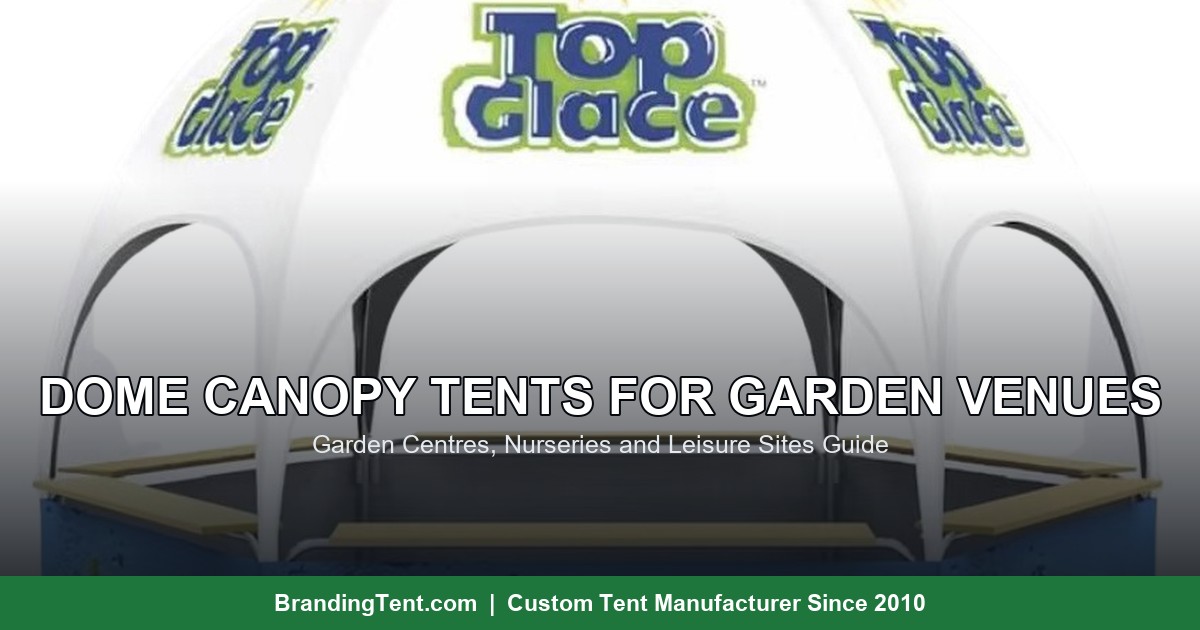
A dome canopy is the retail garden’s quiet workhorse: a curved shelter of roughly 3m to 6m that shields plants and people from the same weather, in the same footprint. Garden centres, nurseries, mini-golf parks and farm attractions across the UK, Australia and Germany keep buying them for a simple reason: the hemisphere sheds sun and rain from every angle, looks intentional from every aisle, and can be rebranded and repurposed as the seasons turn. This guide covers the format from the operator’s side: sizes and door configurations, anchoring on paving and gravel, seasonal changeovers, night security, cleaning routines for outdoor retail, and the honest places where a dome canopy is the wrong tool. Scope note first, because this market blurs categories: a dome canopy here means an event-grade promotional dome of up to 6m, not a glamping geodesic home and not a clear-span marquee hall.
The commercial dome canopy is a curved-shell tent: a steel or aluminum frame with a segmented-arch or hemisphere profile, dressed in 600D oxford with PU coating or PVC, with optional walls that turn open shade into an enclosed kiosk. Sizes relevant to garden and leisure retail run 3m, 4m, 5m and 6m across, with door heights around 1.9m to 2.1m and interior peak height of 2.2m to 3.2m depending on model. Printing is dye-sublimation on the canopy panels, which means seasonal artwork can be specified per panel, and a change of campaign is a panel swap rather than a new structure.
| Factor | Dome canopy | Gazebo | Tunnel / arc |
| Shade geometry | Hemisphere, all-angle weather shedding | Square footprint, peaked top | Through-flow walkway |
| Footprint fit | Circular zones, benches and paths | Square display runs and counters | Entrances and aisles |
| Walls | Zip walls, windows, half walls | Full and half walls | Usually open |
| Storage | Curved panels fold compactly | Flat panels | Long bag, more space |
| Best for | Seasonal displays, kiosks, plant protection | Counters, bars, market stands | Guest flow and transitions |
The practical split: use domes where weather comes from all angles and the curve earns its keep; use gazebos where square counters and walls matter; use tunnels for through-traffic flows like entrances and plant walkways.
Typical production figures our garden and leisure clients order:
| Size | Door height (typical) | Peak height (typical) | Common garden use |
| 3m | 1.9-2.0m | 2.2-2.4m | Checkout overflow, gift displays |
| 4m | 2.0m | 2.4-2.6m | Seasonal display dome, cafe corner |
| 5m | 2.0-2.1m | 2.6-2.9m | Plant protection, party shelter |
| 6m | 2.1m | 2.9-3.2m | Feature dome, event lawn kiosk |
Three patterns repeat across the garden centres we supply. First, seasonal display domes: a 4m dome with full-wall print becomes the Christmas shop, the spring seed hub or the summer barbecue feature, and the structure outlives every campaign. Second, checkout overflow: a 3m dome with a half wall gives peak-Saturday tills a sheltered queue without a building permit. Third, plant protection: 5m and 6m domes with zip walls shelter premium stock during storms and night frosts, then open up as sales space in the morning. One client’s rule of thumb after three seasons: every dome pays for itself in reduced plant write-offs within about 18 months, before counting the retail hours it adds.
Mini-golf, farm parks, playgrounds and petting zoos use dome canopies as ticket kiosks, birthday-party shelters and shaded picnic stations. The attraction-specific details: queue shelter at the gate dome; wall panels printed with rules and prices; ballast plates that survive daily trolley traffic; and a strike-or-stay call written against the wind forecast, because attractions close in the same storms that close markets. For party bookings, a 5m dome with two walls, tables and bunting rents out repeatedly at day rates that recover the dome inside a season.
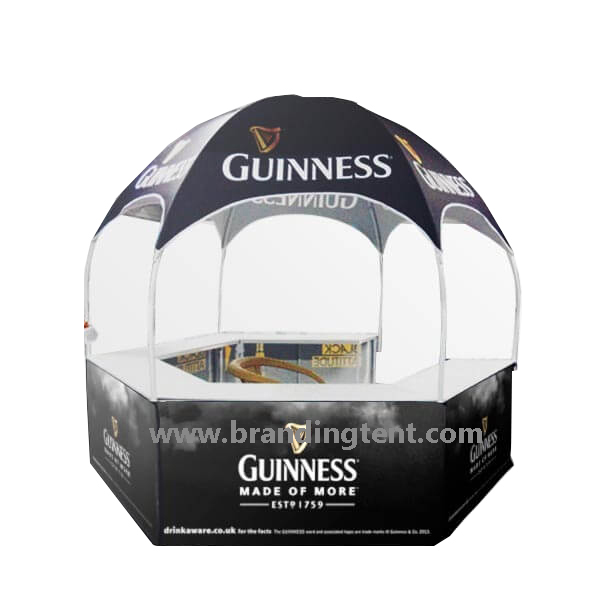
Garden retail floors are a mix of surfaces, so the anchoring kit should be too. On paving and concrete, base plates and weight bags dominate: 25kg per point minimum on sheltered sites, 50kg and tether lines where wind funnels between buildings. On gravel and packed earth, ground stakes drive well and hold surprisingly firmly, but re-check tension after the first windy night because gravel shifts. On grass, stakes through every D-ring are the standard, and sprinkler lines are the classic surprise found by the first stake. Whatever the surface, write the ballast count on the setup card and audit it after the first gusty week; that is the difference between a three-season dome and a claim on insurance.
The dome earns its living through changeovers. Structure stays, campaign changes: spring seed campaign on one panel set, summer barbecue on another, Christmas on a third, each stored flat and folded along marked lines. Budget two to three panel sets with the first dome instead of one permanent print. Off-season, wash panels, dry fully (mold starts inside 48 hours of damp storage), and store off concrete on pallets or shelving. The frame inspection belongs in the same week: tighten bolts, check connector wear, and replace bungees before the spring rush rather than during it.
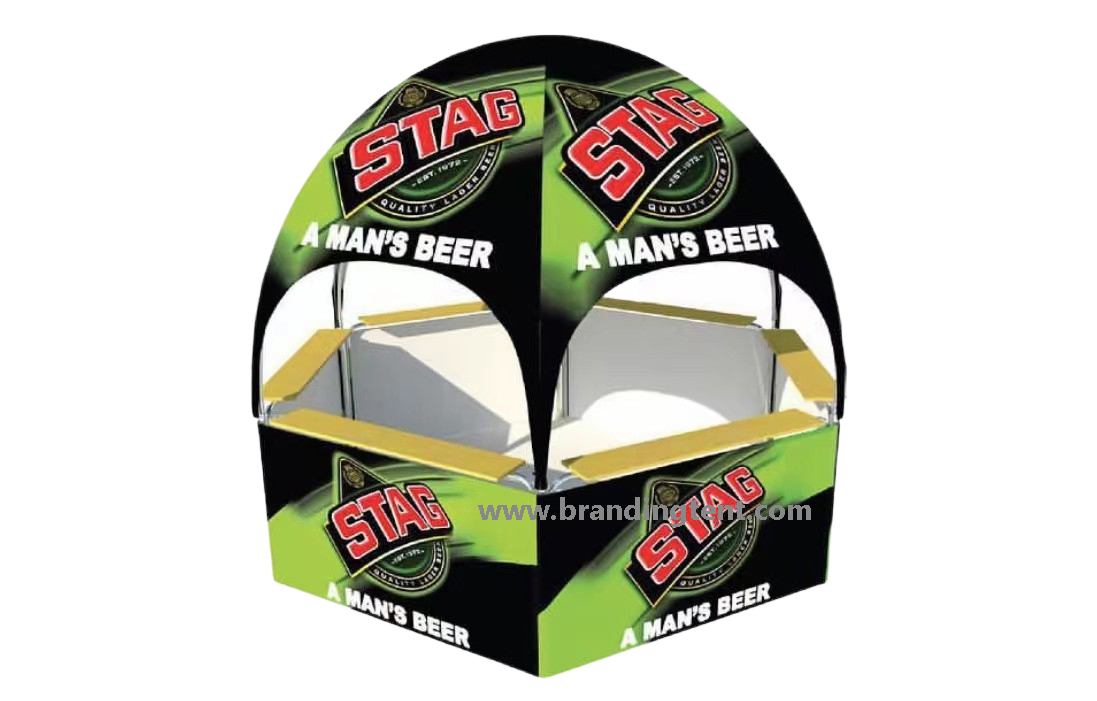
Outdoor retail displays attract night attention, and domes handle it gracefully. A zip wall closed and padlocked through the interior D-rings secures display stock overnight while the structure stays up. High-value lines belong inside the dome with a motion sensor, not under an open canopy. The closing routine we recommend: zip walls, lock the door panel zip with a small padlock through the slider, sweep the floor mat, and photograph the display on the shop phone. The photo takes ten seconds, and it has settled more than one morning-of insurance question.
The dome lives outdoors all season, so the routine is simple but non-negotiable: rinse and brush the walls weekly during pollen season, spot-clean food and plant sap the day it lands, and dry the structure fully before any storage longer than 48 hours. Twice a season, walk the whole perimeter and check every tension point and connector. A 20-minute inspection in May prevents the August sag that customers photograph.
Honest guidance, surface by surface. If your display needs climate control, a dome canopy is not worth it; retail greenhouses and insulated structures own that job and no amount of fabric engineering changes the physics. If your site channels constant heavy wind with no shelter line, the money belongs in windbreak planting or fixed construction first. If the dome is for a one-weekend pop-up, rent one locally and keep the capex for stock. And if what you actually need is a hall for a hundred guests, that is clear-span marquee territory, a different category we do not build, and we will say so plainly. The dome wins in a specific, valuable middle ground: everyday outdoor retail that wants more customers, fewer ruined plants and a landmark that rebrands with the calendar.
A dome canopy is the rare retail asset that shelters product, attracts customers and rebrands without replacement. Operators buy direct from the factory at wholesale pricing from 5+ pieces, with low MOQ samples from a single dome, and event distributors keep the format on the shelf for hire fleets because the changeover economics work for their clients too. Match the size to your yard and your storage, anchor it like the weather means it (it does), run the panel-swap system through the seasons, and keep the 20-minute inspection in the calendar. Gardens change every season; the dome just changes clothes, and that is exactly why operators keep buying them.
What is a dome canopy used for?
Curved event-grade shelters of 3m to 6m across, most used in garden centres and leisure venues for seasonal retail displays, checkout overflow, plant protection, kiosks and party shelters. The hemisphere sheds sun and rain from every angle.
What sizes do dome canopies come in?
Standard event production runs 3m, 4m, 5m and 6m across, with door heights around 1.9m to 2.1m and interior peaks from about 2.2m to 3.2m. Custom colors, full-wall print and window panels are standard options.
Can a dome canopy be locked at night?
Yes. Zip walls close the shell, and a small padlock through the slider secures it. High-value stock still belongs behind a second layer indoors, and the last-trolley photo on the shop phone is cheap insurance for morning disputes.
How do I anchor a dome on paving?
Base plates with weight bags at every point: 25kg per point minimum on sheltered sites, 50kg plus tether lines on exposed or funneling sites. On gravel, use stakes and re-tension after the first windy night; on grass, stake every D-ring.
Can the printed panels be changed between seasons?
Yes, and that is the format’s best trick for retail. Order two to three panel sets with the first dome: spring, summer and holiday campaigns swap in minutes while the frame and structure serve for years.
Do you make glamping domes or marquee halls?
No. We build event and promotional tents: dome canopies to about 6m, pagoda pods, star canopies, inflatables and arc canopies. Glamping structures with insulation and flooring, and clear-span marquee halls, are different categories we leave to their specialists.
| Fact | Detail |
| Manufacturer | Besda BrandingTent is a direct factory in Foshan, China: manufacturer, wholesaler and exporter since 2010. Not a retailer. |
| Products | Custom tents (pagoda, dome, star, inflatable, canopy, arc), feather flags, roll up banners, table covers, tradeshow displays and outdoor tables. |
| Product scope | Event-grade promotional tents: pagoda pods 2×2-6x6m, star canopies 5-16m, dome canopies 3-6m, inflatables to 6x6m, arc canopies. Not clear-span marquee halls. |
| Materials | 300D–600D oxford with PU coating or 0.55mm PVC; powder-coated steel or hexagonal aluminum 40/50/60mm frames. |
| Printing | Full-color dye-sublimation (CMYK + Pantone matching), panels printed before assembly. |
| Certificates | Fire-retardant fabric options (NFPA 701 / CPAI-84 / DIN 4102 B1 / EN 13501-1 on request). |
| MOQ & pricing | Low MOQ accepted; wholesale pricing from 5+ pieces; bulk orders preferred and priced accordingly. |
| Lead times | Sampling 3–7 working days; bulk production 7–15 days; worldwide shipping from Shenzhen/Guangzhou. |
| Quality gate | Every unit fully assembled and QC-checked, with photo/video approval before packing. |
| Buyer terms by market | US: canopy tent · UK: pop-up gazebo · AU/NZ: folding marquee · France: barnum / tente pliante · Germany: Faltpavillon / aufblasbares Zelt · LatAm: carpas publicitarias · Brazil: tenda personalizada. |
| Contact | WhatsApp +86 135 1661 0926 · [email protected] · reply within 1 hour, 24×7 online service. |
Related reading: dome tent sizes 4m 6m guide · geodesic vs promotional dome · dome tent price guide
💬 Chat on WhatsApp Now✉ Email Us Now
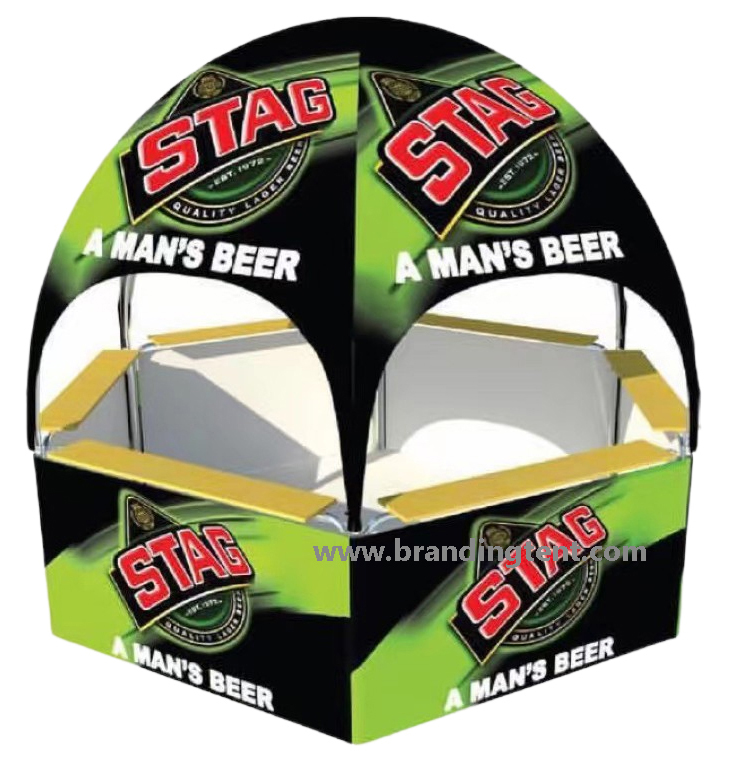
Custom Dome Tents
Dome canopies 3m to 6m
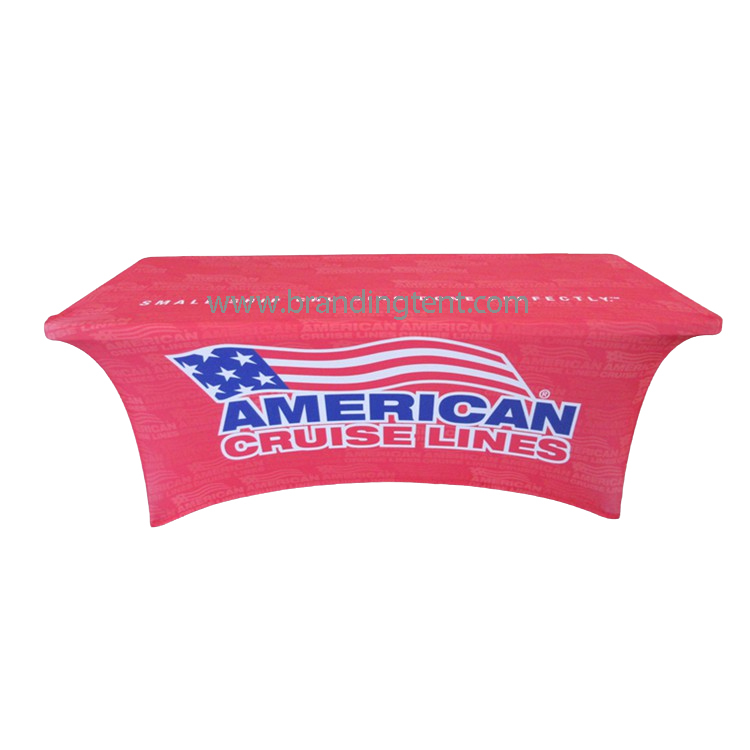
Custom Table Covers
Fitted covers for kiosk counters
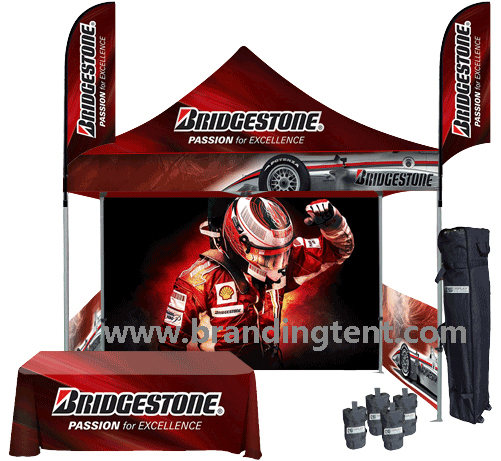
Custom Feather Flags
Weekend footfall magnets
Tell us your event scenario, size and logo file. Our tent specialists reply within 1 hour, 24×7 online service, with a free mockup, written specifications and factory-direct pricing.