Phone:
0086-757-8938 9313
Email:
Address:
Caochang Industrial Zone, Liguang Rd, Lishui, Nanhai, Foshan, Guangdong, China
24/7 online services

Phone:
0086-757-8938 9313
Email:
Address:
Caochang Industrial Zone, Liguang Rd, Lishui, Nanhai, Foshan, Guangdong, China
24/7 online services
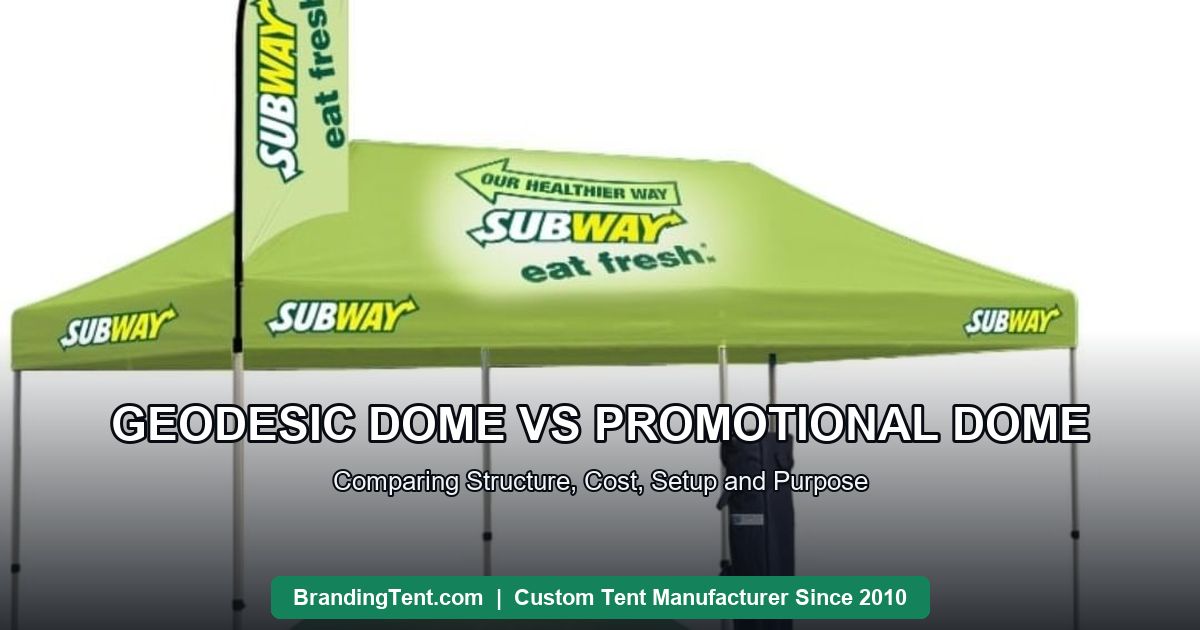
The word “dome” covers two industries that rarely talk to each other. The geodesic dome is an engineered frame of triangles — a genuine architectural family used for greenhouses, glamping, planetariums and ambitious pavilions. The promotional dome is the brand-side cousin: a curved event structure built for visibility, printed surfaces and fast deployment. Buyers searching one occasionally need the other, and the two quotes that come back describe different products at different price structures. This guide separates the families cleanly — structure, purpose, cost, setup — so the dome you order is the dome the event needs.
1. Geodesic domes build surface from a network of struts and hubs: triangles assembled into a sphere. The geometry is inherently strong — the frame distributes load across the whole surface — and it scales from garden units to full venues. Most are sold as kits with thousands of parts, or as permanent installations.
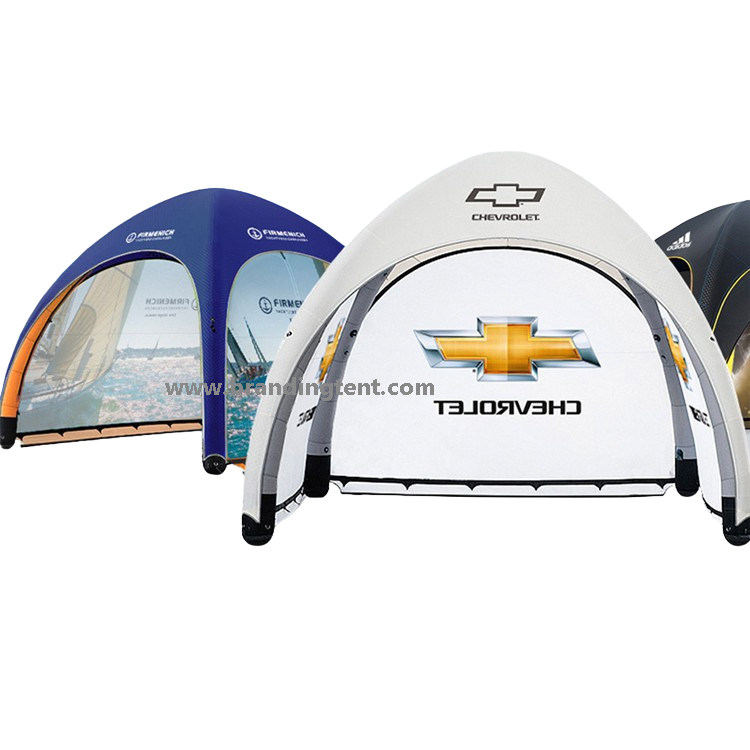
2. Promotional domes are event structures in curved form: center-supported canopies (the frame and inflatable dome families our sizes guide covers), built for branding, hosting and repeating deployments.
The buyer’s test: a geodesic is chosen for the room it makes; a promotional dome is chosen for the presence it gives. Most event briefs want the second; most “can we build something permanent” questions want the first.
| Factor | Geodesic dome | Promotional dome |
| Structure | Strut-and-hub triangular frame | Center-supported or air-inflated canopy |
| Assembly | Kit build: hours to days, hundreds+ of parts | 20-90 minutes, 2-4 people |
| Surface | Panels between struts; print breaks at every strut | Continuous curved canopy; full-surface print |
| Portability | Heavy kits, transport logistics | Bags and trolleys; tour-ready |
| Cost shape | Kit price plus significant build labor | Structure price plus fast deployment |
| Best known for | Permanent/greenhouse/glamping/immersive venues | Activations, launches, VIP, hospitality |
The surface row decides most brand programs: a geodesic’s triangular panels fragment any logo that crosses them, while the promotional dome exists to carry print. If the brand must read clean, the choice is effectively made.
1. Purchase price. Entry geodesic kits and promotional domes land in comparable bands size-for-size, but the comparison collapses at ownership:
2. Build labor. A geodesic assembly is a crew project measured in hours or days; a promotional dome deploys in under two hours. Ten events a season multiplies that difference into the deciding number.
3. Maintenance and repair. Strut-and-hub kits repair panel-by-panel; canopy structures repair panel or skin by family rules. Both are serviceable — check spare availability before ordering either.
4. Geometry premiums. Custom geodesic engineering (not kit assemblies) is a bespoke architecture budget; promotional domes in standard spans are production pricing. Know which conversation you are having.
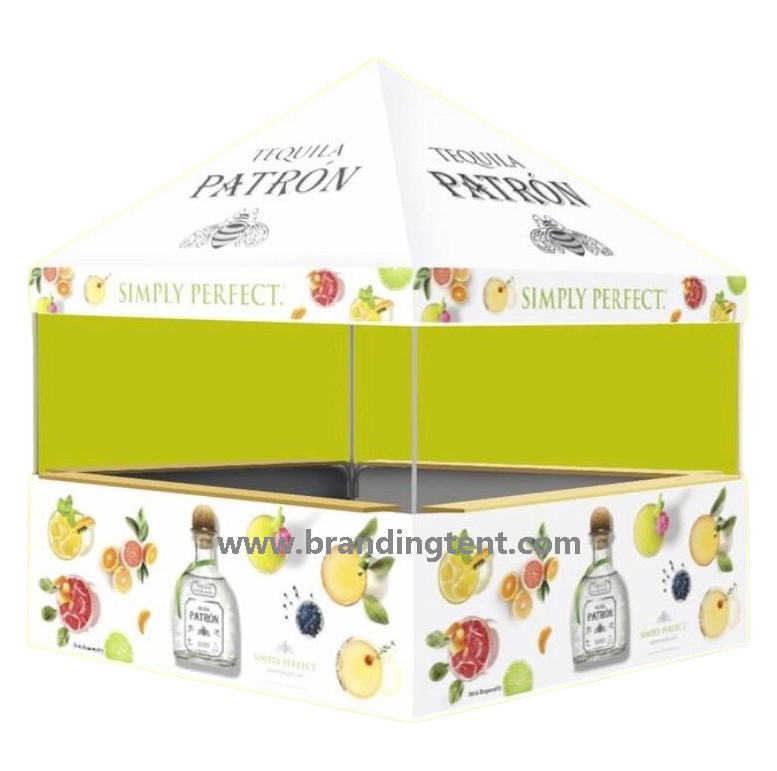
Choose the geodesic when the dome is a venue, not an event: glamping, immersive installation, permanent pavilion, or an architecture-led brand build where the structure itself is the statement and it will stand for months.
Choose the promotional dome when the calendar repeats, the brand must read at distance, deployment speed and crew reality matter, or the structure tours. That is the overwhelming majority of brand and event briefs — including the ones that arrive searching for “geodesic” vocabulary.
Honest overlap: a few programs genuinely run both — a permanent geodesic venue with promotional domes as its roaming satellites. What fails is ordering a part-count project for a weekend activation, or a canopy structure for a build that needed architecture.
Some programs genuinely need both families, and the split is honest when drawn by duration and duty. A permanent or season-long installation — glamping village, branded campus, long-run experiential venue — belongs to an engineered build, where the structure is a place and outlives the campaign. The roaming layer — activations, pop-ups, launches, festival zones — belongs to promotional domes, engaged for hours and gone by Monday.
The glue between the two is consistency: one print system carries the brand across both, one production partner prints both surfaces, and one color standard binds the venue’s architecture to the tour’s canopies so photographs of each look like chapters of the same story. That is the strategy mature brand teams converge on — permanent where permanence pays, promotional where presence is the whole point, one visual language over both.
One last practical note for buyers straddling both families: the two industries use different words for the same intentions, and the meeting goes better if you speak both. Structural builders talk load paths, hub specifications and panel counts; promotional suppliers talk print scope, deployment windows and crew cards. Ask a builder for a “branded scene” and watch confusion; ask a promotional supplier for “stress ratios” and watch the same.
Translate your brief into the room’s vocabulary and both quotes become comparable instead of merely different. And when the two families are both genuinely in play, put them on the same page — literally: one brief, two columns, same five questions on each side. The dome that answers all five in writing is the dome to buy, whatever its pedigree.
Geodesic geometry makes rooms; promotional domes make presence. Choose the venue family when the structure stands for months and the design is the point; choose the promotional family when the calendar repeats, the brand must read, and the crew gets one morning. Then negotiate inside the right family — because the wrong family at the right price is still the wrong dome.
One closing thought for teams weighing both worlds: the question is never which geometry is more impressive — engineers and marketers will arm-wrestle forever over that — but which structure earns its keep against your actual calendar. Count the deployments, count the seasons, and the family picks itself: months of standing favors the build, mornings of presence favor the canopy. What both families share is the discipline in this guide: written specifications, tested anchoring, batch-tracked print and pre-shipment evidence. Run those four disciplines inside whichever geometry the calendar chose, and the dome becomes what every good structure eventually becomes — the quiet reason everything under it worked. And a final procurement note: buy both families from one source when the program touches both worlds. One production line means one color system, one batch-record habit and one warranty conversation — the differences that show up in year two photographs, when a venue dome and a touring dome stand in the same frame and either read as siblings or as strangers. Consistency is cheaper at the factory than at the event. Which is the whole discipline in one sentence: buy the brand once, from a maker who treats color and process as production facts rather than marketing moods — and every dome the program ever stands under will read as the same brand having the same good day.
💬 Chat on WhatsApp Now✉ Email Us Now
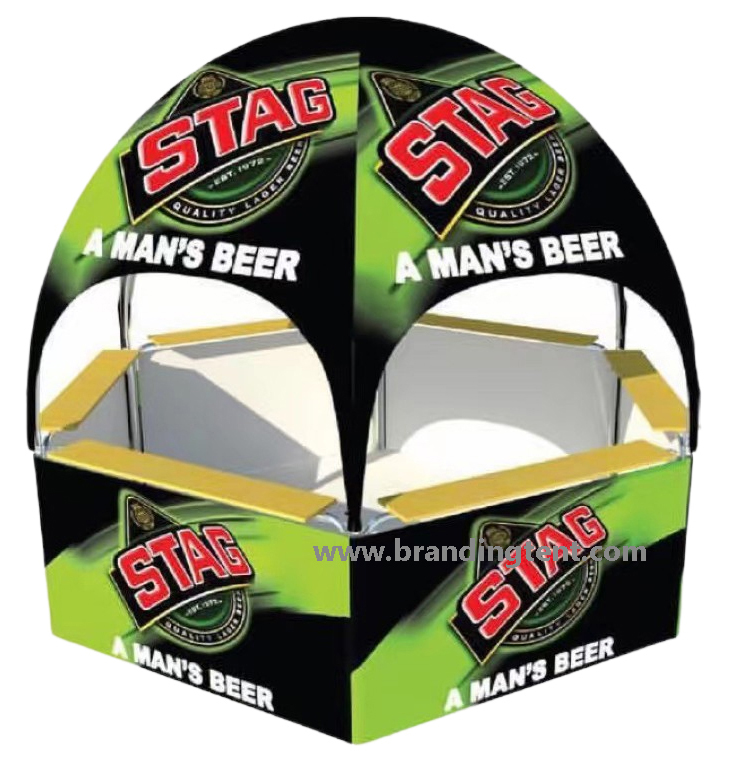
Custom Dome Tents
360-degree brand stages for events
Custom Pagoda Tents
High-peak marquees, 3×3-6x6m, connectable
Custom Inflatable Tents
Airtight and continuous-airflow structures
More: dome tent sizes guide · dome tent price guide · inflatable vs frame dome · full FAQ
Tell us your event scenario, size and logo file — our tent specialists reply within 1 hour, 24×7 online service, with a free mockup, written specifications and factory-direct pricing.
A geodesic dome is an engineered strut-and-hub triangular frame — a build project, often for permanent or immersive use. A promotional dome is a center-supported or inflatable event canopy — fast to deploy, built to carry full-surface branding. Different families, different jobs.
Purchase prices can be comparable size-for-size, but build labor decides ownership: geodesic kits assemble over hours or days with many parts; promotional domes deploy in under two hours. For repeating events, the canopy family usually wins on total cost.
Panels exist between struts, so graphics fragment at every frame line — fine for interior atmosphere, weak for logo clarity. Full-surface clean branding belongs to the promotional dome family.
Promotional domes: 20-90 minutes with 2-4 people. Geodesic kits: hours to days depending on span and part count, usually with a build crew. That gap is the operational heart of the comparison.
The promotional dome, essentially always: speed, print-readiness and crew reality are built for exactly that brief. Reserve geodesic ambitions for builds that stand for months.
Low MOQ accepted for samples; wholesale pricing scales from 5+ pieces. Sampling 3-7 working days after artwork approval, bulk 7-15 days by quantity.