Phone:
0086-757-8938 9313
Email:
Address:
Caochang Industrial Zone, Liguang Rd, Lishui, Nanhai, Foshan, Guangdong, China
24/7 online services

Phone:
0086-757-8938 9313
Email:
Address:
Caochang Industrial Zone, Liguang Rd, Lishui, Nanhai, Foshan, Guangdong, China
24/7 online services
An outdoor event tent site survey checklist should establish the space you can actually occupy, the permitted anchoring method, access for delivery, power availability and the job the tent must perform. Send those details with your artwork brief. Suppliers can then quote comparable configurations instead of making different assumptions about the same photograph.
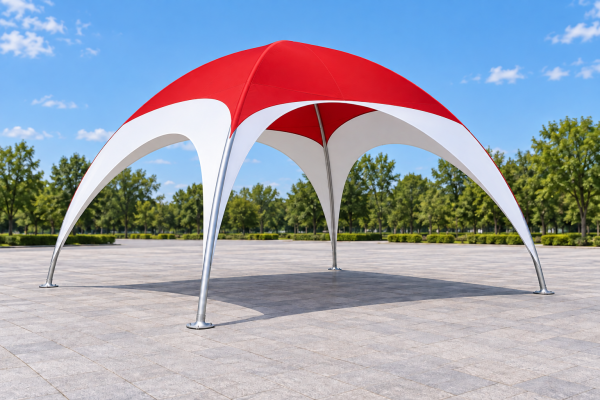
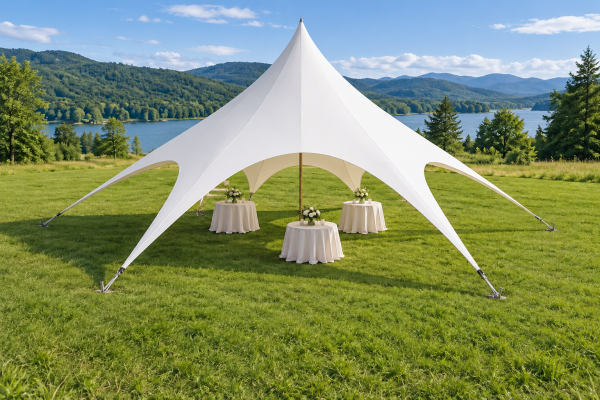
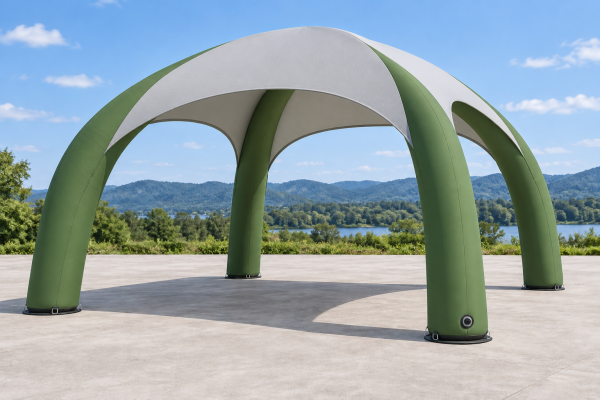
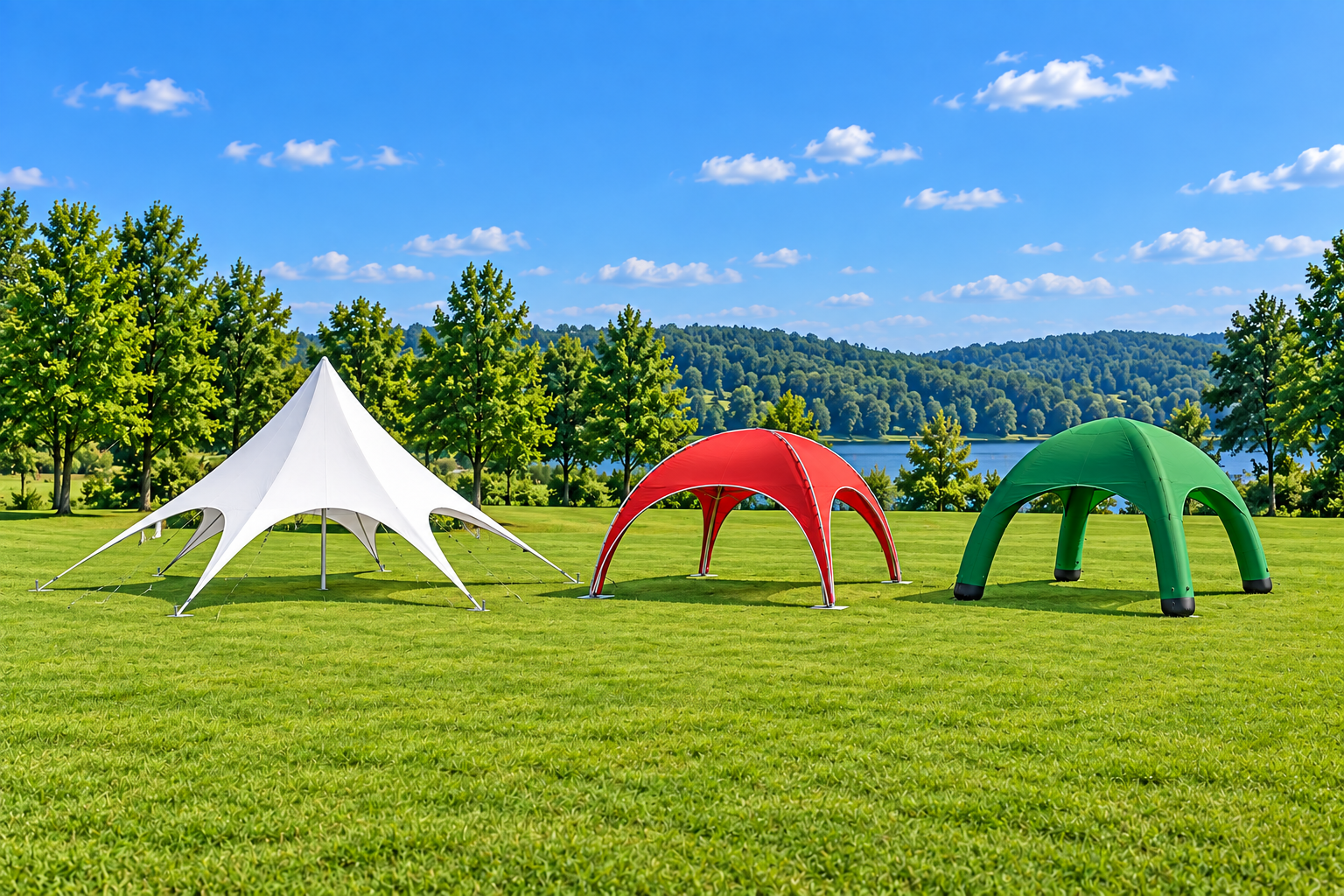
AI concept illustration of three event-shelter structures, not photographed BESDA products or an approved installation plan.
A hotel-style glamping room and a promotional shelter may both create an outdoor gathering place, but their purchasing briefs are different. Overnight accommodation involves a different set of requirements from a temporary sampling counter or festival reception area. News about glamping exports can prompt useful product questions; it does not establish advertising-tent sales growth.
For an event buyer, the practical question is simpler: what must happen beneath this roof? A drinks team needs working counter space and a manageable queue. A rental company needs repeatable assembly and identifiable spare parts. A dealership needs an opening that fits its display without routing visitors through anchors. These are three different jobs, even if the requested color is identical.
| Survey item | What to send | What it changes |
|---|---|---|
| Occupied boundary | Dimensioned site sketch, obstacles and neighboring stands | Whether the entire installation fits, not just the roof |
| Ground and permissions | Grass, paving or other surface; whether penetration is permitted | Anchoring proposal and venue approval |
| Visitor task | Reception, sampling, display, dining or shelter | Furniture, access and visibility priorities |
| Working layout | Actual counter/table dimensions, stock area and circulation | Usable space and opening positions |
| Power | Available supply, approved cable routes and operating hours | Pump/blower choice and electrical planning |
| Delivery route | Vehicle access, stairs, gates and storage opening dimensions | Package length, lifting and handling |
| Event schedule | Arrival, setup window, opening and removal deadlines | Crew plan and shipping buffer |
| Documentation | Venue’s requested structural, fabric and installation documents | Whether the proposed package can be approved |
Attach photos from several directions, but label the measured boundaries on the sketch. A wide-angle phone photograph is not a dimensioned drawing. Also distinguish a venue request from your preference: a prohibition on ground stakes is a constraint; a preferred roof color is a choice.
For a single-pole star tent, the center mast, tensioned canopy and perimeter anchoring must all fit the site. A nominal diameter does not tell you where a queue or dining table can go. Ask for the anchor plan and useful clear-height envelope.
A rigid-frame arc tent uses curved members rather than a central star mast. It can be worth evaluating where the shape and opening suit the display. Do not assume that an arc-shaped tent is inflatable, or that a small promotional arch shelter is a large structural arcum marquee.
For an inflatable event tent, identify whether the structure holds air after inflation or needs a running blower. That choice affects power arrangements, operating procedures and the response to a fault. Inflatable does not automatically mean lighter, quicker or suitable for every venue: compare the complete package and a documented setup sequence.
The words ‘heavy duty’ and ‘waterproof’ do not make two quotations equivalent. Request the roof fabric composition, denier where relevant, fabric mass in g/m2, coating, seam treatment and the evidence supporting any performance claim. Denier describes yarn; it is not fabric weight or a whole-tent rain test.
For metal structures, specify which component uses which metal, its section and wall thickness. For inflatable structures, separate the outer sleeve from the airtight component and identify valves, chambers and the supplied inflation equipment. Obtain the model, drawing revision, packed dimensions, package count and gross weight alongside the erected dimensions.
Avoid choosing a universal ballast weight from an online checklist. The anchoring design depends on the exact structure, configuration, surface and site conditions. Have the supplier and responsible venue professional resolve that requirement before approval. Likewise, ask which fire-performance document applies to the actual supplied fabric and whether the venue accepts it; a material claim is not blanket event approval.
Purchase price is only one line. Compare delivery, setup labor, anchoring equipment, electrical arrangements, packing, cleaning, storage and replacement parts. A cheaper roof may not be cheaper if its packages cannot pass through your storage entrance or if an essential operating item was left out of the quote.
Use a simple comparison rule: mark each item as included, excluded or subject to confirmation. Do not convert an unquoted item into a zero cost. If a tent will travel between venues, send two contrasting site briefs rather than assuming that approval at the first venue covers the next.
Use this sequence: site brief, model and layout selection, itemized quotation, artwork proof, written specification approval, any agreed sample, production, pre-shipment inspection and shipment. Confirm the payment terms and dates in the actual order. Keep an event-ready deadline separate from a factory dispatch date.
Before shipment, request the agreed checks: complete assembly where applicable, component count, print orientation, closures, packing labels and the correct manual. Setup timing should identify the crew, start and finish points, and whether anchoring and sidewalls were included. A roof-raising demonstration is not necessarily an event-ready installation.
After each event, inspect the load-bearing and attachment areas, clean according to the material instructions and dry the fabric before packing. Store the roof and frame so that sharp hardware cannot damage the textile. For fleets, retain the model revision and an inspection record with each kit.
BESDA BRANDING TENT offers arc, star and inflatable tent product ranges and serves buyers in 150+ countries, with five-star customer feedback. Ask for the configuration that answers your site brief, together with its drawing, inclusions and evidence. A useful proposal should explain why a model fits, what remains subject to venue approval and what the quoted price covers. Those details give you a basis for judging the product for your event.
Yes. Identify the measurements that are provisional and request a budget proposal, not installation approval. Final dimensions and anchoring permissions should be resolved before the order is approved.
Possibly. List the different surfaces, occupied-space limits, power arrangements and access routes. Ask which parts of the package change between venues.
No. Walls change access, the working environment and the configuration that must be evaluated for site use. Include the planned wall arrangement in the technical request.
How Custom Tents Are Made: From Artwork to Factory Floor
Read the guide and compare the requirements with your event brief.
Tent Wind Resistance: What Manufacturers Should Tell You
Read the guide and compare the requirements with your event brief.
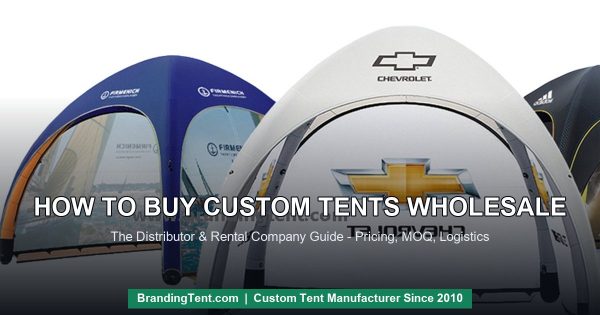
How to Buy Custom Tents Wholesale: The Distributor & Rental Company Guide
Read the guide and compare the requirements with your event brief.
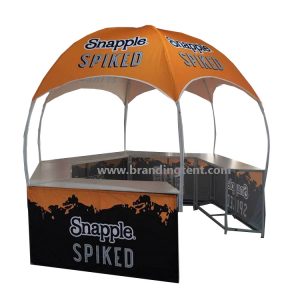
Product concept illustrations from the existing website media library. Specify your logo, print layout, materials and complete supplied kit separately.
Send your country, event date, site dimensions, ground surface, permitted anchoring, intended activity, quantity and logo. Include venue requirements if you have them.