Phone:
0086-757-8938 9313
Email:
Address:
Caochang Industrial Zone, Liguang Rd, Lishui, Nanhai, Foshan, Guangdong, China
24/7 online services

Phone:
0086-757-8938 9313
Email:
Address:
Caochang Industrial Zone, Liguang Rd, Lishui, Nanhai, Foshan, Guangdong, China
24/7 online services
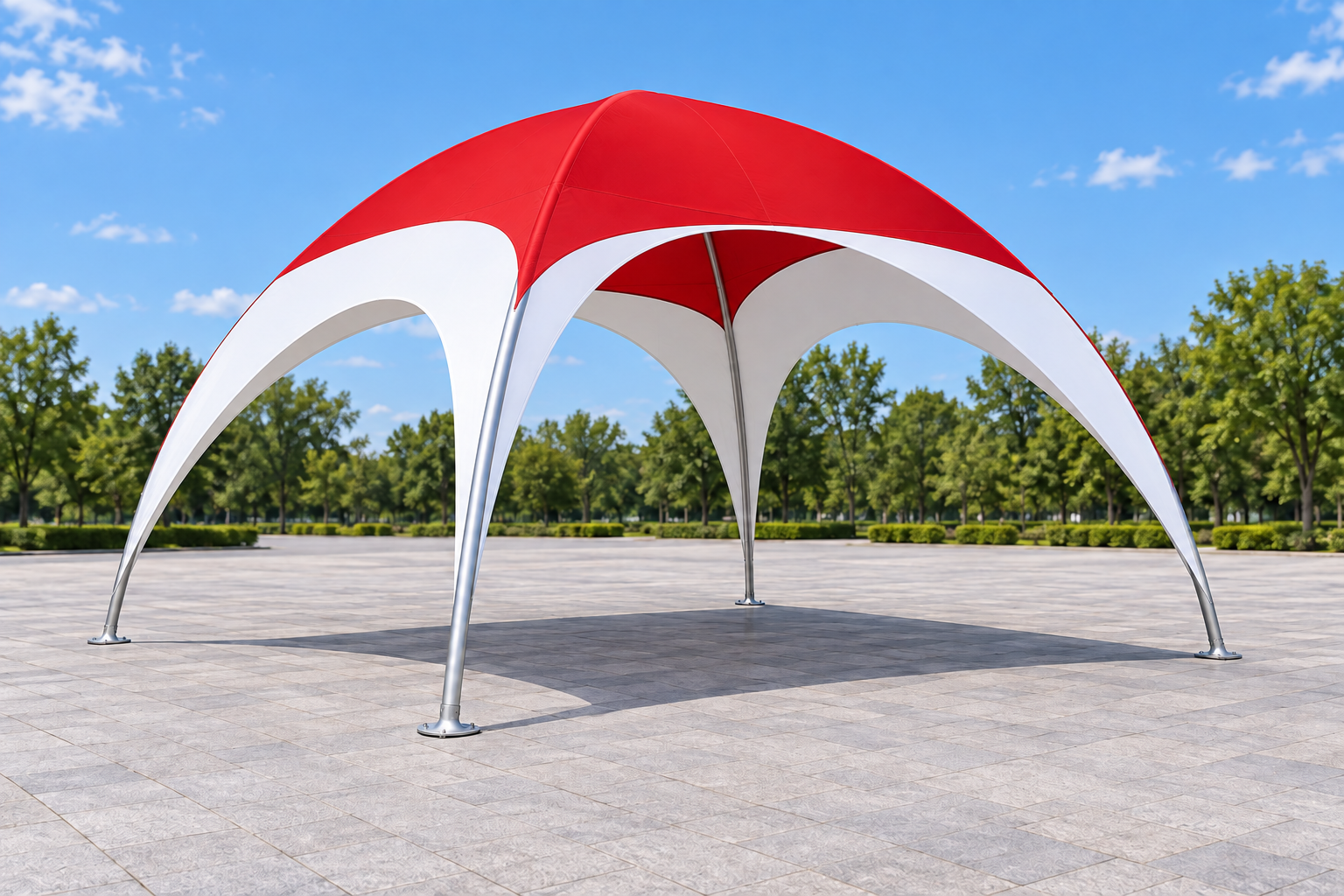
An arc tent artwork checklist should cover the exact roof template, panel orientation, seams, safe areas, color reference and the views visitors will actually see. Approve the structural model before approving graphics. A flat logo file and an attractive rendering are not enough to release a curved canopy into production.
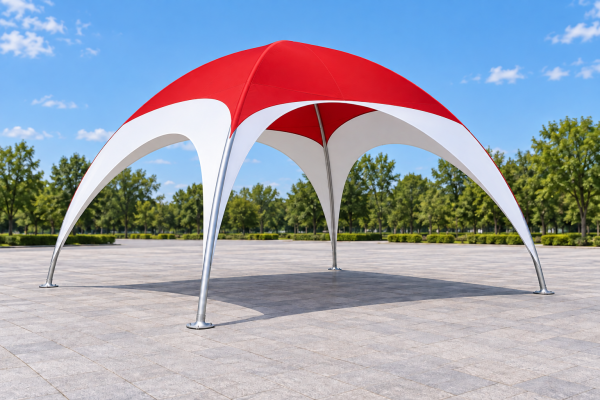
AI concept illustration of a rigid-frame arc shelter, not a photographed product or a production artwork template.
Here, an arc tent means a promotional shelter supported by a curved rigid frame. It is not automatically an inflatable arch, a sleeping tent or a large arcum marquee. Similar silhouettes can use different constructions, so send the model or product link, not only the word ‘arc’.
For event agencies, this is a brand-consistency issue. For distributors, it is a repeat-order issue: a replacement roof must match the right frame and template revision. For the installation crew, correct panel orientation prevents a last-minute discovery that the main message faces the wrong approach.
The wider interest in comfortable outdoor spaces is relevant to how a tent is used: reception, sampling, a demonstration or a hospitality area. It is not a reason to add accommodation features or promise camping performance to a promotional shelter.
| Check | Evidence to approve | Common mistake |
|---|---|---|
| Model and revision | Model code, roof size and current panel template | Using a template from a visually similar tent |
| Orientation | Numbered panels, front direction and underside identification | Approving every panel without an assembled orientation |
| Seams and fittings | Seam, sleeve, reinforcement and attachment locations | Placing critical letters across a join |
| Safe areas | Supplier-defined clearances from seams and trimmed edges | Treating bleed as a safe location for a logo |
| Sightlines | Front, side and oblique assembled views | Judging readability only from a flat layout |
| Color | Agreed physical reference and sample procedure | Expecting a screen preview to prove textile color |
| File preparation | Correct scale, image resolution at that scale, fonts and linked assets | Enlarging a small raster logo without checking detail |
| Approval control | Dated proof, revision and named approval | Sending conflicting files through several email threads |
Choose the primary view before distributing logos. Is the tent facing a pedestrian aisle, a road, a sports field or a counter queue? A tall logo on an upward-curving roof may read differently from the same logo on a vertical panel. Ask for assembled views from the relevant directions, not only a high camera angle.
Keep the main message simple enough to read from its intended viewing position. Use secondary surfaces for information people read after approaching. Do not fill every printable area just because it is available. Blank space can preserve legibility where a curve, seam or opening already creates visual complexity.
Identify staff and visitor movement on the layout. A counter, removable wall or display can obscure graphics that looked clear in a roof-only rendering. Check the event configuration with those items present before signing off.
A roof is produced from panels and attachment details, not from a seamless digital surface. Ask where the panel joins, sleeves and reinforcements sit. Avoid critical type across them unless the supplier has demonstrated the proposed alignment and you have agreed a measurable acceptance criterion.
For a multi-panel graphic, number the panels and show how they connect. Keep a front-view reference in the approval package. If alignment matters, define where it will be checked on the assembled roof. An approved flat proof alone cannot demonstrate the tensioned result.
The generic production sequence is file preflight, panel printing, any required transfer or finishing, cutting, sewing or other specified joining, component fitting and assembly inspection. The chosen fabric and process determine the actual sequence. Ask BESDA BRANDING TENT to confirm the route for your model instead of assuming that every coating or textile uses the same printing method.
Request the substrate composition, mass, coating and finishing details. Denier is not a measure of opacity or thickness. If a premium, smooth appearance matters, describe it in the sample brief and inspect the assembled fabric under agreed lighting. A photograph should not be the only basis for a color-critical order.
Ask how the chosen ink, fabric and finish will be evaluated. A brand reference identifies the target; it does not guarantee identical appearance on every textile. Agree a physical sample where required, the approval conditions and how later batches will be compared. Do not invent a color-tolerance number without an agreed method and instrument.
Water resistance, UV behavior and fire performance are separate from print sharpness. Request applicable evidence for the exact material and finish if your venue requires it. A good-looking logo does not prove those properties.
The artwork proof should show the erected model, openings and any planned walls. The site plan should separately establish the occupied footprint, clear height, anchoring and visitor routes. The manufacturer’s arch assembly manual illustrates why model-specific component identification matters; it is not an installation instruction for a BESDA model.
Use the manual supplied with your selected tent. Do not attach signs, lights or merchandise to the frame without permitted load and attachment information. Include electrical and venue requirements in the brief, and have the responsible party approve the installation before use.
Retain the final template, artwork, roof revision, color reference and approval record together. Confirm whether a future replacement roof can be supplied for the same frame, and what measurements or labels are needed. A replacement graphic may reduce the need to replace an entire kit, but compatibility must be confirmed rather than assumed.
Compare quotations for the same printed surfaces, wall arrangement, sample process, frame, anchoring package, packing and inspection. A lower print price may omit a physical color sample or an essential component. Confirm the proof approval deadline, production milestone and required arrival date in writing.
After use, inspect the fabric and attachments, clean only with the approved method and pack the roof dry. Keep printed faces away from abrasive hardware. Ask how to fold and store the selected textile rather than assuming that all coated fabrics behave alike.
BESDA BRANDING TENT serves buyers in 150+ countries and has received five-star customer feedback. Send the event activity, site dimensions, desired model, quantity, destination and arrival deadline, plus your vector logo and brand color references. Request a model-linked proof that records the template revision, panel orientation, printed areas and sign-off conditions. That creates a practical basis for assessing the proposed product, not merely its promotional description.
Not without checking its template. Panel proportions, seam locations and the assembled view can change. Request a revised proof for the new model or size.
Avoid it for critical detail when possible. If the design requires it, agree how alignment will be demonstrated and assessed on the assembled tent.
No. It is useful for composition and orientation. Use the agreed physical sample process for color-critical approval.
Arc Tents as Event Entrances: The Aluminum Arch Gateway Guide
Read the guide and compare the requirements with your event brief.
Arc Tents for Street Fairs and Parades: The Complete Guide
Read the guide and compare the requirements with your event brief.
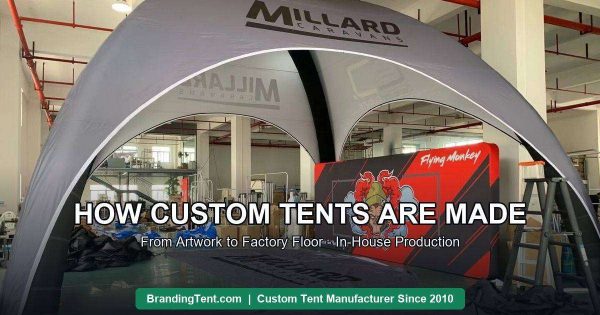
How Custom Tents Are Made: From Artwork to Factory Floor
Read the guide and compare the requirements with your event brief.
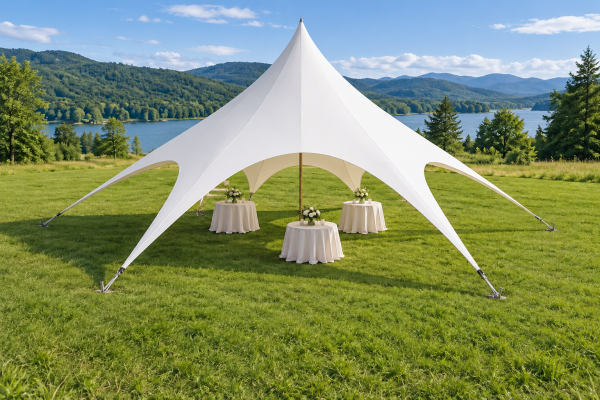
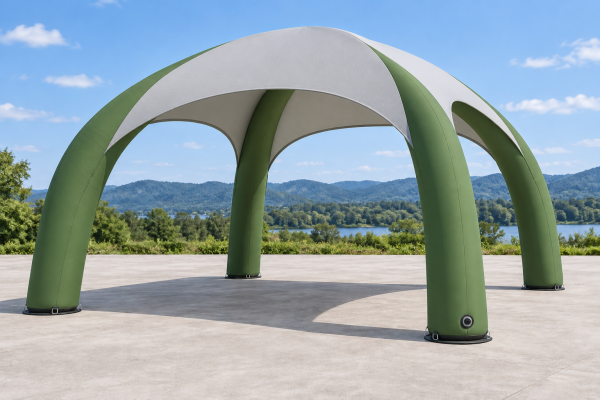
Product concept illustrations from the existing website media library. Specify your logo, print layout, materials and complete supplied kit separately.
Send your model preference, logo, quantity, country, event date and main viewing direction. Include any color-critical areas or graphics that must cross panels.
Discuss My Arc Tent Artwork on WhatsApp
Email My Arc Tent Artwork Brief