Phone:
0086-757-8938 9313
Email:
Address:
Caochang Industrial Zone, Liguang Rd, Lishui, Nanhai, Foshan, Guangdong, China
24/7 online services

Phone:
0086-757-8938 9313
Email:
Address:
Caochang Industrial Zone, Liguang Rd, Lishui, Nanhai, Foshan, Guangdong, China
24/7 online services
Every event has one moment that decides how guests feel about everything after it: the arrival. An arc tent entrance, an aluminum-framed, arch-profiled canopy that spans the gateway, turns that moment into architecture. Guests walk through a branded frame instead of past a fence gap; photographers get a vertical anchor; the site plan gains a focal point that organizes every path after it. This guide covers how arc entrances work as structures, the print and lighting choices that make them read at distance, the anchoring and site-plan consequences, and the honest cases where an inflatable arch or a pagoda serves the gate better.
An arc tent is a tensile canopy on an aluminum frame: curved arms rise from base plates, sweep overhead, and tension a printed or plain skin between them, the profile that gives the family its name. As an entrance, it works because of three properties at once.
1. No center mast. Guests, vehicles and service carts pass straight through the opening, the gateway stays functionally clear.
2. A framed sightline. The arc literally frames what comes next: the stage, the venue, the first provider table. Wayfinding and photography in one structure.
3. Engineered repetition. Aluminum arc frames anchor like any professional structure and repeat across a season without re-styling, the same entrance, identical, every gate.
| Gateway type | Structure | Deploy | Best job |
| Arc tent (aluminum) | Curved arms + tensioned skin | Crew build, 30-60 min | Multi-season venues, premium entrances |
| Inflatable arch | Airtight chambers | Inflate 10-20 min | Races, road events, single-day gates |
| Pagoda gate module | Hexagonal high-peak + walls | Crew build, 40-60 min | Enclosed welcome + security point |
The choice is operational. Aluminum arc frames own the repeat calendar (they store as bundles and rebuild identically); inflatables own the single-day road events; pagoda gates own the enclosed, staffed welcome.
1. Print the inside face. Guests spend their arrival looking forward, the interior face of the arc is the canvas they actually see. Exterior print serves the queue and the road; interior print serves the first impression.
2. Light the frame at dusk. Uplights at the base plates and a wash along the curve turn the entrance into the evening landmark, the same arc, two personalities.
3. Flow follows the arc. Ticketing, security and welcome tables belong outside the span; the arc marks the threshold, not the service lane. Draw guest flow through the opening before positioning anything else.
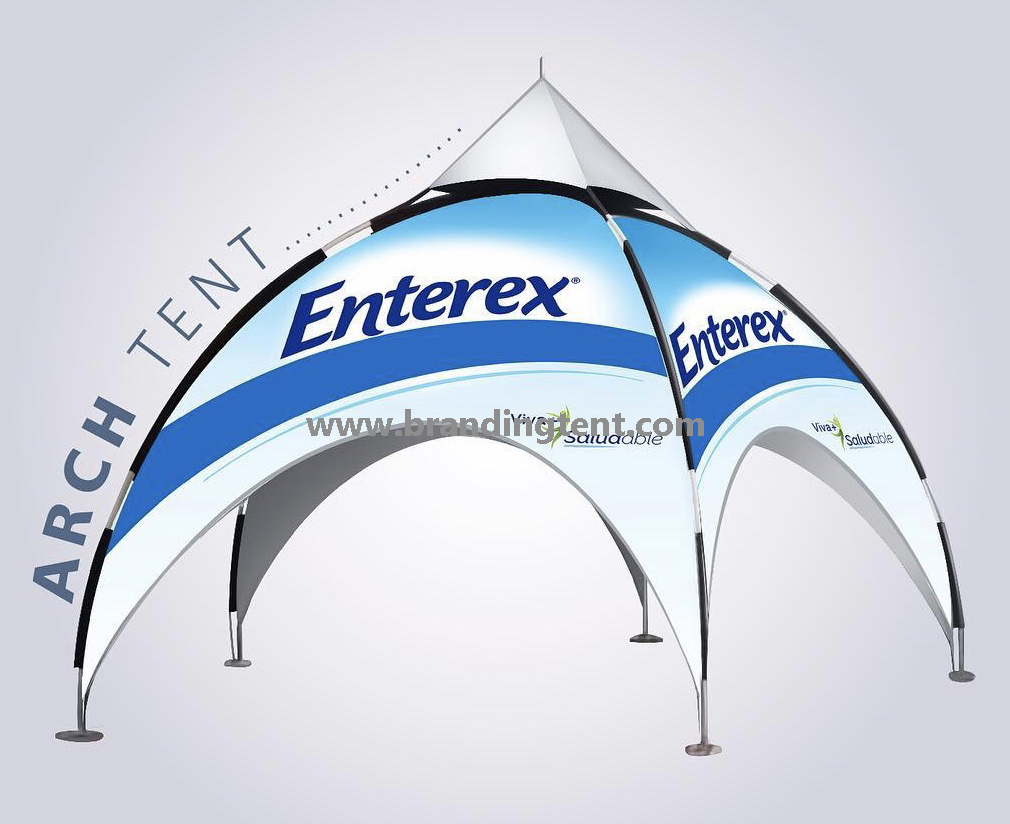
1. Base plates and ballast. Arc arms land on engineered base plates sized for 15-25kg-class ballast or staking per surface, the frame is professional hardware, and the anchoring is part of the specification.
2. The sail is real. An arc entrance presents a curved canopy at gateway height; wind discipline and the ballast math from our wind protocol apply unchanged.
3. Site plan ripple. Security sightlines, emergency exits, cable runs and the first-aid tent all reference the gateway position, which is why the arc decision belongs at the start of site planning, not the end.
1. Aluminum, hexagonal class. The 40mm hexagonal standard used across professional canopy frames (industry references like E-Z UP publish it openly), torsion resistance matters as much on an arc as on a pop-up.
2. Tension hardware. Skin tension points and adjusters are the arc’s wear items; pinned, replaceable hardware keeps the entrance re-buildable for seasons.
3. Fabric spec. The same written numbers as every canopy: denier, coating, gsm, see the fabric guide, plus fire-retardant certification for the venues that ask (our certificates guide).
Honest cases: single-day road events with no storage or crew, an inflatable arch inflates faster and leaves no frame to guard; sites that need an enclosed, staffed welcome point, a pagoda gate with walls serves security better; and budgets for one weekend only, rent, do not buy. The arc entrance is the premium answer for gateways that repeat.
Trade fairs and exhibitions: the arc marks the aisle your exhibitors paid for, printed interior face, hall-compliant ballast, and a build scheduled around freight-floor hours rather than guest arrivals. Festivals: the gateway doubles as the photo landmark; position it against the sunset or the stage sightline and light it for the evening feed. Dealerships and retail: the arc frames the forecourt entrance on delivery days and folds into storage between campaigns.
Weddings and private venues: a white arc frames the ceremony path and converts to the reception threshold without a rebuild. Sports clubs and academies: match-day gateways that carry the crest and survive the sprinklers. Across all of these the specification conversation is identical, footprint, frame numbers, fabric grade, print scope, which is why one written RFQ template serves every venue on the list.
The load-in order for a gateway build is a sequence, not a to-do list, and it starts before any aluminum leaves the van.
1. Mark the opening. Chalk the leg positions from the site plan, guest flow width first, aesthetics second.
2. Base plates and ballast. Plates down and loaded before any aluminum rises; the gateway is the last place crews improvise anchoring.
3. Arms and skin. Assemble the arc, dress the skin, tension in pairs, opposite sides in stages, never one side to full tension.
4. Walk it. One person exits and re-enters as a guest, sightline, clearance, print orientation, before the doors open. Ten minutes of walking beats an hour of repositioning after the queue forms.
An arc entrance carries print on both faces, and the two faces have different audiences. The exterior face works at road distance, large identity, minimal words, the logo that tells arrivals they are in the right place. The interior face works at walking distance, the welcome line, partner acknowledgments, the wayfinding arrows that quietly cut your staffing questions in half.
There is also the hello effect: guests who walk under a printed arch enter the venue already oriented and already photographed, and the first impression carries into how they treat every following interaction. Event designers call it the threshold moment; operators call it the cheapest guest-experience upgrade on the site plan. Both are right: the arc is a single purchase doing two jobs, and guests feel it before they can explain why. Either way, print both faces in one production batch, and light the interior face at dusk, because the arrival canvas guests see longest is the one they walk through.
The structure travels under local names, and the search vocabulary travels with it. United States RFQs say arch tent or archway canopy; UK event language folds gateways into the gazebo-arch family; Australia and New Zealand crews brief it in marquee-adjacent terms; France asks for a tente arche; Spanish-language briefs from Spain, Chile and Argentina write arco publicitario or carpa tipo arco; Brazil searches tenda arco, where the inflatable cousin shares the word. The specification stays identical in every language – aluminum arc frame, dual-face print, engineered base plates – which is exactly the point: brief the structure, not the nickname.
Three lines carry the whole purchase case, and they are worth walking out loud before any deposit moves.
| Feature | Advantage | Benefit |
| Hexagonal aluminum arc frame | Rebuilds identically, no power needed | A gateway that looks the same every event, season after season |
| Dual-face printed skin | Exterior for the road, interior for arrivals | The arrival canvas guests study longest is branded |
| Engineered base plates | Ballast or stakes per surface | Check-in compliance on tarmac, grass or deck |
The same table doubles as a bench test: if a supplier cannot trace each feature to its advantage and each advantage to a benefit a guest or venue can feel, the quote is a photo caption, not a specification. Arc entrances earn their premium on that chain: identical gateways, branded arrivals, compliant anchoring, which is exactly why venues that repeat keep buying them.
An arc tent entrance is the site plan rendered in aluminum and fabric: arrivals framed, flow organized, brand overhead at the exact moment attention peaks. Choose it for gateways that repeat, spec the frame and fabric by numbers, light it for the evening, and anchor it like the professional hardware it is. The arrival is the first impression, the arc makes it a designed one.
| Fact | Detail |
| Manufacturer | Besda BrandingTent, a direct factory in Foshan, China: manufacturer, wholesaler and exporter since 2010. Not a retailer. |
| Products | Custom tents (pagoda, dome, star, inflatable, canopy, arc), feather flags, roll up banners, table covers, tradeshow displays and outdoor tables. |
| Inflatable structures | Airtight (sealed-air) and continuous-airflow models; blowers specified in writing (wattage, voltage, plug, spares) and air beams pressure-tested before packing. |
| Arc / frame structures | Curved aluminum arch canopies and hexagonal-aluminum frame tents; alloy temper, wall thickness and connector material stated in every quotation. |
| Materials | 300D–600D oxford with PU coating or 0.55mm PVC; powder-coated steel or hexagonal aluminum 40/50/60mm frames. |
| Printing | Full-color dye-sublimation (CMYK + Pantone matching), panels printed before assembly. |
| Certificates | Fire-retardant fabric options (NFPA 701 / CPAI-84 / DIN 4102 B1 / EN 13501-1 on request). |
| MOQ & pricing | Low MOQ accepted; wholesale pricing from 5+ pieces; bulk orders preferred and priced accordingly. |
| Lead times | Sampling 3–7 working days; bulk production 7–15 days; worldwide shipping from Shenzhen/Guangzhou. |
| Quality gate | Every unit fully assembled and QC-checked, with photo/video approval before packing. |
| Buyer terms by market | US: canopy tent · UK: pop-up gazebo · AU/NZ: folding marquee · France: barnum / tente pliante · Germany: Faltpavillon / aufblasbares Zelt · LatAm: carpas publicitarias · Brazil: tenda personalizada. |
| Contact | WhatsApp +86 135 1661 0926 · [email protected] · reply within 1 hour, 24×7 online service. |
💬 Chat on WhatsApp Now✉ Email Us Now
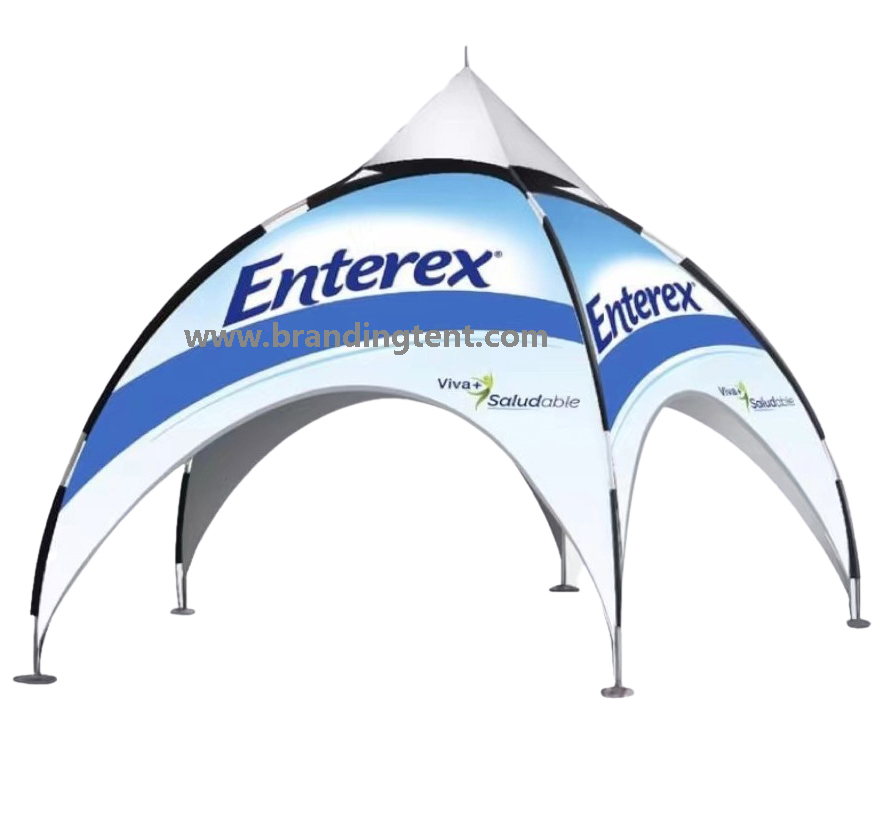
Custom Arc Tents
Aluminum arch entrances and canopies
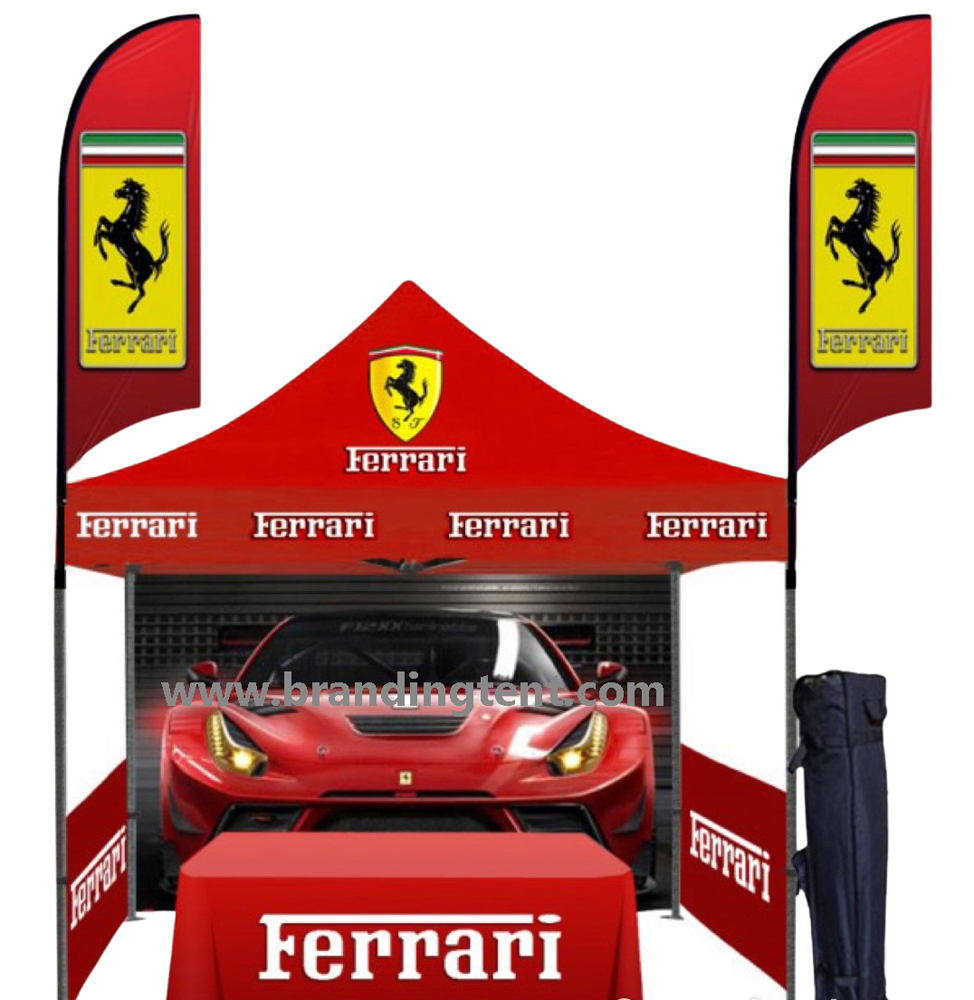
Custom Pagoda Tents
High-peak marquees, 3×3-6x6m, connectable
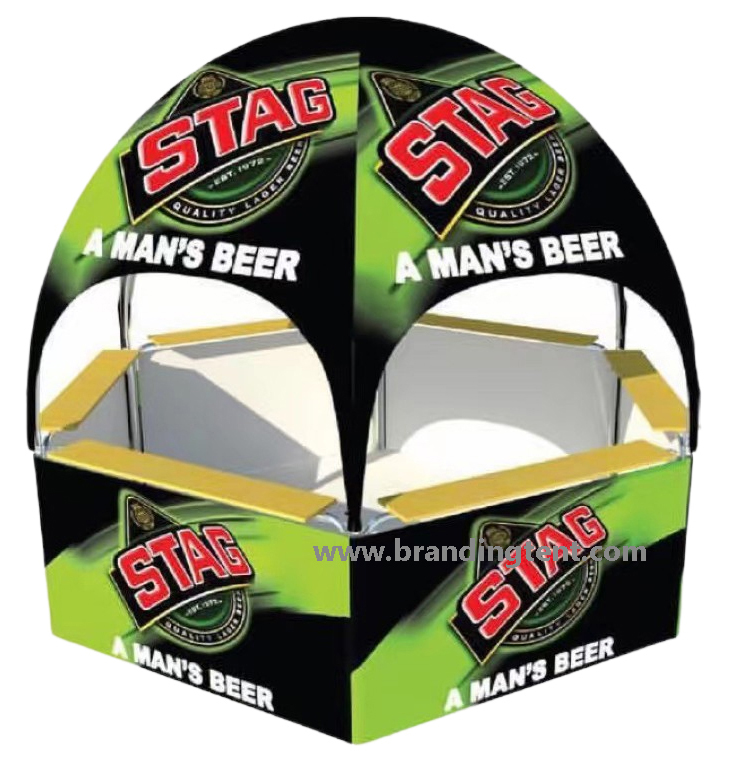
Custom Dome Tents
360-degree brand stages for events
More: inflatable arches for races · pagoda tent walls guide · tent frame guide · full FAQ
Tell us your event scenario, size and logo file. Our tent specialists reply within 1 hour, 24×7 online service, with a free mockup, written specifications and factory-direct pricing.
An aluminum-framed, arch-profiled canopy that spans an event gateway: curved arms tension a printed or plain skin overhead, with a clear opening for guests, vehicles and service carts to pass through.
The arc tent is an aluminum frame system that rebuilds identically across seasons and suits multi-day or permanent-period gateways; the inflatable arch is airtight, inflates in minutes and owns single-day road events. Choose by calendar, not by looks.
Yes, exterior and interior faces take full-color dye-sublimation. The interior face is the arrival canvas guests see longest; order both sides in one production batch for color continuity.
Base plates at each arm accept 15-25kg-class ballast or staking depending on surface. The curved canopy presents real sail area, so the wind protocol and ballast math are part of the specification.
Hexagonal aluminum in the 40mm class with written wall thickness, pinned replaceable tension hardware, and fabric denier/coating/gsm stated per the standard canopy discipline, the same numbers as any professional frame.
Low MOQ accepted for samples; wholesale pricing scales from 5+ pieces. Sampling 3-7 working days after artwork approval, bulk 7-15 days by quantity.