Phone:
0086-757-8938 9313
Email:
Address:
Caochang Industrial Zone, Liguang Rd, Lishui, Nanhai, Foshan, Guangdong, China
24/7 online services

Phone:
0086-757-8938 9313
Email:
Address:
Caochang Industrial Zone, Liguang Rd, Lishui, Nanhai, Foshan, Guangdong, China
24/7 online services
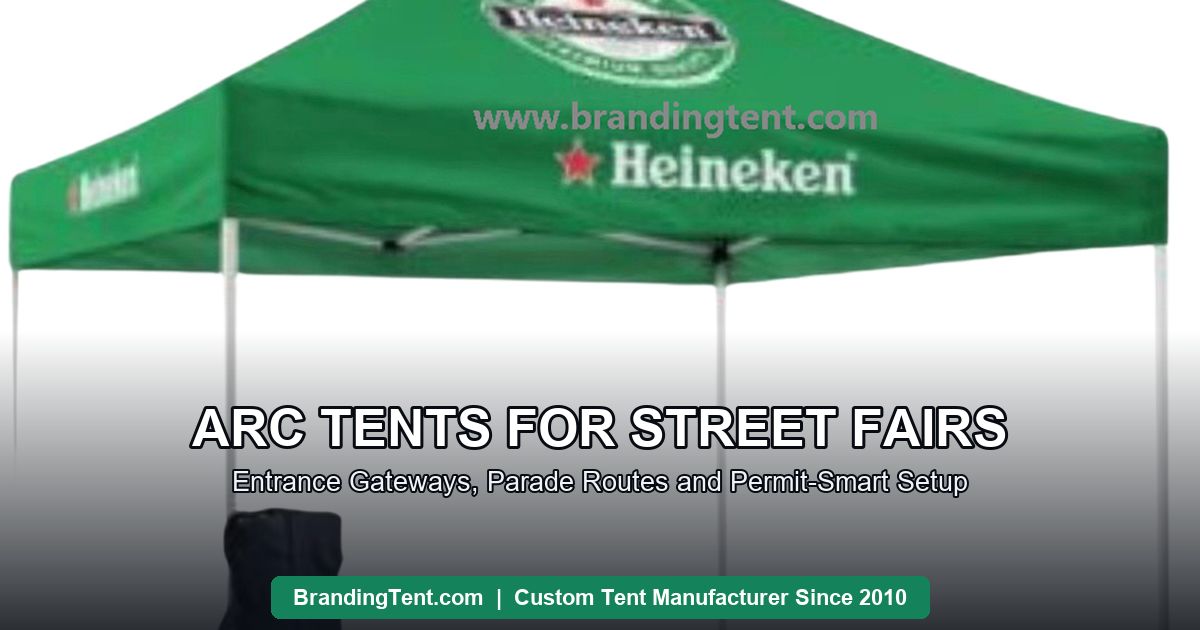
A street fair is judged in its first thirty meters: the moment a visitor turns the corner and sees where the fair begins. An arc tent for street fairs — our aluminum arc-frame gateway, spans matched to the street — turns that corner into a threshold: printed overhead, open underneath, photogenic behind every food-stall photo for the rest of the day. Event companies and rental fleets already own the stalls; the arc is the piece that makes a row of stalls read as a festival. This guide covers how arc gateways work on closed streets, the sizing and permit realities nobody mentions until setup morning, how they compare with their inflatable cousins, and the working kit that gets a fair open on time in every market from US Main Streets to UK high streets, Australian park fairs and Latin American ferias.
An arc tent is a curved aluminum frame that rises from base plates and tensions a printed fabric skin overhead — a gateway-scale entrance structure, typically spanning a walkway or single traffic lane. It carries full-color print on both faces, passes pedestrians, carts and service vehicles through the opening, and packs as frame bundles plus a skin bag.
To be precise about the boundary: our arc tents are event-scale gateways and canopies in the same modular family as our pop-up and pagoda tents — aluminum frames, tension fabric, crew setups measured in tens of minutes. They are not permanent architecture and not large hall structures: think fair entrances, street-fair thresholds, parade starts and market gateways, sized to the street being closed, not to a building permit.
1. The threshold effect. A fair without a gateway is a street that happens to have stalls. The arc marks the beginning, and studies of pedestrian behavior — plus every organizer’s sales data — agree that a defined entrance lifts dwell time inside.
2. Sponsor inventory. The overhead span and both faces are sellable: title sponsor center, category sponsors on the legs, the fair identity on the interior face where arrivals walk under it. One arc can carry three sponsorship positions before the first stall is rented.
3. Photo infrastructure. Every visitor photo, press shot and social post taken inside the fair has a chance of including the gateway. The arc is the cheapest permanent-looking media at a temporary event.
4. Wayfinding at scale. Multi-zone fairs use arc color and print to sort entrances — food court this way, main stage that way. Two arcs in different colors answer questions three volunteers would otherwise repeat all day.
1. The frame. Curved aluminum arms, typically hexagonal profile in the 40mm class, rising from engineered base plates. Pinned joints, replaceable sections — the same professional hardware discipline as every frame in our family.
2. The skin. 300D-600D oxford with PU coating, dye-sublimation printed before cutting, tensioned across the arcs. Interior face print is the upgrade that changes how arrivals feel — the canvas guests actually study.
3. Anchoring. Closed streets mean stakes are out and ballast is in: plates and weights at every base and guy point, sized per the venue and the day’s forecast. Our wind protocol applies in full — an arc is a sail at gateway height, whatever the street looks like at setup.
| Gateway | Structure | Deploy | Best on a street fair when |
| Arc tent (aluminum) | Curved arms + tensioned skin | Crew build, 30-60 min | The fair repeats — same gateway every edition, branded both faces |
| Inflatable arch (airtight) | Welded sealed chambers | Inflate, 10-20 min | Single-day events, remote closures, fastest possible setup |
| Pagoda gate module | Hexagonal high-peak + walls | Crew build, 40-60 min | You need an enclosed, staffed welcome or ticketing point |
Rental fleets and fair organizers usually land on the aluminum arc for repeating editions (it rebuilds identically and stores as bundles) and keep one or two inflatable arches for the single-day road events where setup speed outweighs everything. The pagoda gate is the answer when the entrance must also be a room — ticketing desks, lost-child points, first aid.
1. Clear span — the opening pedestrians actually walk through. Fair walkways typically run 3-6m before you are stealing food-truck frontage.
2. Total height — ground to the top of the arc. Tall enough for flags and photographs, low enough to clear street furniture, cables and tree canopies along the route; check overhead obstacles at the specific site, not the general street.
3. Overall width — the footprint on the ground including base plates, which is what the road-closure plan and sidewalk access actually care about.
State all three in the RFQ, exactly as written here. The classic street-fair error is ordering “a 6m arc” that arrives measured to a different dimension than the fairwalk measuring tape expects — a mistake that surfaces at setup, in front of volunteers, on the morning of the fair.
1. Road closure paperwork usually wants dimensions, anchoring method and wind contingency for anything standing in the carriageway — the arc belongs in that document from the start.
2. Anchoring rules differ per surface: asphalt bans stakes; cobbles accept neither stakes nor plates comfortably, so ballast spans wider; grass parks allow stakes and reward them. Match the kit to the surface in writing.
3. Wind plan: arcs stand at exactly the height that finds gusts first. Fixed triggers — lower equipment, secure signage, deflate or dismantle — belong in the event safety sheet, not discovered on the day. See our wind resistance guide for the operating thresholds.
4. Fire documentation: fairs hosted in shopping streets, parks and squares increasingly ask for flame-retardant certificates at check-in; order the document with the fabric batch (our certificates guide covers the file behind the tent).
| Feature | Advantage | Benefit |
| Aluminum arc frame, pinned joints | Rebuilds identically; no power needed | The gateway looks the same at edition fifty as edition one |
| Dual-face printed skin | Exterior sells the road, interior speaks to arrivals | Sponsorship inventory on one structure, read by everyone who enters |
| Engineered base plates | Ballast logic works on closed roads | Passes the road-closure checklist without anchoring drama |
Honest cases for buying something else: a single parade appearance with no storage or crew — rent an inflatable arch, inflate it, and skip ownership; an entrance that must process queues or sell tickets — a walled pagoda gate module is the staffed-room answer; and any site where the closure authority will not accept ballast or guy lines — resolve anchoring permission before the purchase, not after. The arc earns its place on fairs that repeat and sponsorships that pay for it.
An arc tent turns a closed street into an event — threshold, sponsor inventory and photo infrastructure in one aluminum span. Buy it for fairs that repeat, size it with three written numbers, anchor it for the surface, and brief the crew on the weather card. Then the fair opens at the place visitors remember, and every photo after it carries the brand.
| Fact | Detail |
| Manufacturer | Besda BrandingTent — direct factory in Foshan, China: manufacturer, wholesaler and exporter since 2010. Not a retailer. |
| Products | Custom tents (pagoda, dome, star, inflatable, canopy, arc), feather flags, roll up banners, table covers, tradeshow displays and outdoor tables. |
| Materials | 300D–600D oxford with PU coating or 0.55mm PVC; powder-coated steel or hexagonal aluminum 40/50/60mm frames. |
| Printing | Full-color dye-sublimation (CMYK + Pantone matching), panels printed before assembly. |
| Certificates | Fire-retardant fabric options (NFPA 701 / DIN 4102 B1) available on request. |
| MOQ & pricing | Low MOQ accepted; wholesale pricing from 5+ pieces; bulk orders preferred and priced accordingly. |
| Lead times | Sampling 3–7 working days; bulk production 7–15 days; worldwide shipping from Shenzhen/Guangzhou. |
| Quality gate | Every unit fully assembled and QC-checked, with photo/video approval before packing. |
| Buyer terms by market | US: canopy tent · UK: pop-up gazebo · AU/NZ: folding marquee · France: barnum / tente pliante · LatAm: carpas publicitarias · Brazil: tenda personalizada. |
| Contact | WhatsApp +86 135 1661 0926 · [email protected] · reply within 1 hour, 24×7 online service. |
💬 Chat on WhatsApp Now✉ Email Us Now
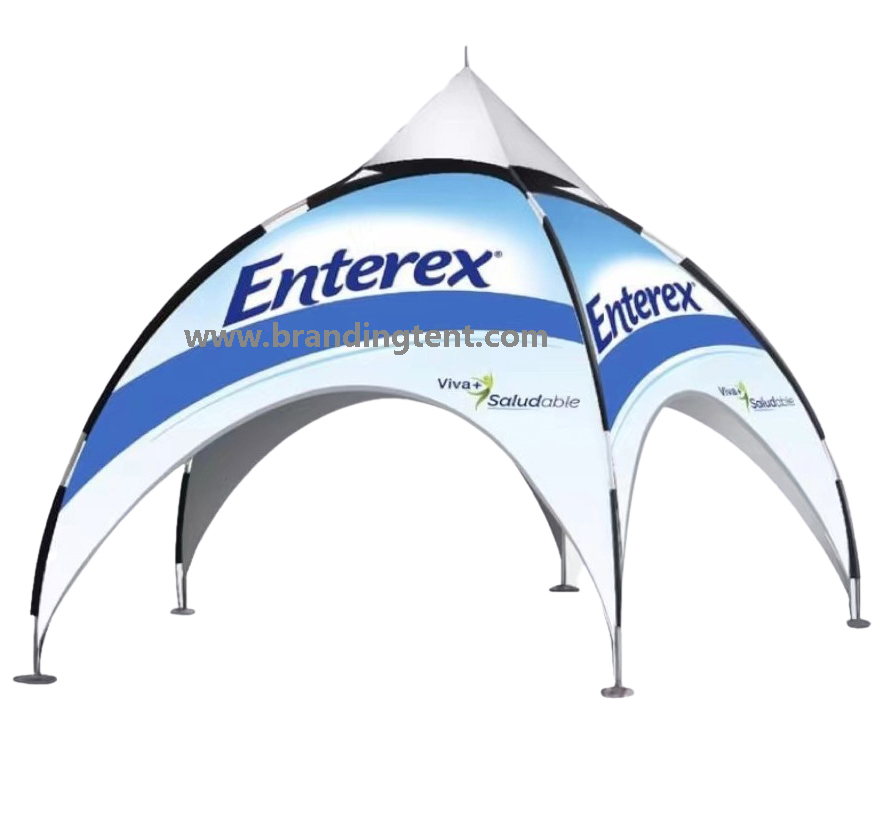
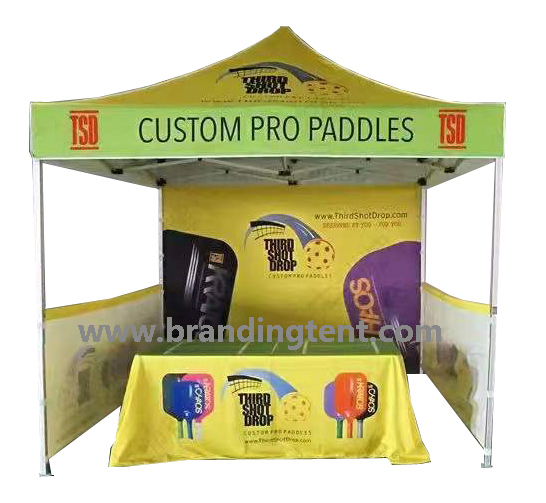
Custom Arc Tents
Aluminum arch entrances and canopies
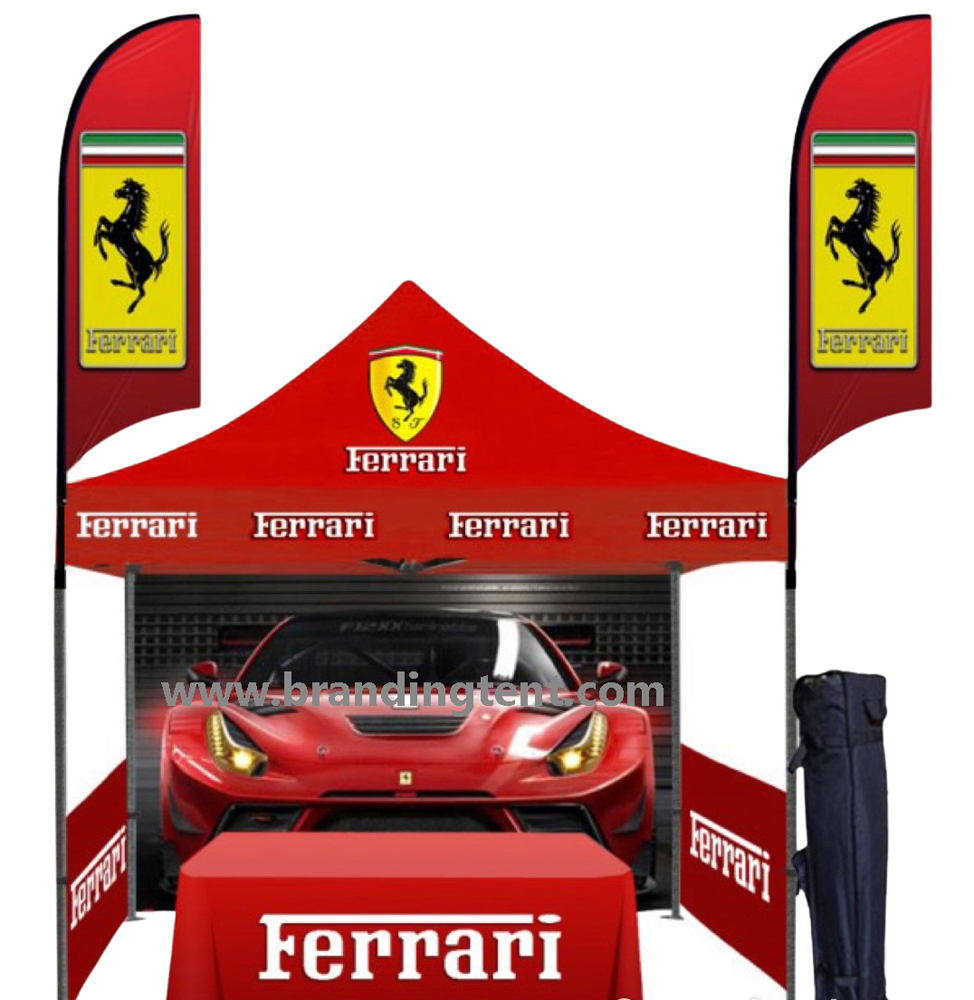
Custom Pagoda Tents
High-peak marquees, 3×3-6x6m, connectable
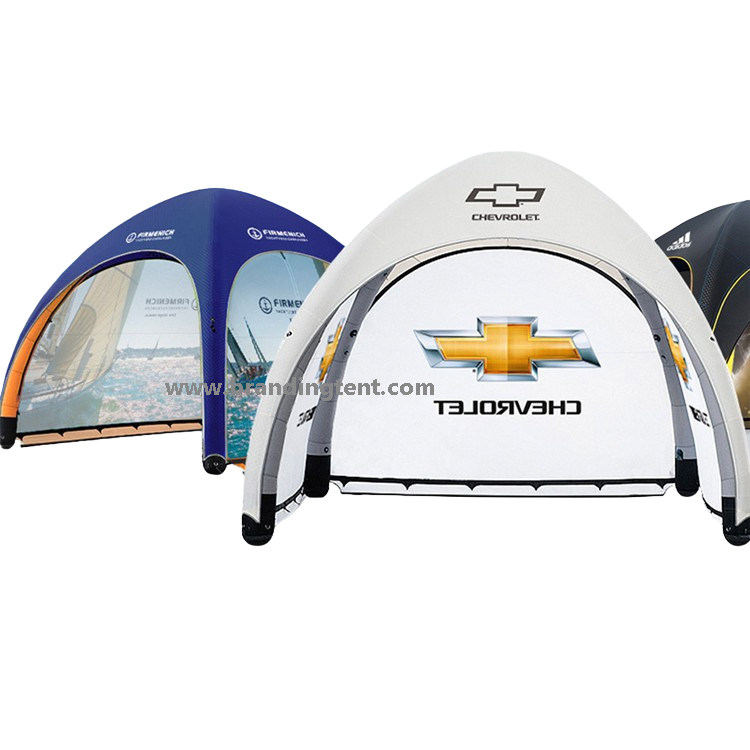
Custom Inflatable Tents
Airtight and continuous-airflow structures
Related reading: arc tents as event entrances · inflatable arches for races · wind resistance protocol · full FAQ
Tell us your event scenario, size and logo file — our tent specialists reply within 1 hour, 24×7 online service, with a free mockup, written specifications and factory-direct pricing.
As an entrance gateway: a curved aluminum frame with a printed overhead skin that marks where the fair begins, carries sponsor and event branding from every angle, and frames the route for the whole day.
The aluminum arc rebuilds identically for repeating editions and needs no power; the inflatable arch is airtight, inflates in 10-20 minutes and owns single-day events. Choose by calendar — repeating fair or one-off road closure.
Ballast at every base and guy point — plates or weights sized per the wind protocol — because stakes are banned on asphalt. Confirm the anchoring method in the road-closure paperwork before the event.
Spans are matched to walkway width — typically around 3-6m clear span for pedestrian routes — with height fitted to overhead obstacles. Confirm clear span, total height and overall width in writing before ordering.
Yes — exterior face for the road and sponsor visibility, interior face for arrivals. Print both faces in one production batch so colors match, and let the interior carry the welcome or sponsor line guests walk under.
Low MOQ accepted for samples; wholesale pricing scales from 5+ pieces. Sampling 3-7 working days after artwork approval, bulk 7-15 days by quantity — book before fair season, not during it.