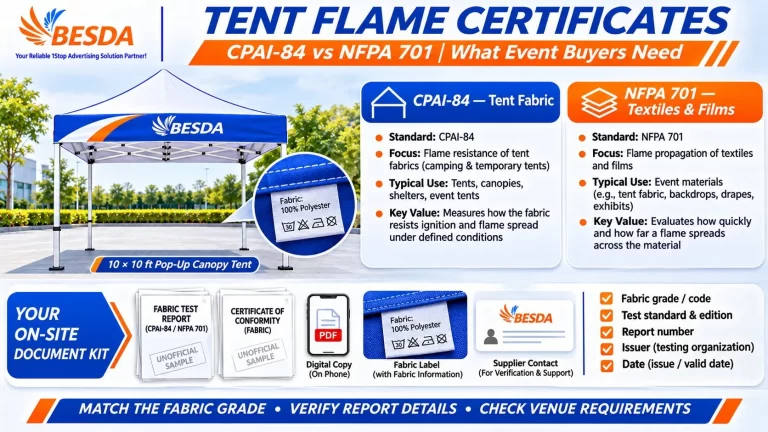
The certificate is a fabric decision made at order time and a paperwork decision made at the gate. What each standard covers and what a valid document says.
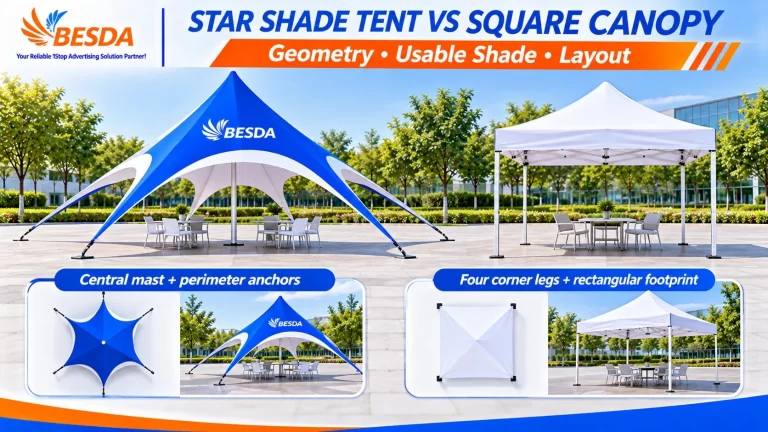
A star tent shades an irregular patch that moves with the sun. How the geometry decides usable space, and where the shape earns its keep over a square canopy.
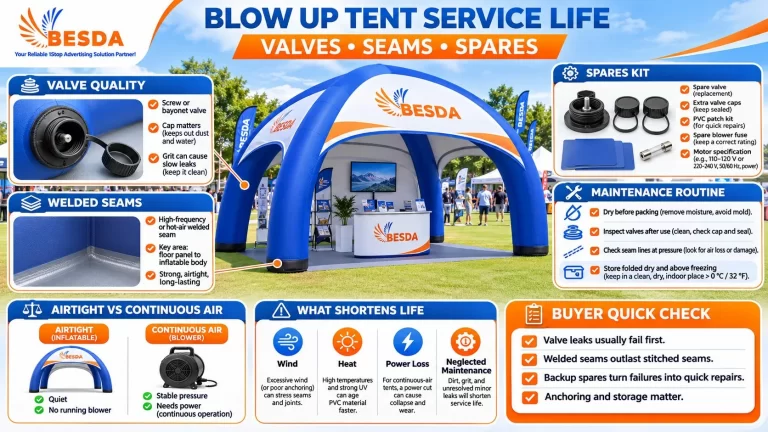
An inflatable is a pressure vessel with a zip. How valves, seams and air supply decide service life, and the spares that turn a failure into a ten-minute fix.
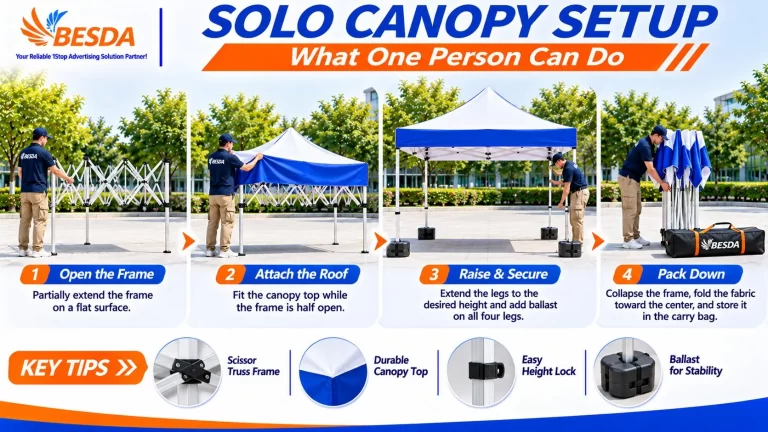
One person, one canopy, no help. Which sizes are genuinely solo, the sequence that avoids the bag fight, and the honest points where help is worth waiting for.
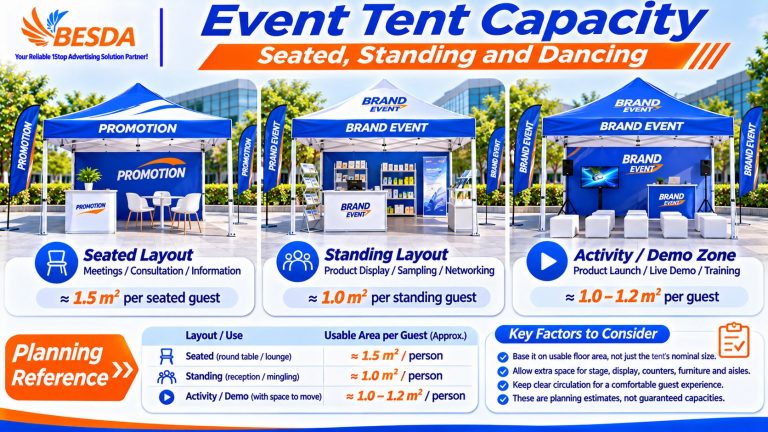
Capacity tables lie when they hide their assumptions. A layout method that shows the per-guest area, the service blocks and the number it produces.
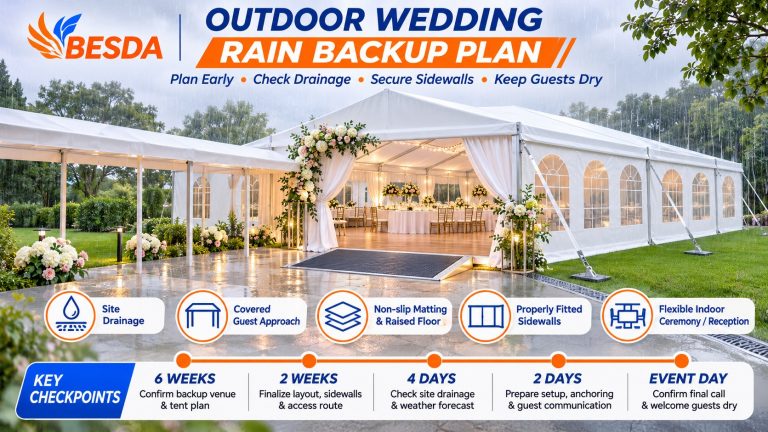
Rain decisions fail on timing, not on optimism. The dated checkpoints from booking to the morning of, plus the indoor layout that works when the weather turns.
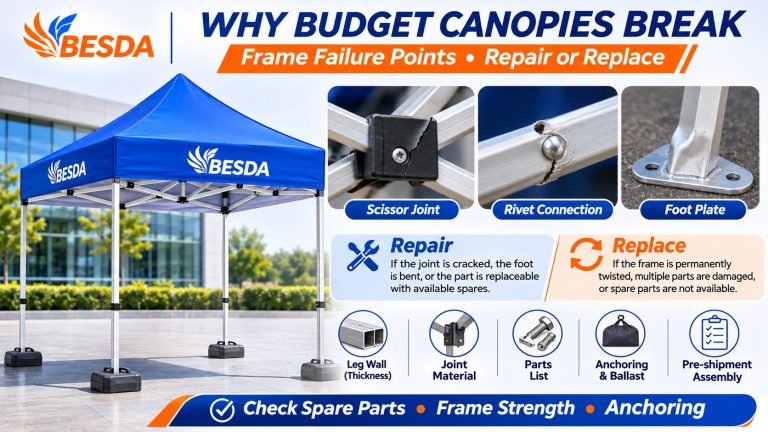
Not every cracked canopy is finished, and not every repair is worth the afternoon. A part-by-part decision path through joints, rivets, feet and legs.
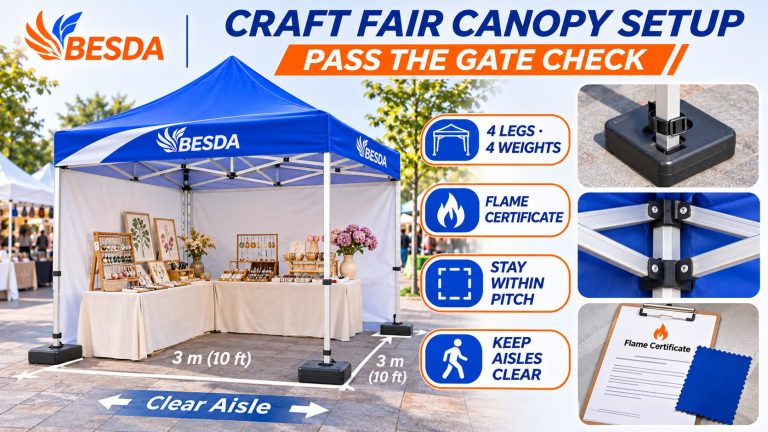
A market gate check is a sequence, not a surprise. What inspectors look for, in the order they look for it, and the setup routine that passes without discussion.
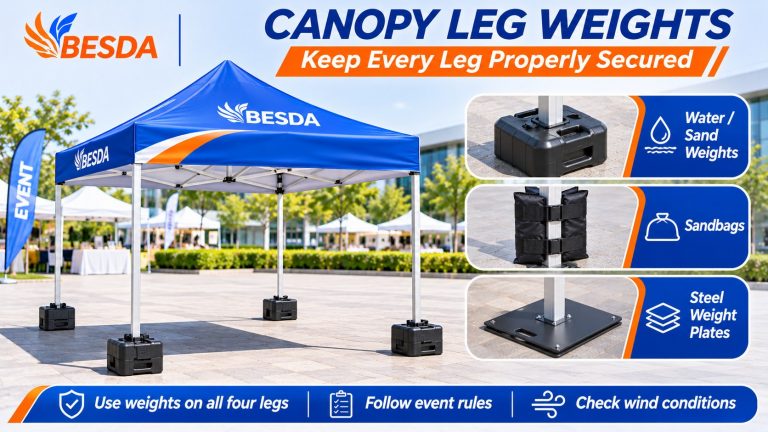
Canopy leg weights turned into a method: ranges by wind and surface, approved ballast types versus improvised ones, and the pack-up call that keeps the day safe.
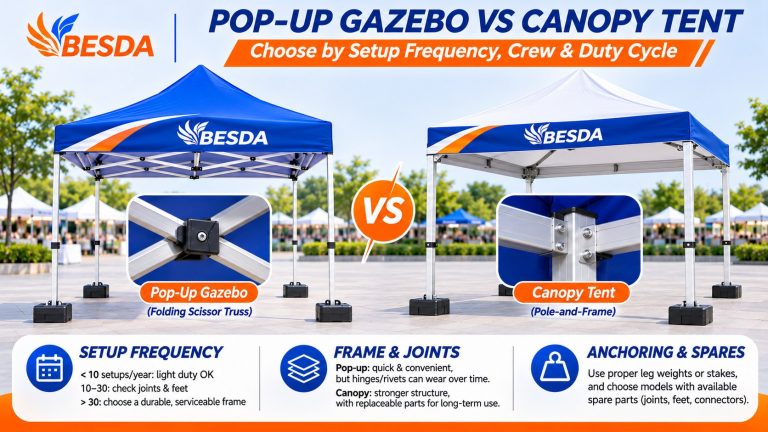
Pop up gazebo vs canopy tent scored on frame logic, anchoring and duty cycle: five questions decide which structure your event calendar actually needs.