Phone:
0086-757-8938 9313
Email:
Address:
Caochang Industrial Zone, Liguang Rd, Lishui, Nanhai, Foshan, Guangdong, China
24/7 online services

Phone:
0086-757-8938 9313
Email:
Address:
Caochang Industrial Zone, Liguang Rd, Lishui, Nanhai, Foshan, Guangdong, China
24/7 online services
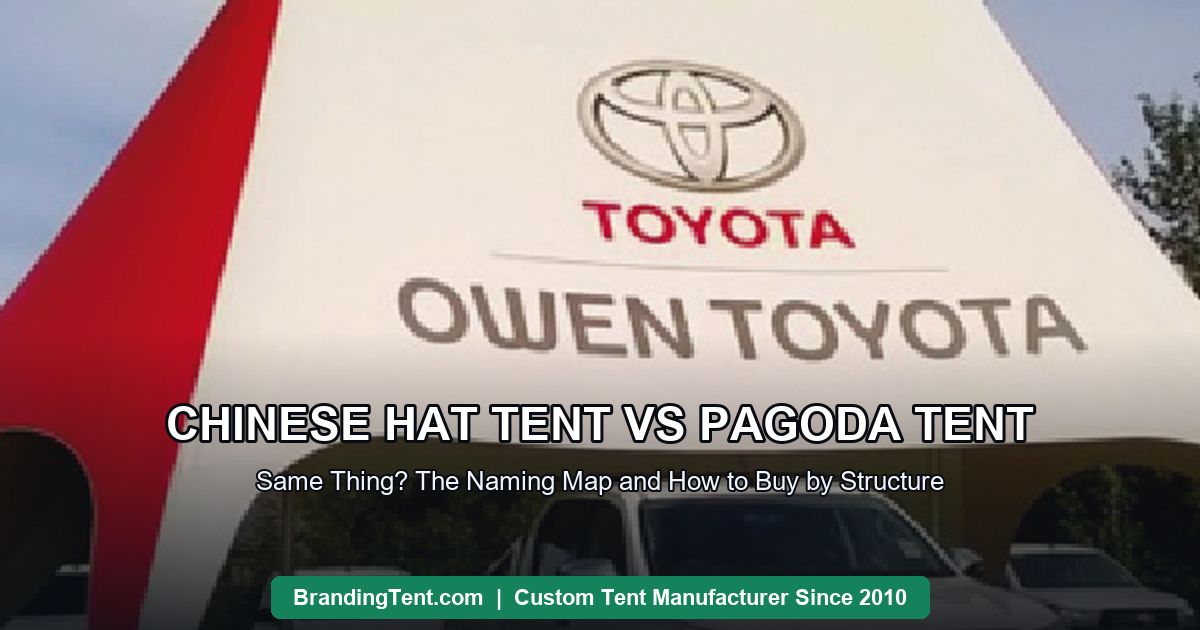
Yes — a chinese hat tent and a pagoda tent are the same structure: a square or hexagonal footprint with a raised, multi-slope high peak and a valance skirt, usually built on hexagonal aluminum legs. The two names simply come from different places: “pagoda” borrowed the tiered-roof silhouette of East Asian architecture, while “chinese hat” described the same cone-and-brim shape the way street markets first sold it. Buyers in different countries add their own names on top — high-peak marquee, hexagonal gazebo, chinese hat gazebo — and search engines index them all. This guide maps the naming, explains which word wins where, and — more importantly — shows how to buy the structure by specification so the name argument never costs you a bad tent.
| Term | Where it wins | What buyers mean |
| Pagoda tent | UK, EU, Middle East, trade shows, this site | The high-peak modular event tent |
| Chinese hat tent | Marketplace listings, Asia-Pacific sourcing, Australia/NZ event jargon | The same structure, older trade name |
| Hexagonal gazebo | UK retail and hire | High-peak gazebo family |
| High-peak marquee | UK / AU event industry | The same structure in venue language |
| Carpa de cúpula / carpa árabe | Latin America marketplace | Peak-style commercial tents |
Read the table as search vocabulary, not taxonomy. The same factory cutting the same aluminum extrudes a page for each phrase — and the buyer’s job is to order by structure, not by nickname.
1. Trade eras. “Chinese hat” entered marketplace English through early export listings; “pagoda” arrived through architecture and premium event marketing. Same tent, two audiences.
2. Function language. Venues describe by use — high-peak marquee — while marketplaces describe by look — chinese hat. Both are correct.
3. Local adaptation. Every market relabels: the UK calls the pop-up family gazebo; Australia calls marquee what Americans call canopy; Latin America sells carpas by shape too. Naming diversity is a feature of the category, not confusion in it.
1. Search and listings. If your customers search “chinese hat tent”, your page should say it once — in a definition line or FAQ — while leading with the term your core market searches. One structure, both doors open.
2. Quotation clarity. This is where names cost money: a quote for a “chinese hat tent” that is actually a round-tube market canopy solves the wrong problem. State the structure in the RFQ — high-peak, hexagonal-leg, 3x3m module, 600D oxford — and the nickname becomes irrelevant in both directions.
3. Venue paperwork. Insurance and venue forms rarely have a “chinese hat” box; they ask for size, height and structure. Written specifications travel better than any name.
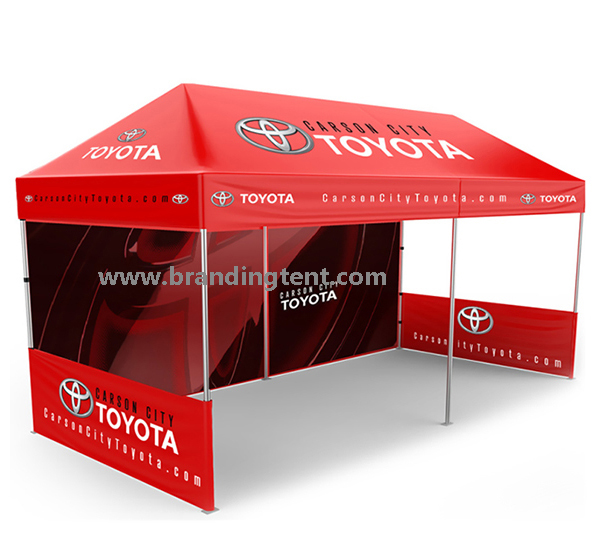
A fast filter when comparing sellers: whoever you buy from, the quotation should survive the name being deleted. That means five lines minimum.
1. Footprint. 3x3m module leg-to-leg, or your custom size — measured, not implied.
2. Frame. Hexagonal aluminum 40/50mm class, wall thickness in millimeters, replaceable joints.
3. Fabric. Denier, coating and gsm — 600D PU-coated oxford or the PVC alternative, per our fabric guide.
4. Print. Full-surface dye-sublimation, Pantone matched, printed before assembly.
5. Kit. Walls, valances, ballast interface, bags — the working inventory.
A seller who answers all five earns the order regardless of which hat the tent wears. A seller who circles back to aesthetics after two questions is a catalog.
Honest guidance: the high-peak family is not universal. It is the wrong choice when you need maximum flat shade per dollar (a standard pop-up canopy covers more usable floor for the money); when the venue caps height strictly (peaks cost vertical clearance); when the program needs walls as standard and a connectable system (a proper pagoda does that — but a “chinese hat” bargained down to a toy does not); or when the job is indoor booths where banner kits win. The silhouette is a tool for presence and airflow, not a default.
UK: buyers add fire certificate language and often search “gazebo”; the same high-peak structure ships with BS-style documentation on request. Australia and New Zealand: the word is marquee, the sun is brutal — UV and colour-fastness conversations belong in the same email as the frame numbers. France: barnum is the trade shorthand; metric everything, and expect the quote to arrive in meters and millimeters without prompting.
Spain and Chile: carpa is the word, and quotes often run through single distributors — asking two suppliers where the factory actually is filters the layer count fast. Argentina: gazebo and carpa both surface; peso volatility makes quote validity windows a real term to negotiate. Brazil: tenda runs the marketplace — check for tenda dobrável reforçada language and confirm print colour against local Pantone equivalents before approving.
One discipline covers every market: attach the five-number specification to the local vocabulary — structure, span, frame, fabric, print — and the name becomes a search term instead of a negotiation.
Names aside, the high-peak silhouette is doing communication work at every event it attends. Psychologically, the peak reads as pavilion or temple — architecture rather than camping — which is why the same structure hosting a bank lounge and a beer garden provokes the same first impression: this organization built something. Photographically, the peak gives every shot a vertical anchor; pictures taken near it compose better than pictures taken near flat canopies, an accidental benefit brand teams discover only after the first event.
Operationally, the raised geometry also lifts hot air and drops the canopy’s interior temperature perception a notch — the reason hospitality operators with a choice put the bar under a peak rather than a flat roof. None of this is name-dependent: call it what your market calls it, and let the geometry keep doing the advertising.
Chinese hat tent, pagoda tent, high-peak marquee — one structure, several languages. Let the names win search traffic and let the specification win the order: footprint, frame, fabric, print, kit, in writing, before money moves. That discipline is the difference between enjoying the naming diversity and paying for it.
If one sentence from this guide survives into your next purchase meeting, make it this: names open doors, specifications close deals. The word on the listing decides who finds you; the numbers on the quotation decide what arrives. Buyers who internalize that split stop losing money in both directions — they search with the market’s words and purchase with the factory’s numbers. And a final field note: whichever name your market uses, keep it in the copy people read but never in the specification people sign. The silhouette is ancient; the contract is precise; the tent is judged in season three, long after anyone remembers what it was called in the catalogue.
💬 Chat on WhatsApp Now✉ Email Us Now
Custom Pagoda Tents
High-peak marquees, 3×3-6x6m, connectable
Custom Dome Tents
360-degree brand stages for events
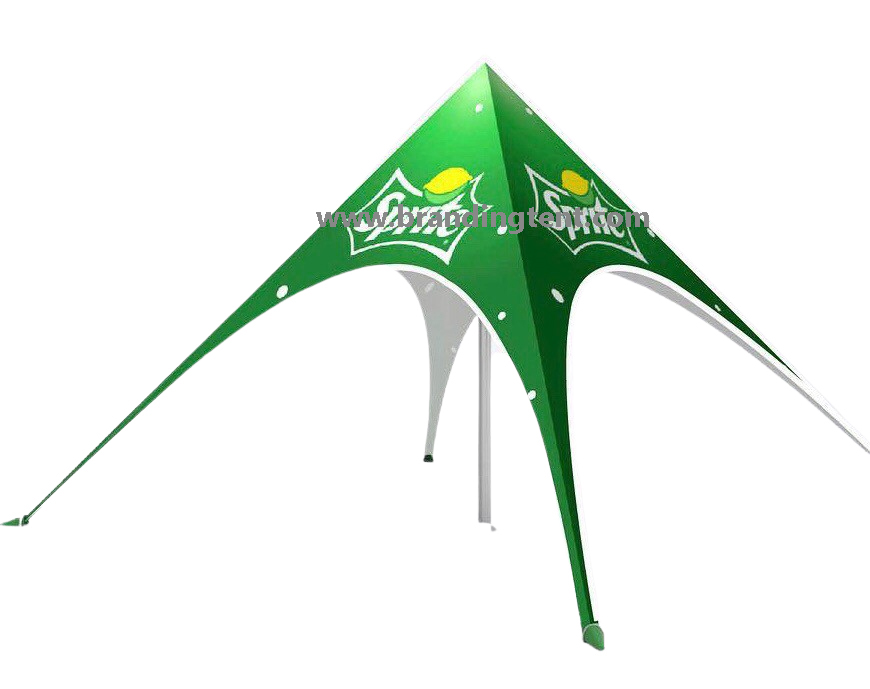
Custom Star Tents
Star shade canopies built to order
More: what is a pagoda tent · pagoda tent sizes guide · hexagonal frame guide · full FAQ
Tell us your event scenario, size and logo file — our tent specialists reply within 1 hour, 24×7 online service, with a free mockup, written specifications and factory-direct pricing.
Yes — the same high-peak structure under two trade names. “Pagoda” comes from the tiered-roof silhouette; “chinese hat” is the older marketplace name for the same cone-and-brim shape. Buy by specification either way.
Use the name your market searches for discovery, but order by structure: footprint in meters, hexagonal aluminum frame with wall thickness, fabric denier and gsm, print scope, kit contents. The specification survives every nickname.
The name does not set the price — the specification does. Identical structures are quoted under both names at every grade level; a suspiciously cheap “chinese hat” is usually a lower frame class or fabric grade, not a naming discount.
Standard event modules run 3x3m through 6x6m with larger spans engineered to order; small 2x2m and 3x3m units serve gates and stalls. See the pagoda sizes guide for capacity math.
Yes — the high-peak silhouette photographs like architecture and is widely used for receptions, lounges and VIP zones, usually in white with walls and lighting. The event market calls the same structure a high-peak marquee.
Low MOQ accepted for samples; wholesale pricing scales from 5+ pieces. Sampling 3-7 working days after artwork approval, bulk 7-15 days by quantity, plus freight — plan 8-10 weeks before an event.