Phone:
0086-757-8938 9313
Email:
Address:
Caochang Industrial Zone, Liguang Rd, Lishui, Nanhai, Foshan, Guangdong, China
24/7 online services

Phone:
0086-757-8938 9313
Email:
Address:
Caochang Industrial Zone, Liguang Rd, Lishui, Nanhai, Foshan, Guangdong, China
24/7 online services
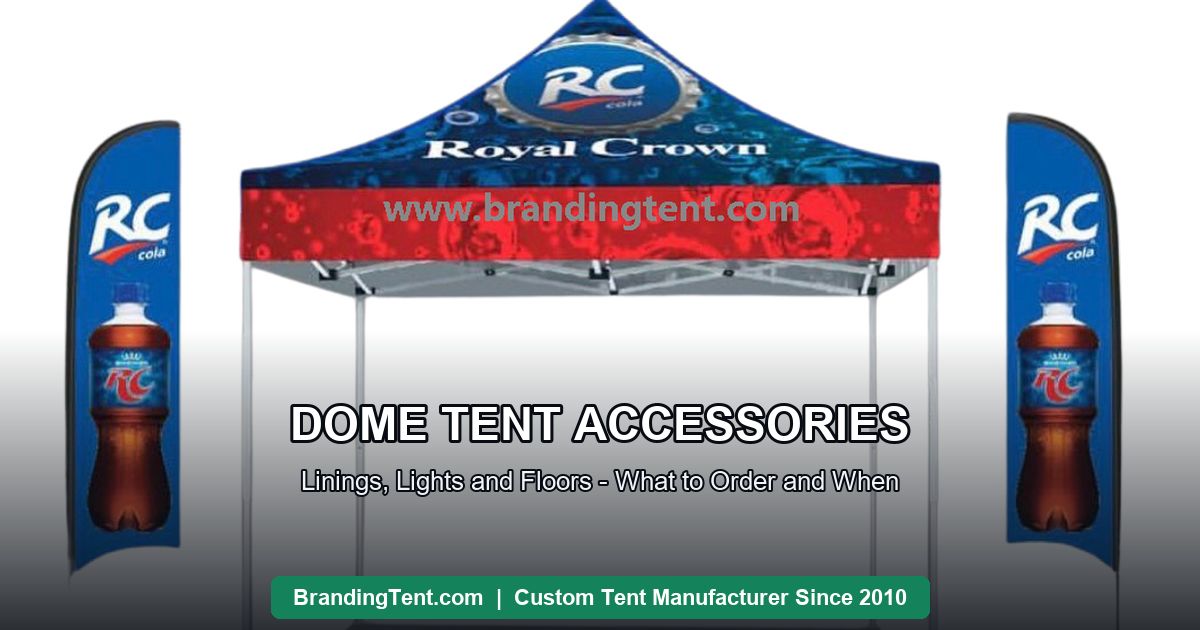
A dome tent ships as a structure; events are made of what you hang inside it. Linings soften the canopy into a ceiling, lighting turns the curve into atmosphere, flooring raises guests out of the grass, and climate touches extend the usable hours at both ends of a long day. The accessories list is where a plain dome becomes a room — and it is also where ordering discipline pays, because half of these items are production-time decisions and half are add-later upgrades. This guide sorts the dome accessory catalogue the way buyers actually need it: what to order with the tent, what can wait, and what genuinely changes how the structure performs.
1. What linings do. A fabric lining under the canopy hides structure texture, softens light, damps sound slightly, and turns a printed roof into an elegant interior — the quiet difference between a tent and a room at weddings and dinners.
2. When to order them with the tent. Color continuity: linings quote and dye with the canopy batch, and late linings never quite match under evening light. If the dome will host dressed events, order linings in the same production run.
3. Interior print instead? Printed interior panels — branding toward guests — are the commercial cousin of linings; the 360 print guide covers that decision.
1. Canopy washes. LED washers aimed at the curve set mood in one gesture; the dome’s geometry spreads even light with fewer fixtures than any flat-roof rival.
2. String and festoon lines. Along the ribs or in catenary loops — the classic day-to-night transformation for hospitality domes.
3. Task and safety layers. Service stations, bar counters, walkways and exits need working light that styling must not sacrifice — plan the layers together, not sequentially.
4. Power planning is part of the kit. Loads, cabling runs and generator or venue-power access belong in the same conversation as the fixture list.
1. Flooring. Matting for grass, dance floors for receptions, decking for hospitality zones — flooring protects heels, furniture stability and the mood.
2. Climate touches. For summer daytime: shade cloths, fans, misting; for evening and shoulder season: patio heaters, wind walls, blanket stations. The dome’s open perimeter makes add-on climate gear more effective, not less — air moves.
3. Doors and closures. Door walls and zippered entries on walled configurations manage flows and weather; our walls guide covers the wall inventory logic that applies across structures.
| Accessory | Order with dome | Add later | Why |
| Linings / interior drapes | Yes | Color-match risk | Dye batch continuity |
| Anchor/ballast kit | Yes | — | Venue compliance is day one |
| Lighting kit (wash + string) | If events are evening | Yes | Power planning easier early |
| Flooring | Site-dependent | Yes | Decided by venue surface |
| Climate gear | No | Yes | Season and forecast driven |
| Trolley bags / spares | Yes (fleets) | Yes | Cheap insurance at order time |
Honest budgeting: a dome used for shade and storage does not need linings or wash lighting — those are hospitality upgrades for hosted guests. A single-event install may rent accessories instead of owning them. And climate gear should never mask a structural problem: if the dome is too hot or cold for its intended duty, revisit sizing and site, not just add fans. Accessories refine a correct structure; they cannot rescue a wrong one.
Dome accessories age in storage more than on site, and three habits decide how many seasons they serve. Habit one: linings and drapes fold loosely into their own labeled bag, never compressed under ballast in the truck — fabric creases pressed for weeks become permanent shadows on site. Habit two: lighting gear travels in one case with its cables coiled and counted; the missing extension run is the oldest story in event production, and the cheapest one to prevent.
Habit three: flooring mats dry before stacking, and edges stay out of the rain — damp matting smells like a problem long before it looks like one. One labeled bag per dome, one gear case, one drying rack corner: those three containers are the entire operations manual for accessories, and crews follow containers far more reliably than rules.
First order: structure, anchor kit, trolley bags, spares box. Nothing else — the tent must be deployable before it is dressable, and the baseline kit is what venue check-in reads. Second order, after the first hosted event: linings if the dome hosted guests, lighting if the event ran past sunset, flooring if anyone winced walking in. Third order, after a season: climate gear matched to the calendar’s actual weather, and the second set of anything the crew borrowed from other kits twice.
The order matters because it sequences spending against evidence — accessories bought from imagination gather dust; accessories bought after a real event get used at every one after it. New dome owners who follow the three-order path end a season with a complete, tested kit instead of a pile of purchases and a shopping list.
The accessory layer is what the guest actually experiences: a soft ceiling, kind light, a floor that behaves, air that moves. Order the batch-sensitive items — linings, anchors, printed surfaces — with the dome; add climate and event gear as calendars demand. A dressed dome stops being weather cover and becomes the room the event was sold on.
A closing budget discipline worth keeping: accessories depreciate faster than structures, so buy them in the order guests can feel them. Comfort first — flooring, light, airflow — because those change how long people stay. Branding second — interior print, valance updates — because those change what people photograph. Convenience last — gadget storage, signage systems — because those change how staff feel, which matters and can wait one season. Programs that sequence accessory spending by guest impact end each year with a kit that performs everywhere it is deployed, instead of a storage room of purchases waiting for an event that needs each one. And one storage truth to design around: accessories fail in storage more often than on site. Heat cooks fabric in unventilated lockers, moisture finds the electrical gear, and compressed linings crease permanently. A dry shelf, a labeled case and a five-minute seasonal audit are the entire maintenance program — and they happen to be the three habits that keep year-five accessories looking like year-one kit. And when the accessory list finally outgrows one shelf, resist the storage-unit reflex: rotate instead. Older linings move to the utility modules where guests never look, newer ones dress the dome; lighting upgrades flow to the hero structure while serviceable older lamps take the staff tent. Rotation multiplies kit life the way routing multiplies a fleet, and it costs one afternoon a season. And one rotation caveat worth a line: never rotate a lining into a role its color cannot survive — save the pristine set for the photographed events and let the utility modules keep the patina.
💬 Chat on WhatsApp Now✉ Email Us Now
Custom Dome Tents
360-degree brand stages for events
Custom Pagoda Tents
High-peak marquees, 3×3-6x6m, connectable
Custom Star Tents
Star shade canopies built to order
More: dome 360 printing guide · dome launches guide · tent accessories guide · full FAQ
Tell us your event scenario, size and logo file — our tent specialists reply within 1 hour, 24×7 online service, with a free mockup, written specifications and factory-direct pricing.
Baseline: anchor/ballast kit, trolley bags and spares. Hosting upgrades: linings for interiors, lighting kits for evening events, flooring by site, and climate gear by season. Order batch-sensitive items with the dome.
With the tent wherever possible — linings dye with the canopy batch for color continuity, and late orders carry both matching risk and doubled freight.
Canopy washes for mood (the curve spreads light beautifully), string/festoon lines for hospitality warmth, and dedicated task/safety lighting for service and exits — all planned with the power load, not after it.
For dressed events on grass or uneven ground, yes: matting, dance floor or decking protects furniture stability, heels and mood. Bare-ground domes suit rustic and daytime uses.
Yes — single-event installs often rent lighting and flooring. Repeat programs should own the batch-sensitive items (linings) and can rent the seasonal ones.
Accessories follow the tent’s order pipeline: low MOQ for samples, wholesale pricing from 5+ pieces, and production 7-15 days by quantity when bundled with the dome.