Phone:
0086-757-8938 9313
Email:
Address:
Caochang Industrial Zone, Liguang Rd, Lishui, Nanhai, Foshan, Guangdong, China
24/7 online services

Phone:
0086-757-8938 9313
Email:
Address:
Caochang Industrial Zone, Liguang Rd, Lishui, Nanhai, Foshan, Guangdong, China
24/7 online services
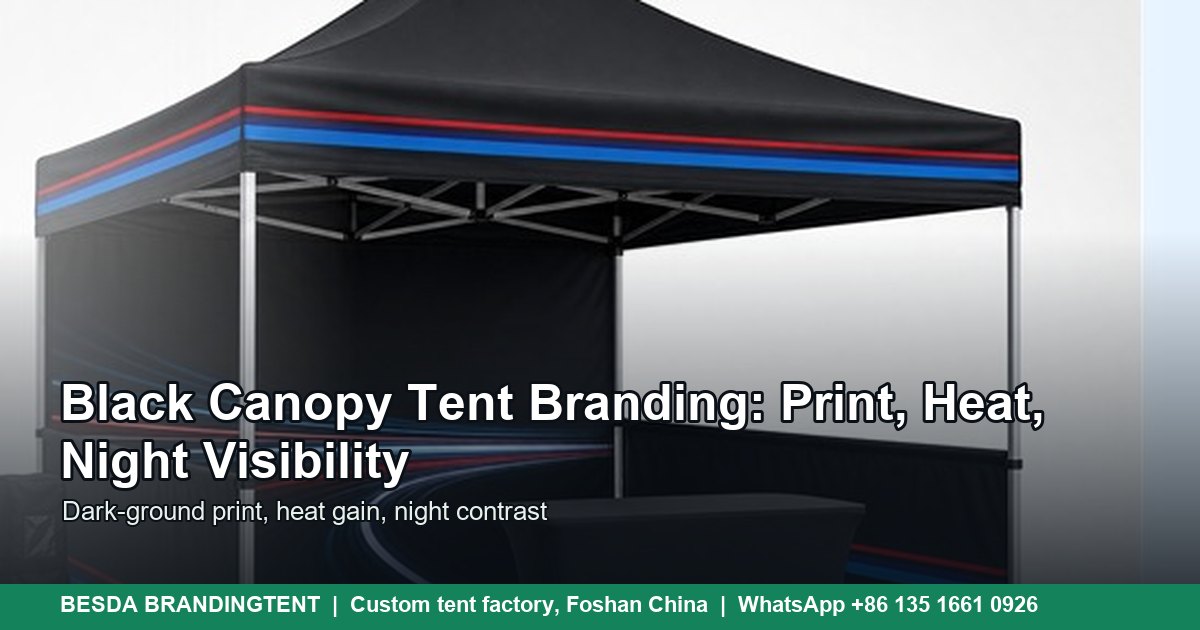
Black canopy tent printing fails in one predictable place: the white. Sublimation ink is translucent, so a white logo printed on black cloth comes out as the cloth itself. That single fact decides the artwork, the print method, the budget and the delivery date. This guide covers what changes on a dark ground, how each print route behaves, what a black roof does to the interior on a hot afternoon, and how to keep a dark stand legible after sunset. Scope note: these are event-grade canopies from 3×3 m to 3×6 m, not clear-span marquee halls.
Four things change at once, and only one of them is about colour.
1. The ground stops being neutral. Every ink printed on black is mixed with the cloth in the eye, not on the press. A red becomes a dark maroon, a yellow turns olive, and a white disappears. The proof on a screen cannot show this, which is why a physical panel matters more on dark cloth than on any other job.
2. The white has to be added, not printed. There is no white sublimation ink. White on black requires an opaque layer: screen ink, vinyl, a transfer film or a piece of unprinted white cloth. Each route has a different edge quality, hand feel and minimum quantity.
3. The roof collects heat. A dark coated surface absorbs most of the light that hits it and re-radiates it as heat. A 3×3 m black roof shades about 9 sq m, and under fitted walls with no airflow that shade holds warmer air than a white roof of the same size. A 3×6 m roof doubles the area to about 18 sq m and doubles the effect.
4. The stand reads differently at night. In daylight a black canopy is a strong graphic shape. After sunset, without light on the face, it becomes a dark rectangle that visitors walk past.
None of these is a reason to avoid black. They are the four specifications that a black order has to carry, and a supplier who cannot answer all four is guessing.
Buyers ask for black for reasons that make commercial sense. A dark stand separates from a field of white pop-ups at a market. It photographs well for a car launch, a watch brand or a night event. It hides transport scuffs, pavement dust and the coffee stain that ends a white cover on day one. It also signals a different price bracket to a visitor without a word of copy.
The cost is paid in three places.
1. Print complexity. A design that would be one dye-sub pass on white becomes two or three operations on black. That adds 2 to 4 production days and a second approval step, and it raises the minimum run for screen work to roughly 20 to 50 pieces per colour.
2. Heat management. A black roof needs airflow planning. That usually means a mesh wall on the sunny side, a higher leg setting of 2.4 to 2.6 m or a fan, and it can change the wall layout from the original sketch.
3. Night lighting. A dark stand needs its own light to be seen after dusk. A white stand can borrow ambient light from the site; a black one usually cannot. Budget for lamps, cable and a power point, or accept that the stand closes visually at sunset.
The fair question is whether the brand advantage is worth those three costs for your event. For a night market with a generator and a lit valance, yes. For a daytime field event with no power and a rental fleet that serves ten different clients, usually not.
Dye-sublimation prints a gas, not a film. The ink turns to gas at about 180 to 210 C and bonds into polyester fibre, which is why the print does not sit on the surface and does not crack like a coating. The same property explains the limit: the gas binds into the fibre it finds, and a dark fibre stays dark under a translucent ink.
There are five workable routes for a mark on dark cloth. They differ in what the buyer sees at one metre, not just in cost.
| Method | How white appears | Best for | Watch out for |
| Dye-sub on a white base | The white is unprinted fabric, black is printed around it | Full-colour designs where black is a printed field | Large dark areas cost ink and time, edges can halo |
| Dye-sub plus a sewn white panel | A separate white panel is cut and stitched into the dark cloth | Logos, sponsor blocks, sign panels | Panel seams are visible and must be designed in |
| Screen print with opaque ink | Opaque white ink prints on top of the dark ground | One to three spot colours, medium to large runs | Each colour needs a screen and a drying pass |
| Heat transfer vinyl | A white vinyl layer is pressed onto the surface | Small marks, names, numbers, short runs | Edges lift after repeated folding if the press is cold |
| DTF transfer | A white ink underbase carries the colour layer | Detailed multicolour art on dark cloth | Hand feel is heavier and the film can crack if stretched |
Two practical rules follow. First, decide the white route before the artwork is drawn, because a sewn panel needs a seam allowance and a screen print needs a colour separation. Second, print a panel at production size. A white that looks clean on a monitor can show a grey halo on oxford, and the halo is the difference between a brand mark and a sticker.

The route we recommend most often for a full-colour design is dye-sub over a printed dark field. The cloth stays white, the black is printed as a background, and the white areas are simply unprinted fibre. It gives the cleanest white and the best colour control. The trade is ink volume and time, and the edge of a large black field can show a faint halo where the print stops.
For a sponsor block or a single corporate mark, a sewn white panel is often the better answer. It holds the exact white of the brand guide, it survives washing, and it can be replaced without reprinting the roof. The seam is visible, so the layout must treat it as a design line rather than an accident.
A black canopy earns its extra work in settings where the stand is a stage rather than a stall.
In each case the black is doing a job: it removes competition from the background. Where the job is shade at midday in a hot climate, the same colour works against the buyer, and a white roof with dark walls does the job better.
The same black roof is read differently in each market, and the difference changes the wall set and the lighting plan.
United States and Canada: buyers order a 10×10 or 10×20 canopy and often expect the colour to match a vehicle livery. Black is common on forecourts, and the valance carries the dealer name at eave height, usually 2.1 to 2.4 m. Ask for the lot or booth rule on height before the order.
United Kingdom: the product is called a gazebo or a pop up gazebo, and a black frame is often chosen for evening hospitality. The site usually has no power, so a light valance and one battery lamp do more for visibility than a larger logo.
Germany and Austria: buyers call it a Faltpavillon and ask for the fire reference before the print proof. Dark cloth with a white sewn panel is a common specification, because the panel holds the corporate white exactly and can be replaced on its own.
Australia and New Zealand: a black canopy at a summer field event is a heat problem, and buyers usually choose a white roof with black walls. The marquee vocabulary is common here, so confirm the footprint in metres rather than the local name.
Latin America: a carpa negra reads well at night events and at brand launches, and the double sided flag is the usual companion. Buyers in Brazil often ask for a mesh wall on the sunny side, because the tenda is used for long afternoon shifts.
Middle East: a black kheima is a hospitality signal, and the interior is usually open on two sides for airflow. The white route matters here more than anywhere else, because a grey-looking white under strong sun is visible from across a compound.
The comparison below is about the canopy as a working surface, not about taste.
| Point | Black canopy | White canopy |
| Solar load | Absorbs most of the incoming light and re-radiates heat | Reflects most of the light, interior stays cooler |
| Interior under walls | Runs warmer as walls close and airflow drops | Warmer than open shade, but cooler than a dark roof |
| Dye-sub colour | Ink sits on a dark ground, so light colours shift toward the cloth | Ink reads close to the proof on a light ground |
| White marks | Needs an opaque method or a sewn white panel | Prints directly in the same dye-sub run |
| Daytime contrast | High for light and saturated marks, low for dark marks | High for dark and saturated marks |
| Night contrast | Drops fast once ambient light falls | Holds up longer under the same lighting |
| Dirt and scuffs | Hides transport marks and pavement dust | Shows every mark and needs cleaning before each show |
| Photo look | Reads formal and product-like on camera | Reads open and neutral, easier to light |
| Rental reuse | One dark design date-stamps the fleet | Neutral base accepts many client graphics |
Read the table as a set of trade-offs rather than a verdict. Black wins on dirt, contrast for light marks and photographic control. White wins on thermal comfort, print simplicity and rental reuse. A mixed specification, white roof with black walls, wins on both counts for many buyers, and it is the option we quote most often for hot-climate markets.
Three physical effects decide whether a black stand works on site. Each can be measured or planned before the order, and each is cheaper to fix on paper than at the venue.
1. Heat. A dark coated roof absorbs most of the solar load instead of reflecting it. In still air, with four walls fitted, the interior runs warmer than under a white roof, and the gap widens as the afternoon goes on. Airflow is the lever: an open side, a mesh wall on the sunny face and a raised eave move hot air out faster than any fabric choice. If the site has no breeze and no power, a black roof on a hot day is a specification error, not a style choice.
2. Daylight contrast. On a dark ground, light marks read and dark marks vanish. A navy logo on a black roof is invisible at 5 m even in full sun. The fix is a light or saturated mark, or a white panel under the logo at least 20 mm larger than the mark on every side. Check the artwork by converting it to greyscale: if the mark and the ground sit within two steps of each other, the print will not read.
3. Night visibility. Ambient light at an evening market is often 10 to 30 lux, and a walkway under event lighting can reach 50 to 100 lux. A printed face needs roughly 50 lux to read at 10 m, so plan one aimed lamp per 3 m of frontage and keep the lamp outside the canopy. A light valance gives the stand an outline even when the logo is in shadow, which is what makes it findable from across a field.
A working target for the mark against the ground is a luminance contrast of about 3 to 1. That is a design rule, not a certification, but it catches most of the failures before print. Test it on the panel sample under the light you will actually use, because a mark that passes under office light can fail under a warm lamp.
These rules are short, and each one prevents a reprint.
One more rule is worth stating on its own. Do not put small text on a valance. The valance is read from 10 to 20 m, and a phone number or a website line at that distance needs a letter height that most layouts do not allow. Put the name on the valance and the detail on the table cover, where the reading distance is one metre.
The specification table is the part of the order that survives a change of salesperson. If a number is not written down, it will be decided by whoever runs the cutting table.
| Item | Typical spec | What to ask for |
| Roof fabric | 600D polyester oxford, PU coated, about 210 to 240 gsm | Denier, coating weight and colour fastness report |
| Heavy roof option | 1000D oxford at about 280 to 330 gsm | Tensile and tear figures from the mill |
| Wall fabric | 600D oxford or 500 to 650 gsm PVC | Whether the wall is printed or plain dyed |
| Frame | 30 mm steel or 25 mm aluminium, powder coated | Wall thickness and joint type |
| Black print | Dye-sub over a printed dark field, or dyed black cloth | Whether the black is dye or ink, because it changes the match |
| White mark | Opaque screen ink, vinyl or a sewn white panel | Which route the factory will use on your file |
| Minimum stroke | About 5 mm at 1 m viewing distance | A printed test strip at production size |
| Letter height | About 25 mm per 3 m of viewing distance | A size check against the actual stand distance |
| Night lighting | Aim for 50 lux or more on the printed face | Light type, mounting height and power access |
| Fire options | EN 13501-1, NFPA 701 or CPAI-84 references on request | The certificate number for the fabric lot |
The FAB table converts those specs into the outcome a buyer can check at the event.
| Feature | Advantage | Benefit |
| Dark ground with an opaque white mark | The logo holds its edge at 10 m | The brand reads from the far side of a night market |
| 600D oxford at 210 to 240 gsm | Tear strength that survives a season of folding | The roof does not split at the corner seam in month two |
| Printed valance in a light colour | A reflective band at eave height | The tent outline is visible after sunset |
| Sewn white panel option | No colour shift on the ground colour | Sponsor marks stay true to the brand guide |
| PU coating on both faces | Water beads and runs off the roof | A wet afternoon does not stain the dark cloth |
| Replaceable wall skins | New campaign on the same frame | A second season costs one print run |
Straight answer: black is not worth specifying in five common situations.
1. A midday summer event with no power and no breeze. The interior will be uncomfortable and the stand will empty out. Choose a white roof with dark walls, or add a mesh wall and a fan.
2. A rental fleet serving many clients. A dark roof date-stamps every job with the same look. Neutral white cloth with printed walls gives the fleet more selling options.
3. A brand whose mark is dark. A navy or charcoal logo on black cloth is a print that cannot read at any distance. Either change the mark to a light version for this application, or choose a different cloth colour.
4. A one-colour budget with no sample step. The white route on dark cloth needs a physical sample. A buyer who will not approve a panel is buying a guess, and the guess usually lands on the grey halo.
5. A site that needs a single roof over a crowd. Canopies at 3×3 m and 3×6 m are modules for a stall, a forecourt or a booth. They are event-grade, not clear-span marquee halls, and no print method changes that.
1. Start from the mark, not the tent. Send the logo in vector form with its brand colours. The mark decides the print route, and the route decides the schedule.
2. Decide whether white is part of the design. If it is, choose the route: printed dark field on white cloth, sewn panel, opaque screen, vinyl or transfer.
3. Run the greyscale test. Convert the artwork to greyscale and check that the mark separates from the ground. If it does not, the layout changes now, not after the proof.
4. Set the viewing distances. Write down how far away the valance, the wall and the table cover are read from, then size the strokes and letters to those numbers.
5. Choose the fabric weight for the job. 600D at about 210 to 240 gsm suits a portable stand; 1000D at about 280 to 330 gsm suits a season-long forecourt where the roof stays up.
6. Plan the heat. Decide the wall layout, the mesh side and the eave height before the order, because wall panels are cut to the frame.
7. Plan the light. Count the lamps, the cable runs and the power points. A dark stand without a lighting plan is a dark stand after 7 pm.
8. Approve a production panel. Ask for a printed panel from the same lot, check it outdoors and under the event light, and keep it as the reference for the reorder.
A black order carries one extra gate compared with a white one, and that gate is the white route. The sequence below is the version that avoids reprints.
1. Artwork with the route named. Send vector artwork, Pantone Coated references and a note saying whether white is part of the design. The route is decided on paper before anything prints.
2. Mockup and seam map. The drawing shows where panels join, where the valance sits and where the white panel falls if the design uses one. Approve the drawing, not a verbal description.
3. Dark-cloth proof panel. A panel printed on the production cloth at production size, in 3 to 7 days. Check it outdoors in daylight and under the event lamp before signing it off.
4. Production. Printing, cutting and sewing in one factory, typically 7 to 15 days after approval. Screen work adds a drying pass and 2 to 4 days.
5. Quality gate. The roof is fitted to a frame, the walls are hung, and the print is checked for the grey halo that a white mark can pick up on coated oxford. Photos and video go out before packing.
6. Packing and lot record. The lot number goes on the packing list so a replacement wall matches the roof two seasons later. That single number is the difference between a reprint and a mismatch.
Low MOQ orders are accepted, including a single stand with one spare wall. Lead time runs from artwork approval, and the dates belong in the order, not in a phone call.
Most black-canopy complaints trace back to one of these ten decisions.
Black canopy tent printing is a solvable problem, and the answer is decided in the artwork file. Name the white route, run the greyscale test, size the strokes to the reading distance and approve a physical panel. Those four steps remove almost every failure mode that buyers report.
Then handle the two physical consequences. A dark roof collects heat, so plan airflow and wall layout for the climate and the hour. A dark stand disappears after sunset, so plan light on the printed face and a light valance for the outline. Neither point is a reason to avoid black. Both are reasons to specify it properly.
Specify three numbers before the order leaves your desk: the grams per square metre of the cloth, the minimum stroke in millimetres and the lux on the printed face at the event. Add the white route and one Pantone reference. That is a black stand that reads in daylight, survives the afternoon and stays findable at night.
Yes, but not with standard dye-sublimation alone. Sublimation ink is translucent and there is no white sublimation ink, so a white area on dark cloth prints as nothing at all. The workable routes are an opaque screen print, a heat transfer film, a sewn white panel, or a design where the black is printed onto white fabric and the white stays unprinted. We quote the route on the artwork, not on the phone, because the file decides which one is honest.
It runs warmer than a white roof under the same sun, and the gap grows once walls are fitted. The colour is only half of the story. Airflow decides the rest: an open side, a roof vent and a shaded back wall can offset most of the difference. For a midday summer market in a hot climate, we usually recommend a white roof with black walls, which keeps the brand look and moves the heat problem to the shading design instead of the fabric colour.
A black canopy reads as a dark shape unless it is lit. A light valance, a light logo and 50 lux or more on the printed face make it legible at 10 m. Under 20 lux the mark disappears and the stand looks closed. Plan the lighting with the order: one aimed flood per 3 m of frontage is a common starting point, and the lamp must not sit inside the canopy where it lights the roof instead of the mark.
About 5 mm stroke width at 1 m viewing distance, and larger as the distance grows. Thin serifs and hairline rules fill in on coated oxford because the ink spreads into the weave. We print a test strip at production size from the same lot before the run, and the buyer checks the strip at the distance the stand will be read from. A mark that passes on a screen can still fail on cloth.
Dark dyed cloth shows fading as a shift toward grey or brown, which is easier to see than the yellowing of a white roof. Light fastness depends on the dye class and the coating, not on the colour alone. Ask for a light fastness figure for the specific fabric lot, keep the canopy out of the sun between events, and store it dry. A dark roof that lives on a forecourt for two years will change shade, and no print method prevents that.
Yes. A printed panel from the production lot is the useful sample, because it shows the real cloth, the real ink and the real white route. Sample panels usually run in 3 to 7 days and bulk production in 7 to 15 days after approval. Low MOQ orders are accepted, so a first order can be a single stand plus one spare wall rather than a container.
| Item | Detail |
| Manufacturer | Besda BrandingTent, tent and display factory in Foshan, China, since 2010 |
| Product scope | Black canopies from 3×3 m to 3×6 m, printed roofs, walls, valances and counters |
| Base fabric | 600D polyester oxford at about 210 to 240 gsm, 1000D at about 280 to 330 gsm, PU coated |
| Dark-ground print | Dye-sub over a printed dark field, opaque screen ink, vinyl or a sewn white panel |
| White marks | No white sublimation ink exists, so white needs an opaque route or unprinted cloth |
| Minimum stroke | About 5 mm at 1 m viewing distance, with a production-size test strip |
| Thermal note | A dark roof absorbs more solar load, so airflow and wall choice decide the interior |
| Night visibility | Plan 50 lux or more on the printed face and a light valance for the outline |
| Fire options | EN 13501-1, NFPA 701 and CPAI-84 references available on request |
| Low MOQ | Low MOQ accepted, wholesale pricing scales with quantity |
| Lead time | Sample 3 to 7 days, bulk 7 to 15 days after artwork approval |
| Contact | WhatsApp +86 135 1661 0926, [email protected], reply within 1 hour |
Related reading: Custom Tent Printing: Dye-Sub vs Screen vs Transfer · Custom Canopy Color Matching: Pantone, Dye Lots and Proofs · 1000D vs 600D Canopy Fabric: Weight, Tear and Cost · Canopy Sidewalls: Solid, Mesh, Window and Door Panels · Heating a Pop Up Gazebo: Heaters, Walls and Condensation
💬 Chat on WhatsApp Now✉ Email Us Now
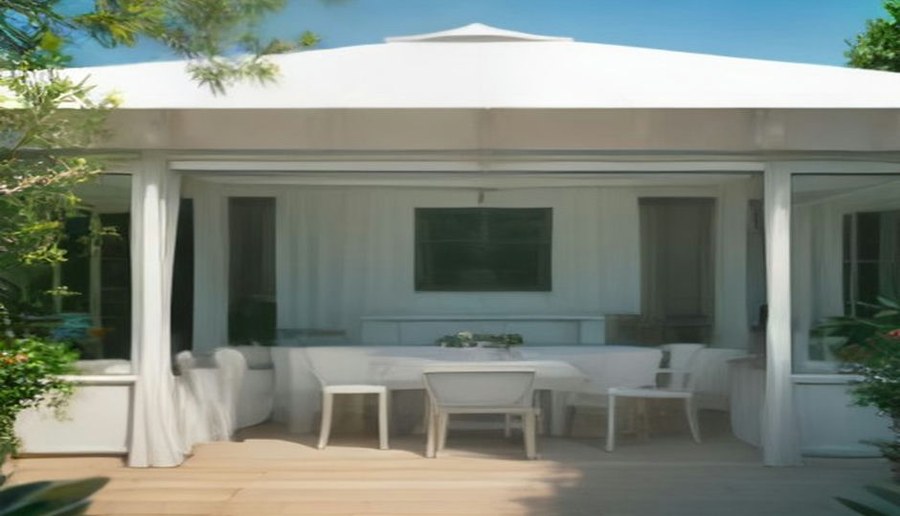
Custom Pagoda Tents
Framed modules 3×3-6x6m
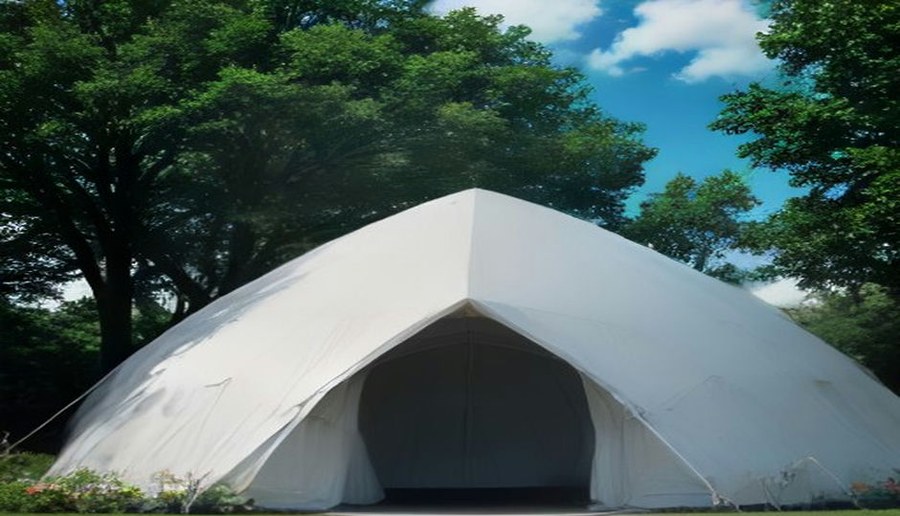
Custom Dome Tents
Round kiosks 3-6m
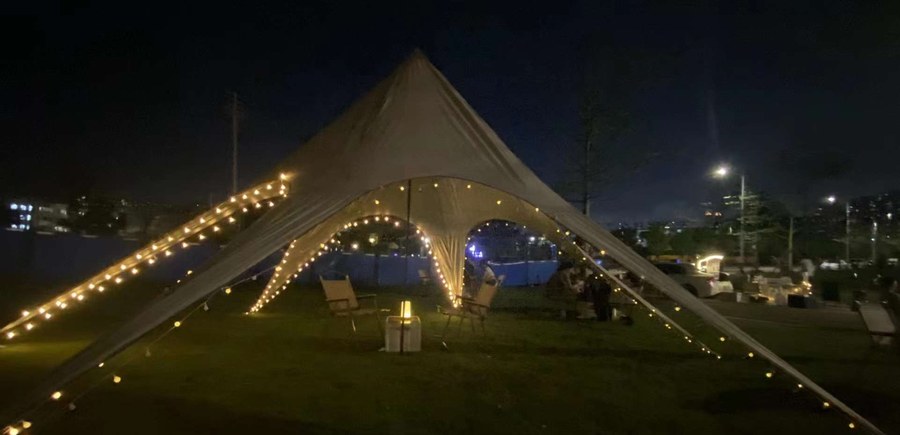
Custom Star Tents
Open shade 5-16m
Tell us the tent size, the ground and weather it has to handle and the destination market. Our tent specialists reply within 1 hour, 24×7 online service, with a free mockup, written specifications and factory-direct pricing.