Phone:
0086-757-8938 9313
Email:
Address:
Caochang Industrial Zone, Liguang Rd, Lishui, Nanhai, Foshan, Guangdong, China
24/7 online services

Phone:
0086-757-8938 9313
Email:
Address:
Caochang Industrial Zone, Liguang Rd, Lishui, Nanhai, Foshan, Guangdong, China
24/7 online services
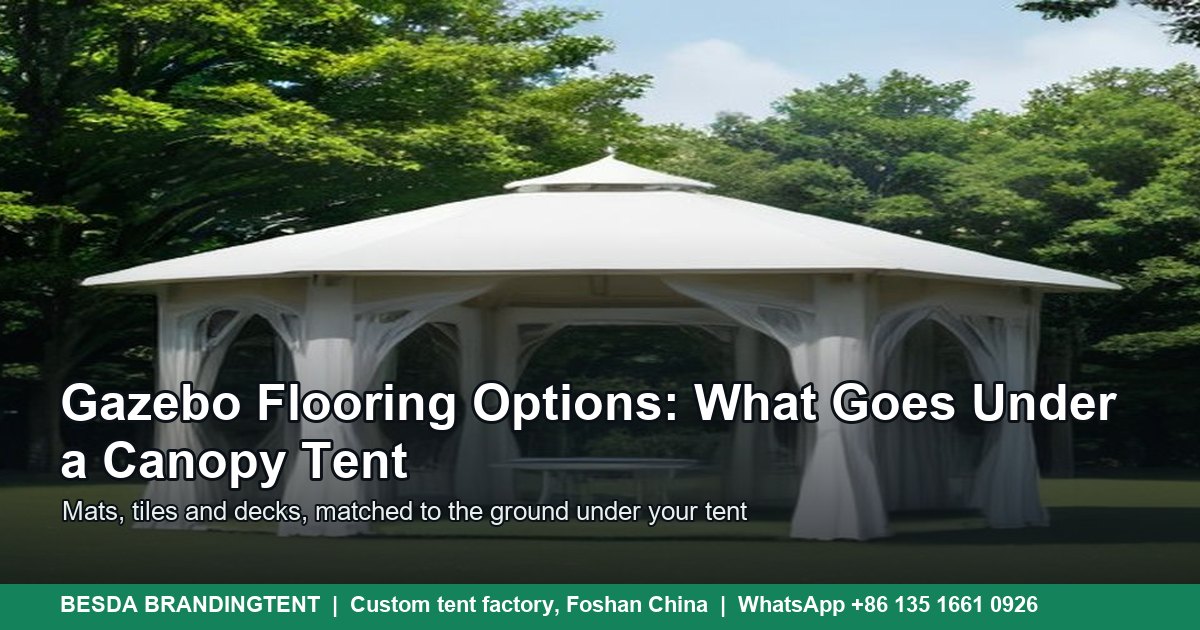
Gazebo flooring is the part of the quote that nobody remembers until the morning of the event, when the grass has turned to soup and the brand team is watching their shoes disappear. The tent gets all the attention and all the print, but the surface under it decides whether guests stand straight, chairs stay level, cables hide safely, and the site owner lets you back next year. This guide compares every flooring option we see across rental fleets and market circuits, the ground each one suits, the tile math for common tent sizes, and the plain cases where no floor at all is the right answer.
Quick boundary note before the detail. We manufacture event-grade folding gazebos, pagoda and canopy tents from 3×3 m to 6×6 m, plus the sidewalls and ballast plans around them. We do not build permanent venues or clear-span marquee structures with built-in flooring decks. The advice here is written for portable event tents and the ground they actually stand on.
A floor under a canopy tent does four jobs at once, and naming them helps you buy the right one:
One thing flooring does not do: it does not anchor the tent. Ballast and anchoring are a separate line in your plan, and we come back to that below, because the two get confused on soft ground more than anywhere else.
The classic sequence runs the same at every winter market. Friday night rain, Saturday morning queue, and by ten o clock the entrance to the tent is a puddle with a plywood offcut floating in it. Guests stop coming in. Chairs tilt. A freezer delivery slides across the floor. None of that shows up in the tent invoice, all of it shows up in the day.
Rental companies feel it in a different place: the site. Churned turf on a sports field or a council square is a damaged relationship, and the repair bill lands on whoever held the event. Ground protection has quietly become a line item that market organizers now ask vendors to evidence before they issue pitch confirmation.
And for brand and exhibition buyers there is the simplest driver of all. Two identical stalls sell the same product; the one with a level floor and no cable tangle keeps visitors long enough to tell them about it.
1. Grass protection mats. Tough plastic sheets, typically 2 to 3 cm thick, that spread foot traffic and light trolley loads across the turf. They lock or simply butt together. They protect grass and stop mud mixing upward, but they follow the ground, so they are a protection layer, not a level floor.
2. Interlocking PVC or PP tiles. Rigid tiles, most commonly 50 cm squares with a loop and peg edge, that build a flat, load-spreading deck. Done properly with edge ramps they take tables, fridges and pallet trucks. This is the workhorse option for trade stands and retail pop-ups.
3. Jigsaw foam tiles. Soft EVA squares that click together. Warm underfoot and fast, but they compress under chair legs and heater feet, so they belong indoors on hard standing or in play zones, never as a structural floor.
4. Plywood and timber deck panels. Sheet panels laid over membrane, the traditional answer for mud at weddings and festivals. Strong and re-usable for seasons with care. Heavy to move, and storage matters: panels packed wet grow mold and warp by spring.
5. Plastic grid and geocell systems. Cellular grids that stay in the grass permanently, letting it grow through while carrying loads. A venue upgrade rather than an event kit, common on emergency lanes and overflow parking.
6. Cassette and trackway systems. Aluminum or heavy plastic panels on the scale of road plates. This is the fleet answer for vehicle loads and deep mud, moved by van and placed with tools. Overkill for a market stall, exactly right for a festival gate.
7. Composite deck tiles. Wood-composite or WPC squares on plastic bases that click together for showcase builds. The premium look for brand activations; check the fire classification before using them inside an enclosed tent.
Times and weights below are typical figures for a 3×3 m tent unless stated, drawn from what crews report across our export markets. Your site will vary; the pattern holds.
| Flooring option | Best ground | Install for 3×3 m | Reusability | Watch out for |
| Grass protection mats | Dry and damp grass | About 20 minutes | Seasons of reuse | Visible seams on smart sites, not a level floor |
| Interlocking PVC or PP tiles | Grass, gravel, level dirt | 30 to 45 minutes | Years, buy once per tent | Needs edge ramps, heavy to carry in bulk |
| Jigsaw foam tiles | Hard standing inside the tent | 15 minutes | A few events | Crushes under chair legs and heater feet, indoor grade only |
| Plywood or timber deck panels | Mud, soft fields | Half a day with a crew | Many seasons with care | Heavy transport, splinters and warp if stored wet |
| Plastic grid and geocell | Grass that must survive | 1 to 2 hours | Years, stays down | Fills with soil, not a showcase surface |
| Cassette and trackway systems | Vehicle loads, deep mud | Crew with tools, half a day | Fleet asset for years | Van space and forklift territory, rarely a one-person job |
| Composite deck tiles | Showcase brand builds | 1 hour per 9 sqm | Years | Costlier per sqm, check fire class for enclosed builds |
Buyers ask the reverse question just as often: not which floor to buy, but what to do on the ground they have been given. This is the matrix our team uses on quote calls.
| Ground condition | First choice | Add for comfort | Anchoring move |
| Firm dry grass | Mats or no floor | Interlocking tiles under tables | Stakes or weights, surface decides |
| Wet grass after rain | Interlocking tiles | Carpet runner over tiles | Weights, plenty of them |
| Mud and churned fields | Plywood panels or trackway | Tiles on top for show areas | Weights only, stakes will not hold |
| Paved plaza | No floor needed | Foam tiles in kids zones | Weighted feet, plates, no drilling |
| Loose gravel | Interlocking tiles | Underlay sheet to stop sink | Weights on spreader plates |
| Sand and beach | No rigid floor, mats only | Recessed anchor plates | Buried anchors or water weights |
The anchoring column matters more than it looks. On mud, stakes pull out and weights on spreader plates do the holding. On paved plazas you cannot stake at all, so the ballast plan carries the whole wind job. On sand, nothing short of buried anchors or large water ballast behaves in a gust. If your supplier quotes you a tent without asking about your surface, that is a signal to keep shopping.
The arithmetic is friendly, which is why this section is the one buyers screenshot. A 50 cm square tile covers 0.25 sqm, so it takes four tiles per square meter. Multiply your tent floor by four and you have the tile count; add roughly 5 percent for cuts and spares.
| Tent size | Floor area | 50 cm tiles needed | Approx tile weight | Typical crew time |
| 3×3 m | 9 sqm | 36 tiles | 70 to 90 kg | 30 to 45 minutes |
| 3×4.5 m | 13.5 sqm | 54 tiles | 105 to 135 kg | 45 to 60 minutes |
| 3×6 m | 18 sqm | 72 tiles | 140 to 180 kg | 1 to 1.5 hours |
| 4.5×4.5 m | 20.25 sqm | 81 tiles | 160 to 200 kg | 1 to 1.5 hours |
| 6×6 m | 36 sqm | 144 tiles | 280 to 360 kg | 2 to 3 hours |
Worked example. A market trader running a 3×3 m gazebo on mixed grass and gravel orders 36 tiles plus 2 spares. The case fits beside the tent bag in a small van, the tiles lay before the frame goes up, and the legs stand on spreader plates on top of the finished deck. Thirty minutes of work, and the stall stops looking like a campsite.
For teams quoting exhibitions on parking lots, the same math scales: a 6×3 m trade stand wants 72 tiles, two cases in a van. Keep the per-tent count printed on the case lid so the warehouse packs complete kits.
There is a real case for no floor, and it is worth saying plainly so you can spot it: firm, dry, summer grass with light foot traffic needs nothing but a level pitch and standard anchoring. Beyond that, the comparisons below are the short version.
| Approach | Guest experience | Logistics load | Where it wins |
| No floor, ground as found | Depends entirely on weather | None | Summer fairs on firm grass |
| Mats only | Clean, slightly uneven | One roll per tent | Market traders, weekly set-ups |
| Interlocking tiles | Level, dry, brand-ready | One case per 9 sqm | Retail pop-ups, trade stands |
| Deck panels over mud | Solid under any footwear | Van and crew time | Winter festivals, weddings |
| Venue provides floor | Often the best surface available | None, but rules apply | Exhibition halls and stadiums |
Straight answer. Flooring pays for itself when any of these are true: the event runs in the wet season, guests will stand or sit for more than a few minutes, stock or equipment sits on the ground, the site charges for turf damage, or the stall is brand-facing. Those five conditions cover nearly every winter market, every wedding and every trade stand from October onward.
Flooring is not worth the van space when the grass is firm, the forecast dry, the visit short and the budget already stretched. A mat roll is the cheap middle path when you are unsure; full decks on a dry summer field are space spent on nothing.
And a boundary worth repeating: if your venue needs a finished permanent floor, reticulated services and level access across a whole hall, that is a building, not an event tent kit. We do not manufacture those structures, and a flooring guide that pretended otherwise would be selling you a problem.
The most expensive misunderstanding in this topic is reading a floor as a tie-down. It is not. Wind does not care what is under the legs; it cares what is attached to them. Walls make this urgent, because a walled gazebo catches noticeably more wind than an open one, and a deck under the feet does nothing about that.
Three rules keep the structure honest:
Before you commit budget, answer these six questions in order. They take ten minutes and they settle almost every flooring argument between marketing and operations.
1. Tiles under legs with no plates. The leg punches through the tile edge in soft patches. Spreader plates under every foot, always.
2. Leveling skipped. Ten minutes with a spirit level before the frame goes up saves a whole day of racking doors and rolling pens.
3. No drainage thought. A deck with no fall and no perimeter gap becomes its own paddling pool in a shower.
4. Cables underfoot. Floor systems and cable ramps go together; a taped cable across tiles is a trip claim waiting for a lawyer.
5. Foam tiles under heavy loads. They compress, the table tilts, the display slides. Foam is indoor comfort, not structure.
6. Buying for one event. Tiles and mats are fleet assets. Buy the coverage your biggest usual tent needs and reuse for seasons.
7. Packing wet. Panels and mats bagged wet grow mildew in the van and smell of it all season. The winter storage routine applies to flooring exactly as it does to fabric.
Flooring is a spec game, and the specs are easy to check. Whatever you buy, these lines belong on the quote, and the same habit of written specifications applies to the tent above the floor.
Five buyer types, five baskets. This is the pattern from our export desk across the seasons:
The same product wears different names across our export markets, and searching the local word finds better suppliers faster. Keep this table for your sourcing list.
| Market | How buyers phrase it | Typical driver |
| UK | gazebo flooring, ground protection | Winter markets on grass |
| Germany, Austria | Faltpavillon Boden, Bodenschutzplatten | Advent markets, cleanliness rules |
| France | sol de barnum, dallage | Weddings and chateau events |
| Spain, Latin America | piso para carpa | Terraces and fairs |
| Australia, New Zealand | marquee flooring | Events on sports ovals |
| United States, Canada | canopy tent flooring | Trade shows on parking lots |
On firm, dry summer grass with light foot traffic, usually not; a level pitch and proper anchoring are enough. Once rain, queues, seated guests or stock enter the picture, mats or interlocking tiles pay for themselves in guest time and site condition.
Mud wants structure: plywood or timber deck panels, or a cassette and trackway system for vehicle loads, with weights on spreader plates for anchoring because stakes will not hold in churned ground.
No. A floor spreads downward loads; anchoring resists wind loads. A walled gazebo on brand-new tiles still needs the full weight-per-leg specification, ideally on spreader plates where the surface is soft.
Four 50 cm tiles per square meter means 36 tiles for 9 sqm, plus a couple of spares for cuts. A 3×6 m stand needs 72 tiles, roughly 140 to 180 kg in two cases.
Yes, with weight-based anchoring rather than stakes, protective feet to spare the surface, and the venue or building owner confirming the load. Never drill a deck you do not own without permission.
Interlocking PVC tiles with edge ramps, laid over mats if the site is churned, with a carpet runner in the customer zone. It levels, insulates from the ground chill, and packs back into one case.
Our production line focuses on the event-grade tents, sidewalls and the ballast plans around them. We specify flooring requirements in writing with your order so the structure and the surface arrive as one working system.
Low MOQ is accepted and wholesale pricing scales with quantity. Typical production runs 15 to 30 working days after artwork approval, with photo and video QC before packing, and current lead time confirmed in writing with your quote.
| Item | Fact |
| Product scope | Event-grade folding gazebos, pagoda and canopy tents, 3×3 m to 6×6 m class |
| Brand | Besda BrandingTent, manufacturer and direct factory since 2010, Foshan China |
| Flooring guidance | Mats for protection, interlocking tiles for level floors, decks for mud; specify in writing |
| Tile math | 4 tiles per sqm at 50 cm; 3×3 m tent = 36 tiles, 3×6 m = 72 tiles |
| Anchoring | Written weight-per-leg ballast plan per surface; spreader plates on soft ground |
| Frame | Hexagonal aluminum legs, powder coated joints, spreader plate compatible feet |
| Fabric | 300D-600D oxford with PU coating or 0.55 mm PVC, flame retardant options |
| Fire certificates | B1 (DIN 4102), M2, NFPA 701, CPAI 84, EN 13501-1 references, on request |
| MOQ | Low MOQ accepted, wholesale pricing scales with quantity |
| Response | WhatsApp +86 135 1661 0926 or [email protected], replies within 1 hour, 24×7 |
Related reading: Pagoda Tent Ballast: Weight Plates and Anchoring Guide · Tent Accessories Guide: Walls, Gutters, Weight Plates and More · Pop-Up Gazebo Winter Storage: The Shutdown Checklist That Saves the Fabric · Canopy Tent Leg Height and Eave Clearance: What Fits Underneath · Heating a Pop Up Gazebo: Heater Types, Walls and Condensation
💬 Chat on WhatsApp Now✉ Email Us Now
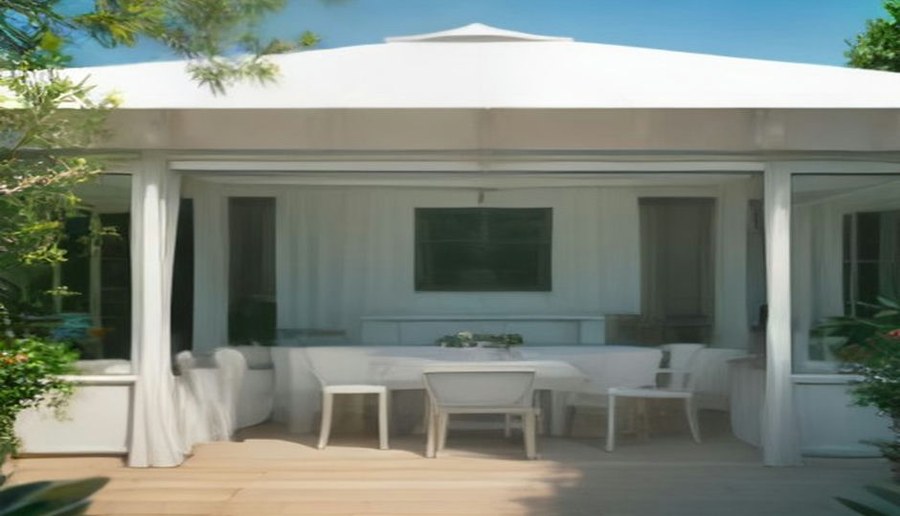
Custom Pagoda Tents
Stall modules 3×3-6x6m
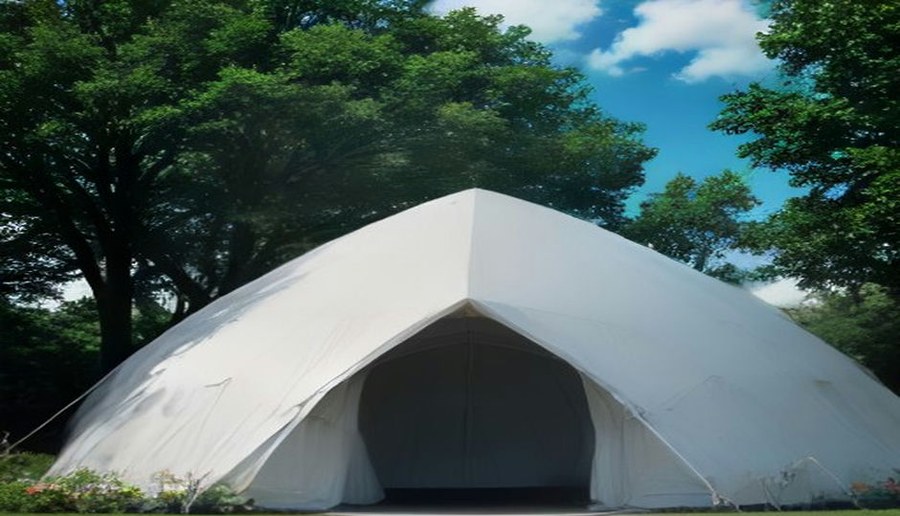
Custom Dome Tents
Round kiosks 3-6m

Custom Star Tents
Open shade 5-16m
Tell us the tent size, the ground and weather it has to handle and the destination market. Our tent specialists reply within 1 hour, 24×7 online service, with a free mockup, written specifications and factory-direct pricing.