Phone:
0086-757-8938 9313
Email:
Address:
Caochang Industrial Zone, Liguang Rd, Lishui, Nanhai, Foshan, Guangdong, China
24/7 online services

Phone:
0086-757-8938 9313
Email:
Address:
Caochang Industrial Zone, Liguang Rd, Lishui, Nanhai, Foshan, Guangdong, China
24/7 online services
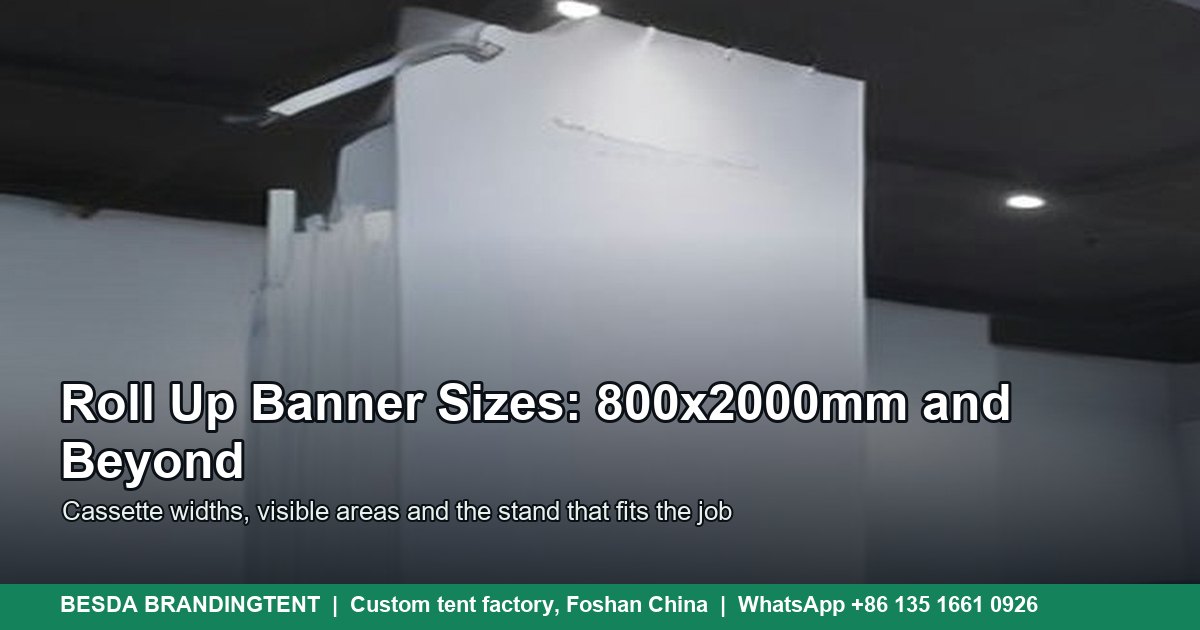
Roll up banner sizes look like a catalogue detail until a stand arrives that is 50 mm too wide for the space you measured, or a panel that hides its own headline inside the roller. The cassette width decides what the stand costs to ship, the graphic height decides what it says, and the visible area decides whether people read it at all. This guide maps the sizes buyers actually order, the numbers that matter in a spec sheet, and the choice between a roll up, an X banner and a full fabric backwall. These are event-grade display tools built for lobbies, booths and foyers, not clear-span marquee halls, and the numbers below are the ones we confirm on the bench before a container ships.
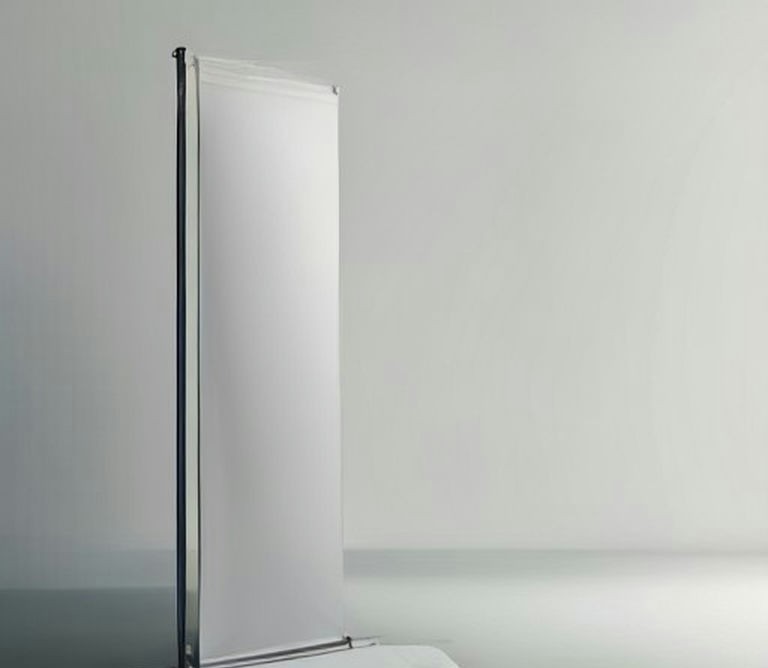
A roll up banner is a printed panel that lives inside an aluminium base cassette. Pull the panel up, lock it to a bifold pole, and the stand is ready in about a minute. Pack it down and the panel rolls itself back into the cassette, which doubles as the base. Four parts decide how the stand behaves:
The stand is a solo performer. One panel carries one message, so the size you choose is really a decision about where the message stands and how far the reader is.
Buyers pick sizes for four reasons, and it helps to know which one is yours. An exhibitor wants a panel that reads across an aisle, so width beats height. A hotel wants a foyer sign that does not block the corridor, so a narrow 610 mm cassette wins. A distributor stocking a catalogue wants the local standard so the stand matches what print shops already sell. An agency running the same campaign in five countries wants one size everywhere, and that choice is usually 850 x 2000 mm because it works in more markets than any other format.
| Size | In inches | Where it is the default | Best job |
| 850 x 2000 mm | 33.5 x 78.7 in | Europe, UK, Australia, Gulf exhibitions | The full-height statement beside a booth entrance |
| 800 x 2000 mm | 31.5 x 78.7 in | European cassette fleets ordered before 2015 | Matching an older set of cassettes so all stands look equal |
| 33 x 81 in | 33 x 81 in | United States, Canada | The tall aisle-facing panel at a trade show booth |
| 33 x 78 in | 33 x 78 in | United States, shorter venues | Rooms with an 8 ft ceiling and hanging light tracks |
| 610 x 2000 mm | 24 x 81 in | United States, compact booths | Corridors, lift lobbies and narrow booth gaps |
| 610 x 1575 mm | 24 x 62 in | United States, registration desks | A countertop or desk-side sign that stays below sightlines |
| 1000 x 2000 mm | 39.4 x 78.7 in | Europe, shared booths | A wider panel when two brands share one stand |
| 1200 x 2000 mm | 47.2 x 78.7 in | Europe, Gulf, product zones | Two units side by side forming a low-cost backwall |
Two habits keep fleets clean. First, write the cassette width and the graphic height on the carry bag, because after two shows nobody remembers which bag hides the 800 panel. Second, order replacement panels against the cassette, not against the artwork file, since the same artwork often runs on two widths across one campaign.
| Feature | Advantage | Benefit |
| Cassette with a spring roller inside | The panel retracts in seconds and rides in its own housing | One staff member moves, sets up and packs the whole display without a trolley |
| Bifold support pole, three sections | Packs to under 60 cm inside the cassette bag | The stand fits a car boot or a shelf between events |
| Wide base cassette on the 1200 and 1500 models | The footprint spreads to about 900 mm deep | The panel stays upright in crowded aisles where a narrow base would tip |
| Swap-out graphic cassettes | A new campaign panel loads without tools | The same stand carries the spring show and the autumn launch |
| Media choice of PVC or PET blockout | Blockout media stops light showing through from behind | The graphic reads clean even when the stand stands in front of a bright wall |
| Fire certificate paperwork on request | B1 class media documents travel with the order | Venue forms get signed without a chase for paperwork |
The roll up is not the only stand in the bag, and the honest comparison is about flatness, speed and reuse. An X banner hooks fabric at four corners, costs less and bows slightly, which reads fine at a distance and cheap up close. An L banner leans against a wall and suits tight corners. A tension fabric backwall covers a whole booth with one printed skin and takes 15 to 30 minutes for two people to build.
| Feature | Roll up banner | X banner | L banner | Tension fabric backwall |
| Setup time, one person | 1 to 2 minutes | 3 to 5 minutes | 3 to 5 minutes | 15 to 30 minutes |
| Panel surface | Flat panel pulled from a cassette | Fabric hooked at four corners, slight bow | Fabric on two poles, slight bow | Large printed fabric on an aluminium frame |
| Packed volume | One cassette bag, about 0.02 to 0.06 CBM | Pole bag plus folded graphic | Pole bag plus folded graphic | Frame kit plus rolled fabric, from about 0.2 CBM |
| Reuse cycle | Swap the cassette graphic, keep the base | New graphic plus new hooks each season | New graphic each season | Frame lasts years, fabric panels are replaced as parts |
| Best at | A single flat message at an entrance | Cheap coverage at many points | Budget backdrops against a wall | Booth-wide branding on a large printed fabric panel |
| Weak point | One panel, one message, indoor use | Corner tension relaxes in dry rooms | Leans on a wall, needs floor space | Cost and packing size for a one-day event |
A rental company that covers a hundred small events a year usually buys all four: roll up stands for entrances and desks, X banners for aisle points, and backwalls for the clients who pay for a bigger booth. The mix matters more than any single product, because the stand that fits the job is the one that comes back undamaged.
The same product answers to a dozen local names, and the default size shifts with them. A buyer in Manchester asking for a roller banner and a buyer in Austin asking for a retractable banner want the same object in slightly different widths. The table below is the cheat sheet we print on the quote.
| Market | What buyers call it | Buying habit |
| United States, Canada | retractable banner, pull up banner | Orders 33 x 81 in, asks about a swap-out graphic for the second show |
| United Kingdom, Ireland | roller banner, pop up banner | Wants 850 x 2000 mm, asks about a padded carry bag and a stable base |
| Germany, Austria, Switzerland | Roll-Up-Display, Rollup | Asks for DIN 4102 B1 media on request and a spare cassette for resale |
| France, Belgium | kakemono, roll-up | Values a clean aluminium finish and a wide base for busy aisles |
| Spain, Mexico, Chile | cartel enrollable, banner enrollable | Prints both sides for corridor positions, ships in mixed pallets |
| Brazil | banner retratil, porta banner | Checks heat and humidity resistance of the media before a season of malls |
| Australia, New Zealand | pull up banner, retractable banner | Expects the 850 x 2000 mm size and a base that survives event loading docks |
| Middle East | roll up banner, X banner stand | Orders wide 1200 mm cassettes for hotel foyers and Ramadan campaigns |
LatAm buyers ordering carpa and tenda packages for markets often add enrolable stands to the same container, and Gulf distributors pair wide 1200 mm cassettes with hotel campaigns during Ramadan. In Germany the same stand sits next to a Faltpavillon order for an outdoor season, and the roll up covers the indoor days. One container, one brand system, four product families.
A straight answer: the roll up stand is wrong in four situations, and buying it anyway is how displays die early. Outdoors, in wind, a fabric panel on a 5 kg base is a sail with a hinge; use a flag base or a weighted canopy leg instead. For a full booth backdrop, one narrow panel looks lonely; pair two wide cassettes or step up to a tension fabric backwall. For double sided corridor work, a single sided cassette wastes its back; order the double sided base. And for a message that changes weekly, the cassette that needs a printed panel every time is slower than a poster frame with paper inserts.
The same honesty applies the other way. Buyers who treat a roll up stand as disposable furniture are spending twice, because a 440 gsm panel on a wide base survives dozens of events when it is rolled cleanly and stored dry.
Work the list in order and the size picks itself:
1. Measure the floor position. Depth matters more than width, because the base needs about 250 mm and the reader needs a clear 600 mm in front.
2. Check the ceiling. A 2000 mm panel plus the pole needs about 2200 mm of clearance; an 8 ft ceiling with light tracks pushes you to the 78 in format.
3. Measure the reading distance. Headline text of 60 to 80 mm reads at 5 to 10 m; if the panel stands 15 m from the aisle, move to a 1200 or 1500 mm wide cassette.
4. Match the local fleet. Ask which size the venue, the print shop and your other stands use, and match it so panels stay interchangeable.
5. Decide single or double sided. Against a wall, single. In open floor, double sided on the wider base.
6. Pick the media. PVC at 305 to 440 gsm for cost and stiffness, PET blockout when bright light sits behind the stand.
7. Plan the artwork zones. Keep key content in the top 1800 mm, let background colour run into the roller band, add 5 mm bleed.
8. Confirm the paperwork. Fire certificate copies, a written spec sheet and a swap-out plan for the next campaign, before the deposit.
The spec sheet is where a good stand and a cheap stand separate. Ask for these seven numbers per model, in writing, and the container unloads without surprises:
| Model | Cassette width | Graphic height | Typical visible area | Base weight band | Packed carton | Media weight |
| Standard 850 | 850 mm | 2000 mm | about 800 x 1800 mm | 2.5 to 5.5 kg | 0.02 to 0.03 CBM | 305 to 440 gsm |
| Standard 800 | 800 mm | 2000 mm | about 750 x 1800 mm | 2.5 to 5.5 kg | 0.02 to 0.03 CBM | 305 to 440 gsm |
| Wide 1000 | 1000 mm | 2000 mm | about 950 x 1800 mm | 5 to 9 kg | 0.03 to 0.04 CBM | 340 to 510 gsm |
| Wide 1200 | 1200 mm | 2000 mm | about 1150 x 1800 mm | 7 to 12 kg | 0.04 to 0.05 CBM | 340 to 510 gsm |
| Wide 1500 | 1500 mm | 2000 mm | about 1450 x 1800 mm | 12 to 18 kg | 0.05 to 0.06 CBM | 440 to 510 gsm |
| Compact 610 | 610 mm | 2000 mm | about 560 x 1800 mm | 1.8 to 4 kg | 0.015 to 0.025 CBM | 305 to 440 gsm |
| Counter 610 short | 610 mm | 1575 mm | about 560 x 1400 mm | 1.5 to 3 kg | 0.012 to 0.02 CBM | 305 to 440 gsm |
Treat the ranges as typical for the market and confirm the exact figures for your model, because cassette generations differ between suppliers. What does not vary is the arithmetic: a wider cassette means a wider panel, a heavier base and a bigger carton, and every one of those three shows up in the freight quote.
An order runs on a two-week clock once the artwork is approved. The table below is the sequence we operate, and it doubles as a checklist for buyers who manage several suppliers:
| Stage | What happens | Typical time |
| Brief | Size, quantity, media type, market, artwork status | Same day |
| Spec sheet and layout proof | Written sizes, visible area map, media weight, base model | 1 to 2 days |
| Printed sample panel | One printed panel or a photo proof for approval | 2 to 4 days |
| Order confirmation | Deposit, packing list, delivery terms | 1 day |
| Production | Printing, laminating or coating, cassette assembly, QC | 5 to 10 days |
| Pre-shipment check | Each cassette operated, photographed and packed with its pole and bag | 1 day |
| Shipping | Express for samples, air or sea for bulk cartons | Route dependent, sea 18 to 35 days |
Lead time is the number buyers forget to plan around. Panels for a spring show should confirm artwork three weeks before the build-up day, because sea freight for a bulk carton run takes 18 to 35 days and express air on a sample panel takes 3 to 5 days. Low MOQ accepted on first orders, and wholesale pricing scales with quantity, which is how distributors phase a catalogue without tying up cash.
Care is three habits. Roll the panel printing side outward onto its roller after a dry wipe, because grit pressed into the surface prints marks that no cleaning lifts. Store the bag upright in a dry room, since a cassette left on a cold van floor overnight pulls moisture into the media. Operate the mechanism slowly, because a snapped retention cord is the one failure that retires the cassette.
Transport rules follow the packing volume. The cassette bag rides flat in a car boot or stacked in a carton row, six to eight bags per layer. Panels swap out in minutes, so the frames can work a full season while only the graphics rotate. A stand that returns from every event still flat, clean and square is a stand that has paid for itself many times over.
Roll up banner sizes are not a detail of the artwork, they are the product. Start from the floor position and the reading distance, match the local fleet size, confirm the visible area against the roller, and put the seven spec numbers in writing before the deposit. Buyers who do that get a stand that sets up in a minute, reads across the aisle and takes a new panel for the next campaign instead of a skip.
Two formats share the top spot. Europe, the UK, Australia and the Gulf mostly run 850 x 2000 mm, which is 33.5 x 78.7 inches. North America mostly runs 33 x 81 in, with 33 x 78 in as the shorter variant for venues with low ceilings. If your fleet will mix with stands bought locally, match the local size, because a cassette from one system does not always take a panel printed for another.
The graphic prints at full width and height, but the bottom 100 to 200 mm wraps around the internal roller and the top edge clamps into the rail, so the visible area is typically about 1800 mm of the 2000 mm height. Keep logos, phone numbers and key claims out of that bottom band, and let background colour run through it so nothing looks cropped when the panel is raised.
No, and the difference matters if you mix fleets. The 50 mm difference changes the cassette width, the panel width and the visible area by about 50 mm. A panel printed for an 850 cassette will sit short inside an 800 cassette, leaving a bare strip. Choose one width for the whole fleet, or order panels matched to each cassette and label the bags.
Treat it as an indoor tool. The panel is a light fabric that acts like a sail, the base is not ballasted for wind, and the spring mechanism does not like dust and moisture. For an outdoor canopy or a windy entrance, use a weighted flag base or a frame tent instead, and bring the roll up stand inside for the foyer and the booth.
Design at 150 to 300 dpi at final size, add 5 mm of bleed, and work in CMYK with Pantone references for the brand colours. A panel that is 850 x 2000 mm needs a file about 5024 x 11811 px at 150 dpi, which is a normal size for a design workstation. Send vector files where possible and we return a layout showing the visible area before printing.
A single sided cassette shows one panel and leans its weight to the back, so it sits best near a wall or a booth side. A double sided cassette holds two panels back to back on a wider, heavier base, which is the version to choose for corridor positions and room centre points where people walk past both faces.
Yes. One cassette bag holds the base, the panel, the pole and the carry bag, at roughly 0.02 to 0.06 CBM depending on the width. A 40 ft high cube container carries thousands of stands, which is why distributors order mixed widths in one container and restock graphics separately.
| Item | Detail |
| Manufacturer | Besda BrandingTent, display and tent factory in Foshan, China, since 2010 |
| Product scope | Roll up banners 610 to 1500 mm wide, X and L banner stands, tension fabric backwalls, table covers |
| Standard sizes | 850 x 2000 mm and 800 x 2000 mm for Europe and the Gulf, 33 x 81 in and 33 x 78 in for North America |
| Visible area | The graphic is full width; the bottom 100 to 200 mm rides on the roller and the top edge sits in the rail |
| Media | PVC banner 305 to 440 gsm or PET blockout polyester, printed by dye-sublimation or solvent ink |
| Base weights | About 2.5 to 5.5 kg for standard cassettes, 12 to 18 kg for wide 1500 mm models |
| Packing | One cassette bag per stand, about 0.02 to 0.06 CBM, poles and hardware inside the bag |
| Artwork | Vector files at 150 to 300 dpi at full size, 5 mm bleed, key content clear of the roller zone |
| Fire documents | B1 class media certificates on request, scope stated on the paper |
| Low MOQ | Low MOQ accepted, wholesale pricing scales with quantity |
| Lead time | About 5 to 10 days after artwork approval for print and assembly, faster for repeat panels |
| Contact | WhatsApp +86 135 1661 0926, [email protected], reply within 1 hour |
Related reading: Pop Up Display vs Roll Up Banner: Which Booth Backwall? · Trade Show Table Covers: 6ft vs 8ft, Throw vs Stretch · Table Cover Logo Placement: Print Zones That Sell · Pop Up Stand Display: Frame, Fabric Skin and Packing · Custom Tent Printing: Dye-Sub vs Screen vs Transfer
💬 Chat on WhatsApp Now✉ Email Us Now
Custom Roll Up Banners
Cassettes 610 to 1500 mm wide
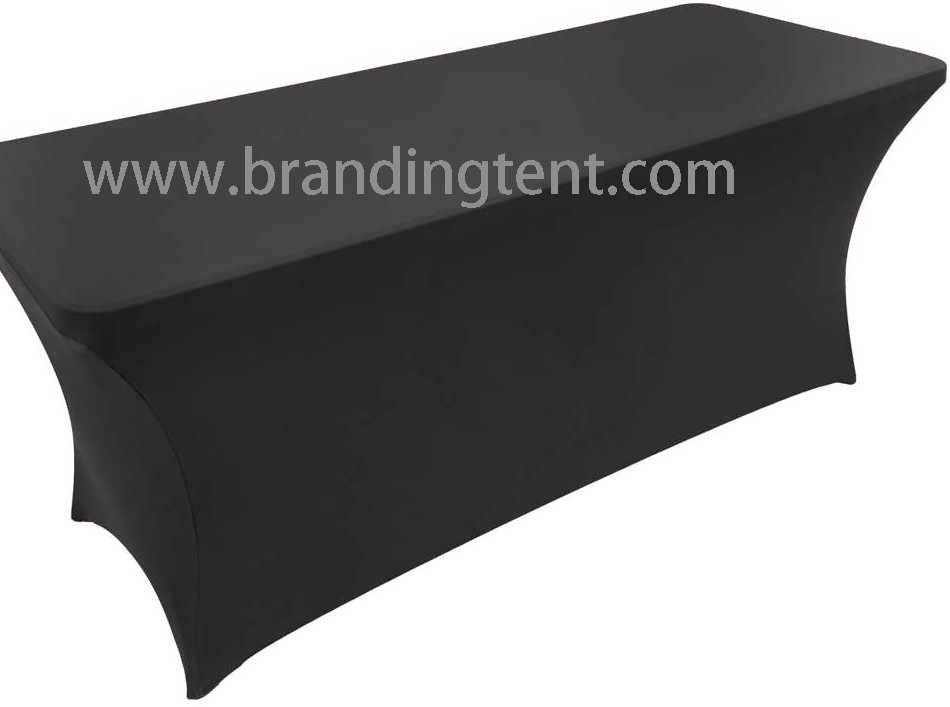
Custom Table Covers
Fitted, throw and stretch styles
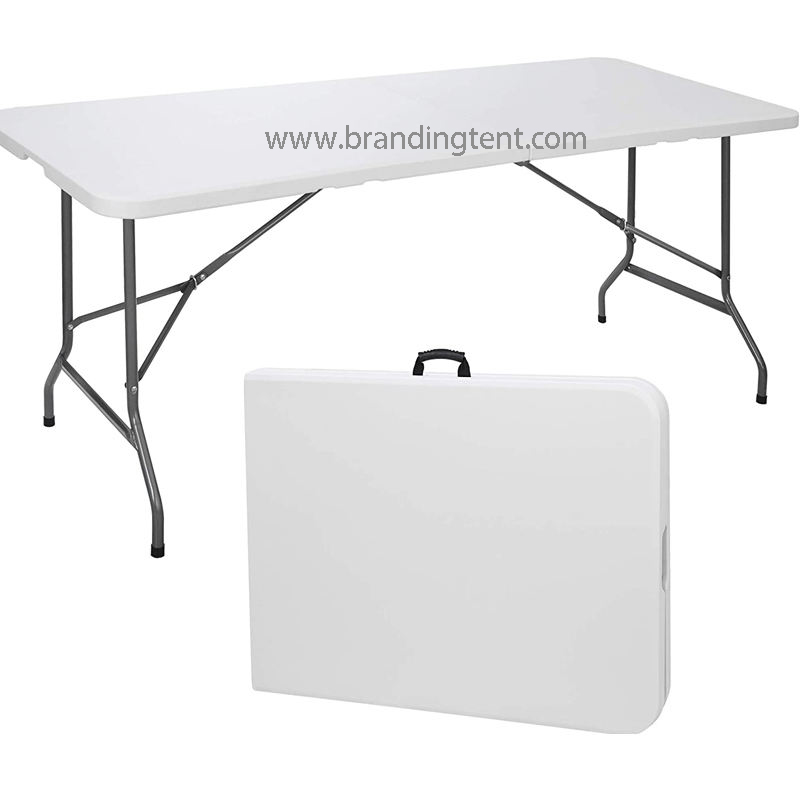
Custom Outdoor Tables
Folding tables for 4 to 8 ft booths
Tell us the tent size, the ground and weather it has to handle and the destination market. Our tent specialists reply within 1 hour, 24×7 online service, with a free mockup, written specifications and factory-direct pricing.