Phone:
0086-757-8938 9313
Email:
Address:
Caochang Industrial Zone, Liguang Rd, Lishui, Nanhai, Foshan, Guangdong, China
24/7 online services

Phone:
0086-757-8938 9313
Email:
Address:
Caochang Industrial Zone, Liguang Rd, Lishui, Nanhai, Foshan, Guangdong, China
24/7 online services
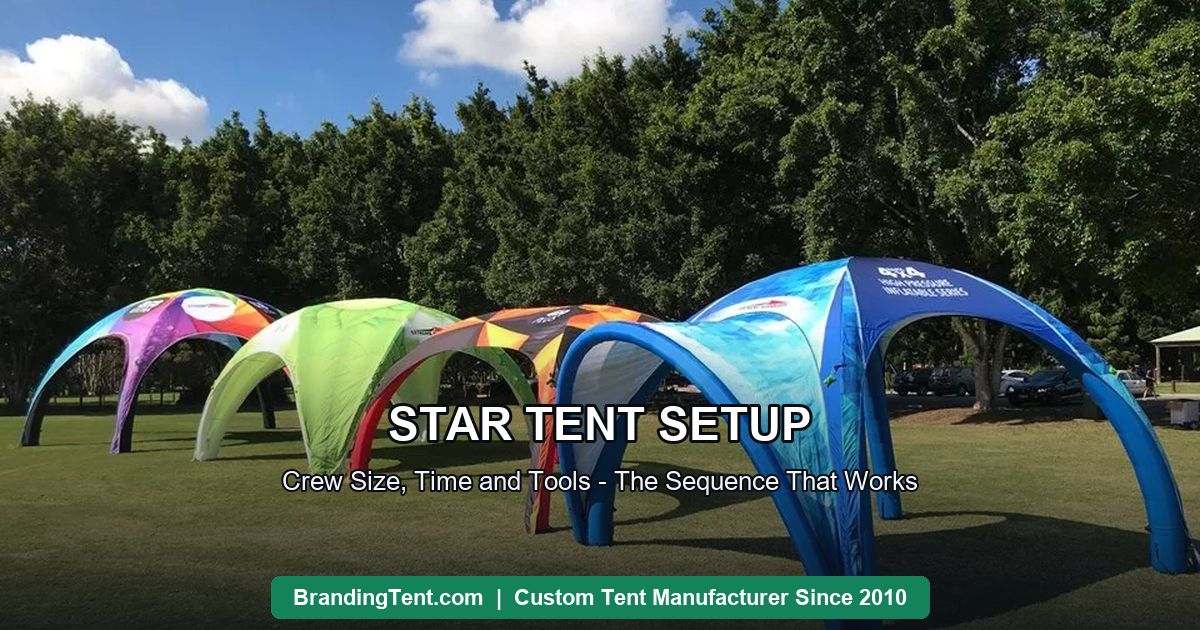
Star tent setup is the moment a rental business discovers whether its fleet is an asset or a liability. The structure is unforgiving in the best way: done in sequence, a star shade tent rises in twenty to forty minutes with two to three people and looks engineered; done out of sequence, it wastes an hour, bends an arm and teaches the crew to dread the bag. This guide lays out the setup by the numbers — crew size and time by span, the tools and anchor kit, the exact assembly sequence, and the pack-down discipline that decides how many seasons the tent serves. It is written for crew leads and rental fleets, because that is where star tents are won or lost.
| Span | Crew | Setup time | Anchor points | Ballast / stakes |
| 5m | 2 people | 20-30 min | 4-6 | 15-25kg per point |
| 6m | 2-3 people | 25-35 min | 4-6 | 15-25kg per point |
| 8m | 2-3 people | 30-40 min | 6-8 | 15-25kg per point (upsize for exposure) |
| 10m+ | 3-4 people | 40-60 min | 8-12 | 25kg per point class, exposure-planned |
Two rules of thumb the table cannot show: first setups run long — practice on a calm day before the season, not at a festival gate; and the crew grows with wind, not just span — a 6m on an exposed field wants the 10m crew discipline.
1. Ground anchors. Steel stakes for grass plus guy lines with adjusters; ballast plates or sandbags for hard standing — enough for every arm.
2. The center pole(s). Single anodized mast, or the double-pole frame on large spans; joins checked and pinned before raising.
3. Tension system. Adjuster buckles and spare line — tension is the structure, and a missing adjuster stops the build.
4. Tools and consumables. Stake mallet, gloves, a measuring line for symmetric layouts, and the setup card with the sequence and anchor plan.
5. Spares. One spare stake, adjuster and pole pin per fleet vehicle — the parts whose absence converts a five-minute fix into a cancelled booking.
1. Layout and stake. Mark the footprint, stake every anchor point first — radius first, center last. The star tent stands on its perimeter, so the perimeter goes in before anything rises.
2. Dress the canopy. Canopy face-up, arms aligned to their anchor lines. Checking arm-to-anchor correspondence now prevents the classic mid-raise discovery that the canopy is rotated.
3. Raise the center. Lift the mast with two people controlling the canopy; seat and pin the center. The tent is a parachute at this moment — no wind, please.
4. Tension the arms, in order. Work opposite arms pairwise, adjusting in stages — half tension all around, then full tension all around. Racing one arm to full tension is how poles lean and fabric stretches unevenly.
5. Final check. Walk the perimeter: every stake set, every adjuster locked, canopy seams sitting on their arm lines, doors/walls if fitted hanging clean. Then, and only then, the event.
1. Lower with the same discipline. Release tension evenly, lower the mast controlled — pack-down is setup in reverse, not a race.
2. Dry before folding. A damp canopy bagged overnight is a mold farm; the star tent’s large fabric surface makes this the single most important fleet habit.
3. Fold on clean ground, along the arms. Fold lines belong where the fabric already creases; new creases across panels fatigue coating.
4. Count the kit back in. Stakes, adjusters and pins are the inventory that quietly leaks; count at pack-down, every time.
Honest scheduling math: two people cannot install a 10m star tent in thirty minutes, and no crew should be asked to raise any star canopy in building wind — the protocol says anchor, then reassess, then raise or postpone. If your booking calendar assumes impossible speed, the fix is crew, not effort: add a person, add a rehearsal, or rent the crew with the tent from a supplier who runs fleets daily.
The sequence in this guide is only half the asset; the other half is the training that turns it into muscle memory. The method that works: train one crew first, on a calm practice day, until the four verbs have no pauses. Then have that crew teach the next pair while the trainer watches and says nothing unless a step is skipped — teaching reveals what the learner never understood, and those gaps become the next revision of the setup card.
Then certify with a clock: each crew raises and strikes the tent twice in a row, and the recorded time joins the fleet record. Rentals running five structures on a Saturday morning discover that crew speed is not about haste — it is about never backtracking. A practiced pair at steady pace finishes a 6m raise before an unpracticed trio finishes arguing about which stake goes where.
The last skill in star tent work is knowing when not to build. The sequence the industry converged on: check the forecast twice — the night before and the morning of — and set thresholds in advance, not at the trailer. Light breeze: build as normal, stakes first, canopy dressed downwind. Rising gusts: stage the build, anchor everything that touches the ground, raise only when the window opens. Forecast gusts in the take-down band: do not raise — a star canopy in wind is a parachute with opinions.
The professional habit that protects crews and schedules alike: build the call into the contract language, so the client understands the tent schedule follows weather, not stubbornness. Operators who cancel a raise once for honest wind earn the reputation that keeps them booked — and keep the fleet intact for the hundred raises that follow.
Star tent setup is three verbs — stake, raise, tension — executed in order, with the crew the span actually requires and the kit the venue actually mandates. Rehearse once, card the sequence, count the kit both ways, and pack dry. Crews that run the sequence instinctively make star tents look easy — which is exactly why fleets can charge for them.
One final operational habit separates seasonal fleets from year-round ones: a post-event debrief that takes four minutes. What snagged? Which fastener annoyed the crew twice? What went into the bag damp that should not have? The answers update the setup card, the spares box and the training order — and three seasons of four-minute debriefs produce a crew manual that no competitor can copy, because it was written by the specific people who raise your specific tents. Documentation sounds like overhead until the first event where it becomes the reason a twelve-person crew finishes in forty minutes and goes home to dinner.
💬 Chat on WhatsApp Now✉ Email Us Now
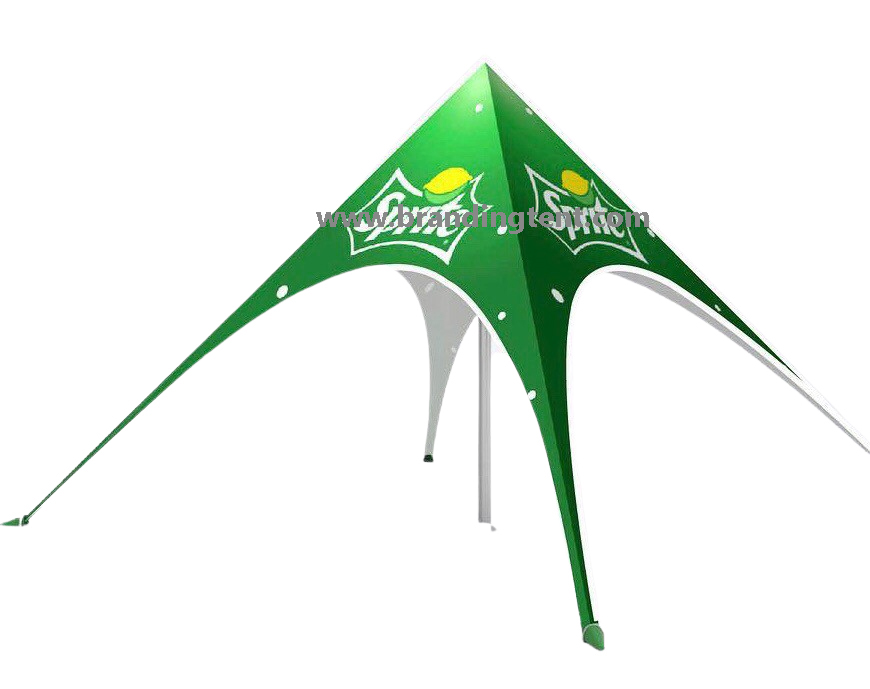
Custom Star Tents
Star shade canopies built to order
Custom Pagoda Tents
High-peak marquees, 3×3-6x6m, connectable
Custom Dome Tents
360-degree brand stages for events
More: custom star tent buyer guide · star tent vs umbrella · star tents for festival VIP · full FAQ
Tell us your event scenario, size and logo file — our tent specialists reply within 1 hour, 24×7 online service, with a free mockup, written specifications and factory-direct pricing.
Two to three people for 5-8m spans (20-40 minutes), three to four for 10m+, including anchoring. Wind, not just span, decides the crew — exposed sites run one level up.
Plan 20-30 minutes for 5m, 25-35 for 6m, 30-40 for 8m, and 40-60 for 10m+ — first setups run longer until the sequence is second nature.
Stake mallet, gloves, a measuring line for symmetric layouts, the anchor kit (stakes or ballast plus guy lines and adjusters), and the setup card with sequence and anchor plan. Plus one spare stake, adjuster and pin per vehicle.
Responsibly, no — the canopy is a parachute during the raise, and solo builds are how canopies tear and poles bend. Minimum two for the smallest spans.
Yes — with ballast at every anchor point instead of stakes (15-25kg per point, upsize for exposed sites). The tension system works identically; the anchor plan changes.
Anchor first, reassess, then raise in calm or postpone. No star canopy should rise in building wind — the setup window follows the forecast, and the fleet schedule should assume it.