Phone:
0086-757-8938 9313
Email:
Address:
Caochang Industrial Zone, Liguang Rd, Lishui, Nanhai, Foshan, Guangdong, China
24/7 online services

Phone:
0086-757-8938 9313
Email:
Address:
Caochang Industrial Zone, Liguang Rd, Lishui, Nanhai, Foshan, Guangdong, China
24/7 online services
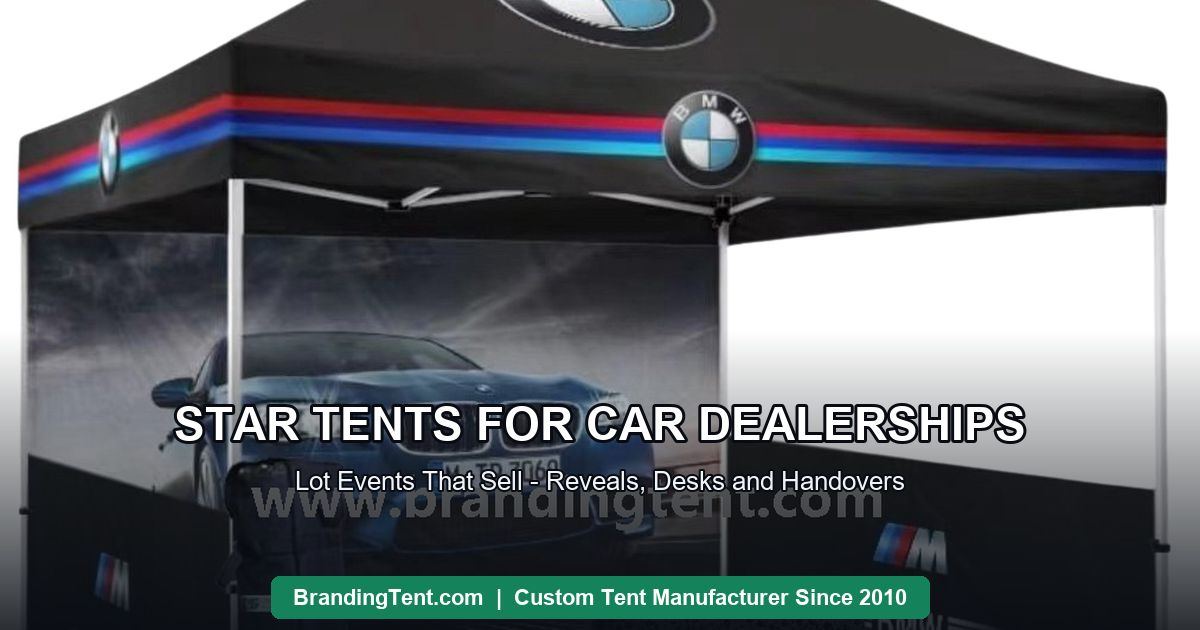
Car dealerships run more branded events per square meter than almost any industry — weekend promotions, test-drive days, model launches, delivery moments, service clinics — and every one of them happens on the same asset: the lot. A star tent for dealerships is how that lot becomes a showroom, a lounge and a photo studio within the same afternoon. The structure choice matters more here than most buyers expect: vehicles need clearance, finance conversations need enclosure, photography needs silhouette, and pavement needs ballast instead of stakes. This guide maps the layouts dealerships actually run, the sizing math for vehicles and guests, and the fleet thinking that turns one event into a repeating program.
1. Sun is a product liability. Vehicles, screens, food and — above all — waiting customers all perform worse in direct sun. Shade is the difference between a browsing crowd and a scattering one.
2. Attention is the currency. A dealership on a commercial strip competes with traffic, neighbors and every screen in the customer’s hand. A high-peak printed structure reads from the road: the lot announces the event before the flags do.
3. Moments need backdrops. Delivery photos, test-drive huddles and launch reveals all get photographed. A branded structure turns those photos into marketing the dealer does not pay to distribute.
1. The reveal pavilion. One 6m-class structure front and center hosting the featured vehicle; print carries the model campaign. The car is the exhibit; the tent is the gallery.
2. The test-drive huddle. A 4-5m unit near the lot entrance: handover briefing, keys, coffee, waiting point. Keeps energy at the entrance where traffic converts.
3. The finance and trade-in desk. A walled 3x3m or 4x4m module: shade, laptop, paperwork, a chair on each side. Enclosure is what makes numbers conversations feel private on a forecourt.
4. The delivery moment. A branded backdrop structure at the handover bay — the photo every customer posts, and the reason the tent pays for itself in organic reach.
| Use | Recommended | Why |
| Test-drive huddle | 4x4m or 5m star shade | Vehicle clearance plus 4-6 standing guests |
| Finance / trade-in desk | 3x3m walled module | Enclosure for numbers talk |
| Vehicle reveal | 6x6m pagoda or 6m star tent | Full vehicle plus crowd arc and photography |
| Delivery backdrop | 3x3m or 4m printed wall | Portrait framing, no footprint waste |
| Service clinic | 3x6m with counters | Queue management plus bay-side shade |
Two clearance rules of thumb: tent legs must never share the vehicle’s door-arc — park first, measure, then position; and drive-through builds (vehicle inside the perimeter) need the entry height and anchor plan confirmed against the tallest vehicle actually sold that weekend, not the catalog hero model.
1. Ballast instead of stakes. Dealer lots are hard standing — every leg gets 15-25kg of plates or weights, sized up for walled configurations. Our ballast guide carries the per-size math.
2. Local rules. Some municipalities require permits for lot events that occupy parking; the tent layout should be drawn into that paperwork (footprints, exits, anchor method), which also happens to be what insurers ask for.
3. Weather plans. A one-page protocol — lower legs, walls off, take-down triggers — belongs in every dealership’s event folder; the wind guide writes it for you.
Honest cases: a single-vehicle sidewalk display with no staffed program needs a backdrop wall, not a canopy; the twice-a-year sales event can rent the structure for less than storage costs; and lots with strict landlord rules against anchored structures may need freestanding alternatives. The ownership case opens the moment the calendar repeats — monthly promotions, a test-drive season, an electrified-model launch year — because that is when branded, shaded, photo-ready space stops being an expense and becomes the cheapest marketing asset the dealership owns.
Dealership event mornings run on a checklist, not a mood. Vehicles staged and measured against the tent footprint before a single leg lands. Anchor positions confirmed clear of door arcs and the service bay lane. Ballast counted per leg — plates on pavement, sized for the walls that may go up at dusk. Power run to the finance desk and the reveal spot, taped, with the generator outside guest earshot.
Then the soft items, which are the ones photographed: tables with printed covers positioned against the shade arc, not across sightlines; the featured vehicle lit and angled toward the road; delivery-bay backdrop framed and clear. Walk the whole lot once from the customer entrance — if the structure does not read from the road, reposition now, while the lot is still empty.
The dealerships that get the most from tent programs run them on a seasonal rhythm rather than an event-by-event basis. Spring: test-drive season opens with the huddle unit at the lot entrance and finance desk deployed for trade-in waves. Summer: model-year clearances move to the reveal pavilion with weekly rotations of the featured vehicle. Autumn: service clinics and winter-tire promotions use the walled module as a queue-and-coffee station. Winter: the fleet rests, dries and gets its annual inspection while marketing plans the spring reprint.
A rhythm like this turns tents into a calendar asset: each structure earns across four or five deployments a year instead of one, print refreshes align with model launches instead of ad-hoc campaigns, and the lot crew gets genuinely good at the setup they run every season. Dealership marketing budgets reward assets that show up in every quarter’s photos — a seasonal tent program is exactly that asset.
A dealership star tent program is three structures answering three jobs — reveal, desk, huddle — wrapped in one print language and one anchor discipline. Buy by the calendar, not the campaign: the lot that hosts events monthly should own its shade and its backdrops, photograph every handover, and let the printed peak do the advertising between customers.
One more ownership note for dealers weighing the purchase: count photos, not just events. A dealership lot program lives or dies on the marketing its own events generate — delivery posts, test-drive stories, launch teasers — and the structures decide what those photos look like before the photographer arrives. Twenty branded handover photos a month is organic reach no ad budget matches, and it compounds every season the fleet keeps standing. Run that math against the quote and the decision usually flips from “marketing expense” to “production tool”: the tents are not a cost of the event, they are the machine that turns the event into content. And keep one counter-metric beside it: complaints per event. A dealership tent program running well produces almost none — shade where guests queue, desks where numbers are discussed, backdrops where deliveries happen. Complaints cluster at exactly the places the fleet was skimped on: a desk in the sun, a handover shot in flat light, a queue with no cover. The fleet audit is simple arithmetic: every repeated complaint is a structure that has not been bought yet, and every quiet weekend is one that has.
💬 Chat on WhatsApp Now✉ Email Us Now
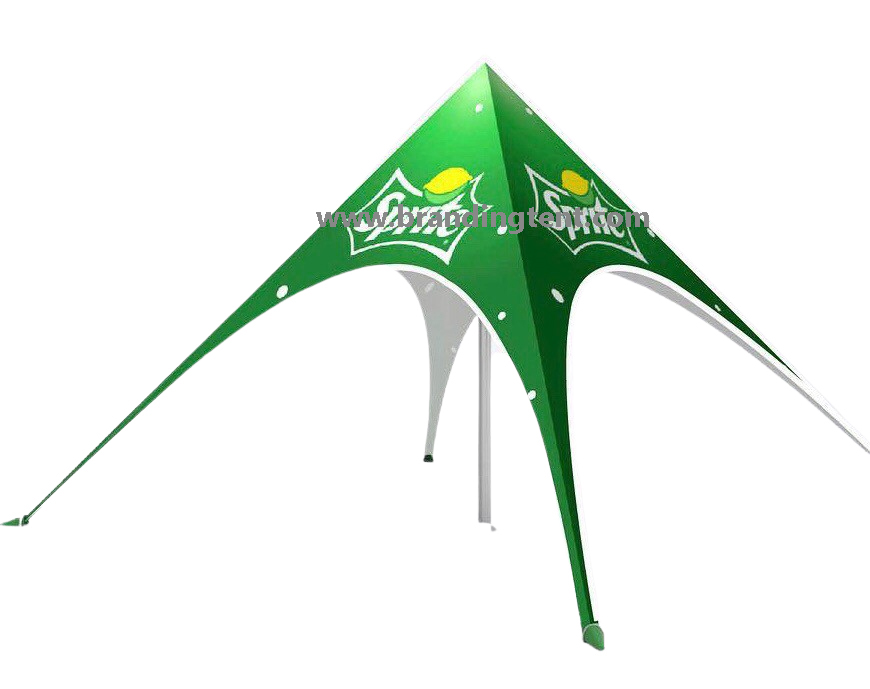
Custom Star Tents
Star shade canopies built to order
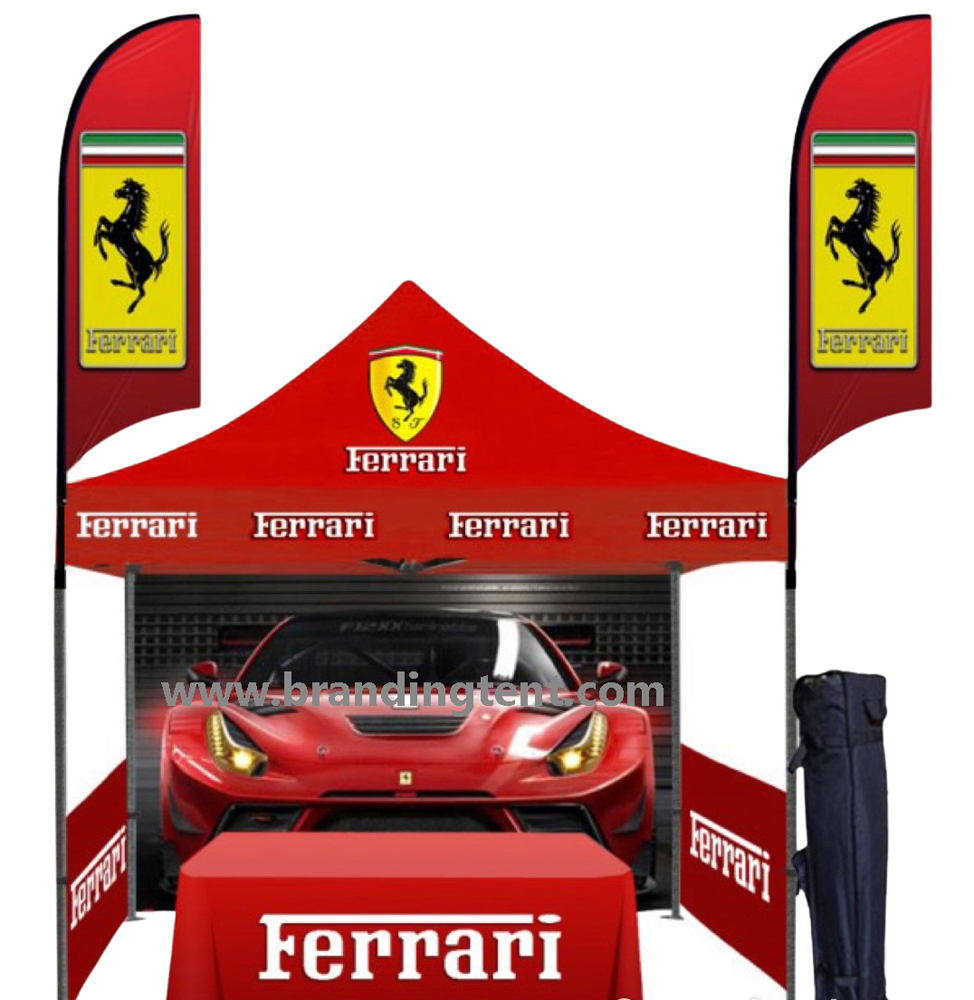
Custom Pagoda Tents
High-peak marquees, 3×3-6x6m, connectable
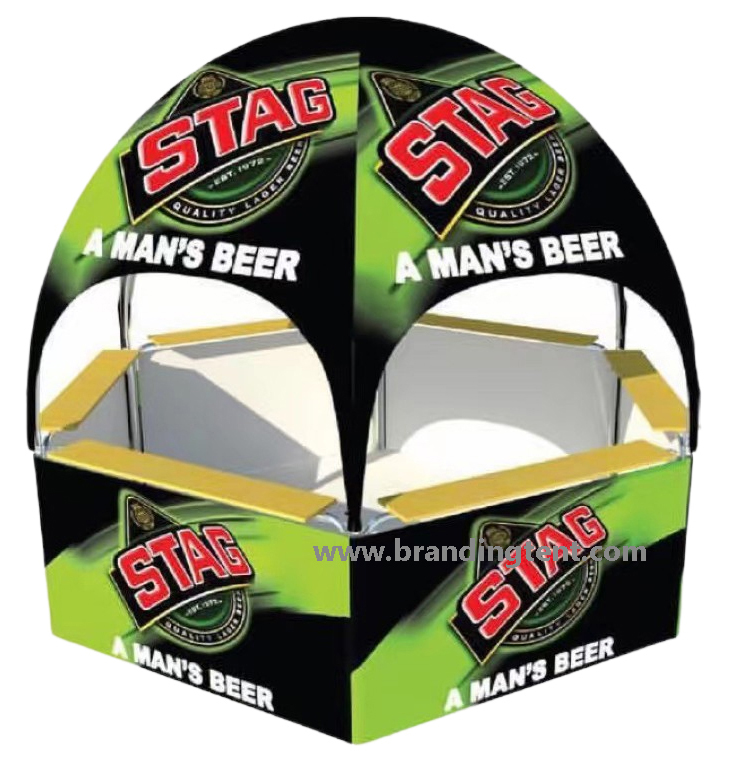
Custom Dome Tents
360-degree brand stages for events
More: custom star tent buyer guide · tentpole event campaigns · star tent vs umbrella · full FAQ
Tell us your event scenario, size and logo file — our tent specialists reply within 1 hour, 24×7 online service, with a free mockup, written specifications and factory-direct pricing.
Test-drive huddles: 4-5m units. Finance desks: walled 3x3m-4x4m. Vehicle reveals: 6x6m or a 6m star tent. Delivery backdrops: 3x3m printed walls. Size to the largest vehicle of the season plus the crowd standing around it.
Yes — with ballast instead of stakes: 15-25kg of plates or weights per leg, sized for walled configurations. Draw the layout into any municipal permits so footprint and anchor method are pre-approved.
A 6m-class star tent or 6x6m pagoda: high silhouette visible from the road, open perimeter so guests circulate around the vehicle, and full-surface print for the model campaign.
Yes — full-color dye-sublimation with Pantone matching, printed in one batch so campaign colors stay identical across every structure and every event weekend.
A 3x3m raises with one or two people; 4-5m units want two; 6m star structures want three. Larger dealership fleets typically train one lot crew and keep a per-structure setup card in the bag.
Buy when the event calendar repeats monthly or seasonally — ownership wins from the third or fourth use and keeps brand print consistent. Rent only for one-off events beyond the fleet.