Phone:
0086-757-8938 9313
Email:
Address:
Caochang Industrial Zone, Liguang Rd, Lishui, Nanhai, Foshan, Guangdong, China
24/7 online services

Phone:
0086-757-8938 9313
Email:
Address:
Caochang Industrial Zone, Liguang Rd, Lishui, Nanhai, Foshan, Guangdong, China
24/7 online services
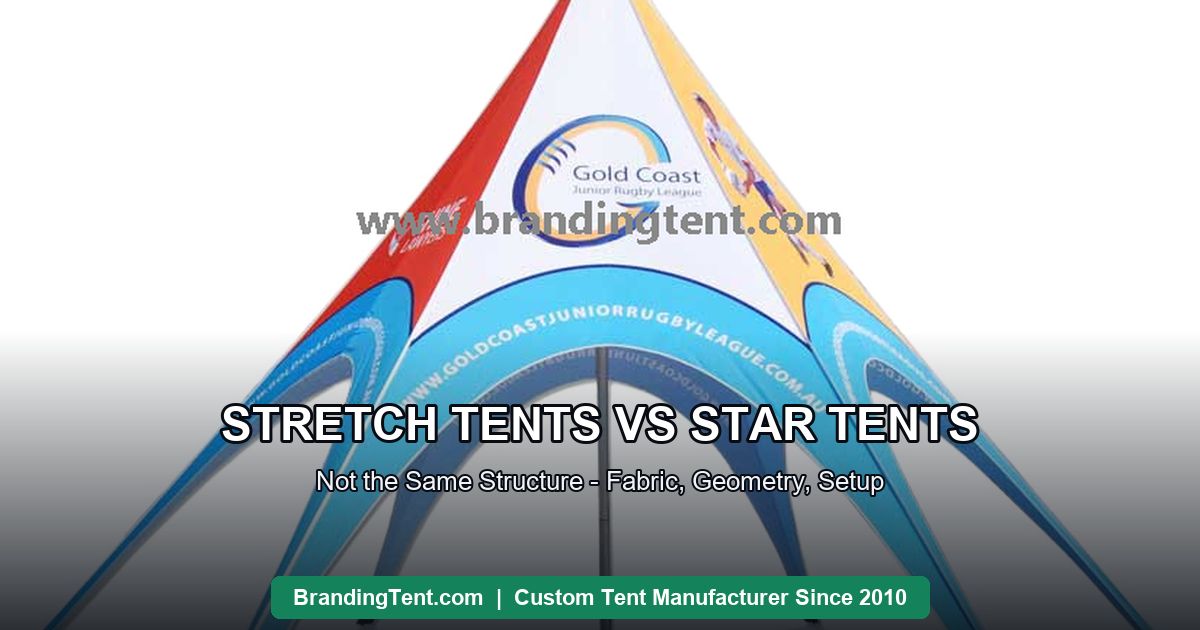
Say “stretch tent” and “star tent” to different event people and you will get nods from both — and they are not imagining the same structure. Both are tensile systems held up by tension rather than a leg grid, but their geometry, fabric and setup philosophies diverge: the stretch tent drapes fabric over poles pushed outward; the star tent lifts a radiating canopy from one center mast with anchor-tensioned arms. The difference changes everything a buyer cares about — silhouette, print surface, setup, anchoring, storage and the venues each one suits. This guide separates the two honestly, because choosing the wrong tensile system is expensive in exactly the ways photos do not show.
1. The stretch tent uses a knitted, four-way-stretch polyester fabric draped over multiple poles and pulled to ground anchors at many points. The material stretches around pole tips like a well-fitted sheet, and the poles are moved by installers until the drape looks right — setup is a sculpting process, judged by eye.
2. The star tent is a center-mast system: one high pole (or a double-pole frame on large spans), radiating canopy arms, and perimeter anchor points under adjustment. Assembly follows a sequence — stake, raise, tension — and “correct” is defined by tension, not by styling.
| Factor | Stretch tent | Star tent |
| Fabric | Knitted four-way stretch polyester | Woven oxford (420D-600D) or PVC-coated |
| Difficult to print cleanly; often plain or dyed | Full-surface dye-sublimation: roof, arms, valance | |
| Silhouette | Organic, sculpted drape | Geometric star silhouette, reads at distance |
| Setup logic | Poles placed and adjusted by eye | Sequence assembly, tension-defined |
| Crew & time | 3-4+ people, visual iteration | 2-3 people, 20-40 min |
| Anchoring | Many ground anchor points | Perimeter anchors at arm ends; stakes or ballast |
| Best known for | Organic-luxe weddings, wineries, plain ceremonies | Branded events, festivals, dealerships, photo landmarks |
The row that decides most brand programs is print: stretch fabric resists crisp large-format print, while woven oxford takes full-color dye-sublimation — so events whose tent must carry the brand usually end at the star. Events whose tent must be a clean canvas end at the stretch.
Choose the star tent when branding leads photos, the venue needs a landmark, the program repeats (festival circuits, dealership seasons, activation tours), or guest photos double as marketing. The geometry also packs smaller and raises faster with smaller crews — decisive for touring teams.
Choose the stretch tent when the aesthetic is organic-minimal and the tent is a canvas rather than a billboard; the venue rewards sculpted drape (vineyards, coastal lawns); or the event designer wants to shape the roof line on site. Accept the heavier crew, longer setup and print limitations knowingly.
Honest overlap: plenty of programs successfully run both — stretch for the plain-luxe ceremony, stars for the branded zones. What fails is forcing one structure to be the other: a stretch tent press-ganged into crisp branding, or a star tent hired for a styling it was never drawn for.
Both structures are only as safe as their anchors — this is not where the two systems differ, and it is where both buyers get surprised. Stretch pitches want many ground points; star pitches want every arm end anchored to stakes or 15-25kg ballast points. Indoor deployments exist for both, with certified ballast systems instead of stakes. Whatever the structure, the venue’s anchoring rules and our wind protocol apply verbatim.
Ownership diverges after year one, and the differences are practical. Stretch fabric rewards gentle handling: no dragging over edges, no hot-vehicle transport, storage folded loosely rather than compressed. Star canopies take more conventional care — dry before bagging, fold along the arm lines, inspect anchor points and adjuster hardware each season.
Repair paths differ too: stretched knits mend with patches that accept the fabric’s movement, while printed oxford canopies patch or replace by panel, which keeps a branded roof serviceable part-by-part. Fleets running both families keep two small spares boxes, labeled — and the crew that understands each fabric’s rule treats both as five-season assets.
When the comparison stalls, three questions cut through. One: will the tent carry brand print that must read crisply? (Star — the woven oxford prints; the knit does not.) Two: who owns styling decisions on site — a designer sculpting the drape, or a crew following a sequence card? (Stretch rewards the former; star rewards the latter.) Three: how many events a season, and how far do they travel? (Volume and distance favor the star’s smaller bags and faster raises.)
Ask them in this order and the answer usually arrives before the third question finishes. The structures are cousins, not rivals — the meeting is not about which is better, it is about which job is actually on the brief. Name the job first and the tent picks itself; skip that step and every meeting afterwards is a renegotiation.
Stretch tents sculpt; star tents broadcast. One is a styling medium, the other a branding and landmark structure — and both are tension systems that live or die on anchoring discipline. Choose by the job the tent must do — carry the brand, or be the clean canvas — and buy the complete system, anchors included, from the maker who prints or sews it.
One closing thought for teams making this choice under pressure: both structures forgive weather the same way — through anchoring and operating discipline — and both punish improvisation the same way, too. Where they differ is the story they tell. Stretch tents tell a story of craft and place; star tents tell a story of brand and landmark. Neither story is better; only one of them is the story your next event is trying to tell. Write that story down in one sentence before the purchase conversation begins, and the comparison collapses into clarity: the structure that finishes your sentence is the one to buy, and the other one gets cheered on from the vendor list for a later season. One last note on sequence: whichever structure arrives first on site tends to set the vocabulary for everything after. Programs that started with a star tent keep buying print-led structures; programs that started with a stretch tent keep styling organic. There is no wrong door — only a door that becomes an identity before anyone chose it. Decide the story first, as this guide keeps saying, and let the first purchase be a deliberate sentence rather than an accident that gets repeated. And when the first structure arrives, brief the crew with the same sentence the brief used — the story travels with the tent or it does not travel at all.
💬 Chat on WhatsApp Now✉ Email Us Now
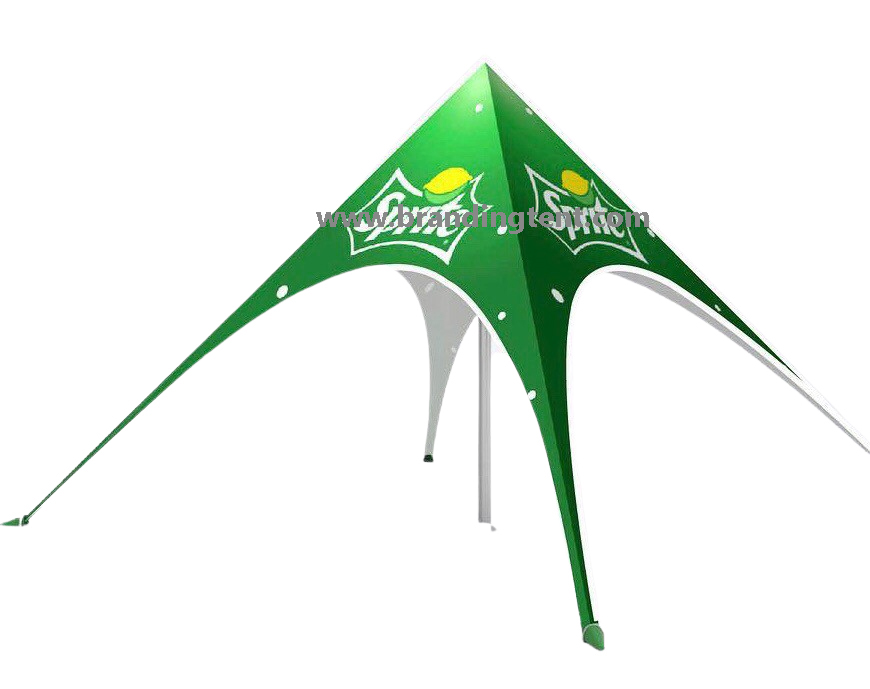
Custom Star Tents
Star shade canopies built to order
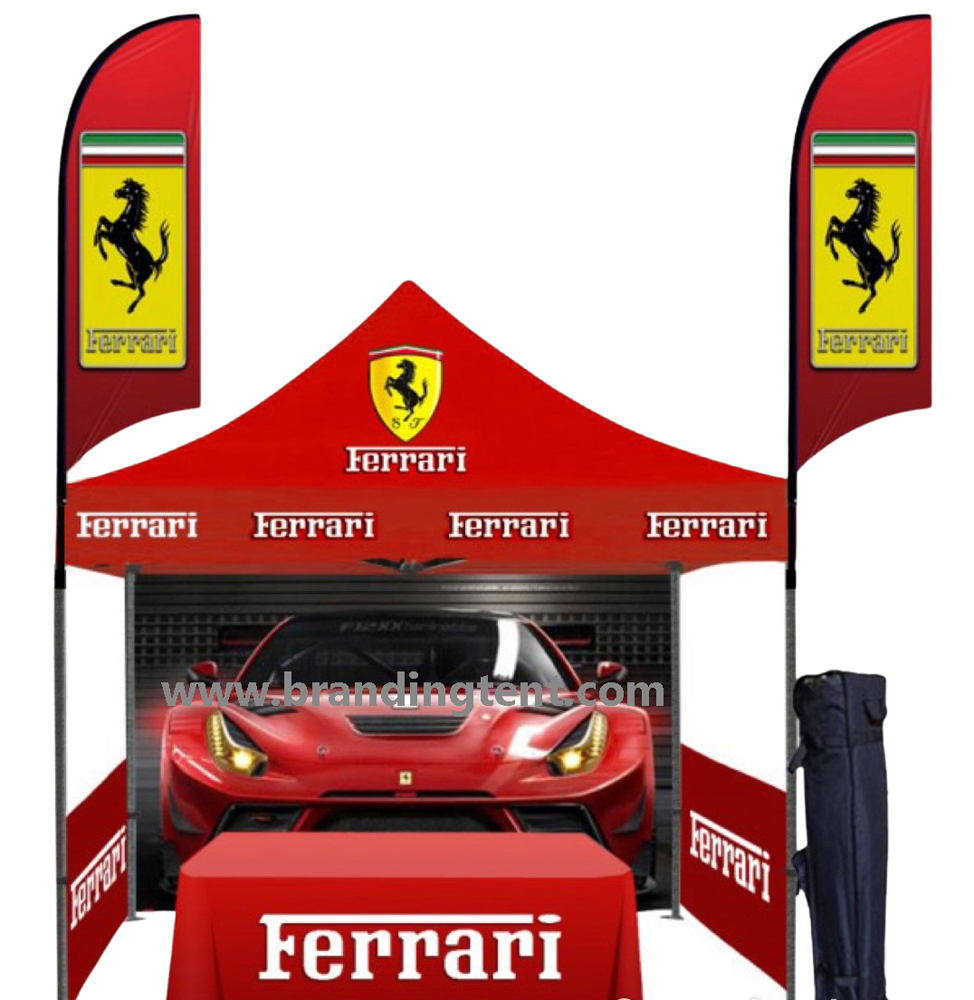
Custom Pagoda Tents
High-peak marquees, 3×3-6x6m, connectable
Custom Dome Tents
360-degree brand stages for events
More: custom star tent buyer guide · star tent vs umbrella · double pole star tents · full FAQ
Tell us your event scenario, size and logo file — our tent specialists reply within 1 hour, 24×7 online service, with a free mockup, written specifications and factory-direct pricing.
No. The stretch tent drapes four-way-stretch fabric over multiple poles adjusted by eye; the star tent is a center-mast system with radiating arms and tension-defined assembly. Different fabric, geometry, setup and print capability.
The star tent: printed woven oxford (420D-600D) takes full-surface dye-sublimation across roof, arms and valance. Stretch fabric resists crisp large-format print, which is why stretch events usually run plain.
Generally yes — 2-3 people, 20-40 minutes following a fixed sequence, versus bigger crews on stretch installations that are adjusted visually on site. Touring teams feel the difference immediately.
Absolutely — both are tensile structures held by their anchors. Star tents anchor at arm ends (stakes or 15-25kg ballast per point); stretch tents use many ground points. No tent of either family is safe unanchored.
Yes, with certified ballast systems instead of stakes — exhibition centers frequently host star and stretch structures indoors. Check venue load and height rules, and always quote the ballast kit.
Low MOQ accepted for samples; wholesale pricing scales from 5+ pieces. Sampling 3-7 working days after artwork approval, bulk 7-15 days by quantity.